Your aquarium glass waits empty, and you want something soft beneath your fish.
Staurogyne repens grows only four inches tall, stays bright green, and feels like velvet under tiny fins.
It roots fast, needs no CO₂ tank—just liquid carbon once a week—and forgives beginners who forget a water change.
You’ll plant it tomorrow, but tonight you’re wondering why so many carpets turn brown and slimy by month three.
That answer changes everything about how you’ll set up your tank.
At A Glance
- Staurogyne repens forms a dense, low carpet reaching only four inches in height.
- It thrives in 68‑86 °F water with gentle lighting and pH levels of 6‑8.
- Plant stems half an inch apart and three‑quarters inch deep for fast rooting.
- Cory catfish, cherry shrimp, and bettas coexist without damaging the carpet.
- Trim vertical growth monthly to encourage lateral spread and maintain density.
Why Choose Staurogyne Repens as Your Carpet Plant?
A carpet plant isn’t just decoration—it’s the floor of your fish’s home. You want something sturdy, something that welcomes tiny fins and busy shrimp into a shared space.
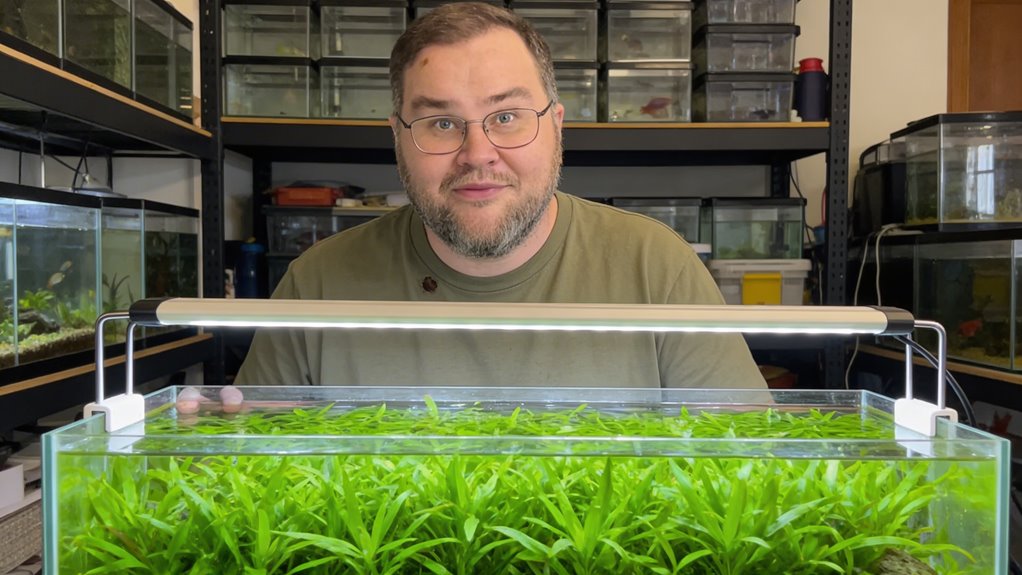
Staurogyne repens gives you that invitation. Its carpet texture spreads low and thick, no more than four inches high, creating soft valleys where your fish feel hidden and safe. The bright green leaves taper like little fingers, forming a mat you can almost feel through the glass.
Your growth aesthetics stay gentle and controlled. This plant grows slowly, so you shape it without rushing. You belong here, building something living.
What Tank Setup Does Staurogyne Repens Need?
Beneath the glass floor where your fish will rest, the right equipment makes all the difference—like laying good soil before you plant a garden.
You need substrate spacing of about half an inch between each stem, giving roots room to spread without crowding. A ten-gallon tank works fine, though bigger feels more generous. You don’t need fancy CO₂ equipment; liquid carbon fertilizers work as trustworthy CO₂ alternatives, letting you belong to this hobby without breaking your budget. Keep your water between 68 and 86 degrees Fahrenheit, with gentle light for nine to eleven hours daily. Your patience now builds the home your fish will love later.
How to Plant Staurogyne Repens for Fast Rooting
When you hold a bunch of Staurogyne Repens in your hand, you will notice each stem has tiny white roots, like thin hairs, waiting to grab hold.
You push each stem about three-quarters of an inch into your soil substrate, spacing them so they don’t crowd. This gives every plant room to breathe, like friends sitting together at a table.
You’ll wait two to three weeks before you see real growth, and that’s normal. Patience feels quiet, but it works.
A thick carpet blocks light from reaching the bottom, which helps with algae control. You’re building something steady, together.
Which Fish Work Best With Staurogyne Repens?
The small leaves of Staurogyne repens, no bigger than your thumbnail, create gentle hiding spots that fish crave.
You’ll feel a warm sense of community when you choose tank mates with compatible compatibility. Your substrate choice matters too—soft-rooted fish appreciate gentle gravel where stems anchor securely.
Consider these peaceful companions:
- Cory catfish, who’ll patrol your carpet without uprooting stems
- Cherry shrimp, tiny cleaners that feel safe among the leaves
- Small tetras like neons, flashing silver and red above green
- Betta fish, resting on soft foliage like a living pillow
You’ve built a home where every creature belongs.
Light and Water Parameters for Healthy Growth
Now that you’ve chosen your fish, you’ll want to give your carpet the right conditions to thrive, and that starts with your aquarium lamp. You run your light 9–11 hours daily, no fancy equipment needed. Your water feels right between 68°F and 86°F, that’s the cozy range where roots wake up. You keep pH at 6–8, soft to medium, like a gentle handshake. You check your substrate composition, making sure it’s nutrient-rich so tiny roots grip and drink. You add CO₂ supplementation if you want faster spread, though you don’t need it. You belong here, growing something steady.
How Fast Staurogyne Repens Grows and How to Prune It
Picture a small green shoot pushing upward through dark gravel, and you’ll feel the quiet patience this plant asks of you.
Staurogyne repens grows slowly, about one inch per month, giving you time to learn its rhythm. Your pruning schedule shapes this living carpet.
- Trim stems to half-inch above substrate every 3–4 weeks
- Remove leggy vertical growth to encourage sideways spreading
- Pinch tops between thumb and forefinger, using no tools
- Collect cuttings immediately, keeping your water clear
This growth rate builds community—you’re not rushing, you’re tending together. Each snip invites thicker, greener connection across your tank floor.
Propagating Staurogyne Repens to Fill Your Tank
Once you’ve watched your carpet thicken for three or four weeks, you’ll notice sturdy stems rising from the gravel, each one carrying enough life to begin again.
You’ll want to pick the healthiest three-inch stems, the ones with bright green leaves and pale roots threading downward.
Your substrate choice matters more than you’d think.
Snip each stem below a leaf node with sharp scissors, then replant the cutting three-quarters of an inch deep, keeping that 3:1 gallon-to-stem ratio you used before.
Check soil compatibility by pressing gently—roots need firm anchoring without compaction.
Water gently, wait two weeks, and watch new growth push upward, joining the community you’ve built.
Why Is My Staurogyne Repens Turning Yellow or Melting?
Sometimes the green carpet you’ve tended for weeks begins to pale at the edges, and you feel a quiet worry—something’s wrong, but you aren’t certain where to look first.
Yellow leaves often whisper of trouble beneath the surface.
- Check for nutrient deficiency, especially nitrogen and iron, which starve growth from within
- Watch for temperature stress when water drifts below 68°F or above 86°F, confusing the plant’s steady rhythm
- Notice melting after water changes—shifts in chemistry shock tender stems
- Trim dying tissue promptly, so energy flows to healthy growth
You’ve learned what your carpet needs. Trust that knowledge.
Frequently Asked Questions
Does Staurogyne Repens Need CO2 Injection to Thrive?
Your Staurogyne repens doesn’t need CO2 injection to thrive. You’ll see steady carpet formation with basic lighting intensity alone. CO2 benefits include faster growth and deeper green color, but this forgiving plant grows slowly without it. You can add liquid nutrients if you’d like, though many hobbyists skip them entirely. Your patience rewards you with a lush foreground carpet in 2–3 weeks.
Can Staurogyne Repens Grow Emersed Outside Water?
Yes, you’ll grow it emersed with ease.
A shallow tray becomes your garden placement, filled with damp—not soggy—soil. Your substrate choice matters: use aquarium gravel mixed with potting soil, about two inches deep. You’ll mist it daily, keeping humidity high, like a terrarium. Bright, indirect light works best. Growth slows, but it won’t die. You’re bridging two worlds, water and air, and that feels quietly brave.
Is Staurogyne Repens Safe for Goldfish Tanks?
You shouldn’t use Staurogyne repens in a goldfish tank, and here’s why. Goldfish compatibility is poor since goldfish uproot plants, eat soft leaves, and grow too large for this delicate carpet. Water temperature additionally causes trouble: goldfish prefer 65–72°F, whereas Staurogyne repens thrives in warmer 68–86°F water. You’ll feel disappointed watching your hard work vanish. Choose hardier plants like Anubias, or you’ll risk wasting time and money.
How Do I Remove Algae From Staurogyne Repens Leaves?
You’ll tackle algae control by gently rubbing leaves between your fingers underwater, dislodging the fuzzy film. For stubborn patches, use a soft toothbrush. Leaf pruning comes next—snip affected stems at the base with clean scissors, about 0.75 inches deep. You’re keeping your carpet healthy, staying patient as new growth fills gaps in 2–3 weeks. Clear water and proper light prevent return; you’ve got this.
Will Staurogyne Repens Spread to Nearby Tanks?
No, Staurogyne repens won’t prop spread to nearby tanks on its own.
Tank isolation keeps your plant exactly where you’ve placed it. This species stays put, rooted in substrate, except you deliberately move stems or trimmings yourself.
You control every new planting through propagation. Dividing stems requires your hands, your scissors, your decision about where 下一代 grows.
No need to worry about surprise visitors in other tanks—you’re the gardener here, spreading only when you choose.
Rounding Up
You’ve seen how this plant, small and steady, builds a home beneath the water.
Staurogyne repens asks little: soft light, warm water, time. It gives back hiding places, clean corners, and quiet growth you can shape with scissors.
Keep your tank at least ten gallons, trim every few weeks, and watch the roots hold firm.
A good carpet isn’t rushed. It’s patient, like you learning something new.