You hold a small, clear bag at the pet store, and three silver fish flicker inside, their noses painted bright red like tiny stoplights. These are rummy nose tetras, and they need your help to glow like that forever. They come from soft, dark streams in South America, where the water is warm, 75 to 84 degrees, and gentle as a lullaby. You will learn how to build them a home, who they can live with, and the quiet trick to making baby fish appear. But first, you need to know why their red noses sometimes fade to pale pink, and what that tells you about their hearts.
At A Glance
- Keep six or more Rummy Nose Tetras in 20+ gallon tanks with soft, acidic water and stable 75–84 °F temperature.
- Provide open central swimming space with driftwood, tannins, and soft sand to encourage schooling and vibrant coloration.
- House with peaceful companions like Cherry Barbs, Harlequin Rasboras, Dwarf Corydoras, and small Tetras; avoid fin-nippers and large aggressive fish.
- Feed high-quality flakes twice daily and frozen foods thrice weekly; remove uneaten food promptly to maintain water quality.
- Quarantine new fish two weeks, monitor for early Ich signs, and maintain strict water parameter stability to support 6–8 year lifespans.
What Is a Rummy Nose Tetra: and Why Keep One?
You might wonder why someone picks this fish over flashier options.
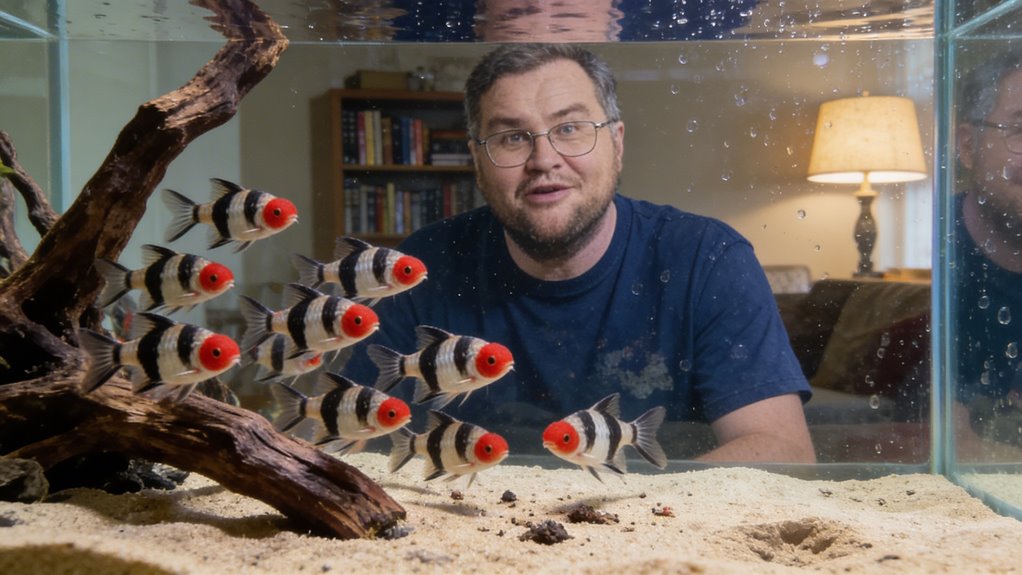
The Rummy Nose Tetra, *Hemigrammus rhodostomus*, doesn’t beg for attention. Its Aquarium Origin lies in the gentle waters of Colombia’s Rio Vaupes and Brazil’s Rio Negro, where muted light filters through dense forest canopy. You notice the red head first, like a tiny ember glowing in dim water, then the striped tail fin flickering as the group moves together. These fish live five to six years, sometimes eight, when you care for them well. You cannot easily tell male from female, and that mystery feels comfortable, like belonging to something slightly unknowable yet completely trustworthy.
Tank Size, Water Parameters, and Setup Basics
When you bring Rummy Nose Tetras home from the shop, the first thing they need is space to move as a group, which means a tank of at least twenty gallons, though thirty gives them room to breathe easier.
Keep your water warm, between 75 and 84 degrees Fahrenheit, like the Amazon streams they know.
Warm water between 75 and 84 degrees Fahrenheit mirrors their native Amazon streams.
Aim for soft, slightly acidic water, pH 5.5 to 7.0, and gentle hardness around 2 to 6 KH.
Your decor tank size shapes their whole world, so plan carefully.
Provide optimal lighting, not too bright, to keep their colors glowing without stress.
Test weekly, change water often, and they’ll thrive.
Substrate, Plants, and Décor for Natural Behavior
Three layers of the tank floor shape how Rummy Nose Tetras feel safe enough to swim boldly.
You spread soft sand first, two inches deep, so their barbels brush gently as they investigate. This bottom layer anchors roots and begins natural filtration, where good bacteria clean the water silently. You add driftwood next, dark and waterlogged, releasing tannins that tint everything amber like their home streams. Finally, you plant Cryptocoryne and Java fern around the edges, leaving the middle open for their shimmering performance. Your aquascape aesthetics matter since beauty brings calm, and calm fish show their brightest red noses to everyone watching.
Temperature and pH: Finding the Stability Balance
Thermometers and test kits sit beside your tank, tools that measure invisible forces shaping your fish’s every breath.
You keep the temperature steady between 75 and 84 degrees, right in the middle where your rummies feel safest. Sudden swings stress their bodies, so you check daily.
Water stability matters more than chasing perfect numbers. Your fish adapt slowly, but they panic when chemistry lurches.
For pH buffering, you add driftwood or peat, letting nature soften the water toward 5.5–7.0. You test weekly, watching the color shift like a mood ring.
You’re building a home, not a laboratory.
Daily Feeding Routine: Flake, Frozen, and Live Foods
A pinch of flake food drifts through the water like autumn leaves on a slow stream, and your rummies rise to meet it with eager, silver bodies flashing.
You’ll want to feed them twice daily, morning and evening, when fluctuating light steadies into gentle brightness.
- Offer high-quality flakes or micro-pellets as their staple meal
- Add frozen bloodworms or brine shrimp three times weekly for variety
- Include live daphnia occasionally to spark their hunting instincts
- Remove uneaten food within two minutes to protect water quality
Your feeding schedule timing builds trust between you and these small, gentle fish. They learn your rhythm, gathering expectantly when you approach.
Diet’s Impact on Color and Longevity
The flakes you scatter today settle into tomorrow’s brilliance, or they don’t. You hold their longevity in your palm.
A dietutrient balance—mixing flakes, frozen bloodworms, and live daphnia—unlocks that crimson head you crave. Six years becomes eight when you feed small amounts twice daily, removing uneaten bits before they sour. Each vitamin threads through gills and fins, weaving armor against disease.
Years pass, and you’ll notice which fish keep their fire. The others fade early, victims of convenience feeding. Your patience writes this difference. Belonging here means choosing the measured scoop over the rushed pour, again and again.
Why Do These Tetras Need Six or More?
Compact glass walls amplify everything you do, so your six fish never need to guess where safety lives.
In a compact tank, your presence becomes their certainty—six fish, zero doubt, absolute safety.
You belong to something bigger when you keep a proper sho Group. Your rummy nose tetras feel it too. Six bodies create Color Dynamics that shimmer through the tank, each red nose flashing like a signal fire passed friend to friend. Below this number, they hide, they pale, they lose their courage.
- Six fish split predator attention so no single tetra becomes target
- Moving as one unit, they find food faster and waste less energy
- Stress hormones drop when companions surround them
- Their red heads glow brighter in confident company
You give them this gift, and they give you living art.
Compatible Tank Mates and Species to Avoid
Your rummy nose tetras dart through the middle of the tank, their red faces glowing like tiny stoplights, and you’re probably wondering who else can share their space without turning that peace into chaos.
You need companions with matching energy—peaceful fish who won’t steal food or nip flowing fins. Think of your tank as a neighborhood where everyone watches out for each other, not a playground with bullies.
| Ideal Neighbors | Room for Caution | Definitely Avoid |
|---|---|---|
| Cherry Barbs, Harlequin Rasboras | Pearl Gouramis (verify temperament) | Betta males, large Angels |
| Dwarf Corydoras, small Tetras | Betta females (individual variation) | Cichlids, Tiger Barbs |
| Hatchetfish, Dwarf Gourami | New fish without quarantine | Any fin-nippers |
Breeding behavior intensifies in groups, so spaciousness matters. Disease prevention starts with quarantine—always isolate newcomers for two weeks. Watch for stress signals like faded color. Your tetras belong with friends who respect their gentle nature.
Breeding: Triggering Spawns in Soft, Warm Water
Once you’ve found tank mates that live in harmony, you’re ready to try something more delicate—coaxing your tetras to become parents.
You’ll lower water hardness to 2–4 KH, soft as blackwater streams. Warm your tank to 84°F, mimicking the Amazon’s breeding season. These spawning cues whisper “home” to your fish.
Prepare fine-leaved plants, like java moss, for egg cradles. Then introduce one male with several plump females—nature’s way of improving odds.
- Dim your aquarium lights to replicate flooded forest shadows
- Add peat extract, staining water amber-brown
- Perform small, frequent water changes with aged, soft water
- Remove adults immediately after eggs appear
Raising Tetra Fry: From Egg Sac to Juvenile
The empty breeding tank now holds hundreds of tiny, clear beads, each no bigger than a pinhead, and you’ve got about twenty-four hours before they hatch.
You watch them twitch, alive already, waiting. That’s the egg sac they’ll eat first, three days of built-in food, like a packed lunch from mom.
After that, you offer infusoria, then powdered fry food, then baby brine shrimp. Each bite builds their bodies, their futures. You notice fry coloration by day seven, a faint stripe, proof that good breeding genetics passed through. You feel pride, quiet and steady.
At week three, they’re fish-shaped, darting. You’ve done this. You belong here.
Preventing Ich, Dropsy, and Stress-Related Illness
After you’ve coaxed those fry through their first weeks, you’ll notice how easily things can slip sideways, since one morning you might spot a single white speck, like a grain of salt, stuck to a fish’s fin, and you’ll feel a small, cold weight in your chest, the kind that comes from knowing you’ve seen this before in other tanks, in other years.
You stop Ich, Dropsy, and stress before they take hold by building a fortress of habit.
- Complete aquarium cycling before adding fish, letting beneficial bacteria establish for 4-6 weeks
- Perform water testing weekly, checking ammonia, nitrite, and nitrate levels
- Quarantine newcomers for two weeks in a separate tank
- Maintain stable temperature between 75-84°F and pH at 5.5-7.0
You belong to a community that learns from each loss.
Frequently Asked Questions
How Long Do Rummy Nose Tetras Live in Captivity?
You’ll find your rummy nose tetras living five to six years, sometimes eight, when you care for them well. Their lifitat depends on clean water, good diet, and peaceful tank mates. You must feed them varied foods twice daily, keep them in groups of six or more for community compatibility, and maintain soft, warm water. Breeding behavior needs special conditions, but your patience rewards you with healthy, colorful companions.
Can Rummy Nose Tetras Change Sex During Their Lifetime?
No, they can’t. Rummy nose tetras don’t undergo sex reversal during their lifetime. Their biological sex stays fixed from birth, unlike some fish that respond to hormonal cues in their environment. You’ll notice males remain males, and females remain females, though telling them apart proves tricky until breeding season arrives. Their genetics lock in this trait firmly, so you won’t see surprises in your shoal’s makeup.
Do Rummy Nose Tetras Sleep With Their Eyes Open?
Yes, they do. Rummy nose tetras don’t have eyelids, so their eye behavior means they rest with eyes always open. You’ll notice their sleep posture changes instead: they hover motionless, often near plants or the bottom, with faded colors and slower breathing. This stillness, not closed eyes, tells you they’re sleeping. It’s okay to feel curious about this—it shows you’re paying gentle attention to your fish’s quiet moments.
Why Does My Rummy Nose Tetra Lose Its Red Color at Night?
Your rummy nose tetra loses its red color at night since it’s resting, and fish don’t have eyelids, so they sleep with eyes open and pale. The bright red head fades during darkness—this pigment shift happens naturally, not from color stress. When morning light returns, you’ll see the crimson return within minutes. It’s like you blushing when excited; the color comes and goes with energy and environment.
Are Rummy Nose Tetras Sensitive to Aquarium Lighting Intensity?
Rummy nose tetras aren’t especially sensitive to lighting intensity, but they do prefer subdued light intensity that mimics their shaded Amazon home. You’ll want moderate light intensity, not harsh brightness, to keep their red color vivid. Dim light intensity at night helps them rest. Balanced light intensity reduces stress, supports their schooling behavior, and keeps their colors bright. Adjust light intensity gradually, and they’ll thrive.
Rounding Up
You’ll hold a small, living jewel in your hands when you keep rummy nose tetras. They need soft water, a warm tank, and friends to school with—six or more, always. Feed them well, watch them glow, and you’ll feel calm pride. Breeding takes patience, like waiting for seeds to sprout. Stay steady, check your water, and these fish will reward you with color, peace, and quiet wonder.