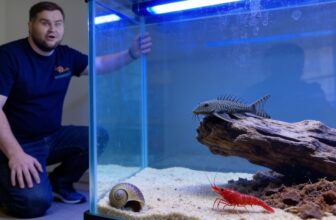
You’ll want a 20‑gallon tank minimum for a school of five Mexican Tetras, since they’re peaceful mid‑water swimmers that do best with a dark sand substrate and one secure cave.
Keep temperatures between 68‑77°F, pH 6.8‑8.0, and avoid aggressive tankmates like cichlids or Tiger Barbs.
Feed sinking pellets or wafers near the cave, plus frozen brine shrimp.
The blind cave morph relies on its lateral line, not eyes, so turn off the filter briefly during feeding.
Stick with these basics and you’ll avoid most headaches—there’s more to the setup if you want the full picture.
At A Glance
- Minimum 20-gallon tank with dark sand substrate and one secure cave.
- Keep peaceful, schooling groups of five or more Mexican tetras.
- Compatible mates include Corydoras catfish and Danios; avoid aggressive cichlids.
- Feed sinking pellets and varied diet; turn off filter briefly for blind cave morph.
- Maintain pH 6.8-8.0 and temperature 68-77°F with consistent water testing.
Why the Mexican Tetra Is a Unique Aquarium Fish
Why the Mexican Tetra is unlike any other fish you’ll keep comes down to one thing: there are actually two versions of it—the normal sighted form and the blind cave morph.
You get two fish in one species, which is weird, right? The cave variant lost its eyes and pigment over millennia, relying on its lateral line to sense vibrations.
It’s like owning a little albino submarine with no windows. You’ll feel part of an exclusive club, honestly, watching it navigate your tank without bumping into things. It’s a conversation starter, and you’ll love explaining it.
This species also benefits from regular water parameter testing to maintain stable conditions and prevent stress.
Tank Setup: Size, Water, and Substrate Requirements
So, what does a Mexican tetra actually need to not feel like it’s living in a janitor’s closet? A minimum 20‑gallon tank, no exceptions.
Larger is better for community setups, so you’ve got room to grow.
Go with dark sand or gravel substrate—it matches their natural caves and makes them feel hidden.
Add a cave or shelter for acclimation; they’re shy starters.
Add a cave or shelter for acclimation; they’re shy starters.
A heater keeps things between 68‑77°F, but no worries on specifics yet.
Live plants? Any that survive your clumsy thumbs work fine.
Bottom line: Give them space, dark ground, and a hideout—they’ll settle in like they own the place.
For stable water levels, consider integrating a whisper-quiet ATO system to automate evaporation replacement.
Mexican Tetra Water Parameters: pH, Hardness, and Temperature
Let’s nail down the water parameters for your Mexican tetra, since getting this wrong is like serving a fish a bad cup of coffee—it’s just not gonna work out.
You want a tight, stable range, and here’s the quick version:
- pH: Keep it between 6.8 and 8.0; anything outside stresses them, and stressed fish get sick.
- Hardness: Aim for 90–447 ppm—that’s moderately hard to very hard water, easy with tap if you test.
- Temperature: Set your heater to 68–77°F (20–25°C); they’re hardy, but sudden swings ruin their vibe.
Nail these, and your tetra settles in like it owns the place.
Use a species-specific buffer like Seachem Equilibrium to build custom alkalinity from scratch if needed.
Creating a Secure Tank: Caves and Substrate for Your Tetra
Your water chemistry is dialed in, so now it’s time to make your tetra feel at home with the right decor.
Grab dark sand or fine gravel—it mimics their limestone cave habitat, costs around $10 per bag, and won’t scratch their sensitive bellies. They’ll scour it for food, and you’ll love the natural look.
Dark sand mimics their limestone cave habitat and protects their sensitive bellies.
Next, add a proper cave. A ceramic hide, PVC pipe, or stacked slate works. Your blind tetra memorizes its space, so a single secure bolt-hole reduces stress fast. Place it near the tank’s center—they’re shy initially but join the group once settled.
Keep it simple: dark substrate plus one cave. For a natural dark aesthetic, try Carib Sea Moonlight Sand, which is smooth and gentle on bottom-dwelling fish. Your tetra belongs here.
Mexican Tetra Appearance: Blind Cave Morph and Color Variations
Even though most fish fans fixate on the blind cave morph, the Mexican tetra actually comes in two distinct packages: the sighted surface form and the eyeless cave dweller.
You’ll notice three key variations:
- Blind cave morph: Albino-pale, no eyes, and uses its lateral line like a sixth sense. It’s ghostly but tough. This blind morph requires stable water conditions to support stress-free molting, though as a fish it does not molt like a shrimp.
- Surface form: Normal eyes, silver-gray with a subtle forked tail. Looks like any other tetra, honestly.
- Fin flash: Males get orange-yellow fins during breeding—pretty, but not a showstopper.
Lifespan and Temperament: What This Hardy Fish Needs
So you’ve got the looks down—blind cave morph or not—now let’s talk about what this fish actually does for a living.
You’re looking at a hardy buddy that’ll roam your tank for 3–5 years, not the wild’s paltry 2.
It’s peaceful, prefers three or more siblings for that school swagger, and swims mid‑tank like it owns the place.
Yes, it’ll nip during feeding—that’s not aggression, just food‑rush chaos.
Don’t sweat it.
Give it a cave, steady 68–77°F water, and consistent pH; this fish memorizes your setup fast.
Maintain stable water parameters to prevent stress-related health issues and color loss.
You belong together.
Best Tank Mates for Your Mexican Tetra Community
What’s a fish without a few good roommates? For your Mexican Tetra community, you’ll want tank mates that match its peaceful vibe and hardy nature.
- Other Mexican Tetras – Keep a group of five or more. They’re social fish, and a school reduces shyness, making everyone feel part of the crew.
- Corydoras Catfish – These bottom-dwellers stay small, around 1–2 inches, and won’t compete for mid-tank space. Plus, they’ll snack on leftover flakes.
- Danios – Active swimmers, like zebras, thrive in similar temperatures (68–77°F) and keep your tetra stimulated without nipping.
Stick with these buddies, and your tank stays calm. A gentle bubble flow filter is ideal for protecting any delicate fry or shrimp you might add to the community.
Mexican Tetra Tank Mates to Avoid
Since your Mexican Tetra thrives with peaceful, similarly-sized tank mates, you’ll want to steer clear of anything that sees it as a snack or a rival.
Big, aggressive fish like cichlids or Oscars? Hard no—they’ll terrorize your tetra.
Avoid fin-nippers like Tiger Barbs; they’ll turn your peaceful tank into a bullying ring.
Likewise skip slow, long-finned beauties—your tetra might mistake them for a buffet.
Cold-water fish, like goldfish, demand different temps and won’t fit in.
Stick with calm, warm-water pals.
Your community’s about harmony, not chaos—keep it chill, and you’ll belong.
For a similar bottom-dwelling companion, avoid large predatory catfish that could stress or consume your tetra, as Rubbernose Pleco care recommends only peaceful tank mates.
Feeding Your Mexican Tetra: A Balanced Diet Plan
Now that you’ve got the “who not to house with” part down, let’s talk about what goes into your Mexican Tetra’s belly. You’re part of the crew that feeds smart, not just full.
- Staple flake or pellet – Get a quality omnivore formula; it’s their daily bread, costing about $8‑12 per container.
- Live or frozen treats – Brine shrimp or bloodworms, twice weekly, boost color and health (think $5‑10 per pack).
- Algae wafers – Sinking ones guarantee your blind cave buddy gets his share, around $6‑10.
Mix it up, and you’ll have a happy, thriving school. Using a thick polyester dual-density filter floss roll helps keep the water crystal clear during feeding.
Helping Your Blind Tetra Get Enough Food
Since your blind cave tetra can’t see the food rush, you’ll need to outsmart the feeding frenzy.
Drop sinking pellets or wafers directly near its usual hangout, like that cave you set up.
Your sighted tank mates will zoom for floating flakes, but dense, slow-sinking food gives your tetra time to use its lateral line—its built-in motion detector—to track down dinner.
Turn off the filter briefly to avoid scattered bits.
You’re part of a crew that looks out for each other; this simple trick guarantees nobody goes hungry.
You could also use an automatic feeder with precision portion control to ensure consistent, non-competitive feeding times.
Your tetra will thank you.
Breeding Your Mexican Tetra: Step-by-Step Spawning Guide
Since you’ve already mastered the art of feeding your blind tetra without your other fish turning it into a circus act, it’s time to tackle the next step: breeding.
- Set up a separate breeding tank – Use a 10‑gallon with a mesh bottom (prevents egg‑eating) and a sponge filter. Keep water at 74°F, pH 7.2. Ensure the tank’s internal filter provides at least 40–50 GPH flow to maintain water quality during conditioning.
- Condition your pair – Feed them protein‑rich live foods like bloodworms for two weeks. You’ll see males get orange‑tinged fins—that’s their nesting attire.
- Trigger spawning overnight – Place the pair in the tank after lights out. By morning, you’ll find sticky eggs scattered. Remove the adults immediately.
You’ve got this.
Caring for Fry: From Egg Sac to Free Swimming
How do you even begin to care for something that’s smaller than a grain of rice and basically just a belly with fins? You don’t touch them, that’s for certain. For the first 5–7 days, fry survive on their egg sac, so you just wait. No feeding, no fiddling.
| Stage | What You Do |
|---|---|
| Day 1–2 | Hatch happens; fry cling to mesh or glass. |
| Day 3–4 | Egg sac shrinks; they still need nothing. |
| Day 5–6 | Sac almost gone; keep water still and clean. |
| Day 7–8 | Sac gone; introduce infusoria slowly. |
| Day 9–10 | Free swimming; switch to baby brine shrimp. |
Once they’re zipping around, don’t skip water changes—tiny volume, big impact. You’ll feel like a pro when they school together. That’s your crew now. To maintain water quality during this stage, use a digital hygrometer to track temperature stability and prevent sudden shifts that could harm delicate fry.
Health Issues in Mexican Tetras: Spotting Ich on Albino Fish
Since you’re dealing with a blind cave tetra that’s fundamentally a white ghost with no pigment, spotting ich on it’s like trying to find a snowflake in a blizzard.
But you’re not alone—we’ve all squinted at those pale bodies.
Here’s your cheat sheet:
- Watch for behavioral red flags. If your tetra darts, scratches against decor, or breathes rapidly, suspect ich—even if you can’t see it.
- Track subtle texture. Run a flashlight at an angle; ich looks like tiny grains of sand, not smooth skin.
- Quarantine immediately. Raise temp to 82°F slowly—heat speeds the parasite’s lifecycle, helping medications work faster. White cottony patches signal a secondary fungal infection that may require methylene blue treatment after antibiotics.
Bottom line: trust their behavior over your eyes. You’ve got this.
Weekly Maintenance Checklist for a Thriving Tetra Tank
You’ve survived the ich scare on your blind cave tetra—good eye on those behavioral clues.
Now, keep that tank thriving with this weekly checklist.
Test water parameters—pH 6.8–8.0, temp 68–77°F—using a liquid kit; strips lie.
Change 25% water, siphoning waste from the sand.
Scrub algae off glass, but leave a patch for nibbling.
Inspect the cave; your shy tetra needs shelter intact.
Feed a varied diet: sinking flakes, frozen brine shrimp.
Observe feeding—blind fish rely on scent, so drop food directly.
Prune any plants that rot quickly.
Clean the filter intake.
Bottom line: consistency beats panic.
Stick to this, and you’re part of the crew that keeps tetras happy.
For additional nitrate control, add a Premium Nitrate Reducer Pad to your sump or filter.
Frequently Asked Questions
Can Mexican Tetras Live With Shrimp or Snails?
You can, but you’re rolling the dice.
Those blind cave tetras will likely leave your shrimp alone—they rely on smell, not sight, so ghost shrimp and snails usually stay safe.
Amano shrimp? They’re big enough to avoid hassle.
But don’t toss in tiny cherry shrimp; the tetras might accidentally nip ’em during feeding time.
Snails? Perfectly fine—they’re armored and boring.
Bottom line: stick with snails or larger shrimp, and you’re good.
Do Blind Cave Tetras Recognize Their Owners?
No, they don’t recognize you like a dog would—they’ve got tiny brains and no eyes, but they’re not total dummies.
Blind cave tetras use their lateral line (a sensory system) to sense vibrations, so they’ll learn your routine, like when you drop food.
They might even swim up to the glass, but it’s more about trained anticipation than actual recognition.
Still, it’s a neat trick for a blind fish. You’ll feel special, just don’t expect a welcome home party.
How Can You Tell the Sex of a Young Mexican Tetra?
You can’t easily sex a young Mexican tetra—they’re too immature to show clear traits.
Wait until they’re about six months old, when males develop orange or yellow tinges on their fins and tiny hooks on their anal fin.
Females stay plainer, often rounder when gravid (full of eggs).
It’s a waiting game, honestly. You’ll get better at spotting it once they’re adults, no need to rush.
What Causes a Blind Cave Tetra to Lose Its Eyesight?
Blind cave tetras lose their eyesight through evolution, not injury.
You’re looking at a fish that adapted over generations to dark caves—eyes became useless, so they shrank and vanished. It saves energy, honing other senses like smell and touch.
Think of it as nature’s trade-off: no eyes, but you get a tougher, smarter swimmer. That’s why they’re albino too—no need for pigment in permanent darkness. Pretty wild, right?
Can Mexican Tetras Jump Out of an Open Tank?
Yes, they can. Mexican tetras—even the blind cave ones—are known jumpers.
You’ll lose one if your tank’s uncovered. They’ll spook during feeding, light changes, or simply since they feel like it.
So get a lid. It’s not fancy, just practical. A tight-fitting cover saves you from finding a crispy fish on the floor.
No need for expensive glass; a mesh screen works fine for around $15.
Bottom line: cover your tank or expect a Houdini act you won’t enjoy.
Rounding Up
So you’ve set up a dark, 20‑gallon cave—congrats, you’re basically their personal evolution curator. These blind fish don’t care if you forget the light; they’ll find dinner using their lateral line (a pressure‑sensing organ) and a sharp nose for bloodworms. Keep pH between 6.8–8.0, temps at 72°F, and ditch aggressive tank mates. Buy three or more at $4–$8 each, feed sinking pellets, and breed them in a mesh‑bottom tank. Low‑tech, high‑weirdness payoff. Bottom line: keep it stable, keep it simple, and you’ll outlast those eyes they never had.