A glass tank holds water, but it doesn’t hold a life unless it’s big enough. Bala sharks need room to swim, really swim, not just turn around in circles. They grow almost as long as a ruler, sometimes longer, and they feel afraid when alone. A keeper who understands this starts with 120 gallons, minimum, and adds five friends. The fish school together, moving like silver thoughts in a stream, and that schooling calms them. But there’s a catch. They jump when startled, hard and sudden, and a bare tank becomes a tragedy. A lid saves them, yet that’s only the beginning of what they require. The water must move, must breathe, must stay clean through constant gentle flow. Temperature matters more than you’d think for creatures that look so tough. And food? They’ll eat flakes, sure, but they need variety to truly thrive, not just survive. Some people call them silver sharks, which sounds exciting, almost dangerous. They’re not sharks at all, of course, just peaceful fish with a pointed fin. The name fools people into thinking they’re simple to keep, hardy, unbreakable. That assumption has ended more lives than cramped tanks have. There’s a quiet sadness in that, a small regret that builds in every enthusiast who learns too late. The truth about these fish unfolds slowly, lesson by lesson, and the next lesson starts with something most owners never consider until it’s urgent.
At A Glance
- House five or more Bala sharks in 120–150 gallon tanks to ensure confident schooling and reduce stress.
- Maintain filtration flow at 8–10× tank volume with adjustable pumps and gentle, continuous currents.
- Keep water at 77–82°F, pH 6.5–8.0, and perform 25% weekly changes with regular testing.
- Feed three small daily meals of quality flakes, supplemented twice weekly with frozen foods and vegetables.
- Secure a tight-fitting polycarbonate lid with mesh panels to prevent jumping and ensure proper ventilation.
What Tank Size Do Bala Sharks Need?
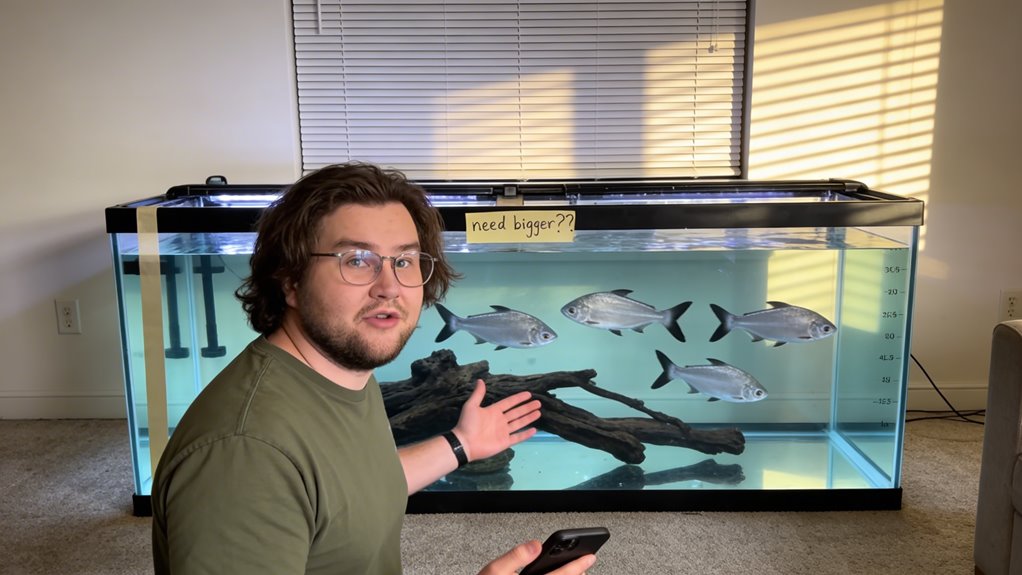
A single Bala Shark, that sleek silver flash with black-edged fins gliding through pet store tanks, stretches longer than a standard school ruler when full-grown.
These active swimmers need room to roam, so experienced aquarists choose 120–150 gallon tanks for small groups.
Tank tank design matters deeply, since cramped quarters create stress, and stressed fish fall ill quietly.
Filtration maintenance keeps their water clean and oxygen-rich, matching the flowing rivers they remember.
Schools of five or more bring out their best behavior, turning solitary hiding into confident, shimmering movement everyone can share.
What Filtration Power Do Active Bala Sharks Need?
Since Bala Sharks never stop moving, their water must stay cleaner than still ponds, swirling constantly like the rivers they came from.
Filter efficiency matters more than fancy brands. These fish need mechanical and biological cleaning working together, hard.
Mechanical precision meets biological patience—clean water demands both, tirelessly delivered.
Flow rate determines their comfort. Too slow creates dead zones where waste collects; too fast exhausts them. Aim for gentle, steady current throughout.
Pump speed controls everything. Adjustable settings let you match their energy level as they grow from four inches to thirteen.
Filter capacity means room for beneficial bacteria. Undersized filters crash fast, leaving these sensitive swimmers vulnerable.
- Flow rate: 8-10 times tank volume hourly, creating river-like movement without exhaustion
- Filter capacity: 150-200% minimum volume, accounting for heavy bioload from active metabolism
- Pump speed: adjustable settings let caregivers respond to growth, building trust through observation
What Water Temperature and pH Do Bala Sharks Need?
Since these fish come from warm, flowing rivers, they need steady temperatures that match their home waters. Temperature control matters deeply for their wellbeing.
A reliable heater keeps the water at 77 degrees Fahrenheit, preventing dangerous temperature fluctuation that stresses their bodies and dulls their silvery sheen.
Water chemistry extends beyond warmth to the invisible balance they swim through daily. pH stability lives between 6.5 and 8.0, a gentle range called “slightly acidic to slightly alkaline.”
Readers aiming above 7.0 find steadier ground, like choosing a flat path over rocky hills. Weekly testing with simple strips builds confidence, and stable parameters mean healthy, thriving companions who recognize their keeper’s face.
Why Bala Sharks Jump (And What Tank Lid Stops It)
Water chemistry keeps their bodies healthy, but it cannot protect them from themselves.
Bala sharks jump. It’s what nervous, open-water fish do when startled. A sudden light flicker, a hand’s shadow, loud footsteps—any jump trigger sends them rocketing upward. Without a secure top, they find floor, not freedom.
Your lid material matters more than you’d think. Glass cracks; sturdy polycarbonate absorbs impact. The lid design needs mesh panels for air exchange, not solid sheets that trap humidity. Most essential: the lid seal. A gap wide as a pencil invites tragedy.
They leap since they feel unsafe.
- Glass reveals vulnerability—we all need barriers we can see through.
- Mesh breathes—protection shouldn’t suffocate connection.
- Gaps betray trust—small openings destroy what walls preserve.
What Should You Feed Bala Sharks?
A handful of pellets disappears in thirty seconds flat, and the Bala sharks circle again, hopeful.
Feeding frequency matters more than volume. Three small meals daily, each lasting two to three minutes, keeps their metabolism steady and water cleaner.
Feed little and often: three brief meals daily outpaces one heavy feast for health and water quality alike.
Diet variety prevents boredom and deficiency. High-quality flakes or pellets form the foundation. Supplement with frozen bloodworms, brine shrimp, or plankton twice weekly. Offer blanched spinach or zucchini for plant matter. Occasional fruit tidbits—melon, banana—mimic their wild foraging.
Watch them eat. Uneaten food fouls water quickly. Remove leftovers immediately.
Healthy eaters show bright scales, steady energy, eager curiosity. That’s belonging, shared across glass.
Which Fish Make Safe Bala Shark Tank Mates?
What catches your eye first when Bala sharks glide past the glass?
Their silver sides catch light like scattered coins, and you’ll want tank species that match this peaceful energy.
- Choose rainbowfish or large tetras with compatible size—they swim confidently without fear.
- Add gouramis or rasboras that share the middle waters, creating a community where everyone belongs.
- Select other Bala sharks, since schooling brings them calm, and calm fish make gentle neighbors.
Avoid tiny fish they might mistake for food, and skip aggressive cichlids that’d disrupt harmony.
Your aquarium becomes a living room where every resident feels safe, seen, and connected.
How Many Bala Sharks Should You Keep Together?
Why does one Bala shark often hide whereas five swim boldly across the tank? The answer lives in their schooling nature, a survival instinct that creates safety in numbers. A single Bala feels exposed, vulnerable, incomplete. Five or more fill that emptiness, triggering confident groupming behavior throughout the water column. Keep six if space allows, though five forms a sturdy minimum for emotional health. Breeding compatibility improves with larger groups, as females and males find natural pairings among familiar companions. These social fish need their own kind to thrive, mirroring how people seek community. They belong together.
Common Bala Shark Diseases and Treatments
When a Bala shark rubs its silver flank against a rock, something invisible has moved in.
Ich, a tiny parasite, causes white spots and frantic scratching.
Bacterial infections bring fin rot and cloudy eyes, spreading fast in stressed groups.
Waterborne fungi attack wounds, growing cotton-like patches that won’t heal alone.
Prevention matters more than cure. Weekly water changes, about 25 percent, remove threats before they strike. Stable temperature, near 77 degrees, keeps immune systems strong.
- Quarantine new fish for two weeks, watching closely for hidden illness
- Treat ich with gradual heat and medicine, not patience alone
- Test water weekly, since clean homes prevent most troubles before they start
Belonging means vigilance.
Silver Shark Size: How Big Do They Actually Get?
A silver Bala shark looks small in the pet store tank, no bigger than a child’s finger, swimming in a school of ten. Many newcomers feel surprised, then worried, when growth shark growth accelerates.
Consider this size comparison:
| Life Stage | Typical Length | Where You’ll Notice |
|---|---|---|
| Pet store juvenile | 2–3 inches | Fits easily in palm |
| 6 months home | 4–5 inches | Needs swimming room |
| 1 year mature | 6–8 inches | Outgrows small tanks |
| 2 years adult | 10–12 inches | Commands the aquarium |
| Full grown | 12–13 inches | Creates peaceful presence |
They’ll reach twelve inches, sometimes thirteen. That’s a foot of silver grace, gliding together. Belonging means planning space for who they become, not who they were.
Can You Breed Bala Sharks at Home?
Spawning Bala sharks at home presents quiet challenges that test both patience and preparation, yet determined aquarists succeed each spring when conditions align.
A dedicated breeding tank, sixty-five gallons or more, gives these large cyprinids room to glide. Temperature rises slowly, from seventy-seven to eighty-two degrees Fahrenheit, hinting to their bodies that spring has arrived. Some keepers use a breeding hormone when natural hormone triggers fail, gently coaxing reluctant pairs toward creation.
Consider these truths:
- Space honors their need to move freely, protecting fragile eggs from clumsy parents.
- Patience acknowledges that good things take seasons, not days.
- Community reminds us that we’re not alone in this quiet labor.
Is a Bala Shark a Real Shark?
While its sharp, triangular dorsal fin slices through the water like a knife, the Bala shark carries a name that tricks the eye and the mind.
A knife-shaped fin cuts through water, but the name cuts deeper—deception swims in silver disguises.
It’s not a shark at all.
The Bala shark belongs to the Cyprinidae family, which makes it a cousin to carp and minnows, not predators with true shark classification. Its marine lineage simply doesn’t exist. The “shark” label comes from that tall dorsal fin and its sleek, silver body gliding through freshwater streams in Southeast Asia.
Understanding this matters. When you know what your fish truly is, you care for it better, and that connects you to a community that values truth.
Frequently Asked Questions
What Plants Do Bala Sharks Prefer in Aquariums?
Bala sharks prefer sturdy plants with broad leaves, like Java fern, Anubias, and Amazon sword, which withstand their active swimming.
Plant placement matters: position tall grasses in back corners, short carpets up front, creating open middle lanes for movement.
Tank lighting runs eight hours daily, about one-third of each day, using basic freshwater lamps.
They’ll appreciate floating plants too, which dim brightness and let them rest, feeling safe.
How Long Do Bala Sharks Typically Live?
Bala sharks typically live up to ten years when owners meet their needs with care and patience.
Growthlifespan trends show these fish, which start at three to four inches as youngsters, reaching twelve to thirteen inches if given space and time. Breeding cycles begin only after three years, when they’ve grown past five inches, so owners must wait with steady hope. A decade of companionship rewards those who keep water clean, temperature steady at seventy-seven degrees, and hearts open to watching silver forms glide through morning light.
Do Bala Sharks Need Strong Water Currents?
Bala sharks don’t need strong currents, but they do need good water flow from filtration. These fish grow to 12 inches and need a tank size of 120-150 gallons. The filter creates gentle movement that keeps water clean and oxygen-rich, like a slow river rather than rushing rapids. They’re active swimmers, so open space matters more than powerful currents. A basic filter handles their needs fine.
Why Did My Bala Shark Stop Eating?
A Bala shark stops eating when something makes it feel unsafe or unwell. Stress signs include hiding, faded colors, or darting suddenly. Check the feeding schedule—three small meals daily, two to three minutes each—and test water temperature, staying near 77°F. Poor water quality, bullying tankmates, or illness like ich cause appetite loss. Isolate the fish, observe closely, and adjust conditions immediately.
Can Bala Sharks Live With Bottom-Dwelling Fish?
Yes, Bala sharks live well with bottom-dwelling fish, but tank compatibility depends on size and temperament.
These active swimmers occupy middle and upper water levels, leaving room below for peaceful residents like corydoras catfish or loaches. Nevertheless, tank size matters greatly—you’ll need 120–150 gallons so swift Bala sharks don’t stress slower bottom-dwellers during their continuous, flowing movements.
Avoid tiny shrimp or delicate species, as adult Bala sharks reach 12–13 inches and may view very small tank mates as food. Choose robust bottom-dwellers of similar size for a calm, balanced community where every fish finds its place without fear.
Rounding Up
A sturdy polycarbonate lid keeps these silver swimmers safe, as 150 gallons, gentle current, and 77‑degree water let them school contentedly. Feed them flakes thrice daily, add bloodworms twice weekly, and watch gentle feelings of calm pride grow as they glide together. They’re not true sharks, but they’ll still reach a foot long. With steady care and patient attention, you’ll feel quiet satisfaction seeing healthy, streaming fish. Simple steps, measured out, bring lasting peace.