You watch a tiny fish flicker like a lost coin in murky water, and you wonder why it stays dull. That fish is a Lemon Tetra, and it needs friends—six at least—to turn gold. Give it four months in warm, soft water, and you will see the change. But loneliness breaks them. The real question is how you build a home where courage, not fear, paints their fins bright.
At A Glance
- Keep six to twelve lemon tetras for vivid coloration and confident schooling behavior.
- Maintain soft, slightly acidic water with gentle flow and dim forest-floor lighting.
- House with peaceful bottom dwellers like Cory catfish and small rasboras.
- Feed high-quality flakes twice daily, supplement weekly with frozen brine shrimp.
- Monitor yellow fin development monthly as a health and settlement indicator.
Tank Size and Water Parameters for Thriving Lemon Tetras
A twenty-gallon tank sits like a modest living room for your lemon tetras, the smallest space where they’ll truly feel at ease.
You’ll want to check your water hardness weekly, keeping it between 3 and 20 dGH—think of it like the firmness of a pillow, not too soft, not too stiff.
Watch for temperature fluctuations, as these fish feel stress when warmth swings wildly. Aim for 72 to 82 degrees Fahrenheit, steady like a calm heartbeat.
Your water filtration, with proper filter capacity, guards against troubles in filtration parameters. pH stability matters too—keep it slightly acidic, around 6.0 to 7.0, so your tetras don’t feel lost.
Mind the flow rate; gentle currents match their quiet nature. Light intensity shouldn’t blind them—dim feels like home. Oxygen level stays sound with gentle bubbles, and filter capacity handles their modest waste. You’ll belong here too, keeping their world steady.
Build an Amazon Biotope: Substrate, Plants, and Hardscape
When you step back from the glass, you’ll want to see a slice of Brazil’s Tapajós River staring back at you, and that vision starts with what’s on the bottom.
Spread two inches of fine, dark sand across the floor. It anchors your plants and holds the Amazon water chemistry steady, soft and slightly acidic, just like home.
Tuck driftwood and smooth river stones along the back and sides. They release tannins, those brown compounds that calm your fish and protect their health.
Add dried leaves for leaf litter filtration, nature’s gentle water cleaner. Plant Cryptocoryne, Amazon swords, and floating Salvinia. Leave the center open for swimming.
Why Lemon Tetras Need Groups: and the Risks of Keeping Them Alone
If you’ve ever watched a single lemon tetra drift through a tank, you’ve seen a fish that’s forgotten how to shine.
These little swimmers need their crew, just like you need friends at recess.
When lemon tetras stick together, they use shoal dynamics to feel safe and show their brightest yellows.
A solo tetra feels exposed, and grouping stress sets in fast—think of it like sitting alone at lunch, every single day.
You might notice faded colors, skittish hiding, or a drooping tail, all signs of loneliness.
Keep at least six together, twelve if you can.
Your fish will sparkle, and you’ll feel that warm sense of belonging right alongside them.
Best Tank Mates for Lemon Tetras: and Species to Avoid
Your kettle of lemon tetras clicks and glimmers in the tank light, and now you’re wondering who else might fit into their quiet world.
A kettle of lemon tetras clicks and glimmers, soft light on gentle fins—quiet company for a peaceful world.
You want friends who share their gentle rhythm, not bullies who’ll steal their glow.
- Cory catfish patrol the bottom, whiskers sweeping sand, never nipping fins.
- Small rasboras dart through mid-water, mirrors of your tetras’ soft shimmer.
- Otocinclus cling to leaves, tiny vacuums keeping glass clean, peaceful as shadows.
- Apistogramma cichlids claim small corners, bright but not bossy, respecting boundaries.
Adjust your aquarium lighting dim, like morning forest gaps.
Check water filtration twice weekly; clean homes keep everyone calm.
Avoid bettas with flowing tails, large angelfish, and any mouth big enough to swallow a lemon tetra whole.
Best Foods for Brighter Colors and Longer Life
What you pour into the tank shapes what shines back at you.
Start with high-quality flakes, the kind with Vitamin enrichment listed right on the label, vitamins being the nutrients that keep cells healthy and colors vivid. Feed small pinches twice daily, enough they finish in two minutes.
Add frozen brine shrimp or daphnia weekly, three cubes thawed in tank water. These proteins deepen that yellow glow you want.
Notice how Light spectrum, meaning the colors of light your bulb produces, affects what you see. Warm white LEDs, 5000-6500 Kelvin, make their yellow fins pop like sunshine through leaves.
You’re feeding life itself.
Early Signs of Sick or Stressed Lemon Tetras
When you’re watching your lemon tetras drift through the water like tiny yellow lanterns, you’ll notice their bodies tell stories before words ever could.
Catch warning signs early, and you’ll stress the prevention of bigger troubles.
Watch for these four signals:
- Faded yellow color, the dullness creeping like clouds over sun
- Clamped fins held tight against the body, not fanned in ease
- Hiding alone, separated from the group’s shimmer and movement
- Gasping at the surface, gills working too hard for air
Water quality monitoring, done weekly with test kits, catches problems before fish suffer. Test ammonia, nitrite, and nitrate; keep numbers safe. Your tetras trust you to notice.
Are Lemon Tetras Right for Your Community Tank?
A small glass tank sits on your counter, empty and waiting, and you are wondering if six tiny yellow fish with bright red eyes belong inside it. You feel that quiet hope of finding creatures who’ll share your space, not dominate it.
Lemon tetras fit this longing perfectly. They’re peaceful, playful, and thrive in groups, weaving through water like friends through a crowded room. You’ll need hobbyist lighting to show their pearlescent scales, and DIY tank décor—driftwood, leaf litter—to help them feel home. Check your match below.
| Your Situation | Lemon Tetras? | What You Do |
|---|---|---|
| Peaceful fish present | Yes | Add six or more |
| Aggressive tank mates | No | Choose calmer neighbors |
| 20+ gallon tank | Yes | Plant edges, center open |
| Busy schedule | Yes | Simple weekly care |
| Shrimp under 80 gallons | Risky | Wait, or pick larger space |
How to Set Up a Lemon Tetra Breeding Tank
Where does new life begin for these quiet swimmers? You’ll find it in a dedicated breeding tank, built with care and patience.
Create your sanctuary through these steps:
- Choose a 10-gallon glass box, small enough to control, large enough for comfort.
- Anchor soft sponge filters, gentle water filtration that won’t suck away precious eggs.
- Weave in java moss or spawning mops, fine threads where sticky eggs hide like secrets.
- Dim the lights, mimicking dawn shadows that whisper *now is safe*.
You belong to this cycle, watcher becoming keeper.
How to Raise Lemon Tetra Fry That Actually Survive
Those tiny beads of life will slip away if you’re not ready.
Breeding demands patience, but fry-survival rewards your watchfulness. Start with egg incubation: keep those amber pearls at 79–80°F, where they’ll hatch in three to four days. You’ll feel a quiet thrill when tails first flicker.
Water stability matters more than you’d guess. Check parameters daily—sudden shifts kill fragile bodies. Use a sponge filter, gentle bubbles that won’t suck babies into danger.
Feed infusoria first, then baby brine shrimp when mouths grow strong. You’re building a tiny community now, and every survivor proves you’ve earned your place among careful keepers.
When Do Lemon Tetras Get Their Signature Yellow?
If you’ve ever bought lemon tetras young, you’ve probably wondered when they’ll stop looking like plain glass minnows and start glowing like their name promises.
The Coloration timeline unfolds gradually. Your patience rewards you, and you’re not alone in this waiting game.
Yellow development milestones mark your tetras’ journey into the community of dynamic, healthy fish. Watch for these changes:
- First two weeks: fry remain nearly transparent, like living slivers of glass
- Weeks three to six: faint yellow dusting appears on the dorsal fin edges
- Months two to three: that bright yellow floods the anal fin, a signal you’re doing things right
- Month four onward: full lemon brilliance emerges, confirming your fish has found its place
Mistakes That Shorten Lemon Tetra Lifespan
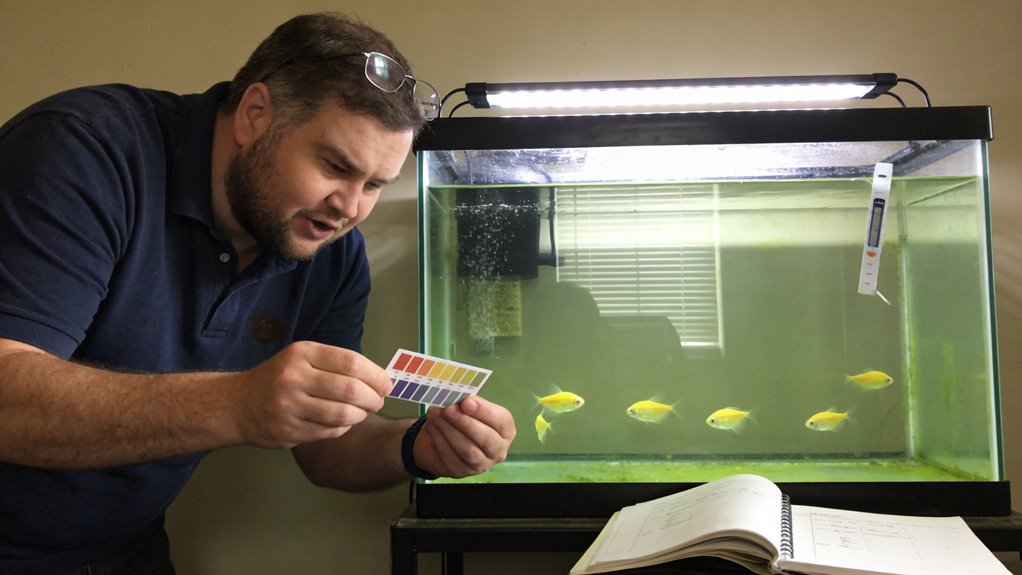
Water test strips, those thin paper ribbons you dip and compare to colored charts, can fool you into thinking your tank is safe when it is not. You need liquid kits, the kind with glass vials and drops, to catch what strips miss.
| What Hurts Them | Why It Matters | What You Do Instead |
|---|---|---|
| Over filtration, filtration overload | Tired fish from fighting current | Use gentle flow, one filter |
| Temperature spikes | Shock kills slowly or fast | Heater with guard, 75-80°F steady |
| Water hardness ignored | Mineral burn, stress | Test weekly, stay 3-20 dGH |
| Lighting intensity too bright | Faded color, hiding fish | Dim it like forest floor shade |
| Overfeeding | Polluted water, disease | Pinch once, they eat in two minutes |
| Aggressive tank mates | Fear, torn fins, death | Peaceful friends only |
| Substrate choice wrong | Rough gravel cuts barbels | Soft sand, smooth pebbles |
| Plant overcrowding | No swim room, dead spots | Open middle, edges green |
| Breeding stress | Worn parents, eaten eggs | Breeding tank, then rest |
You belong here when you learn, and your fish live longer when you do.
Frequently Asked Questions
Do Lemon Tetras Jump Out of Open Tanks?
Yes, Lemon tetras can jump out of open tanks.
A tank design with a fitted lid prevents this escape, since stress response from sudden light changes or chasing sends them upward. Tank size matters too—twenty gallons minimum, but crowding in small spaces increases jumping. Stable water parameters, meaning temperature between seventy-two and eighty-two degrees Fahrenheit, keeps them calm and grounded. You’re protecting curious swimmers who panic, not prisoners who plot.
Can Lemon Tetras Change Sex Like Clownfish?
Your lemon tetras won’t change sex, not like clownfish do.
Clownfish use sex reversal when their group needs a new leader, switching through hormonal cues that rewrite their bodies. Lemon tetras stay the sex they’re born with, male or female, their whole lives. You’ll spot males by their thicker black fin borders, females by thinner ones. No amount of stress or solitude flips that switch. What you see at the store stays true in your tank.
How Do Lemon Tetras Sleep at Night?
Your lemon tetras don’t truly sleep, but they enter night resting states when darkness falls. You’ll notice them drifting lower in the water column, finding comfort at a resting depth among your tank decor like plants or driftwood. Their colors fade slightly, movement slows, and they hover together for safety. Keep lights off for 8–10 hours so they can recharge, staying healthy and ready to play again at dawn.
Are Lemon Tetras Sensitive to Aquarium Lighting?
Yes, they’re moderately sensitive. You’ll want to dim your lighting intensity during dawn and dusk periods, since sudden brightness startles them. Their color perception helps them sense shadows, so use floating plants to diffuse harsh beams. You feel calmer in soft light, and so do they. Keep a regular schedule, about 10-12 hours daily, and they’ll show brighter colors, less stress. Trust their red-eye response—it dims when they’re uncomfortable.
Do Lemon Tetras Recognize Their Owner?
Lemon tetras don’t show true owner recognition like dogs do, but you’ll notice they learn your routine. They’ll swim to the glass when you approach, responding to vibrations and your shape rather than knowing you personally. Their social hierarchy matters more—they’re focused on their shoal mates. Still, you can feel a quiet connection, a small warmth, when they greet your shadow with bright fins.
Rounding Up
A twenty‑gallon tank, six friends, and patience bring out the yellow. You’re giving them a little forest, regular meals, and clean water. That’s enough. Watch them school, glow after four months, and trust you more each week. Keep steady, check your tests, and they’ll stay bright for years. You’ve got this.