Drip acclimation is the gold standard for transferring your betta safely, taking roughly 45 minutes from start to finish.
These fish are notoriously sensitive to pH swings and temperature shocks—both will shave years off their lifespan if you rush the process.

Detoxifies ammonia and removes chlorine, making tap water safe for your betta.

Replaces protective slime coat and reduces stress during acclimation.
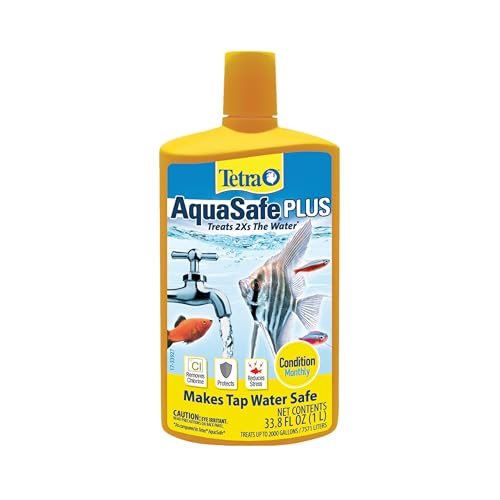
Instantly neutralizes chlorine and adds vitamins for a healthier transfer.
Check discounted items inAquarium Water Conditioners
Cup or bag methods can work in a pinch, but only if your water parameters differ by less than 0.3 units.
Always float the container first for 15 minutes to equalize temperature before adding anything else.
Then introduce tank water in slow, small increments over time.
Never pour store water into your aquarium—it is a cocktail of ammonia, pathogens, and parasites waiting to crash your cycle.
Gently net your betta out once acclimated, leaving the contaminated water behind.
Skip this process entirely and you will likely see clamped fins, lethargy, and a fish that simply gives up.
Your betta’s longevity starts with patience.
At A Glance
- Acclimate using drip, cup, or floating bag method for 30–60 minutes.
- Always float betta container in tank 15 minutes to equalize temperature.
- Never add store or container water to tank; net fish instead.
- Quarantine new betta two to four weeks before adding to community tank.
- Match pH within 0.3 units and temperature to prevent shock or lifespan loss.
Why Acclimation Matters for Your Betta’s Health
Why acclimate a betta in the first place? Since bettas are drama queens disguised as fish. They’re exquisitely sensitive to temperature and pH shifts, and skipping acclimation is a fast track to a shortened betta lifespan.
Bettas are drama queens disguised as fish—acclimate slowly or risk their lifespan.
Watch for stress signs—clamped fins, frantic darting, or listless sinking. That’s a fish screaming for help.
Gradual adjustment lets them breathe easy, avoiding shock that silently steals their lifeblood. Modern protein skimmers use DC needle-wheel motors for near-silent operation below 35 dB, ensuring a peaceful environment.
No one wants a grumpy, short-lived pet. Acclimate slowly, and you’re not just being careful—you’re giving them years of calm, colorful life. The payoff? A healthier, happier fish that actually swims to greet you. For a healthy environment once transferred, choose a low-flow filter to avoid stressing delicate fins.
The Cup Acclimation Method: Simple and Beginner-Friendly
The cup acclimation method is the easiest way to ease a betta into a new tank, requiring almost no extra gear—just a cup, a timer, and a bit of patience.
It’s beginner friendly, perfect for those just starting out.
Here’s how it works:
- Float the cup in the aquarium for 15–20 minutes to match temperature gently.
- Use a small dropper to add a little tank water every few minutes.
- Discard some cup water occasionally to avoid overflow, keeping stress low.
- After 30–45 minutes, net the betta out and release him into his new home.
The cup method is simple, steady, and safe—just the way a new fish parent likes it.
Since bettas prefer calm, low-flow environments, a gentle sponge filter is ideal for keeping the water clean without overwhelming your fish.
For thriving biological filtration, choosing a media like CerMedia MarinePure can help maintain crystal clear water quality.
Floating Bag Acclimation: Step-by-Step Guide
Floating the bag is the classic acclimation move—the one most pet store employees will casually recommend as handing over a fish in a plastic sack. It works best with nighttime transportation planning, as dim light reduces stress. Start with floating bag preparation: clip the sealed bag to the tank rim, letting it float for 15 minutes to equalize temperature. For setups requiring precise water removal, a manual siphon power source can be used to gently extract small amounts without disturbing the tank.
| Step | Action | Time |
|---|---|---|
| 1 | Float sealed bag | 15 mins |
| 2 | Open bag, add ½ cup tank water | Every 10 mins |
| 3 | Repeat step 2, 3 times | 30 mins total |
| 4 | Net out betta | Do not pour bag water in |
| 5 | Release into tank | Done |
Using an overflow box with a continuous siphon can help maintain stable water levels during the acclimation process.
You’ve joined the careful crew—now your betta feels at home.
Drip Acclimation Method: Best for Sensitive Bettas
If you can drip water at a steady, controlled pace, you can give your betta the gentlest possible welcome. Drip acclimation is the top pick for sensitive bettas, slowly matching tank water without sudden parameter shocks.
Imagine:
- A clean bucket, no soap residue, holding your betta in its store water.
- A plastic tube siphoning tank water, adjusted to 4–5 drips per second.
- After 15–20 minutes, the bucket’s water volume doubles—then you halve it and double again.
- Finally, netting your betta into its new home, leaving old water behind.
This method takes about an hour, but it’s worth the wait for skittish fish. Once transferred, a breeding box with mesh walls can provide a safe, oxygenated space for monitoring your betta during its adjustment period. For extra security, use a box with adjustable compartments to separate your betta from other tank inhabitants during the initial observation.
Water Switch Acclimation: Quick for Similar Tank Conditions
For tank conditions that already match your betta’s store water within a few decimal points of pH and temperature, water switch acclimation is the no-fuss shortcut.
You’re fundamentally saying, “Hey, your new home is basically the same as the last one—welcome.” This method skips the drip setup, making it ideal for confident keepers who verified their water parameters ahead of time.
Stress reduction is baked in when you keep lights low and add half-cup increments every 15 minutes. Choosing a bowl with shatter-proof plastic ensures that accidental bumps during transfer won’t cause a dangerous mess.
After about 45 minutes, net your betta out. Done. Just skip dumping cup water into the tank—that’s where unwanted hitchhikers hide.
Simple, reliable, and fast.
Using a conditioner like API Stress Coat can support fin healing and slime-coat protection during the transfer process.
Which Method to Choose Based on Water Parameter Differences
The deciding factor between a water switch and a drip acclimation boils down to one question: how different is your tank water from the store water? This parameter matching guides your method selection like a compass.
- If pH and temperature differ by less than 0.3 units, water switch works fine.
- For gaps greater than 0.5 units, drip acclimation prevents shock.
- When ammonia levels are high in store water, drip slowly halves concentration.
- If you’re unsure, always choose drip; it’s safer and still only takes 45 minutes.
Bottom line: match method to mismatch. Your betta will thank you, quietly.
How to Match Tank Water to Your Betta’s Source Water
Matching your tank water to your betta’s source water is less about guesswork and more about a simple test kit. Grab a liquid test kit—API’s Master Kit, about $35—to check pH, ammonia, and nitrites. For a quicker option, you can use 125 test strips like the General 7-In-1 Aquarium Test Strips for chlorine, hardness, and other key parameters. To ensure reliable results, store test strips in a cool, dark place to maintain their accuracy over time.
Compare those water parameters to the source water’s values. If they’re far apart, adjust your tank gradually over a day. Add a pinch of baking soda to raise pH, or driftwood to lower it.
This isn’t rocket science; it’s just chemistry with fins. You want your betta to feel at home, not shocked.
Get those numbers close, and you’re already winning.
How Long Should Acclimating a Betta Fish Take?
Acclimation time walks a weird line—too short invites shock, too long risks suffocation in a tiny cup.
The sweet spot for acclimation duration is 30 to 60 minutes, depending on water parameter differences.
Transfer timing matters: a quick 15-minute float for temperature, then gradual water additions.
Here’s the picture:
- 30 minutes: Works if source and tank water are nearly identical.
- 45 minutes: Ideal for moderate pH or hardness differences.
- 60 minutes: Needed when parameters vary significantly.
- Over 60 minutes: Risky—oxygen drops, ammonia builds in the cup.
Stick to this window.
Your betta will thank you with calm, vivid colors.
Maintaining stable temperatures during this process reduces coral shock, just as gradual light changes protect sensitive reef inhabitants.
A built‑in programmable timer can automate the lighting schedule to further reduce stress during the transfer process.
Avoid Adding Container Water to Your Tank
Timing is one thing. But here’s the real trick: never add container water to your tank. That water carries waste, parasites, and bacteria from the store. Dumping it in risks your betta’s health and your whole setup.
Instead, net your fish out gently. Let the container water go down the drain. Your tank introduction should be clean, not contaminated. Think of it like bringing home a new couch—you don’t drag in the old dust.
A simple net costs $3. It’s cheap insurance. For gentle handling, use a fine soft nylon mesh net designed to prevent fin snagging and reduce stress during transfer. For added protection during the move, consider a cover that uses polyester mesh to block any accidental jumps while you work. Bottom line: skip the dirty water. Your betta will thank you, and your tank stays safe.
Should You Quarantine Before Adding to a Community Tank?
A serious fish keeper should quarantine a new betta for two to four weeks before adding it to a community tank. This quarantine duration prevents spreading hidden diseases, parasites, or stress to existing tank mates—community tank risks include wiped-out neon tetras or grumpy danios.
A proper setup includes:
- A small, cycled tank or sturdy plastic bin
- A heater set to 78°F and gentle sponge filter
- Daily water changes with a gravel vacuum
- Observation for clamped fins, white spots, or odd swimming
Skipping this step is like inviting a sneezing stranger to a potluck. Just don’t.
Quarantine guarantees survival for everyone. A dedicated stand with a 660 lb load capacity can support a quarantine tank and its equipment safely. Many metal frame stands offer heavy‑duty metal frame construction with a 1,200 lb top load, ensuring secure support for both the tank and essential filtration gear.
How to Transfer Your Betta Without Stressing It Out
Moving a betta from one tank to another doesn’t have to be a drama—but it does require a little patience and a light touch.
The trick is matching water parameters slowly. Float the container in the tank for 15 minutes. Then, every 15 minutes, add half a cup of tank water.
Watch for stress signs like frantic swimming or clamped fins; that means you’re rushing. When full, scoop the betta out with a net—don’t dump the old water in.
It’s that simple. A calm transfer means a happy fish, and a happy fish makes the whole tank feel right. Use ±1 °C standard aquarium digital thermometers to quickly verify temperature matching between containers. A digital floating thermometer with a stainless‑steel probe can provide lab‑grade accuracy for this step.
5 Mistakes That Shock Your Betta
- Pouring cup water into the tank. That used bag water carries ammonia—dump it, not the betta.
- Rushing the drip. Four to five drops per second, not a torrent; patience isn’t optional. A non-slip leveling mat ensures the tank remains stable during the slow drip process.
- Skipping temperature float. Fifteen minutes for that plastic cup to match the tank’s warmth.
- Using unrinsed nets. Soap residue burns delicate gills, causing instant, jarring shock.
- Ignoring the tank’s leveling mat can cause wobbling that stresses your betta during transfer.
Stress Signs to Watch For (and How to Fix Them)
Since bettas are masters of disguise regarding stress, their caretakers need a sharp eye for the subtle signals.
Key stress signs include clamped fins—held tight like a bad perm—along with rapid gill movement, loss of color, or frantic glass-surfing.
Your fish might additionally refuse food or lie at the bottom, looking personally offended.
Fixing stress begins with turning off the tank light and providing a silk plant or leaf hammock for cover.
Keep the water clean and calm; avoid tapping glass or hovering.
A slow hand, quiet room, and patience are your best tools.
Using a feeding ring can reduce waste and keep food contained, lowering stress from water quality issues during recovery.
You belong to the observant few.
Testing water for ammonia spikes with a reliable kit can prevent further stress during the recovery period.
What Happens If You Skip the Acclimation Process
Skipping the acclimation process is like throwing a betta into a blizzard wearing flip-flops. It invites sudden parameter shock—a brutal temperature or pH swing that hits your fish like a brick wall. Without a slow water introduction, the betta’s body can’t adjust, leading to distress and damage that lingers.
Skipping acclimation hits your betta like a sudden, brutal brick wall.
- Gills may burn from pH mismatch, causing rapid, panicked breathing.
- Fins might clamp tight, signaling intense, silent stress.
- The fish could dart erratically, crashing into tank decor.
- Lethargy sets in within hours, often followed by disease or death.
Using a digital pH meter with a precision of 0.01 can help you match the water parameters before transfer, avoiding this survival crisis entirely. For the best success, this process should incorporate a 3 W hang‑on filter to gently circulate water during acclimation, ensuring stable conditions from the start. Skipping acclimation turns a simple move into a survival crisis you didn’t mean to start.
Frequently Asked Questions
Can I Acclimate a Betta in Its Original Store Cup?
Yes, but with careful cup quality and bag respacing adjustments. The store cup works if you float it for 15 minutes, then add tank water slowly—half cup every 15 minutes for an hour. But that cup’s small, so watch for temperature drops and oxygen loss.
Use a net to move the betta; don’t dump the cup water in the tank (parasites, bacteria). It’s a solid method for solo bettas, but for community tanks, a drip method or quarantine for 2-4 weeks is smarter.
Bottom line: fine for a quick, low-stress transfer if you’re careful.
Do I Need to Turn off the Filter During Acclimation?
No, the filter stays on during acclimation—filter disruption would be a rookie move, and we’re not rookies here.
That gentle current helps oxygenate the water, lowering stress for your betta, who’s already a bit dramatic about change.
Turning it off risks ammonia spikes later—nobody wants that mess.
Keep lights low, float the cup, and let the filter do its job.
Bottom line: a running filter equals calmer fish, fewer headaches.
What if My Betta Jumps Out During the Process?
A betta jumping during acclimation is a real risk, but easily prevented. Prevention methods include using a lid or mesh cover on the tank or container, keeping lights dim, and maintaining calm, slow movements.
If a betta does jump, emergency response is simple: gently scoop it up with wet hands or a soft net, return it to its acclimation container, and proceed carefully. A calm handler avoids panic, ensuring the fish stays safe.
Bottom line? A covered setup is a betta’s best friend.
Can I Use a Bowl Instead of a Container for the Drip Method?
A betta once hung a dorsal fin in a tiny bowl for drip acclimation; the bowl volume was too small to mix tank water steadily, and its bowl surface area gave the fish no room to escape rising toxins.
Short answer: yes, but only a wide, gallon‑size bowl works.
A narrow cup traps waste and oxygen thieves.
Think “swimming pool,” not “coffee mug.”
Use the drip method with a net transfer; skip bowl water entirely.
Bottom line: pick a container with at least one‑gallon capacity, a wide mouth for gas exchange, and zero soap residue.
Your betta will owe you a fin flutter.
How Do I Acclimate if the Tank Water Is Colder Than the Bag?
A rapid temperature drop shocks a betta, so use a gradual warming method.
Start by floating the sealed bag in the tank for 15 minutes—this slowly equalizes temps.
Then, every 10 minutes, add a half-cup of tank water to the bag, discarding a bit each time.
Repeat for 45-60 minutes.
Never dump bag water into the tank; net the fish out instead.
This slow, steady approach keeps stress low and survival high—think of it as a spa day, not a cold plunge.
Rounding Up
Acclimating a betta is like teaching a toddler to swim—you don’t just toss ‘em in.
Take thirty minutes, use a cup or drip (five bucks for airline tubing), and let your fish adjust its gills to new pH and temp.
Skipping this turns a hardy pet into a stressed-out, fin-clamping mess.
Bottom line: slow and steady wins the healthy, lively betta.

Measures pH, ammonia, nitrite, and nitrate so you can match water safely.

Quick dip strips for pH, nitrite, nitrate, hardness, and alkalinity.

Fast, easy water testing to confirm safe parameters before transfer.
See today's best deals onAquarium Test Kits