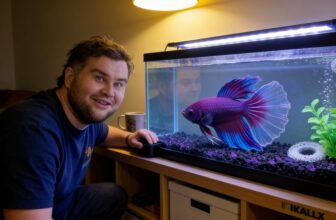
For a ten-gallon Betta tank, you’ve got fifteen gorgeous, safe options.
Stick with calm, small fish.
● Tetras: Cardinal ($4–$6), Rummy Nose ($5–$8), Silver Tip ($3–$5).
● Rasboras: Fire, Harlequin, Purple Harlequin, Galaxy (all ≤1.5″, peaceful).
● Bottom dwellers: Goldstripe Cory ($8), Kuhli Loach, Otocinclus (group of 5+).
● Livebearers: Only plain female Guppies ($3) or standard short-fin Mollies.
● Non-fish: Amano Shrimp ($4–$6), Zebra Snails, Dwarf Frogs.
Avoid male Guppies and flashy Mollies—those fins scream “punch me.”
Now, let’s talk about which ones actually won’t get eaten first.
At A Glance
- Cardinal Tetras thrive with Bettas in soft, acidic water.
- Rummy Nose Tetras are gentle community fish that avoid Betta aggression.
- Female Guppies offer safe color without triggering Betta fin-nipping.
- Corydoras bottom dwellers are peaceful, low-risk Betta tank mates.
- Kuhli Loaches hide in soft substrate, posing minimal danger to Bettas.
What Makes a Fish a Safe Betta Tank Mate?
Since your betta is basically a tiny, grumpy dragon in a fish suit, not every tank mate can handle the heat. You need fish that mind their own business, avoid flashy fins, and stay small. A safe mate won’t compete for top spots or trigger your betta’s territorial rage.
Look for three traits: peaceful temperament, subdued colors, and similar water needs. Tetras like Cardinals and Rummynoses fit—they’re calm, under 2 inches, and school together. Bottom-dwellers like Corydoras or Otocinclus work too; they clean scraps without bothering your dragon.
Avoid nippy fish or flashy males. Your betta’s kingdom isn’t a frat party. Stick with reliable matches, and you’ll belong to that club with a peaceful, drama-free tank. For ideal conditions, Cardinals thrive in soft, acidic water with a pH ideally below 6.0 and stable parameters.
4 Peaceful Tetra Betta Tank Mates That Won’t Nip
If your betta is a grumpy dragon, tetras are the court jesters—so long as you pick the right ones. You need peaceful types that won’t nip those majestic fins.
Cardinal Tetras (up to 2 inches, $4–$6 each) flash vivid blue and red. Rummy Nose Tetras (same size, $5–$8) sport a bright red face and gentle demeanor. Silver Tip Tetras (under 2 inches, $3–$5) stay calm and simple. Purple Harlequin Rasboras (1.5 inches, $4–$7) fit visually, though they’re technically rasboras. Maintain schools of six or more and weekly 25% water changes to keep them vibrant and reduce stress.
Bottom line: stick to cardinals, rummy noses, or silver tips. Your betta keeps its fins, you get a lively show.
The One Tetra You Should Never Add to a Betta Tank
- Why it’s risky: Instinctual nipping, especially in groups under six.
- Your betta’s outcome: torn fins, infections, hiding constantly.
- Price: cheap (around $4), but not worth the vet bills.
Bottom line: Don’t invite a bully. Choose a calm tetra instead. A proper stand with adjustable leveling feet prevents wobbling that stresses a tank’s inhabitants.
3 Striking Rasboras for a Calm Betta Community
While tetras can be a gamble, rasboras are almost a certain thing.
For your calm Betta community, you’ll want three peaceful stunners.
The Fire Rasbora, growing to just 1.5 inches, brings a vivid orange‑red flash without any fuss, but it needs plenty of hiding spots when stressed—add some moss or driftwood.
The Harlequin Rasbora, a tried-and‑true classic, swims calmly in schools of six or more, costing around $4 each.
These peaceful fish thrive with dim dappled lighting to enhance their natural coloration and reduce stress.
Finally, the Standard Harlequin variant offers similar serenity at a lower price.
These fish won’t nip fins; they’ll just glide alongside your Betta.
That’s a win.
Why Purple Harlequin and Galaxy Rasboras Are Top Picks
Since rasboras are almost a certain bet for a Betta community, the Purple Harlequin and Galaxy rasboras stand out as top‑tier picks. They’re peaceful, small, and won’t nip your Betta’s fins—promise.
The Purple Harlequin hits 1.5 inches with a deep purple body that screams elegance. Galaxy Rasboras stay under an inch, showing off dark purple with yellow‑white dots—like a night sky in your tank. Both stay calm, mind their business, and keep your community stress‑free.
Stick with these two for a guaranteed, gorgeous match. You’ll feel like part of an exclusive club that just *works*. For a clean, clear view of these fish, use a magnetic cleaner with a floating design that prevents loss in the substrate.
What Makes Fire Rasboras Act Differently With Bettas?
Since they’re sensitive little drama queens.
You see, their natural response to stress is to hide—fast.
They need dense refuge spots, like Java moss or driftwood caves, or they’ll dash around frantically, which can spook a Betta.
That frantic movement triggers your Betta’s territorial instinct, leading to chasing.
Light self‑deprecation here: I’ve learned this the hard way.
Keep them in a heavily planted tank, a 10‑gallon minimum, with calm water flow.
It’s not rocket science—just give them security, and they’ll stay peaceful.
Simple fix, really.
Providing driftwood caves also supports the Rubbernose Pleco’s need for fiber and hiding spots.
2 Livebearer Betta Tank Mates That Work (and One to Skip)
When it comes to livebearers, you’ve got two solid options for a Betta tank and one clear dud.
Stick with female Guppies—they’re plain, peaceful, and won’t trigger your Betta’s temper.
Stick with female guppies—plain, peaceful, and no temper triggers.
Females possess a dark gravid spot near the tail that helps confirm their sex and reproductive status.
Standard Mollies, the short-finned kind, work too, but they need a bigger tank to avoid territory wars.
Skip male Guppies entirely.
Their flashy fins and constant posturing? That’s just asking for a showdown.
Your Betta sees a rival, not a friend.
You want a calm community, not a fin‑nipping disaster.
Bottom line: choose the mellow females, give them space, and you’ll belong to the ranks of successful, drama‑free tanks.
Why Female Guppies Are Safer Than Males for Bettas
Since male Guppies practically wave a neon “fight me” sign at your Betta, female Guppies are the obvious, safer pick. You’ll sidestep flashy fin displays that trigger aggression—it’s a simple swap. Females max out at two inches, rock subdued grays or yellows, and cost about $3 each at big‑box stores.
- No neon “I’m a threat” colors.
- Less swimming drama, more peaceful grazing.
- Perfect for 20‑gallon setups; avoid fry if you don’t want babies.
Bottom line: ditch the showboating males and grab females. Your Betta won’t feel challenged, you won’t deal with nipped fins, and everyone relaxes. Belonging starts with calm choices.
Like the twig catfish, these guppies benefit from dim lighting and a calm environment to reduce stress.
Pick the Right Molly Variety for Your Betta Tank
Stick with standard Mollies, not the flashy showboating varieties, for your Betta tank. Those huge sails and veiltails? They’re basically dinner bells for a territorial Betta. You want peace, not a fin‑nipping war. For optimal health, remember that juvenile and adult turtles thrive on lower protein levels of about 25%.
- Choose Short‑Finned Types – Look for “common” or “short‑fin” Mollies. They’re less likely to trigger aggression.
- Skip Sailfins and Lyretails – Their flowing fins scream “target.” Your Betta won’t ignore them.
- Size Matters – Pick Mollies under 3 inches. Smaller fish cause less stress.
- Neutral Colors Work Best – Avoid bright or patterned varieties that spark competition.
- Test with One First – Add a single Molly, watch for two days, then decide.
Bottom line: keep it plain, keep it safe.
4 Bottom Dwellers That Keep Your Betta Tank Clean
Moving on from fancy mollies to the people who actually earn their keep, let’s talk bottom dwellers. You’ll want these guys. They’re your clean-up crew, not just decoration.
Goldstripe Corydoras? Hardy scavengers, costing around $8 each. They’ll sift through substrate, munching leftovers. Albino Corydoras are tougher, equally peaceful—your Betta won’t mind.
Goldstripe Corydoras are hardy scavengers, sifting through substrate for leftovers at just $8 each.
Kuhli Loaches? Worm-like, reaching 4.5 inches. They wiggle into tight spots, cleaning where you can’t. Otocinclus? Algae-eating pros, staying under 2 inches, non-disruptive.
Keep them in groups of five or more. That’s the trick—they feel safer, perform better. Your tank stays cleaner, your Betta stays calmer. For those needing to isolate new bottom dwellers during acclimation, a multi-chamber breeding box offers separate compartments for safe quarantine.
Bottom line: pick one, group them right, watch your tank thrive. You’ll belong to the “tidy tank” club.
Corydoras vs. Kuhli Loach vs. Otocinclus: Which Fits Your Betta Tank Best?
So, which clean-up crew member—Corydoras, Kuhli Loach, or Otocinclus—actually earns its keep in your Betta tank without causing drama? The Otocinclus wins for peaceful algae control. Here’s your quick fit guide:
- Otocinclus – Up to 2 inches, mild‑mannered algae-eater. Needs a group of 5+ and established algae. Won’t bother your Betta, ever.
- Corydoras (Albino or Goldstripe) – Tough, 3‑inch scavenger. Loves the bottom, but watch for nippy long‑finned Betta. Group of 5 minimum.
- Kuhli Loach – 4.5‑inch worm‑shaped traveler. Reaches tight spots, but hides a lot. Needs soft substrate and multiple hides.
- Drawback – Corys and Kuhlis stir substrate, possibly stressing a territorial Betta. In any shared aquarium, quarantine tank use is recommended for disease monitoring.
- Bottom line – Pick Otocinclus for zero drama; Corys if you want active bottom action with a calm Betta.
3 Non-Fish Betta Tank Mates: Shrimp, Snails, and Frogs
Fish aren’t your only option for Betta tank mates. Shrimp, snails, and frogs bring movement and cleanup duty, no fin-flicking drama.
Bettas don’t need fish friends—shrimp, snails, or frogs bring cleanup without drama.
Amano shrimp (up to 2 in, $4–$6 each) eat algae like tiny vacuum cleaners, but they’ll hide if your Betta’s a bully.
Zebra snails ($3–$5) scrape glass, leaving nerite-style stripes behind—they’re bulletproof.
Dwarf frogs ($5–$8) paddle around, goofy and harmless, but they’re clumsy eaters who’ll steal your Betta’s food if you blink.
Bottom line: pick one critter, not all three. Shrimp for cleanup, snails for low-maintenance, frogs for personality. Your Betta won’t care, but you’ll feel cooler. For quick, fin-tastic humor to share while setting up your tank, fish puns bridge language barriers with shared smiles.
5 Must-Follow Rules for Long-Term Betta Tank Success
Before you dump a school of tetras into your Betta’s kingdom, lock in five rules that’ll keep the tank stable for years.
- Quarantine every newcomer – A separate five‑gallon tank costs $30 but saves your Betta from unseen parasites. Wait two weeks before introduction.
- Cycle fully before adding – Let beneficial bacteria establish for 4–6 weeks. Test ammonia and nitrite; both must read zero before fish enter.
- Match water parameters – Betta’s thrive at 78–80°F, pH 6.5–7.5. Check your potential mates tolerate that exact range.
- Provide escape routes – Dense plants, caves, or driftwood give your Betta a quiet retreat when he needs alone time.
- Observe the first 48 hours – Watch for fin‑nipping or hiding. Be ready to move stressed tankmates to a backup tank. For best results, gentle flow filtration helps avoid stressing a Betta’s sensitive fins while keeping water clean.
The Betta Tank Mate Rules You Can’t Skip
Since you’ve already locked in those five rules, let’s kick things up a notch. You can’t skip these three matchups—or risk a fin-flicking fiasco.
| Tank Mate | Danger Level | Why It Works (or Doesn’t) |
|---|---|---|
| Male Guppy | High – avoids | His flashy fins trigger your Betta’s aggression. Stick to females only. |
| Kuhli Loach | Low – great | They’re peaceful, nocturnal cleaners that ignore your Betta completely. |
| Silver Tip Tetra | Medium – risky | Calm usually, but may nibble fins if stressed. Test with a small group first. |
Bottom line: choose mates that are calm, small, and non-confrontational. Your Betta’s not looking for drama—just space. For secure anchoring of any decorations in the tank, consider using dense ceramic weight similar to frag plugs.
Frequently Asked Questions
How Many Tetras Should Be Kept Together With a Betta?
You’ll keep 5 to 7 tetras with your betta—any fewer makes them skittish, any more overcrowds the tank.
I’ve learned that rule the hard way.
Small schools (that’s a group of fish) let them feel secure without stressing your betta out.
Pick peaceful species like rummy noses or cardinals.
Avoid black phantoms—I still regret that mistake.
Stick to that number, and you’ll create a calm, stunning community.
Bottom line: 5-7 tetras, peaceful pick.
Can Galaxy Rasboras and Mollies Ever Be Safely Housed Together?
Short answer: no, not safely.
Mollies grow up to 4 inches, and galaxy rasboras max out at 1 inch—that’s a size mismatch stress bomb.
You’re fundamentally asking a tiny, peaceful fish to share a tank with a bigger, fin-displaying livebearer.
Mollies’ active swimming can spook rasboras, and their fin-flashing might trigger aggression.
It’s not worth the risk. Stick with one or the other. Your tank will be calmer for it.
Do Kuhli Loaches Need Sand Substrate in a Betta Tank?
No, you don’t absolutely need sand, but you’re missing out if you skip it.
Kuhli loaches are burrowers—they love rooting through soft substrate for food.
Sand lets them do that safely, without scraping their sensitive undersides on sharp gravel.
Use fine pool filter sand ($10 a bag) instead of play sand; it’s cleaner.
Gravel works in a pinch, but you’ll see less natural behavior.
Bottom line: for happier loaches and less stress, go with sand—it’s the smart, peaceful choice for your betta’s tank.
Will Bamboo Shrimp Compete With Bettas for Food?
No, they won’t.
Bamboo shrimp are filter feeders, not gobblers—they use their fan-like hands to catch tiny floating particles.
Your betta hunts for chunks of food you drop. They’re in different dining lanes.
You’ll toss in a pinch of powdered shrimp food or spirulina once daily, and they’ll scoop it from the water column.
Your betta won’t even notice. It’s a peaceful mismatch, honestly.
Just don’t dump sinking pellets; your shrimp can’t eat those.
How Often Should Bottom Dwellers Be Fed in a Betta Tank?
You’ll feed bottom dwellers like corydoras or kuhli loaches once a day, the same as your betta.
They’re scavengers, not competitive eaters—just drop sinking pellets or wafers at night.
Don’t overfeed; leftovers foul the water faster than a bad joke.
A pinch per five fish works.
Watch for bloated bellies: if they’re round, you’re overdoing it.
Stick to this rhythm, and your cleanup crew stays happy without turning your tank into a buffet.
Simple as that.
Rounding Up
Bottom line? You’ve got this. Skip the neon tetras, grab some rummy noses (around $3 each), and let those galaxy rasboras do their shimmering thing. Your betta won’t care—unless you add flashy fins, then he’ll throw a tiny tantrum. Stick with corydoras for cleanup, maybe a bamboo shrimp for laughs. Low stress, high payoff. Your tank’s about to feel alive, not like a battleground.