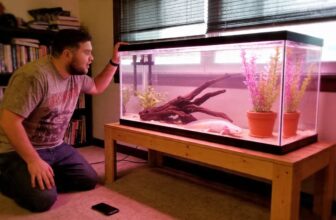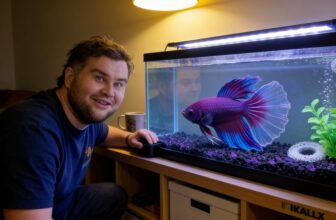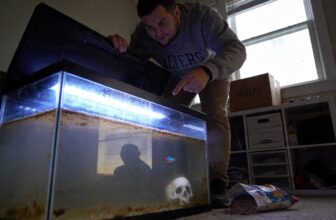
You’ll need a 30‑gallon tank with a tight lid (crayfish are escape artists, not magicians) and soft sand for burrowing.
Keep pH 6.5‑7.5, temp 65‑75°F, and dKH 5‑15 for shell health.
Feed sinking pellets daily, plus protein treats and blanched veggies twice weekly.
Skip convict cichlids unless you want a demolition derby.
Molting is normal—don’t poke the wiggly pile.
Stick with those basics, and there’s more waiting below.
At A Glance
- Minimum 30‑gallon tank with secure lid for escape prevention.
- Maintain pH 6.5-7.5, temperature 65-75°F, and soft sand substrate.
- Feed sinking pellets daily plus blanched vegetables and protein twice weekly.
- Provide multiple caves or PVC pipes for safe molting and hiding.
- Compatible tank mates include Giant Danios, Bristlenose Plecos, and Roseline Sharks.
Is the Electric Blue Crayfish the Right Pet for You?
So, you’re thinking about getting an Electric Blue Crayfish. Honestly? They’re gorgeous but demanding. You’ll need a 30-gallon tank minimum, fully cycled water, and a secure lid—these guys climb. Look for an aquarium cover with strong magnetic hold to prevent your crayfish from escaping through any gaps. To manage the lighting cycle for live plants or a natural day/night rhythm, consider using a digital programmable timer for consistent dawn and dusk phases.
They’re territorial loners; keep just one unless you want a crustacean showdown. Expect to spend around $40, plus gear. They’ll eat your plants and grab slow tankmates.
If you crave a low-maintenance buddy, this ain’t it. But if you’re ready for regular water changes, precise parameters, and a feisty blue bulldozer, you’ve found your people. Bottom line: perfect for devoted aquarists, not beginners.
How to Set Up the Perfect Tank for an Electric Blue Crayfish
You’ve decided an Electric Blue Crayfish is your kind of chaos—good choice. Start with a 30-gallon minimum; bigger’s better for territory. Use soft sand for burrowing—blue substrate makes that cobalt pop. Layer in hiding spots: driftwood, PVC tubes, overturned pots. They’re climbers, so a secure lid’s non-negotiable—trust me, you don’t want a dry crayfish hunt. Ensure a moderate current around 2 inches per second to mimic natural streams for optimal flow. Choosing a stand with a heavy-duty steel frame ensures the tank’s weight is supported safely and prevents wobbling on uneven floors.
A 30-gallon minimum, soft sand, hiding spots, and a secure lid—build their kingdom right.
- Sand substrate for digging
- HOB or canister filter
- Air pump or surface rock for oxygen
- Large décor pieces for molt shelter
- Live plants like Java fern or Anacharis
Bottom line: tank’s their kingdom—build it right, and they’ll thrive without drama.
Why Water Chemistry Is Non-Negotiable for a Healthy Crayfish
Skip the chemistry angst—crayfish are basically feather dusters with attitude, so water quality isn’t just a suggestion, it’s the fine print they’ll hold you to. Get this wrong, and your cobalt buddy’s doomed. You’re aiming for stability, not perfection, but you’ve gotta nail the numbers. Using a water clarifier can help maintain visual clarity, but it does not replace the need for proper chemical filtration and regular water changes.
| Parameter | Target Range | Why It Matters |
|---|---|---|
| pH | 6.5–7.5 | Shifts stress ’em, crash molts |
| Hardness (dH) | 3–10 | Too soft? Shells won’t harden |
| Temp (°F) | 65–75 | Too hot? They cook, literally |
Test weekly, change 25% water every seven days. Ammonia or nitrite above zero? You’re poisoning your pet. Keep it clean, keep ’em thriving. No shortcuts, just smart care. A KH Buffer Supplement can stabilize carbonate hardness and prevent pH crashes that threaten your crayfish’s molting cycle.
Best Substrate, Decor, and Plants for a Safe Crayfish Habitat
What’s the point of perfect water if your crayfish is stressed, bored, or can’t molt safely? You’re building a home, not a cell. Here’s your habitat cheat code:
- Blue sand substrate – Go with black or blue sand (about $10‑15 per bag). It’s soft, lets him dig, and makes that cobalt pop. Avoid gravel—he’ll struggle to burrow.
- Driftwood & PVC caves – Secure hiding spots are non‑negotiable. Use 2‑inch PVC elbows ($3 each) or cholla wood. He needs to vanish during molting.
- Crayfish‑safe plants – Stick with Anacharis, Hornwort, or Java fern ($5‑8 each). They survive his curious claws, but floaters (like Frogbit) are safest if he’s a bulldozer. Water Spangles multiply automatically to create natural shade and reduce algae without any trimming. For a thriving biological filter, consider Aqua Natural Prairie Sand Bio‑Substrate which contains live nitrifying bacteria to instantly cycle your tank and prevent ammonia spikes.
- Secure lid – He’s an escape artist. A mesh lid ($20) stops midnight adventures without blocking air.
- Large, stable rocks – Add flat slate or river rocks ($1‑2 each). He climbs them for heat, and they anchor his molt spots.
Bottom line: Spend $40‑60 on a deep sand bed, tough plants, and plenty of bolted‑down hiding spots. Your crayfish won’t just survive—he’ll thrive, showing off that electric blue in a home he actually owns.
Can You Keep Electric Blue Crayfish With Other Fish?
Why risk turning your tank into a battleground? You can’t just toss any fish in with an Electric Blue Crayfish—it’s a clawed opportunist that grabs whatever moves.
That peaceful community tank you imagined? It’s more like a slow-motion horror flick.
This crayfish views smaller fish as lunch and larger, slower ones as chew toys. Even fast swimmers get ambushed during molting when your cray’s extra hungry. You’re looking at constant stress, shredded fins, and missing tank mates if you choose survivors carefully.
Bottom line: keeping fish together requires specific, tough companions—or you’re just funding a crayfish buffet. For temporary isolation, you can use a quarantine tank built from materials resistant to acid or alkaline conditions. Similar to sensitive Sulawesi shrimp, these crayfish thrive best with stable water parameters and low-stress environments.
Which Tank Mates Can Survive With an Electric Blue Crayfish?
If you’re set on adding tank mates, you’ll need fish that are fast, tough, and preferably too big to fit in a crayfish’s mouth. No slow‑moving, long‑finned fish allowed—your crayfish will snatch them. Your best bet? These five survivors:
- Giant Danios – Lightning‑fast and too big to gulp; they’ll dart away before your crayfish blinks.
- Bristlenose Plecos – Armored with thick scutes, these bottom‑dwellers won’t be grabbed easily; just guarantee they outweigh your crayfish.
- Roseline Sharks – Aggressive and speedy; they hold their own, adding flashy color without becoming dinner.
- Convict Cichlids – Tough, territorial fish that fight back; your crayfish learns quickly to back off.
- Tinfoil Barbs – Large, fast, and tough; they need a 55‑gallon tank but outsize your crayfish’s mouth.
For precise plant rearrangements without tearing stems, consider using extra long aquascaping tweezers to safely position decor around these survivors.
A rimless low‑iron glass tank provides the high transparency needed to clearly observe these fast tank mates.
How to Sex Your Electric Blue Crayfish
Now that you’ve stocked your tank with lightning-fast fish that won’t become dinner, you’re probably wondering who’s who among your crayfish.
Flip them over gently—males have claspers, those little leg-like hooks near their tail, whereas females sport a sperm receptacle, a tiny round opening behind their legs.
Flip them over gently—males have claspers, females a sperm receptacle.
Males rock larger claws and a longer, straighter tail; females curl theirs slightly.
It’s like a lobster beauty contest, honestly.
Don’t stress if you’re unsure at first—practice makes perfect.
You’ve got this, fellow keeper. Ensure your crayfish’s water parameters remain stable, as sudden shifts can cause swim bladder disorder similar to that seen in twig catfish. If you need to repair any cracked decor or equipment in the tank, choose a reef‑safe epoxy putty that cures underwater without harming your crayfish.
How to Breed Electric Blue Crayfish (If You Dare)
Breeding electric blue crayfish is like hosting a very small, very blue wrestling match—it’s doable, but you’ll want a backup plan. You’re basically a crustacean marriage counselor with a net.
- Use a separate breeding tank (20‑gal minimum) to avoid turf wars
- Introduce a male and a female simultaneously, not one after the other
- Watch for the male’s claspers gripping the female’s tail—that’s the go‑ahead
- After mating, remove the male immediately to prevent her from tearing his claws off
- Wait one month for eggs to hatch under her tail, then remove her three days post‑hatch
- Ensure the breeding tank chemistry includes calcium 400‑450 ppm to support healthy exoskeleton formation and egg development.
- Use a controller with high/low temperature alarms to protect developing eggs and fry from sudden tank fluctuations.
Bottom line: expect casualties, keep spare tanks ready, and welcome the chaos.
What to Feed Your Electric Blue Crayfish Daily
Wondering what to toss into your tank that won’t get you a death stare from a tiny blue bulldozer?
Start with sinking pellets or algae wafers—drop one daily, watch it vanish in minutes.
Start with sinking pellets or algae wafers—drop one daily, watch it vanish in minutes.
You’re part of the club that keeps things simple, so stick to a routine: pellets as the base, then rotate frozen treats like bloodworms or brine shrimp twice a week.
Skip the flakes; they float, and your crayfish digs for dinner.
Keep portions small, no leftovers. Using a dual‑sponge filter ensures gentle water flow and excellent biological filtration to keep waste from fouling the water between meals.
That’s it—no fuss, just a happy bulldozer.
For a clean start, choose sterile tissue culture plants like Cryptocoryne Mioya to avoid introducing pests to your tank.
Why Your Crayfish Needs Calcium and Veggies (Even If It Disagrees)
Your crayfish’s survival depends on two things it will probably ignore: calcium and vegetables. Without calcium, molting becomes a death sentence—its new shell won’t harden. Veggies provide crucial fiber and vitamins otherwise missing from a pellet diet. Don’t worry if it turns up its antennae; you know better.
- Blanch zucchini, spinach, or carrots until soft, then drop them in.
- Crush eggshells or add a cuttlebone piece to the tank.
- Offer veggies twice weekly, removing uneaten bits after 24 hours.
- Watch for a healthier, more lively exoskeleton—proof you’re doing it right.
- Stick with it; stubborn eaters eventually come around. You’re in control.
- For vacation care, drop in a slow-release gel block to provide steady nutrition while you’re away.
Using a Microbe‑Lift Aqua Extreme conditioner can help sequester heavy metals from tap water that could harm your crayfish during sensitive molting stages.
How to Balance Protein Treats Without Overfeeding
Since protein is tempting—both for you and your crayfish—but overdoing it turns the tank into a toxic soup. You’re part of the club that wants a healthy, thriving pet, not a murky mess.
Stick to 2–3 protein treats weekly, like bloodworms or brine shrimp. Offer just a pinch, what they can finish in two minutes flat. Remove leftovers immediately, or you’ll spike ammonia fast. Test with ammonia test kits at least twice weekly to catch any spikes early.
Uneaten food? That’s wasted cash, buddy. Keep treats balanced with veggies and pellets, and you’ll avoid bloating and filth.
Your crayfish will stay active, and your water will stay clear—belonging starts with smart choices.
Molting: What to Expect and How to Help
Molting isn’t a mid-life crisis—it’s how your Electric Blue Crayfish grows, replacing its old exoskeleton with a larger one.
- Watch for hiding: Your crayfish will vanish for 1–3 days; don’t panic, it’s prepping. Don’t feed or disturb it.
- Leave the old shell alone: They eat it to reclaim calcium, so let them munch for 2–3 days.
- Check your water: Keep ammonia and nitrite at 0 ppm; a sudden spike can kill your soft, molting buddy.
- Offer a calm cave: Use a PVC pipe or driftwood hideout; they need secure cover to shed safely.
- Provide calcium: Cuttlebone or crushed eggshell ensures they harden properly—no brittle new shell. Maintain stable water parameters to prevent stress during the molting process, as sudden shifts can delay hardening.
Same as Ramshorn Snails, your crayfish needs 5–15 dKH general hardness to support proper exoskeleton formation.
Bottom line: Stay hands-off, test often, and they’ll grow strong.
Common Health Problems in Electric Blue Crayfish and How to Prevent Them
A happy, healthy crayfish is a tank boss that just minds its own business—but one bad water shift can turn things ugly fast.
Ammonia poisoning, your biggest threat, hits when your cycle crashes. You’ll spot listlessness, clamped claws, or twitching.
Another nasty: shell rot, those fuzzy white patches on the exoskeleton. Both scream poor water quality.
Prevention’s simple: test weekly (API Master Kit, $35), keep pH stable between 6.5‑7.5.
Don’t skip that 25% water change.
Crayfish plague? Rare, but wild‑caught specimens carry it. Quarantine new picks for two weeks.
You’re part of a crew that values vigilance—stick to the routine, and your blue champ stays tough.
How to Do Water Changes Right for Your Electric Blue Crayfish
After you’ve nailed the nitrogen cycle and dialed in your pH, water changes are the one chore you can’t phone in—skip them, and your crayfish will let you know by going limp or twitchy. You’re part of the crew that keeps things stable, so let’s get it right.
Water changes aren’t optional—skip them, and your crayfish goes limp or twitchy.
- Use a siphon, not a bucket—scoop out 25% weekly, no more, no less.
- Match temperature exactly; your cray’s a diva about sudden shifts.
- Treat new water with dechlorinator—tap water’s chlorine is a silent killer.
- Vacuum the substrate gently; don’t disturb your molt-hiding buddy.
- Test ammonia and nitrite post-change; aim for zero, always.
- For tanks with electric blue crayfish, choose a self-priming filter to ensure reliable operation after any power outages during water changes.
Models with a silent, spill‑free dual‑valve system allow simultaneous drain and refill, keeping your crayfish calm during the process.
Nail this routine, and your blue buddy stays lively, not stressed. It’s your secret handshake to crayfish success.
Frequently Asked Questions
Do Electric Blue Crayfish Need a Heater?
No, you don’t strictly need a heater for electric blue crayfish. They thrive in 65–75°F, so room temperature usually works.
But if your home dips below 65°F, grab a cheap adjustable heater to keep things stable. Sudden temperature swings stress them out, leading to illness or failed molts.
For around $20, a 50‑watt heater in your 30‑gallon tank is cheap insurance. Stay consistent, and your crayfish will reward you with vivid color and calm molting.
How Long Do Electric Blue Crayfish Typically Live?
You’re looking at about three to five years with proper care—yeah, not a decade-long commitment, but enough time to get attached.
Keep that tank cycled (no ammonia surprises), feed them decent pellets and the occasional blanched zucchini, and they’ll reward you with a decent lifespan.
Skip the heater most days—they’re fine at 70°F.
Just don’t slack on water changes; that’s the real lifespan killer.
Bottom line: give them stable water, and they’ll stick around.
Can I Keep Two Electric Blue Crayfish Together?
You can keep two electric blue crayfish together, but it’s a gamble—these guys are territorial and feisty.
In a 30‑gallon tank with plenty of hiding spots like driftwood or PVC pipes, they might coexist if introduced at the same time.
But aggression spikes when they’re hungry, so feed them daily.
Honestly, one per tank is safer; otherwise, you risk losing a $40 crayfish to a brawl.
Stick with a solo setup for peace of mind.
Why Is My Electric Blue Crayfish Not Moving?
Your crayfish isn’t moving, and that’s a common worry, but let’s check a few things first.
It’s likely molting—they go still for hours or days to shed their exoskeleton, a vulnerable time.
If it’s on its side or back, don’t poke it; just guarantee the water’s perfect, no ammonia spike above 0 ppm.
Stress from bad parameters, like pH swings or high nitrates, can also freeze them up.
A sudden temperature drop below 65°F will slow them cold, too.
Test your water, check the heater, and leave it be—it’s probably just being a drama queen.
Do Electric Blue Crayfish Change Color as They Age?
Yes, they do, but not drastically. Juveniles often start with a duller, grayish-blue hue, deepening into that radiant cobalt you love as they mature.
It’s not a sudden shift—think slow, satisfying glow-up over months. You’ll notice their color intensifying, provided you’re keeping water parameters stable and offering a quality diet.
Don’t expect a chameleon act; just a richer, more striking version of themselves. Keep conditions consistent, and you’re basically parenting a tiny, crusty Picasso.
Rounding Up
So, is the electric blue crayfish worth the effort? Honestly? Yeah, if you’re ready for a small, feisty tank dictator. This isn’t a set‑and‑forget pet; it’s a demanding, gorgeous project.
Here’s the bottom line:
- You’ll spend roughly $100–$150 upfront on a cycled 30‑gallon tank, filter, and heater.
- Expect weekly 25% water changes—no skipping, or you’ll chase ammonia spikes.
- Forget docile tank mates; this clawed comedian will grab anything slow.
- Calcium supplements ($5–$10) are non‑negotiable for successful molts.
Bottom line: commit to the routine, and that cobalt shell stays brilliant. Skip the prep, and you’ll have a dull, stressed crayfish. Your call.