You hold a tiny glass tank, maybe ten gallons, and wonder if it’s enough room for a fish no bigger than your thumbnail. Dwarf pea puffers, called *Carinotetraodon travancoricus*, grow only one inch long, yet they need space to patrol, hide, and hunt like little tigers in slow water. You’ll feel calm watching them investigate dense plants, but frustration comes fast if the water fouls or they nip tank mates. The real puzzle isn’t their size—it’s matching their wild habits to your living room, and that starts with knowing exactly what they eat, how they breed, and why some sources sell sick fish. You’ll want to keep going since one wrong choice, like skipping a water change or picking the wrong neighbor, turns your peaceful project into a quiet disaster you could’ve prevented.
At A Glance
- House a single puffer in at least 10 gallons, adding 5 gallons per additional fish.
- Maintain temperature between 72–82°F with slightly basic pH of 7.0–8.0.
- Feed twice daily with appropriately sized frozen foods like bloodworms or brine shrimp.
- Create dense planted areas with floating plants, driftwood, and moss to reduce aggression.
- Perform daily small water changes and use gentle filtration to keep water pristine.
How Big Do Dwarf Pea Puffers Get?
A tiny fish can surprise you with how much room it needs in your heart.
Your dwarf pea puffer, *Carinotetraodon travancoricus*, grows to about one and a half inches long, nearly four centimeters, smaller than your thumb. You’ll notice this size stays steady, rarely changing, like a pocket watch that keeps perfect time. In tank breeding programs, careful keepers select for health, not size, preserving this small wonder.
Their compact bodies let you craft intricate aquarium décor, tiny castles of driftwood and moss where they traverse every corner. You belong among careful stewards, protecting what is little and precious.
What Tank Size Do Dwarf Pea Puffers Need?
Ten gallons of water is the smallest home your dwarf pea puffer can tolerate, though twenty to thirty gallons let them truly thrive.
Every extra fish needs five more gallons; cramped spaces turn friends into fighters.
Each additional dwarf pea puffer demands five extra gallons of space; without room, peaceful tankmates become territorial combatants.
- Each tank supports ethical‑sourcing by reducing demand for wild-caught survivors.
- Dense plants follow aquascape trends and give shy puffers safe corners.
- Bigger water holds steadier cleanliness, like a calm pond versus a puddle.
- You’re building a community where every inhabitant belongs, not merely survives.
What Water Temperature and pH Do Pea Puffers Need?
Your thermometer and pH test kit are the quiet guardians of your pea puffer’s world, even though you’d rather watch the fish splash than check numbers.
You keep the water between 72°F and 82°F, like how you’d want a cozy sweater in cool weather, not too hot, not too cold.
For pH, you aim for 7.0 to 8.0, which means slightly basic water, like baking soda dissolved in a glass, not lemon-juice sour.
This temperature habitat keeps your little puffer’s body working smoothly, almost like how you feel sleepy when a room gets too warm.
When you nudge the heat toward 79°F or 80°F, you’re sending breeding cues, telling the fish it’s safe to make tiny eggs.
You check weekly, writing numbers in a notebook, because steady water means your puffer trusts its home.
Which Plants and Hardscape Create the Best Pea Puffer Habitat?
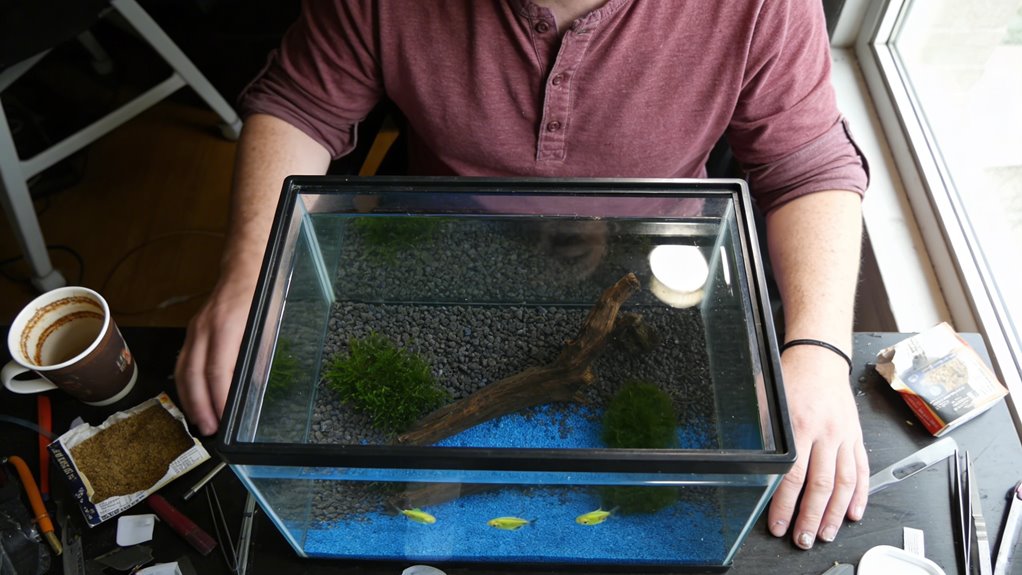
Plants turn a glass box into a neighborhood where your pea puffer feels safe enough to investigate. You create this community with four elements:
A neighborhood blooms from glass and water, leaf by leaf, until your pea puffer dares to explore.
- Live plant canopy — Frogbit, duckweed, or water lettuce cast dappled shadows, like trees shading a playground, so your puffer swims with confidence.
- Driftwood hiding spots — A single piece of spiderwood becomes a fortress where feelings of worry dissolve into curiosity.
- Java moss carpet — This soft bed, spreading eight inches thick, catches tiny foods and muffles bright lights.
- Tall stem clusters — Vallisneria or hornwort break sightlines, letting neighbors live peacefully side by side.
You build belonging, one leaf at a time.
What Should You Feed Dwarf Pea Puffers?
Since their stomachs are tiny—about the size of a single eyeball—you must feed dwarf pea puffers small, fierce meals several times each day.
Think of their mouth as a keyhole, and their food as the right key. Frozen bloodworms, brine shrimp, and daphnia fit perfectly. Pellets and flakes don’t, so you’ll waste money and watch them starve. This matters since their wild cousins, living in India’s Western Ghats, face a “vulnerable” conservation status—that means they’re at risk of disappearing.
Healthy food keeps them strong for breeding, if you choose that path. Well-fed puffers live four to five years, rewarding your care with curious, active days. Your choices protect a species.
How Often Should You Feed Pea Puffers?
A pea puffer’s stomach stays tiny, roughly the size of one of its own eyeballs, so you’ll feed these small hunters twice each day—once in the morning, once in the evening.
This feeding frequency keeps them satisfied without overloading their system.
- Offer only what they consume in two minutes to prevent waste buildup.
- Rotate protein sources—bloodworms, brine shrimp, daphnia—to guarantee diet variety.
- Skip one day weekly; fasting mimics natural patterns and aids digestion.
- Adjust breeding frequency slightly warmer when conditioning pairs for spawning.
You belong to a community that respects these creatures’ limits.
How Do You Prevent Pea Puffer Diseases?
Your test kit sits on the shelf like a quiet promise, since catching illness early means watching your puffer’s behavior every single day.
You perform water changes weekly, removing 25% of old water to keep toxins low and stress lower still. Quarantine protocols protect your whole community—new plants and fish spend two weeks alone, where you can spot trouble before it spreads.
| What You Watch For | What It Means |
|---|---|
| Fins clamped tight | Fear, or early sickness |
| Not eating breakfast | Something hurts inside |
| Rubbing on rocks | Itchy skin, maybe parasites |
| Hiding too long | Loneliness, or pain |
| Floating oddly | Swim bladder trouble |
You belong here, keeping them safe.
Which Fish Make Safe Pea Puffer Tank Mates?
The quarantine tank sits empty now, its heater unplugged, which means you’re ready to choose who lives beside your pea puffer. Your compatibility list matters, friend.
- Habitat design creates sanctuary. Plant thickly, so shy neighbors escape.
- Ethical sourcing protects wild populations; ask your supplier where fish originate.
- Health monitoring means watching for nipped fins, daily.
- Tank setup with Kuhli loaches, Otocinclus, or Ember tetras brings peace.
Skip slow fish. Control aggression through bre breeding barriers—dense moss, sight breaks. Your feeding schedule stays separate, preventing food wars. Together, you build community.
Should You Keep One Pea Puffer or a Group?
Before you fill your cart at the fish store, picture the glass box sitting on your counter, empty and waiting.
You must choose between one pea puffer or a small group, and this choice shapes everything that follows.
Group dynamics demand careful attention.
Tank size determines their happiness: ten gallons for one, plus five more for each friend you add.
Your puffer diet and feeding schedule stay consistent either way—twice daily, protein-rich foods.
Disease prevention through stable water matters more with multiple fish.
Compatible mates include Kuhli loach or Otocinclus if you build community.
Ethical sourcing protects wild populations.
Habitat design needs thick plants for hiding.
Breeding basics can wait; focus first on belonging.
How Do You Breed Dwarf Pea Puffers?
Once you’ve watched your pea puffers settle into their planted home, you might notice something curious happening between two of them.
Watch your pea puffers closely—soon, curious courtship dances may unfold in the java moss.
You’ll see one fish, round with bright eyes, start to follow another, zigging through java moss. That’s courtship. You’re witnessing breeding techniques unfold naturally when conditions feel safe enough.
Breeding happens best when you raise the water temperature to 79-80°F, just slightly warmer than usual. You’ll want a smaller tank ready, about half the size of your main one, with soft sand and thick plant cover. The male fertilizes eggs among leaves, then leaves completely.
- Select a bonded pair through patient observation of mutual interest.
- Prepare a dedicated 5-10 gallon spawning tank with gentle filtration.
- Feed newly hatched fry infusoria before shifting to baby brine shrimp for fry nutrition.
- Maintain pristine water through daily small changes, as fry cannot tolerate waste buildup.
Your puffer community grows through attentive care, connecting you to something larger.
Where Can You Find Ethically Sourced Pea Puffers?
When you’re ready to bring home a dwarf pea puffer, you’ll need to look carefully at where your new fish comes from, since these tiny swimmers carry a heavy story on their backs.
Seek breeders who practice ethical sourcing. These individuals keep careful records, and they’ll tell you exactly which river their fish trace back to.
Ask about legal compliance, too. Responsible sellers follow India’s export rules, protecting vulnerable wild populations.
You’ll feel calmer knowing your puffer’s origin. This care connects you to others who value these little lives.
Choose transparency. You’re building trust, one informed choice at a time.
Frequently Asked Questions
Do Dwarf Pea Puffers Need a Filter?
Yes, you need a filter for your tank tank. The filter keeps water clean, like a river current carries away leaves. You’ll want gentle water flow, around 4-6 times your tank’s volume each hour, since pea puffers come from calm Indian streams. Slow water flow helps them swim easily, feeling safe, not tired. Choose a sponge filter or adjust hang-on-back output low.
Can Pea Puffers Change Color or Pattern?
Yes, your pea puffer can shift its colors and spots. You’ll notice brighter hues when the fish feels safe, and duller tones during stress. This color adaptation isn’t just mood lighting—it signals social hierarchy among tankmates too. Brighter puffers often dominate, whereas faded ones submit. Watch these changes closely; they’re your fish’s way of telling you how it feels, like reading a friend’s face across the room.
How Do You Sex Dwarf Pea Puffers?
You’ll spot male dwarf pea puffers by their deep, golden-yellow bellies and bold racing stripes along their flanks. Females wear lighter, mottled colors with rounder, fuller bodies. Look closely at their eyes—males often sport wrinkly, dark patches behind them. These physical cues, plus their breeding behavior, help you tell them apart. Scientists likewise study genetic markers for certainty, but your careful observation works wonderfully for home aquariums.
Do Pea Puffers Need a Heater in Summer?
Your aquarium thermometer shows the water sits at 76°F, so you don’t need a heater in summer temperature months if your room stays between 72°F and 82°F. You’ll want seasonal lighting—about 8 hours of gentle daylight lamp—to keep your puffer calm, since changing light makes him feel insecure. Check tanks daily with a thermometer, add the heater when mornings drop below 72°F, usually mid-September.
Can Dwarf Pea Puffers Inflate Out of Water?
Your dwarf pea puffer can inflate out of water, but you shouldn’t let it try. This stress response, called puffing, forces water—or air—into a special stomach pouch. Air inflation damages their organs, so you feel concern when you see it. In their habitat adaptation, they puff with hab water for predator avoidance. Keep them submerged, and you’ll protect their small, three-centimeter bodies from harm.
Rounding Up
You hold a tiny fish in your hands now, a creature no bigger than a grape, and you see how much care it needs. A ten-gallon tank, soft plants like Java moss, bloodworms twice daily—these small acts build trust between you and your puffer. Keep the water steady, the group peaceful, and your patience steady too. When you meet these needs, you will feel proud, calm, and connected to something delicate that thrives since of you.