You hold a living gemstone that took generations of careful breeding to perfect, and its survival depends entirely on the choices you make today.
Keep your Crystal Red Shrimp in at least 5 gallons of water, though 10 gallons gives them more room to graze and grow.
Maintain the temperature between 72°F and 76°F, and raise it to 78°F when you want them to breed.
Test your water twice weekly, keeping ammonia below 0.25 ppm so their delicate gills don’t burn.
Feed them tiny pinches once daily at dawn, rotating between algae wafers, blanched vegetables, and powdered fry food for the babies.
With gentle sponge filtration and patient attention to these details, you’ll soon uncover what separates thriving colonies from costly disappointments.
At A Glance
- Maintain 62–78 °F water temperature, with 72–76 °F optimal for health and 78 °F to trigger breeding.
- Keep pH 5.8–7.4, kH 0–4 °dH, and gH 4–6 °dH for proper molting and shell development.
- Use sponge filtration and 5–10 gallon tanks with hiding plants to reduce stress and protect fry.
- Feed daily small portions of algae, biofilm, powdered fry food; remove uneaten food to prevent ammonia spikes.
- Raise stable 78 °F temperature for breeding, avoid disturbing egg-carrying females, and expect fry in 30 days.
Why Crystal Red Shrimp Are the “Crowning Jewel”
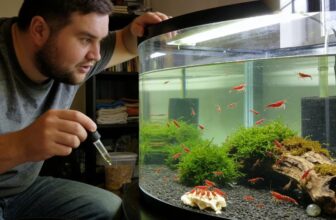
When you first spot a Crystal Red shrimp in a pet store tank, you’ll notice how your breath catches just a little, like finding a tiny ruby hidden in gravel. These dwarf shrimp, born from a single mutation in black Bee shrimp, carry rare color genetics that create their striking red-and-white stripes. Their pristine, high-contrast appearance rivals the visual impact of premium betta displays with etched glass and aluminum trim, creating an instant focal point in any aquascape. Breeders carefully select pairs to strengthen these patterns, producing grades from mostly red Grade C to pristine Grade SSS. High market demand follows this scarcity, making each shrimp a living investment. You’ll pay more than for common Cherry shrimp, yet you’re purchasing years of careful cultivation compressed into one inch of perfection.
Crystal Red Shrimp Lifespan: What Shortens Their Lives
How long can you expect these tiny creatures to stay with you?
Crystal Red shrimp typically live about eighteen months, though your care choices reshape that timeline.
You can’t buy extra years, but you prevent early loss.
Watch for these dangers:
- Ammonia spikes burn your shrimp’s gills, causing silent suffering.
- Unstable temperatures above seventy-eight degrees Fahrenheit accelerate aging.
- Poor genetic lines, common in budget specimens, carry hidden weaknesses beneath flashy grading standards.
- Stress from cramped quarters invites disease.
You provide stability, and they reward you with gentle presence, stripe by stripe.
Because ammonia becomes unsafe above 0.25 ppm in freshwater environments, testing your water at least twice weekly with reliable strips or liquid reagent kits helps prevent the silent gill damage that shortens their lives.
Crystal Red Shrimp Tank Size and Setup: Minimum Specs
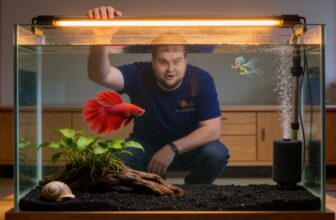
A small glass box sits on your counter, waiting. You’ll need five gallons minimum, ten gallons preferred, since small spaces feel crowded fast, and crowded shrimp grow stressed.
Sponge filtration cleans your water gently—think of it as a soft brush, not a vacuum, keeping tiny babies safe from suction. That’s what nutrient filtration means: light cleaning that feeds your plants as filtering waste.
Lighting aesthetics matter too. A warm LED lamp, about eight to ten hours daily, makes their red stripes glow like candy against dark sand, and plants grow thick hideaways. You’re building a home, not just a tank.
For enhanced water clarity and overflow management, some advanced setups incorporate acrylic disk silencers to reduce turbulence and protect delicate shrimp from harmful micro-bubbles.
Crystal Red Shrimp Temperature: Comfort Zone and Breeding Trigger
Your heater clicks on in the dark, and you don’t see it working, but the shrimp feel every half-degree shift. Crystal Red Shrimp need steady warmth, like a cozy blanket that never bunches or slides off. The comfort zone sits between 62°F and 78°F, though you’ll want to aim higher for happy, busy shrimp. When you push toward 78°F, something wonderful happens: the females start carrying eggs. That’s your breeding trigger, and it matters since color genetics determine how stunning your babies look, and strong color genetics meet market demand from collectors who pay well for gorgeous shrimp. Since these shrimp prefer soft water, many keepers also provide calcium-magnesium rocks to ensure proper mineral availability for molting and shell development.
Crystal Red Shrimp feel every half-degree shift—steady warmth between 72-78°F keeps them vibrant and triggers breeding when you hit that upper mark.
Here’s what you need to watch:
- Keep it stable: Swingy temperatures stress shrimp badly, like sudden weather changes give you headaches.
- Aim 72-76°F daily: This keeps them comfortable, active, and showing their best red-and-white stripes.
- Hit 78°F to breed: Warmer water tells female bodies it’s safe to reproduce.
- Track with a reliable thermometer: Cheap ones lie; spend ten dollars, sleep better.
Crystal Red Shrimp pH and Hardness: Exact Parameters
As your thermometer keeps the heat steady, your test strips whisper a different story about the water itself.
| Parameter | Target Range | Why It Matters |
|---|---|---|
| pH level | 5.8 – 7.4 | Controls how shrimp breathe and grow their shells |
| Carbonate hardness (kH) | 0 – 4 degrees | Keeps pH from bouncing like a loose trampoline |
| General hardness (gH) | 4 – 6 degrees | Builds strong bodies through minerals |
You’ll stress about these numbers since hard genetics in these shrimp means they cannot adapt.
Market demand rewards perfect color, and perfect color demands perfect water.
Test weekly.
Adjust slowly.
Your patience protects your investment.
Consider using non‑bleeding strips to keep your fingers clean and ensure crisp color matching for accurate readings every time.
Crystal Red Shrimp Filtration: Why Sponge Filters Protect Adults and Babies
The sponge filter sits in your tank like a quiet bodyguard, its foam walls full of tiny holes too small for baby shrimp to slip through.
You need gentle water movement, not strong currents that exhaust these tiny creatures. The sponge filter gives you exactly that.
- Mechanical safety: The foam blocks stop adults and babies from getting sucked into dangerous machinery.
- Biological home: Your filter media grows helpful bacteria that clean the water.
- Gentle bubbles: The rising air provides larval aeration, bringing oxygen to even the smallest swimmers.
- Easy cleaning: You squeeze the sponge in old tank water, keeping good bacteria alive.
You protect your whole colony with one simple choice. For crystal red shrimp keepers with larger setups, three-stage filtration systems combining sponge protection with bio-ball biological media and activated carbon can maintain pristine parameters across 10-gallon to 180-gallon colonies.
Crystal Red Shrimp Aquascaping: Plants, Substrate, and Stress-Reducing Hides
A crystal red shrimp feels safest when it can vanish into moss, duck under a leaf, or press its belly against fine, dark sand.
You’ll want a plant substrate, something soft and dark, maybe black aquasoil, one to two inches deep. It anchors roots, and shrimp pick across it all day, grazing on algae that coats every stone.
Tuck in java moss, bucephalandra, and cholla wood. These are hides, like pillows in a blanket fort. Each shrimp needs its own space to molt, to rest, to feel unseen. Crowd the tank gently, and they’ll reward you with bright, calm color.
For added security, consider a static-cling background that hides equipment and creates a darker, more enclosed environment that reduces stress from outside movement.
What Do Crystal Red Shrimp Eat: Daily Diet and Feeding Schedule
Once your shrimp have moss to graze and sand to pick through, you’ll notice them busy at work, tiny mouths scrubbing every surface.
You’ll feed them once daily, a tiny pinch they finish in two to three hours.
Feeding timing matters—young shrimp need food when they’re most active, usually dawn.
Good nutrition strengthens color genetics, helping those red and white stripes stay vivid.
You’ll rotate these foods:
- Commercial shrimp pellets, crushed fine for babies
- Blanched zucchini or spinach, soft enough to tear
- Algae wafers, broken into crumb-sized pieces
- Powdered fry food, for newly hatched shrimplets
Remove leftovers quickly so ammonia stays low.
For isolating berried females or protecting newly hatched shrimplets, many breeders use a transparent acrylic box with mesh walls that maintains water flow while keeping babies safe and oxygenated.
Crystal Red Shrimp Diseases: Early Symptoms and Safe Treatments
Since your shrimp can’t tell you when something hurts, you’ve got to watch their bodies like a book you’re learning to read.
Watch their bodies like a book you’re learning to read.
A bacterial blot shows up as dark, spreading patches on their shell, like ink bleeding into wet paper. You’ll feel worry when you spot it, but keep steady. Caught early, you can act.
Copper free treatment protects these little ones, since copper—even tiny traces—poisons them quietly. Use shrimp-safe antibacterial formulas, following doses exactly: 1 milliliter per 10 gallons, repeated every 48 hours for 7 days.
Watch their swimmerets. When they fan strongly again, you’ll know healing came.
A gentle bubble flow sponge filter prevents additional stress during recovery by minimizing water disturbance and protecting delicate swimmeret movement.
Crystal Red Shrimp Breeding: Temperature Triggers and Egg Care
If you’ve kept your water clean and your shrimp calm, you’ll soon notice something special. Females carrying eggs appear, their swimmerets fanning tiny green spheres beneath curved abdomens.
Raising temperature to 78°F triggers breeding hormones, mimicking warm spring streams where life quickens. This thermal cue awakens reproductive cycles without shocking their systems.
Strong genetics matter greatly here, since superior patterns command higher market demand from collectors seeking Grade SSS specimens.
Egg care demands patience and stillness:
- Maintain stable 78°F throughout 30-day incubation.
- Shield females from sudden vibrations or light changes.
- Verify sponge filters protect delicate fans from suction.
- Leave mothers undisturbed; stress causes egg-dropping.
Just as temperature-triggered feeding optimizes nutrient intake for pond fish during active seasons, maintaining warm water temperatures for Crystal Red Shrimp ensures their reproductive systems remain fully activated during the entire breeding cycle.
Crystal Red Shrimp Juvenile Care: Powdered Foods and Survival Strategies
Powdered Foods and Survival Strategies
Thirty days pass, and the green spheres beneath a mother’s tail vanish into shadowy corners of the tank.
You spot them now, specks no larger than a sesame seed, clinging to moss like drifting snow.
Feed these babies powdered food, ground finer than dust.
Their mouths can’t grip pellets yet.
Sprinkle lightly, twice daily, so nothing rots.
You feel worry, watching numbers shrink.
This happens.
Strong genetic lineage helps some survive, whilst weaker cousins fade.
Market demand pushes breeders to raise more, but nature keeps her own ledger.
They’ll grow, four to five weeks, if you’re patient, if water stays clean.
Safe Tank Mates for Crystal Red Shrimp Colonies
Look at the glass box on your desk, and you’ll face a quiet puzzle.
You’ll want friends for your shrimp, but you must choose carefully.
A compatible aquarium keeps everyone calm and safe.
- Amano shrimp – They’re bigger, peaceful, and excellent at algae control.
- Nerite snails – These slow movers clean glass without bothering anyone.
- Small tetras – Choose gentle species like embers that won’t nip fins or hunt babies.
- Otocinclus catfish – Tiny algae eaters that stay busy on plant leaves.
You’ll feel relief watching a community thrive without fear.
Avoid fish with big mouths or hunting instincts.
Your colony’s safety matters more than variety.
Trust your observations, and you’ll find balance.
Crystal Red Shrimp and Cherry Shrimp: Hybrid Results
Hybrid Offspring and What to Expect
You might wonder what happens when red-and-white jewels meet their cherry-colored cousins in the same tank.
Well, you’ll get babies, but don’t expect aquarium glory. When Crystal Reds (*Caridina cantonensis*) and Cherry shrimp (*Neocaridina davidi*) share water, hybrid genetics take over. The offspring inherit mixed traits, and color inheritance becomes messy.
You’ll see muddy browns, dull grays, or patchy patterns nobody grades highly. The elegant stripes and snow-white shells you carefully cultivated? They vanish in one generation. Hybrid vigor, meaning stronger health, might appear, but visual appeal suffers.
If you’re breeding for profit or showing, you’ll feel mild frustration watching your lines blur.
Crystal Red Shrimp Troubleshooting: Common Failure Points
Tangible Test Kits and Hidden Water Truths
Every section starts with something you can touch: your test kit, dripping with reagents, colors shifting to reveal secrets.
Your test kit drips truth: colors shift, secrets surface in waters you thought you knew.
You bred for beauty, but water genetics betray you when parameters swing. Your shrimp perish, leaving you confused and sad, wondering where trust went wrong.
Market demand pushes rushed breeding, weakening lines you now struggle to keep alive. You’ve felt that quiet disappointment, finding shells in morning light.
Four failures haunt most keepers:
- Ammonia spikes above 0.25 ppm poison silently
- Inbreeding depression from unchecked lineages
- Temperature swings wider than 4°F daily
- Copper medications, lethal at 0.01 ppm concentrations
Frequently Asked Questions
Do Crystal Red Shrimp Need Drip Acclimation?
Yes, you’ll need drip acclimation for these sensitive shrimp. They’re fragile creatures, and you can’t skip this step. Combine it with proper water cycling before introducing them, or you’ll risk shocking their systems and losing your investment.
How Many Can I Keep per Gallon?
You can keep roughly five to ten Crystal Red Shrimp per gallon, though you’ll want to evaluate shrimp density carefully based on your tank capacity and filtration strength.
Should I Use RO Water or Tap Water?
You’ll need RO water and remineralize it yourself, as tap water rarely matches their strict water hardness and pH balance requirements. Most municipal supplies contain minerals and pH levels that’ll stress or kill these sensitive shrimp.
Why Are My Shrimp Losing Color?
Your shrimp’re losing color since color genetics limit their vibrancy, and diet stress from poor nutrition or unstable water worsens fading. You’ll improve their reds by feeding high-quality food and maintaining pristine parameters.
How Do I Remove a Molt Without Stressing Them?
You’ll use tongs or a siphon to gently lift the molt during a water change when shrimp graze elsewhere, ensuring stress minimization through indirect handling and stresselt reduction by avoiding sudden movements near the colony.
Rounding Up
Your Crystal Red shrimp need steady hands and watchful eyes, but you’ve got both. Start small, mind your water numbers, and move slowly. These little gems will reward your patience with babies, beauty, and quiet wonder. That’s the whole game, friend—keep it simple, keep it stable, keep going.