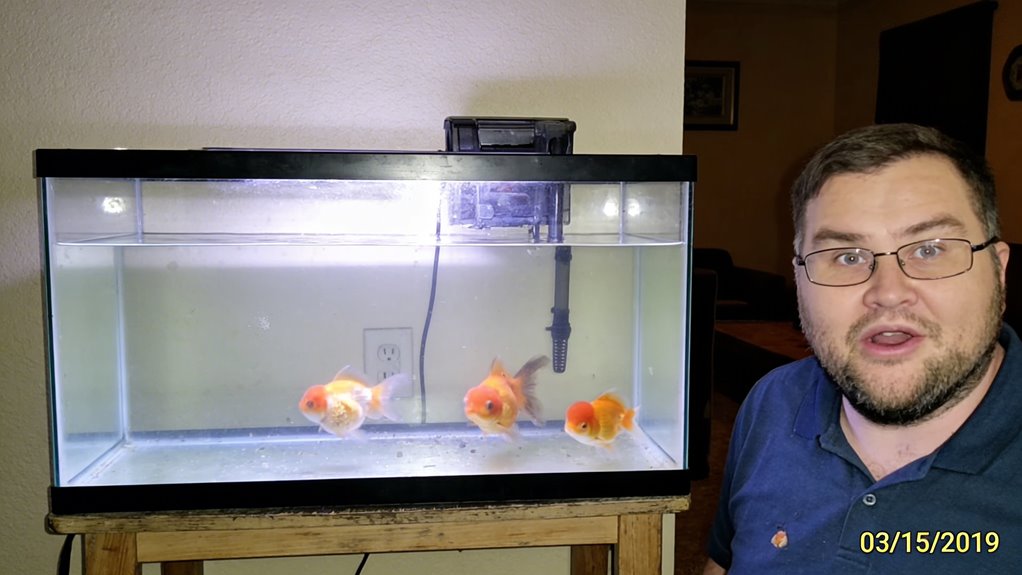
A ten-gallon water tank holds one Bubble Eye Goldfish, no more. The fish’s eye sacs, delicate as water balloons, need gentle flow and foam-wrapped filters to stay safe. Care feels patient and careful, like walking a sleepy dog on a short leash. Owners learn that small mistakes hurt these fish quickly, but small kindnesses help them thrive for years. The real secrets start with understanding why they’re so fragile.
At A Glance
- Provide at least 10 gallons per fish with smooth décor and calm water flow.
- Maintain 65–80 °F temperature, gentle filtration with foam-covered intakes.
- Feed sinking pellets at 4 PM, fast 10–12 hours nightly for digestion.
- Treat popped sacs with 1 tsp salt per gallon in a 10-gallon hospital tank.
- Fast 48 hours, then feed skinned peas to relieve buoyancy failure symptoms.
Why Bubble Eye Goldfish Need Specialized Care
The water-colored bubbles beneath a Bubble Eye Goldfish’s eyes look like tiny glass marbles, but they’re actually thin sacs filled with fluid, not air.
These delicate sacs developed through eye sac genetics beginning in early 1900s China, part of bubble eye history tracing back when breeders crossed Prussian Carp to create living art. As they lack dorsal fins, these fish swim poorly, wobbling like a child learning to ride a bicycle. Their gentle nature means they can’t compete for food with faster tank mates. You’ll need soft décor, smooth gravel, and protected filters. Their fragility isn’t a flaw—it’s simply who they are, requiring patient keepers who understand belonging means accepting vulnerability.
Bubble Eye Goldfish Tank Size and Setup
Since a single Bubble Eye Goldfish needs room to wobble without bumping into walls, you’ll want to start with at least ten gallons of water, though twenty gallons works better for one fish to swim comfortably. Add ten more gallons for each friend you bring home, since nobody likes feeling crowded.
Your decor tank design must protect those delicate bubbles. Sharp edges pop sacs like balloons, so choose smooth stones and silk plants instead.
- Use rounded gravel, no bigger than a pea, to prevent scrapes
- Anchor silk plants with smooth river rocks
- Skip castle towers with pointy turrets entirely
- Leave open swimming lanes wide as a dinner plate
- Check décor weekly for algae‑rough surfaces
Filtration maintenance matters deeply here. Cover intake tubes with foam guards, or eye sacs get sucked in and tear. Clean filters gently every two weeks, preserving good bacteria as removing gunk. A calm, safe home builds trust between you and your wobbly companion.
Water Parameters and Filtration for Bubble Eyes
Water flows through a fish’s life like air flows through yours, so keeping it clean matters tremendously.
A Bubble Eye needs water between 65 and 80 degrees, with a pH of 6.0 to 8.0 and hardness at 5 to 19 dKH—these numbers feel like home when they’re steady.
Water flow must stay gentle, like a slow creek, since strong currents push these fragile swimmers around and risk those delicate bubbles.
Filter media, the spongy material inside filters, needs weekly rinsing in old tank water, never tap, to keep good bacteria alive as scrubbing out waste.
Clean water means belonging together longer.
Preventing Eye Sac Damage and Injuries
Since those fluid‑filled sacs sway like tiny water balloons with every turn, protecting them becomes the keeper’s quiet daily work.
Eye sac genetics have shaped these fish for beauty, not durability, so every choice matters.
- Use foam‑covered filter intakes, so suction won’t pull at delicate bubbles
- Select smooth, medium‑sized gravel without sharp edges
- Choose silk plants or Anacharis over plastic décor with rough seams
- House Bubble Eyes only with gentle, slow‑moving companions
- Maintain calm water flow, reducing stress and restless swimming
Bubble eye psychology leans toward shy, tentative movement. A peaceful tank lets them investigate without fear, building trust between keeper and fish through daily, quiet attention.
What to Do If Your Bubble Eye’s Sac Pops?
How does a keeper help when a water balloon bursts?
They act fast, stay calm, and remember they belong to a community that shares knowledge.
Immediate sac pop remedies demand clean water, first. The keeper transfers the fish to a hospital tank, 10 gallons, temperature matched within 2 degrees. They add aquarium salt, one tablespoon per five gallons, to fight infection where the thin membrane tore. No rough gravel, no sharp edges, no sharp-finned tank mates nipping the wound.
Clean water first. Temperature matched. Salt to heal the tear. No sharp edges, no nipping fins. Just space, patience, and care.
Healing protocols follow patience, not panic. The keeper tests ammonia daily, keeps it at zero, performs 25% water changes twice weekly. They feed high-protein foods, bloodworms or daphnia, to rebuild tissue.
The sac may refill partially, or it may not. Asymmetry feels unfair, but the fish adapts, swims differently, keeps living. The keeper learns that imperfection belongs in every tank, every home.
They document the recovery, share photos online, invite others to say, “I have seen this too.”
Best Foods for Bubble Eye Goldfish
A small jar of flakes sits on the counter, humble and ordinary, yet it holds the key to twelve years of swimming.
Nutrition shapes eye color vibrancy and delivers lifespan tips straight to your tank. Members of this community know quality matters.
- High-quality flakes provide daily vitamins
- Sinking pellets prevent surface gulping
- Bloodworms boost protein twice weekly
- Blanched peas aid gentle digestion
- Daphnia offer natural hunting behavior
Serve small portions, watching each bite disappear. Patience rewards you with bright, healthy companions who float beside you for years, their strange beauty a shared secret among keepers who understand.
Daily Feeding Schedule and Portions
The jar closes with a soft click, and now the real work begins.
| Feeding Timing | Nutrient Balance |
|---|---|
| Morning, 7 AM | 40% protein, 40% carbs, 20% fiber |
| Midday, 12 PM | vegetable or fruit supplement |
| Afternoon, 4 PM | sinking pellets for eye safety |
| Evening, 7 PM | live food twice weekly |
| Night, none | fast 10–12 hours for digestion |
Bubble Eye Goldfish thrive when keepers honor routine, and feeding timing builds trust between fish and caregiver. Small portions—what they’ll finish in two minutes—prevent waste and swim bladder trouble. You’ll feel proud watching them gather, knowing you’ve struck true nutrient balance. They’re counting on you.
Safe Tank Mates for Slow, Delicate Goldfish
Since your Bubble Eye Goldfish drifts through the water like a small, living lantern, you must choose friends who won’t bump its precious bubbles or outrace it to food.
Choose gentle companions who won’t bump delicate bubbles or steal the feast from this drifting lantern.
A compatible bubble mate shares your fish’s gentle pace, its quiet way of moving through the day.
Consider these peaceful companions:
- Other Bubble Eye Goldfish, who understand the same slow movement
- Telescope Goldfish, with their own clouded eyes and careful swimming
- Celestial Goldfish, looking upward together in shared wonder
- Black Moors, dark and unhurried as midnight pudding
- Mystery snails, who clean as your fish rests
Tank decor must stay smooth, with no sharp edges where bubbles might tear. Place silk plants and rounded stones, creating cozy corners where every slow swimmer feels they belong.
Common Bubble Eye Goldfish Diseases
Since water holds every secret a fish carries, poor conditions reveal themselves first in fragile places.
Eye sac inflammation troubles these fish when ammonia climbs, turning delicate bubbles red and swollen.
This hurts, like skinned knees, and the fish rubs against smooth gravel seeking relief.
Sac bacterial infection follows untreated inflammation, filling bubbles with cloudy fluid that won’t drain on its own.
It spreads fast, like playground gossip, so watch for torn sacs that invite germs through open wounds.
Clean water prevents both ailments, measured weekly with test kits, changed by cupfuls to protect the wounded.
Patience heals what rushing breaks.
Emergency Symptoms and Treatments
A single bubble, once plump as a grape, now hangs deflated like a popped balloon, and the fish drifts sideways near the tank’s corner, unable to rise.
These guardians know panic, but they still know action.
- Popped sacs: Add 1 tsp aquarium salt per gallon, reduce flow, let fluid sacs heal over 7-14 days
- Buoyancy failure: Fast 48 hours, then feed skinned pea to clear blockage
- Clamped fins: Test ammonia instantly; 0.25 ppm demands 50% water change
- Lethargy at 78°F: Quarantine, observe for ich spots resembling salt grains
- Unequal bubbles: Accept asymmetry; bubble eye genetics vary by breeder lines
Market demand pressures quick sales, yet patience preserves these fragile companions.
Breeding Bubble Eye Goldfish Successfully
Breeding bubble eye goldfish starts with a simple tank heater, the kind you’d use to warm a bedroom, turned slowly upward like a dial on a old radio.
Raising the temperature three degrees each day, from sixty toward seventy-two degrees Fahrenheit, triggers the fish’s bodies to prepare for spawning.
Gradual warmth coaxes bubble eye goldfish toward spawning, three degrees at a time, until their bodies awaken to spring’s promise.
Breeding season timing matters deeply, as these fish respond to warmth like gardeners respond to spring.
Males chase females through the water, nudging, urging, until eggs spill onto plants.
Bubble eye genetics pass to tiny fry, though their famous sacs won’t appear until six months have passed.
Frequently Asked Questions
Do Bubble Eye Goldfish Recognize Their Owners?
Bubble Eye Goldfish do recognize their owners through consistent owner interaction. Their memory retention allows them to associate a person’s shape, footsteps, or feeding times with food and safety. They’ll swim toward the glass when their caregiver approaches, displaying calm curiosity. This recognition develops over weeks of regular contact. The fish feels secure, not frightened, when familiar patterns repeat. Connection grows slowly, like trust between neighbors.
Can Bubble Eye Goldfish See Color?
Yes, bubble eye goldfish see color. They possess color vision through cone cells in their eyes, though their eye sacs reduce visual acuity slightly. Their color perception helps them spot food and recognize tank mates, bringing gentle curiosity to their slow, drifting movements. Keep their water clean, their companions peaceful, and they’ll reward your patience with quiet, trusting presence.
Why Do My Bubble Eye’s Bubbles Change Size?
The sacs on a bubble eye’s face, they’re filled with fluid, not air, and they shift. They change size since they’re delicate—sometimes they refill after a bump, sometimes they don’t. Water temperature matters, colder slows everything, warmer speeds healing. Good bubble eye nutrition helps, strong fish repair better. Uneven bubbles feel disappointing, it’s okay, they’re still your fish, they adapt, they keep swimming.
Is It Normal for Bubbles to Smell Funny?
A strong, strange bubble odor isn’t normal, and it signals trouble. The sacs contain fluid, not air, so they shouldn’t smell like much at all. Funky smells usually mean bacteria or infection has entered a damaged sac, or water chemistry has slipped into dangerous territory. They’ll want to test ammonia and nitrite levels immediately, change 25% of the water, and consult a vet if the smell persists or the fish seems uncomfortable.
Can Bubble Eyes Live in Outdoor Ponds?
Bubble Eye Goldfish can live in outdoor ponds, but they’re fragile swimmers with delicate eye sacs that need protection. Pond placement requires thoughtful seasonal care, since temperature swings stress their bodies. Predation risks from birds or raccoons demand covered spaces or deeper areas. Water temperature must stay between 65–80°F, so monitoring’s crucial through spring and fall. Filtration methods need gentle flow, since strong currents exhaust them. Plant compatibility matters too—soft plants like Anacharis give hiding spots without tearing sacs. Pond depth should reach at least 18 inches, keeping them cool when summer heats up. Feeding schedule stays similar to tanks: small amounts, two to four times daily. Disease prevention means weekly water checks, since outdoor conditions change fast. Lighting needs aren’t strict, though some shade prevents overheating. They’ll need a calm, safe home to thrive.
Rounding Up
A ten-gallon tank, smooth stones, and gentle water flow protect these fragile fish.
Balance brings peace: stable warmth, soft water, and careful feeding grow trust between keeper and creature.
When sacs tear, quiet healing follows salt and patience.
Choose slow friends, watch for sickness early, and breed with gentle hands.
Small choices ripple outward—clarity, kindness, and steady care reward both goldfish and guardian.