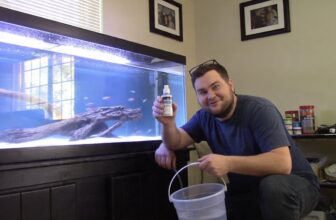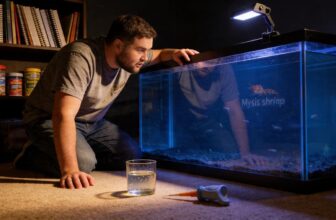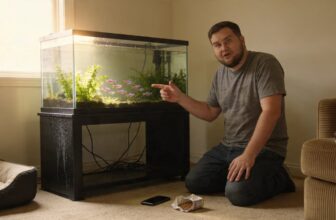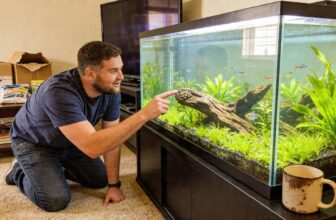
You need a 30-gallon tank minimum for six blue green chromis, kept at 75–78°F with pH 8.1–8.4 and salinity 1.023–1.025.
Give them gentle water flow, live rock caves, and 150–250 PAR lighting with sunrise-sunset timers.
Feed small flakes, spirulina, and frozen Mysis shrimp 2–3 times daily, removing uneaten food within five minutes.
Test water weekly, quarantine new fish 30 days, and expect five to eight years of shimmering, peaceful schooling behavior when these basics are met.
The deeper you go into their world, the more their quiet reef rhythms will reveal themselves.
At A Glance
- House six or more Chromis in a minimum 30‑gallon tank to encourage natural schooling and reduce stress.
- Maintain water at 75–78 °F, pH 8.1–8.4, salinity 1.023–1.025, and 8–12 dKH alkalinity for reef‑like conditions.
- Feed small, varied meals two to three times daily using spirulina‑enriched flakes and frozen Mysis shrimp.
- Provide live rock caves, branching Acropora, and open swimming lanes with 150–250 PAR lighting for security and health.
- Quarantine new fish in a 10‑gallon tank for 30 days, treating with copper at 0.15–0.20 ppm if disease appears.
Blue Green Chromis Behavior and Schooling Requirements
A small school of Blue Green Chromis moves through your tank like a handful of living jewels caught in a current, and you’ll notice right away how their bodies flash between blue and green as they turn.
You’ll want at least six fish, odd numbers work best, since their fish personality shines when they’re not alone. Watch their stress indicators carefully—pale color or hiding means trouble.
Your lighting design, aquascape aesthetics, and color tank choices affect how boldly they shimmer. Their community dynamics stay peaceful with room to swim. Breeding genetics, feeding frequency, tank cycling, and water chemistry all click together, keeping them darting happily through your water.
Given their tendency to dart toward the surface when startled, installing a magnetic aquarium cover net prevents potential jumping accidents while still allowing proper ventilation and light penetration for your reef setup.
Minimum Tank Size for Blue Green Chromis Schools
A small group of Blue Green Chromis needs at least **30 gallons**, though bigger tanks let you build a true school that feels safe and moves as one living thing.
Your filtration must handle extra waste from active swimmers, so choose strong mechanical and biological systems.
Reef lighting matters too—it turns their scales into living sapphires and supports the corals they dart between for comfort.
Think of it like running room at recess. Crowding creates stress; space invites play.
Give them horizontal swimming lanes, and you’ll see peace.
For maintaining ideal water parameters in these active schooling tanks, regular testing with 8‑in‑1 water test kits helps you monitor ammonia, nitrite, and nitrate levels that can spike quickly from increased fish waste.
Blue Green Chromis Water Parameters and Testing
When you slide the test kit across your kitchen table, you’re holding the quiet heartbeat of your tank in your hands.
You check temperature first: 75–78°F feels right, like a warm bath.
You dip strips for pH, watching for 8.1–8.4, the slightly basic water these fish remember from wild reefs.
Water hardness testing comes next—8–12 dKH keeps their scales and bones strong, just like calcium builds your own teeth.
You’ll mark a colorination schedule on your calendar, testing weekly, since steady numbers mean steady fish.
In smaller systems like a 5‑gallon tank, parameter shifts occur faster, demanding more vigilant observation.
They trust you to notice changes before they feel stressed.
Filtration and Flow for Constant Swimmers
Since Blue Green Chromis never stop moving, your filter works harder than you might expect. These little swimmers create waste constantly, so you’ll need strong filtration—think protein skimmers, canister filters, or sumps rated for twice your tank volume. Aquarium lighting runs alongside this, and you may notice CO₂ management shifts slightly with robust water movement. You want moderate flow, not a hurricane, so they can dart gracefully without exhaustion. A self-priming filter automatically resumes operation after power outages, ensuring continuous filtration for these active fish.
| Flow Element | Your Target |
|---|---|
| Filtration rate | 10× tank hourly |
| Flow pattern | Gentle, variable |
| CO₂/air mixing | Moderate surface agitation |
Check your gear weekly, and they’ll thrive.
Live Rock, Coral, and Shelter Design
Where do your Blue Green Chromis dart when the lights dim?
When dusk falls, Blue Green Chromis vanish into caves and coral branches, seeking shelter in the shadows.
They seek cover in live rock caves and coral branches you’ve placed thoughtfully throughout the tank.
Aquarium lighting matters here. You’ll want moderate intensity, about 150-250 PAR, mimicking their Indo-Pacific reef homes. Too bright stresses them; too dim dulls their color. A refugium light with programmable sunrise/sunset cycles can help maintain natural photoperiods that reduce stress.
For substrate selection, choose fine aragonite sand, two to three inches deep. It anchors your rockwork securely and completes the natural environment they’ll patrol near dawn and dusk.
Your Chromis feel safest with multiple escape routes. Layer branching Acropora and porous rock formations mid-tank, leaving open swimming lanes above.
Compatible Tank Mates and Predators to Avoid
Your Blue Green Chromis swim with confidence when they trust their neighbors, so you’ll want to choose peaceful companions that share their gentle spirit.
Good tank mates include clownfish, butterflyfish, royal gramma, bicolor blenny, and yellow watchman goby—fish of similar size who won’t bully or outcompete them. Your Chromis need aquatin lighting that mimics gentle reef sunrises, helping all species know when to rest and when to play. Reef compatibility matters, since these fish thrive among living coral where hiding spots create neighborhoods of safety. Their 3‑inch bodies fit easily between branches without damaging delicate structures.
When selecting lighting for a mixed community, consider systems with full-spectrum LEDs that support both fish coloration and photosynthetic coral health. Avoid large predators like groupers, lionfish, moray eels, and aggressive triggers—these hunters see your Chromis as snacks, not neighbors. You’ve chosen peaceful fish, so honor that trust by keeping danger away. A calm community means brighter colors, bolder swimming, and fish who feel truly at home.
Diet and Feeding Schedule for Color and Health
What do Blue Green Chromis eat when the morning light first touches your tank?
You’ll offer them flakes or pellets, small bits drifting like plankton they know from wild reefs. Your nutrition timing matters—you’ll feed small portions two to three times daily, not one heavy meal, so their small stomachs process food completely.
Small bites drifting through light, like home—feed often, not much, so they thrive.
You’ll add color enhancing foods, like spirulina-enriched flakes or frozen Mysis shrimp, which bring out their blue-green shine. It’s like vitamins making your own skin healthy.
You’ll watch them dart, catch, swallow, quiet satisfaction filling your chest. You’ll remove uneaten food within five minutes, keeping water clean, keeping them well.
Just as root-feeding plants need targeted nutrition through substrate tablets for optimal growth, your Chromis benefit from varied, precisely delivered meals that match their natural feeding patterns.
Common Diseases in Blue Green Chromis: Crypt and Velvet
The glass wall of your aquarium can become a window into trouble when tiny parasites slip through. Your Blue Green Chromis, lively during a breeding display, carries hidden disease susceptibility that stress can amplify.
- Crypt (marine ich) causes white salt-like spots, rapid breathing, and rubbing against rocks.
- Velvet shows as gold dust, flashing, and clamped fins—often deadlier than crypt.
- Both parasites feast on gills first, making detection tricky until damage spreads.
- Weakened fish from poor water quality face higher infection rates.
Watch closely, act fast, and keep parameters stable at 75–78°F, 1.023–1.025 salinity. Regular phosphate and nitrate testing with accurate kits helps prevent the water quality deterioration that leaves fish vulnerable to these parasites.
Quarantine Setup and Disease Treatment Steps
A small glass tank sits on your countertop, waiting with quiet purpose. This quarantine tank becomes your hospital, 10 gallons minimum, heated to 78°F, with gentle bubbler and hiding rock. Before adding fish, you cycle it two weeks, testing ammonia daily.
When ich spots appear, you feel worry, but you follow disease protocol calmly. You move sick chromis immediately, no net—acclimate in bag 15 minutes. Dose copper-based medicine per label, 0.15-0.20 ppm, measuring with test kit every morning. Dim lights; stress slows healing. After 30 days symptom-free, they return home. You kept them safe.
A noise-reducing bubble diffuser made from an Ultum 4-inch silencer can replace standard air stones, spreading water flow gently to reduce turbulence and micro-bubbles that stress recovering fish.
Fixing Schooling Breakdowns and Aggression Issues
Though your chromis once swam as one shimmering ribbon, you’ve noticed lately how they scatter, hiding alone behind coral heads, or how one fish chases another with sudden, sharp intent.
Schooling breakdowns hurt. They signal distress you can fix.
Here’s your path forward:
- Test your water — poor filtration, wrong temperature, or bad pH cause stress that breaks bonds.
- Check your lighting — too bright or too dim confuses their natural rhythm.
- Review nutrition — hungry fish turn mean; feed varied, vitamin-rich foods twice daily.
- Assess compatibility and tank size — cramped tanks spark tank aggression; breeding males need space.
Watch, adjust, restore peace.
For larger chromis schools, consider upgrading to a self-cleaning aquarium with advanced filtration and stable water parameters to reduce maintenance stress on your fish.
Breeding Blue Green Chromis in Home Aquariums
If you’ve watched your chromis flash yellow at dusk, you’ve already glimpsed the start of something possible.
That golden glow means a male is ready. You’ll need a quiet corner, some flat rock, and patience. He’ll sweep a nest spot clean, then shuffle for a female. She lays sticky eggs, he fertilizes them, and stands guard like a tiny knight.
Home breeding is rare but doable. Focus on breeding genetics when pairing your strongest fish, since healthy parents make stronger babies. Market demand for captive‑bred chromis stays steady, so your efforts help wild reefs too.
The hard part comes next.
Egg Care, Larval Rearing, and Nursery Tanks
Egg Incubation and Larval Rearing
Once the male finishes his guard duty, you’ll spot the eggs turning silver, a sign they’re ready to hatch in about two to three days. Egg incubation requires steady water flow, stable temperature near 78°F, and dim lighting, as bright lights stress the developing embryos.
You must prepare a nursery tank before they hatch, using a small 10-gallon setup with gentle aeration and no sharp filters that could suck up the tiny babies.
Transfer the newly hatched larvae carefully with a cup, not a net.
Fry feeding begins immediately with rotifers, microscopic animals you culture beforehand, given three times daily.
By day 20, you introduce newly hatched brine shrimp.
Metamorphosis completes around day 47, when you see the first blue-green shimmer on their sides, and you feel quiet pride at lives you’ve guided from silver speck to swimming color.
Blue Green Chromis Lifespan and Long-Term Health
Lifespan and Long-Term Health
How long can a tiny fish truly stay with you?
Your Blue Green Chromis can brighten your tank for 8 to 15 years, sometimes more.
You’ll need smart long-term care strategies to reach that milestone.
Start with healthy stock, since genetics matter—some lines resist disease better than others.
You must test your water weekly, keep ammonia at zero, and stay faithful to that 72–82°F range.
You’re feeding small meals, watching for ich, and quarantining newcomers.
You’re building trust slowly, like tending a garden that doesn’t bloom for a decade.
Your patience now writes their future.
Advanced Care Strategies for Aging Fish
When your chromis starts graying around the edges, you’ll notice the small signs first.
Their swimming slows, and they linger near the coral you’ve placed for comfort.
- Check your nutrient cycling twice weekly, as old fish produce more waste that fouls their water faster.
- Soften your lighting effects by fifteen percent; bright beams tire aging eyes.
- Feed smaller portions, four times daily, so they don’t struggle with large meals.
- Add extra hiding spots, letting them rest without competition.
You’ll feel sadness watching time pass, but care softens that ache.
Frequently Asked Questions
Can Blue Green Chromis Survive in Nano Reef Tanks?
You can’t keep blue green chromis in a nano tank; they need 30+ gallons. You’re maintaining stable lighting cycles and using proper feeding strategies with small, frequent meals to support their health in appropriately sized setups.
Do They Need Moonlight Simulation for Natural Behavior?
You don’t need moonlight simulation for blue green chromis, though gentle moonlight cycles can support circadian entrainment, reducing stress and encouraging natural dawn-dusk activity patterns in your reef tank.
How Often Should I Perform Partial Water Changes?
You should perform 10-15% weekly water changes to control nitrate spikes and maintain stable parameters. Adjust frequency based on your tank’s bioload and guarantee moderate water flow during changes to minimize stress.
Are Captive-Bred Specimens Available and Preferable?
Captive-bred specimens offer limited availability since they’re rarely bred, but you’ll find wild-caught fish dominate the trade. You should choose captive-bred when possible to support genetic diversity and reduce collection pressure on wild populations.
Can They Be Trained to Eat From a Feeding Ring?
You can train them to eat from a feeding ring using gentle, consistent training methods—start by placing food near the ring, then gradually move it inside until they associate the ring with meals.
Rounding Up
You now hold everything needed to keep these blue-green swimmers thriving. Start with six fish, test your water weekly, and watch them dart through the current for years. Remember their loyalty to the group, their fear of dirty water, their hunger for variety. You’ve got this. Build the tank they’d choose, feed them well, and they’ll reward you with motion, color, and calm. Your reef awaits.