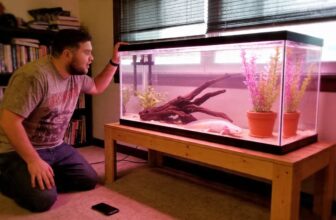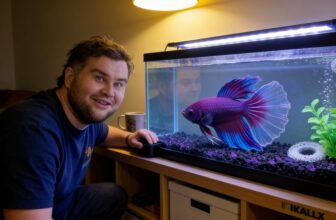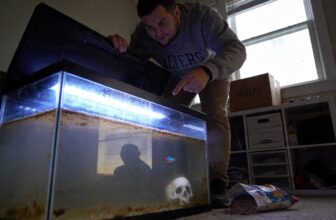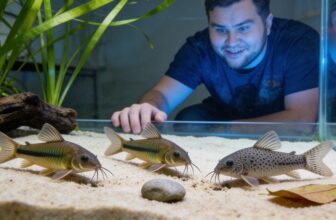
Blackwater tanks aren’t dirty—they’re biologically rich. You’ll mimic Amazon igapó forests with dark, acidic water from driftwood and Indian almond leaves, which release humic acids that boost fish health and coloration while lowering pH naturally.
For a pair of gouramis, start with a 10-gallon nano; tetras need 20. Use sponge filters—avoid carbon, it strips tannins.
Feed sparingly and limit water changes to 10-15% weekly. Stick to low-light plants like Anubias.
Stick around—the payoff is less work and healthier fish.
At A Glance
- Use gentle sponge or canister filtration to preserve beneficial tannins.
- Maintain soft, acidic water with driftwood and Indian almond leaves.
- Choose low-light plants like Anubias, Java fern, and Cryptocoryne.
- Stock compatible species such as tetras, dwarf cichlids, or bettas.
- Limit water changes to 10-15% weekly with RO water for stability.
What Exactly Is a Blackwater Aquarium?
So, what exactly is a blackwater aquarium? It’s a slice of the Amazon’s “igapó” forests, where dark, acidic water comes from decomposing leaves and wood.
You’re not just making tea for fish; you’re mimicking a soft, low‑pH habitat.
That brown tint comes from humic and fulvic acids—fancy names for natural compounds that lower pH.
That brown tint comes from humic and fulvic acids—natural compounds that gently lower pH.
This environment boosts your fish’s health and colors, making them feel right at home.
Don’t worry; it’s not dirty, just biologically rich.
You’re replicating a specialized ecosystem, giving your aquatic pets the ultimate sense of belonging.
Think of it as their cozy, chemical‑free comfort zone.
To maintain the ideal water clarity for viewing, you can use a clear mesh aquarium lid to prevent fish jumping while allowing high light transmission for your plants and fish.
Choosing the Right Tank Size for Blackwater
You might think bigger is better, but in the case of blackwater tanks, the real trick is matching size to your goals.
A 10-gallon nano tank works perfectly for a pair of sparkling gouramis—just don’t overcrowd. For tetras or Apistogramma, aim for a 20-gallon long; its shallow footprint mimics their root-filled habitat. Discus? Go 55 gallons minimum, since they need stable chemistry. Bigger water volume resists pH swings, a lifesaver for beginners. But a 5-gallon bowl? That’s asking for trouble—tannins spike fast. For a schooling species like the Harlequin Rasbora, a minimum 20 gal tank ensures proper grouping and reduces stress.
Bottom line: pick a tank that fits your fish, not your ego. Your blackwater crew will thank you.
3 Critical Gear Choices for Blackwater Tanks
When you’re building a blackwater tank, three gear choices can make or break the whole setup, from water chemistry to fish health. Don’t overthink it—just get these right.
First, pick a gentle filter, like a sponge or small canister. No high-flow powerheads; they’ll stress your tetras and discus. Instead, consider a SUNSUN JP‑022 submersible pump rated at 158 GPH for a soft, low-flow alternative. Second, grab inert driftwood—Manzanita’s perfect—because it adds tannins without messing with pH. Finally, use dim, white LEDs, not blue or pink party lights; your fish didn’t ask for a rave.
Bottom line: soft flow, safe wood, subtle light. That’s your ticket to the club.
How to Create Soft, Acidic Water Naturally
To soften and acidify your blackwater tank without bottled chemicals, you’ll rely on two natural workhorses: driftwood and leaf litter.
Drop in a few pieces of Malaysian driftwood—it’s your tank’s slow-release acid factory. Tannins leach out, lowering pH and staining water a perfect tea shade.
Pair that with Indian almond leaves. They decompose, releasing humic acids that soften water and boost fish health.
Add a handful per 20 gallons. Replace leaves every few weeks as they break down.
This combo works for tetras, angelfish, or any soft-water lover. No guesswork, no expensive bottles—just nature doing its thing. You’ve got this.
For fish like twig catfish, provide multiple driftwood tunnels to create secure hiding spots and a grazing surface for essential biofilm.
How to Keep pH Stable Without Chemicals
Once you’ve got your blackwater tank humming along with driftwood and leaves, the real trick is keeping pH stable—without reaching for chemical bottles. You don’t need potions, you need patience. Here’s how to let nature do the heavy lifting:
- Don’t chase numbers. A steady pH 6.5 is better than a perfectly acidic 5.0 that wobbles—your fish prefer consistency to a perfect number.
- Use inert hardscape only. Any calcium‑rich rock will buffer against your tannins, causing pH to drift upward over time.
- Limit water changes. Swap just 10‑15% weekly; drastic changes shock the system, sending pH on a roller coaster.
- Top off with RO water. Tap water adds minerals that neutralize your humic acids—keep it soft.
- This approach is unlike adding alkalinity supplements for reef tanks, which actively raise carbonate hardness to target pH 8.3.
Stick with this routine, and you’ll belong to the stable‑pH club.
Pick the Right Substrate and Driftwood
Your substrate and driftwood aren’t just decor; they’re the chemical engine of your blackwater tank.
Fine gravel—light or dark, natural only—anchors plants without releasing carbonates.
Driftwood like Manzanita or Mopani slowly leaches tannins, lowering pH and that lovely tea tint.
Avoid any rock that fizzes with vinegar (it’s calcium, bad news for soft water).
Expect to pay $10–$30 for decent driftwood, but it lasts years.
Bottom line: inert substrate plus tannin-rich wood builds that authentic igapó vibe, making your tank feel like a slice of the Amazon.
You’re not just decorating—you’re engineering chemistry.
For stable anchoring of corals or plants, ceramic frag plugs offer dense weight and rough texture that prevent drift during high water flow.
How Leaf Litter Lowers pH Naturally
Since you’ve got your driftwood leaching tannins, leaf litter is the other half of the pH-lowering equation—think of it as nature’s slow‑release acid tablet. As leaves decompose, they release humic and fulvic acids—fancy names for organic compounds—that gently pull your pH down without harsh chemicals.
- Indian almond leaves: classic choice, releases tannins steadily over weeks.
- Oak leaves: free if you dry them yourself, just avoid treated trees.
- Alder cones: compact, potent, great for nano tanks.
- Beech leaves: slower breakdown, longer-lasting effect.
You’ll see the water darken gradually, that’s good. Your fish feel right at home.
Adding a ceramic refuge block provides porous habitat that encourages copepod breeding and shelter within the leaf litter ecosystem.
Best Low-Light Plants for Blackwater Tanks
Low light doesn’t have to mean low life in your blackwater tank—it just means picking plants that are happy in a dimmer world.
Low light doesn’t mean low life; it means picking plants happy in a dimmer world.
You’re not failing; you’re matching nature.
Stick with these three workhorses:
- Anubias nana ($8–$12) – attach it to driftwood; it grows slowly, ignores tannins, and won’t rot.
- Java fern ($5–$10) – same deal; tie it down and watch it sprout baby ferns along its edges. It thrives under 20‑40 lux light, requiring no fancy equipment.
- Cryptocoryne wendtii ($6–$9) – plant it in gravel; expect melt at first, then lush rosettes.
No CO2 needed. No high-watt lights.
Your tank will look rooted, authentic, and right.
Stick with these and you’re part of the club, dad jokes included.
Top Fish Species That Thrive in Blackwater Conditions
Although not every fish can handle the low pH and dark water, plenty of them actually thrive in it—you just have to pick the right ones. These species evolved in igapó root forests, so they’ll feel right at home in your tank.
- Cardinal tetras — their electric blue pops against the dark water; they school tight and cost around $3 each.
- Apistogramma dwarf cichlids — these feisty little parents guard caves and stay under 3 inches; perfect for nano tanks.
- Corydoras — the janitors of blackwater, sifting sand for leftovers; they’ll ignore you completely.
- Betta splendens — famously hardy; Indian almond leaves heal their fins faster than any medicine.
- Royal grammas — also adapt well because they favor ample caves for shy darting and can be sustained by small, frequent meals of marine pellets and frozen mysis.
Stick with these, and you’re in the club.
5 Ways Blackwater Boosts Fish Health and Color
You’ve got the fish picked out, now let’s talk about what happens when you actually set up the dark water.
First, humic substances boost their immune system, fighting off disease like a tiny fishy vaccine.
Second, they reduce stress, letting colors pop like a neon sign.
Third, that soft, acidic water helps healing, so fin nips aren’t a death sentence.
Fourth, it mimics home—they feel safe, so they show off.
Fifth, it knocks down bacteria growth.
Bottom line? Dark water isn’t just looking cool; it makes your fish stronger, brighter, and happier.
You belong here.
For long-term success, stable water parameters encourage natural health and resilience in your fish.
Setting Up Gentle Filtration for Blackwater
How do you filter blackwater without stripping out the good stuff? You don’t want a power filter that’s too aggressive—it’ll suck out all those beneficial tannins you worked hard to cultivate. Gentle filtration is key, so here’s your setup:
- Use a sponge filter – cheap ($10‑$20), gentle, and won’t remove humic substances. Perfect for nano tanks.
- Go with a canister filter on low flow – adjustable flow rate lets you dial in soft current, avoiding surface agitation. Adds 0‑3 dH.
- Add a pre‑filter sponge – traps debris without clogging main media or stripping tannins.
- Skip activated carbon – it’s terrible for blackwater; use weekly if you must, but it’ll clear your stain.
Stick with mechanical media and you’re part of the igapó crew. For sealing any leaks in your filter setup, use a 100% silicone sealant that is fish-safe and cures underwater.
Fertilizing Plants Without Ruining Water Parameters
Since you’re already running gentle filtration, you can’t just dump in any fertilizer—heavy stuff like all‑in‑one liquid ferts often spike nitrates or phosphates, throwing your careful pH balance out the window.
Stick with targeted iron and trace element blends (like Seachem Flourish or API Leaf Zone).
Start at half the label dose; watch your plants’ response.
If leaves green up without algae, you’re golden.
Overdo it, and you’re just feeding unwanted gunk.
You’re part of the blackwater tribe now—precision matters.
Bottom line: gentle, gradual dosing keeps your humic‑rich water stable and your plants thriving without wrecking the chemistry you’ve worked for.
A shrimp‑safe alternative like Brightwell Aquatics Shrimp Florin avoids copper and allows separate nitrogen control.
Keep Water Clean With Fewer Changes
That tight‑rope walk with fertilizers is exactly why the next trick matters—keeping water clean without dragging out the change bucket every weekend. You want that dark, tannin‑rich look without sludge buildup, right?
That tight‑rope walk with fertilizers is exactly why the next trick matters—keeping water clean without dragging out the change bucket every weekend.
- Feed sparingly. Overfeeding turns your blackwater into a murky mess. Pinch food, not handfuls.
- Add a cleanup crew. Snails, shrimp, or corydoras devour leftovers before they rot.
- Siphon debris, not water. Spot‑clean mulm (decaying organic gunk) from gravel every two weeks.
- Replace filter media sparingly. Rinse it in tank water; you’re preserving beneficial bacteria, not aesthetics.
- For spot-cleaning, a pinch‑ball siphon gives instant flow control without blowing into the tube.
It’s about working smarter, not harder. You’ve got this.
Fix Common Blackwater Issues Fast
Why does your blackwater tank suddenly look like swamp soup, or your prized cardinal tetras start gasping at the surface?
Don’t panic—you’re part of the club now.
Fix cloudiness fast by swapping in fresh RO water, but keep your tannin levels steady with a new Indian almond leaf.
Gasping fish? Crank up gentle surface movement with a sponge filter—too much agitation kills that dark vibe.
pH spiking? Drop in an alder cone; it’ll buffer things naturally.
Test your GH; if it’s above 8°dH, you’ve got hard water wrecking your humic magic.
If ammonia spikes occur, check levels with an ammonia test kit and keep readings below 0.25 ppm.
Stick with 20% water changes every three weeks, and you’re golden.
Frequently Asked Questions
How Do I Breed Blackwater Fish in My Aquarium?
Don’t overthink it—breeding blackwater fish is about mimicking nature, not magic.
You’ll need soft, acidic water with a pH around 6.0-6.5 and low GH/KH (2-5°dH).
Add Indian almond leaves or alder cones for tannins, which trigger spawning in tetras or dwarf cichlids.
Keep lighting dim, temperature steady at 78°F, and offer fine-leaved plants for egg-laying.
Patience is key; they’ll do the rest. It’s that simple.
Can I Use Tap Water Treated With Dechlorinator for Blackwater?
You can, but it’s not ideal. Tap water’s pH and hardness—often above 8 °dH—fight your blackwater efforts. You’ll need to blend it with RO water if hardness exceeds 8 °dH. Dechlorinator is a must, but even then, you’re working against your goal.
- Tannins from driftwood and leaf litter won’t shine if your water’s too hard.
- Aim for GH/KH of 2–5 °dH for that dark, acidic look.
Bottom line: skip pure tap, mix in RO, and you’ll get true blackwater.
What Diseases Are Blackwater Fish Most Prone To?
Blackwater fish aren’t especially disease-prone—the humic acids and low pH you’re creating actually boost their immunity and healing.
Your main risk comes from sudden parameter swings or poor acclimation.
You’ll see fin rot, ich, or velvet if you let nitrate climb above 20 ppm, or your pH crashes past 5.0.
Stick with stable, soft water, 75–80 °F, and weekly 20% changes.
Bottom line? Give them consistency, and they’ll reward you with vivid health.
How Do I Prevent Biofilm From Forming on Driftwood?
Don’t panic—biofilm on driftwood is normal and temporary.
To prevent it, start by boiling new driftwood for 20–30 minutes to kill surface spores.
Then, add shrimp or snails (like Amano shrimp or nerites); they’ll feast on that slime faster than you can groan.
Keep your light dim and water flow gentle—bright light feeds biofilm more.
If it still mocks you, wipe it off during water changes.
It’ll stop appearing once the wood’s surface bacteria settle.
Can I Mix Blackwater Fish With Hard Water Species?
You can’t safely mix blackwater fish with hard water species—it’s like forcing a vampire to sunbathe.
Blackwater fish need soft, acidic water (pH 5-6.5, low GH/KH).
Hard water species thrive in alkaline, mineral-rich conditions.
Humic acids from driftwood and leaves won’t lower your tap’s hardness enough.
You’ll stress both groups, leading to disease or death.
Instead, pick one biotope and stick with it.
Your fish will thank you by staying alive.
Rounding Up
So, you’ve turned your living room into a murky slice of the Amazon. That dark water, full of tannins (plant compounds that stain the water), isn’t just cool looking—it’s healing. Your discus are fat, your tetras flash like jewels, and your pH sits sweetly at 6.4 without a single bottle of snake oil.
Bottom line: Stick with Indian almond leaves, a gentle sponge filter ($15, whisper-quiet), and weekly 10% water changes. No chemicals. Just patience. Your tank will do the work. You just watch.