You pick up a tiny bag of betta pellets, and you wonder if three grains twice a day could really keep a fish alive for five years.
The pellets are smaller than your pinky nail, but they hold the secret: your plakat—*Plakat* means short-finned, like a boxer with cropped ears—needs steady routines, not grand gestures.
You’ll test the water each Sunday, watching for ammonia like you’d watch a stove you forgot to turn off.
The tank, five gallons minimum, fits on a desk; the filter hums half-strength so his fins don’t tire.
You feel cautious hope, the kind you get when something fragile depends on you.
He’ll flare at his reflection, build bubble nests, and maybe outlive your first phone.
But only if you understand why 72 degrees matters more than a pretty castle.
There’s more to learn before you bring him home.
At A Glance
- House Plakats in at least five gallons with heater, filter, and weekly water testing.
- Maintain pH 6.0–7.5, hardness 2–12 dKH, and steady temperature 72–82°F.
- Use gentle filtration with pre-filter sponges and plants to create calm resting zones.
- Feed two small meals daily, three pellets each, to prevent overfeeding and water pollution.
- Quarantine new fish fourteen days and perform weekly thirty percent water changes for disease prevention.
Is a Plakat Betta Right for You? 5 Questions Before You Buy

A small plastic cup, no bigger than your fist, sits on a pet store shelf.
You’re drawn to the flash of color inside, but pause. Plakats need honest evaluation first.
Drawn by color, you pause. Plakats demand honest evaluation before commitment.
Check your budget temperament. These aren’t impulse buys. Tank, heater, filter, test kit—costs add up before you reach the register.
Consider seasonal shedding in your home. Plakats thrive at 72-82°F; drafty winters mean equipment, not shortcuts.
You’re joining a community of keepers who choose commitment over convenience. Ask yourself: can you provide daily care, proper space, peaceful tankmates? If yes, you’ll belong here.
Plakat Tank Size: Why 5 Gallons Is the Minimum
Your hands now hold a clear glass measuring cup from your kitchen drawer, the kind with red lines marking every quarter cup. Pour five of those cups, lined up end to end, and you’ve built your plakat’s whole world.
Smaller spaces squeeze these fish—they’re built from sturdy plakat genetics, bred for endurance, not cramped quarters. A five-gallon tank lets them swim, investigate, breathe freely at the surface. You’ll need patience here, since tank cycling takes four to six weeks before your fish moves in. That waiting protects their health, builds your confidence.
| Tank Size | What It Gives Your Plakat | Your Commitment |
|---|---|---|
| 2.5 gallons | Stress, poor water, early death | Daily struggle, frequent mistakes |
| 5 gallons | Stable home, room to roam, real rest | Weekly care, steady learning |
| 10 gallons | Territory, plants, tank mates possible | Deeper joy, stronger bond |
| 20+ gallons | Community, exploration, full expression | Partnership, shared wonder |
You belong here, in this careful work.
Water Parameters Your Plakat Needs (and How to Test Them)
Since you’ll need to know exactly what’s dissolving in that water you poured, a test kit becomes your most important tool—not the fish, not the tank, not even the food.
Your Plakat thrives when pH selection lands between 6.0 and 7.5, slightly acidic to neutral, matching the leaf‑stained streams his ancestors called home.
He’ll also want water soft to medium‑hard, so hardness testing matters: aim for 2‑12 dKH, or degrees of carbonate hardness, which helps his scales and fins stay strong.
Temperature sits steady at 72‑82°F, like a warm bath you’d want yourself.
Test weekly, friend. Numbers don’t lie, and your fish can’t tell you when something feels wrong.
Filtration and Flow: Clean Water Without the Current
Water moves through a filter like blood moves through a heart, and your Plakat needs that clean water to live, but he similarly needs the water to stay still enough to rest.
His short fins, built for fighting in Thai rice paddies, don’t cope well with strong flow. He’ll exhaust himself, hiding from hidden currents you might not notice. You’re aiming for gentle water that barely ripples the surface.
- Choose a filter rated for half your tank size, or less
- Position the outflow near the top, breaking surface tension
- Add a pre-filter sponge to slow water’s flow
- Create still zones with broad-leaf plants placed strategically
Test with a flake of food; it should drift, not race. Your fish will thank you by swimming freely, not cowering in corners, and that’s how you’ll know you’ve built him a home where he belongs.
Décor That Calms Plakat Aggression and Stress
A filter humming soft as a heartbeat will keep him alive, but what he sees around him decides whether he thrives. You want him to feel safe, not cornered. That is where you step in, creating a world he recognizes.
| Calm Maker | Why It Works |
|---|---|
| Plant plant | Breaks sightlines, lets him hide without fighting |
| Hidden caves | Gives him territory he owns, reduces stress |
| Driftwood edges | Smooth resting spots, no torn fins |
You are building him a home, not just a tank. He belongs here since you planned it that way.
Feeding for Color: What to Feed at Each Life Stage
Red flakes drifting in morning light catch your eye, and you wonder if food alone can make him glow.
Color genetics set your Plakat’s palette, but diet supplements release its depth.
You’re building a lifetime of meals together, and each stage matters.
- Feed fry infusoria, then baby brine shrimp within three days of hatching
- Offer juveniles powdered pellets with astaxanthin, a red pigment booster
- Provide adults quality pellets plus frozen bloodworms twice weekly
- Add spirulina flakes occasionally, even for carnivores, to intensify blues
You can’t override genes, but you’re partnering with them.
Plakat Aggression Warning Signs You Can’t Miss
The mirror ripples, and suddenly your Plakat’s gills flare like two pink fans behind his cheeks. You’ve spotted the first visual cue of aggression, and you need to act.
Watch his fins next. They’ll spread wide, forming a mane-like shape that makes him look twice his size. His body darkens, stripes appearing like warning flags. He charges, he nips, he patrols his corner with fierce purpose.
These signs mean stress for everyone in the tank, including you. Recognizing aggression early keeps your fish family peaceful. Remove triggers, give him space, and you’ll both breathe easier.
Tank Mates That Survive (and Who to Avoid Entirely)
Your Plakat patrols his territory like a tiny sentry, and you’re wondering who can share his watery home without starting a war. You’re not alone in wanting peace, friend.
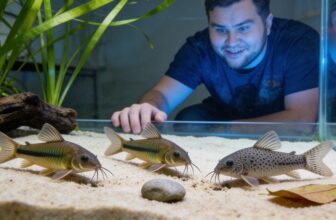
- Choose non-fin-nipping, bre friendly species like Cory Catfish, who mind their business on the tank bottom
- Add gentle algae control helpers such as Nerite Snails, quietly cleaning without bothering your Betta
- Avoid Neon Tetras and Tiger Barbs, who nip flowing fins and spark fights
- Skip another male Plakat entirely; they’ll battle until one perishes
Build this community slowly, friend, and watch calm unfold.
How to Breed Plakats: From Bubble Nests to Free-Swimming Fry
Where do those tiny eggs come from when you spot a glint of fry darting beneath the leaves?
You begin with a separate ten-gallon tank, warm water near 80°F, and floating plants. The male crafts his bubble nest design, a raft of saliva bubbles cradled among stems. Condition both parents with live brine shrimp for one week. Release the female, let him twirl, hug, squeeze eggs free. He catches each falling egg, tucks it in his nest. Three days later, they hatch. Remove the adults gently. Feed infusoria, then powdered food. By week three, you start fry weaning onto crushed pellets. You feel the quiet wonder of new life you’ve guided.
Fin Rot and Other Threats: Spot Trouble Before It Spreads
A torn fin fringe, pale and ragged along the edge of your Plakat’s tail, is often your first whisper that something has gone wrong.
You’re witnessing fin rot, a bacterial invasion that feasts on weakened tissue. You must act fast, since gen rot waits for no one.
Your disease prevention toolkit starts with clean water, always. You keep ammonia at zero, you change thirty percent weekly, you watch like a hawk.
Clean water is your first weapon—zero ammonia, weekly changes, relentless vigilance.
You guard your fish’s home through four pillars:
- Test water twice weekly with a liquid kit, catching trouble before it blooms
- Quarantine new plants and animals for fourteen days, patience protects your community
- Feed small amounts once or twice daily, removing uneaten food within two minutes
- Inspect fins every morning, running fingers across the glass if fog blocks your view
You belong to a circle of keepers who notice before disaster strikes.
Helping Your Plakat Live Past 5 Years
How long would you like your Plakat to glide through the water? You want him beside you, don’t you, past that five-year mark others miss.
Start with your test kit, the one with the little glass tubes. Check ammonia weekly, keep it at zero, since poison builds quiet, like resentment in a crowded room.
Feed him twice daily, three pellets, no more. His stomach’s tiny, smaller than his eye, and overfeeding rots the water that carries his breath.
These Longevity tips protect his genical health, the inherited strength his parents gave him. You’re guarding a living inheritance.
Frequently Asked Questions
What Distinguishes Plakat From Halfmoon Bettas?
You’ll spot the difference in their fins, right away. Plakats carry short, sturdy fins built for speed, whereas Halfmoons spread a 180-degree tail shape that fans out like a moon. This fin genetics gives Plakats powerful, darting swimming style, but Halfmoons glide slower, their long fin length dragging like fancy curtains. You might feel wonder seeing both, knowing each fits different tanks. Choose based on what movement brings you calm.
Can Plakat Bettas Recognize Their Owners?
Yes, your Plakat betta recognizes you through owner interaction that builds social bonding over weeks. When you approach the tank, he’ll swim to the glass, tracking your movements with his upturned mouth pressed close. His cylindrical body, usually lounging on broad leaves, becomes alert, fins raising slightly in greeting rather than threat. Feed him at consistent times, and he’ll anticipate your arrival. This recognition brings quiet joy, like a friend remembering your face.
Do Plakat Bettas Need Air Stones or Bubblers?
Your Plakat doesn’t need an air stone, but you’ll want gentle air filtration to keep water moving without strong currents.
Bubble control matters since these fish breathe air at the surface using their labyrinth organ, which works like a simple lung.
Too many bubbles disturb that breathing space and stress your fish.
A quiet sponge filter gives you clean water and calm surface conditions, keeping your betta comfortable and healthy.
How Often Should Plakat Betta Water Change?
Your water schedule for a Plakat betta depends on tank size and filtration tips you’ll follow.
In a 5-gallon tank, perform 25% water changes weekly. With a 10-gallon tank and good filter, change 20% every two weeks. Test your water with a kit—if ammonia rises, you’re changing too little. Clean gravel with a siphon, leaving your fish calm in their home.
Why Is My Plakat Changing Color Suddenly?
Your Plakat’s scales hold stories, and sudden color change signals stress or a diet shift. Check your water parameters with a test kit—aim for 76°F, pH near 7.0. A recent food change, like switching pellets, can fade or brighten hues within two weeks. Watch his fins too; clamped ones mean he’s anxious. You’re noticing as you care, and that attention keeps him thriving.
Rounding Up
A small five‑gallon tank, warm water between 72 and 82 degrees, and a gentle filter keep your Plakat healthy and calm. You test the water once a week, change some of it regularly, and feed tiny amounts twice daily. Live plants give him places to rest and hide. When you watch closely and move slowly, you build trust. Care like this brings quiet pride, and your fish lives longer since you noticed what he needed.