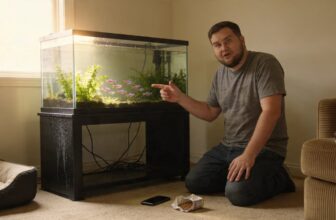
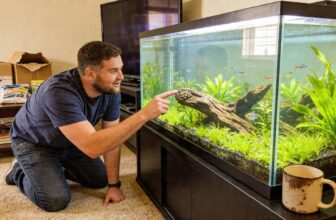
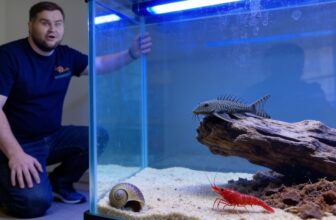
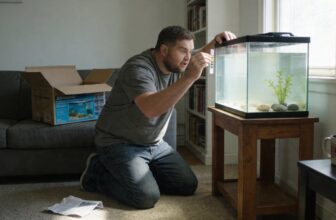
The Coralife LED BioCube 32 wins for most hobbyists, though your wallet might flinch at ~$350.
You’re getting programmable sunrise-to-moonlight LEDs, hidden filtration that keeps your scape Instagram-clean, and a footprint that won’t bully apartment floors.
The cheaper Marineland Biowheel 29 (~$150) throws in a heater and fish food, making it the “reliable sedan” choice—functional, boring, and prone to filter hiccups down the road.
Glass tanks run $60–$100, acrylic hits $150–$250 but laughs off bumps; pick acrylic if you’re clumsy, glass if you’re cheap.
You’ll want 100–150W of heat and 300–400 GPH of flow, period.
The BioCube’s LED hood dies eventually and replacements cost ~$150, so budget for that heartbreak.
Aqua Culture’s 29-gallon kit skips the heater but lands under $150, perfect for testing the waters before you commit.
Below, you’ll find exactly how to cycle it, stock it, and keep your fish from judging your life choices.
At A Glance
- 30-gallon tanks hit the “Goldilocks” zone: spacious for aquascaping yet manageable for floor load and budget.
- Glass tanks cost $60–$100 and resist scratches; acrylic costs $150–$250 and offers 17× impact strength but warps easily.
- Recommended kit: Coralife LED BioCube 32 (~$350) with programmable lighting and hidden filtration for clean aesthetics.
- Aim for 300–400 GPH filtration flow and 100–150W heater placed near filter outflow for stable water parameters.
- Cycle new tanks 4–6 weeks, then maintain bi-weekly cleaning routines including gravel vacuum and filter media rinse.
Why Does a 30-Gallon Aquarium Hit the Sweet Spot?
A 30‑gallon tank lands right in that Goldilocks zone—big enough to matter, small enough that your floor won’t groan and your spouse won’t file paperwork.
You’ve got room for roughly thirty small fish, real aquascaping creativity, and water that stays stable without constant babysitting.
aquarium aesthetics shine here—you’ll craft layered scenes with driftwood, rocks, and thriving plants that actually look like something.
Your wallet breathes easier too: basic setups run $150–$300 setups skip the custom‑tank premium.
Basic setups run $150–$300, skipping the custom-tank premium.
Smart budgeting tips include buying kits with bundled filters and lights let you upgrade piecemeal as your skills (and obsession) grow.
Versatility seals the deal. Community tanks? Breeding projects? You’re covered.
To keep that water crystal clear, consider a model like the Fluval 107 designed specifically for tanks up to 30 gallons.
Where Should You Place a 30-Gallon Tank Before Buying?
Before you drop two hundred bucks on glass and silicone, you’ll need to figure out where this thing’s actually going—since a 30‑gallon tank, once filled, weighs about 250 pounds and isn’t exactly something you shove around the living room on a whim.
Placement considerations start with structure: you’ll want a dedicated stand rated for 300+ pounds, not that IKEA side table you’ve been “meaning to replace.” Built‑in AC outlets and USB ports on a quality stand can eliminate messy extension cords and simplify powering your filters and lights. Keep it away from windows—sunlight’s a green‑water nightmare—and leave six inches of rear clearance for cords, since crawling behind a full tank is about as fun as it sounds.
Your lighting strategy matters too. Those programmable LEDs need proximity to outlets, and you’ll want easy hood access for feeding without doing yoga poses. Think traffic patterns, kids, cats, that one friend who leans on everything. Measure twice, buy once, avoid the hernia.
How Many Fish Can a 30-Gallon Tank Actually Hold?
Where you might’ve heard the “one inch of fish per gallon” rule tossed around like gospel at every pet store from here to Tallahassee, it’s more of a rough sketch than actual math—think of it as the “measure with your heart, fail with your tank” approach.
Your stock capacity (~30 small fish) depends on behavior, not just length—active swimmers need room, territorial fish need territory, and nobody likes a cramped commute.
Fish count isn’t about inches—it’s about behavior, territory, and giving every swimmer enough room to actually live.
Stocking density matters more than you’d think. Overcrowd, and you’re running a sewage plant with fins. Understock, and you’ve got a lonely water box.
Bottom line: start modest, add slowly, let your filter catch up.
Adding a cut-to-size magnetic aquarium lid can prevent jump-prone fish from escaping while maintaining high light transmission.
Glass or Acrylic: Which 30-Gallon Material Lasts Longer?
You’re joining a passionate crew of hobbyists who’ve debated this for decades, so here’s the straight talk.
Glass
- Material durability: Decades if you don’t drop it, scratches only with serious effort
- Cost effectiveness: $60–$100, cheap to replace when you inevitably want an upgrade
- Heavy, though—your back will remind you
Acrylic
- Material durability: 17× stronger against impacts, warps under heat, scratches if you stare too hard
- Cost effectiveness: $150–$250, plus polishing kits you’ll definitely need
Bottom line: Clumsy? Acrylic. Budget-conscious perfectionist? Glass.
For hauling water during tank maintenance, collapsible buckets offer a lightweight, space-saving alternative to rigid pails.
What Filtration Does a 30-Gallon Fish Tank Need?
Since your filter’s gonna run 24/7 for years, picking the right one isn’t the place to pinch pennies—you’ll want something that actually keeps up with 30 gallons of fish waste, leftover flakes, and whatever weird stuff your pleco just churned up. For this tank capacity, you need filtration that handles your fish compatibility, plant selection, and flow dynamics without creating a whirlpool. To maintain consistent water quality and reduce dead zones in a planted 30-gallon tank, a filter with a flow rate near 300 to 400 GPH is recommended for adequate turnover.
| Filtration Type | Best For | Maintenance Schedule |
|---|---|---|
| Hang-on-Back (HOB) | Beginners, easy filter media changes | Weekly checks, monthly deep clean |
| Canister | Heavy bioload, specific flow needs | Bi-monthly cleaning routine |
| Sponge Filter | Breeding tanks, gentle flow | Bi-weekly squeeze in tank water |
| Internal Power | Tight spaces, specific decorative themes | Weekly rinse, quarterly replacement |
| Undergravel | Planted tanks with simple substrate choices | Monthly vacuum during water testing |
Match your pump sizing to your equipment budgeting, and you’re set.
What Heater Size Works for 30-Gallon Dimensions?
Tank dimensions matter more than you’d think.
Tank shape and size quietly run the show—ignore them at your fish’s peril.
You’re dealing with roughly 36 × 13 × 16 inches, which means you’ve got some surface area to heat but nothing outrageous.
For heater wattage, aim for 100–150 watts—roughly 3–5 watts per gallon keeps tropical fish cozy without cooking them.
A 150-watt model gives you wiggle room if your home runs cold, like that one room everyone’s afraid to mention.
Submersible heaters with adjustable thermostats work best, since preset models sometimes lie about their accuracy (they’re optimists, apparently).
Place it near the filter outflow for even heat distribution—nobody likes a lopsided hot tub.
A model like the Fluval M 150W Submersible Heater includes a ceramic heat sink that spreads heat evenly to avoid hot spots.
Go with 150 watts, and sleep easy.
SeaClear 30-Gallon Acrylic Combo: Who Should Buy It?
If you’ve got zero patience for heavy lifting and you’re the type who babies your gear, the SeaClear 30‑Gallon Acrylic Combo is basically tailor‑made for you. You want crystal clarity without the hernia, and this acrylic tank delivers—17 times stronger than glass, half the weight, seams you literally can’t see.
Here’s who joins the club:
| You feel this… | SeaClear answers with… |
|---|---|
| Paranoid about cracks | Impact‑resistant acrylic |
| Hate wardrobe‑malfunction leaks | Seamless, molded construction |
| Cry over scratches | Gentle care, soft cloth only |
| Need budget selection wins | Solid mid‑range price comparison value |
| Want belong‑to‑something pride | A tank that looks expensive, isn’t |
You’ll baby it, certainly. But it babies you back.
Pair it with a low-iron glass alternative if you desire the same 91% light transmission for truer color rendering without the scratch risk.
Aqua Culture 29-Gallon Kit: Best Budget All-in-One?
Not everyone wants to baby their aquarium, and your wallet definitely doesn’t want to either.
The Aqua Culture 29-Gallon Kit delivers exactly what you’d expect: enough stuff to get started without crying at your bank statement. You get a tank, filter, heater, and some fake plants—budget friendly accessories that won’t impress anyone, but they’ll keep fish alive.
The Aqua Culture 29-Gallon Kit: enough stuff to get started without crying at your bank statement, plus fish that actually survive.
The stock hood light? Let’s call it “functional,” which is a nice way of saying you’ll probably experiment with DIY lighting if you want plants that actually grow. The cutouts make feeding easy, though.
It’s freshwater-only, and yeah, water can damage the hood lights—ironic, right? Still, for under $150, you’re getting a complete starter setup.
For those worried about crowding, a 29‑gallon tank is a far safer choice than smaller kits, as larger tanks reduce stress for community fish and require less frequent water changes.
Verdict: Perfect for beginners who want in without breaking the bank, but you’ll outgrow it fast.
Coralife LED BioCube 32: Worth the Premium Price?
When you’re ready to stop playing beginner and actually commit to this hobby, the Coralife LED BioCube 32 demands your attention—and about $350 of your hard‑earned cash. You’re paying for polish, and frankly, that LED design delivers: programmable sunrise, sunset, moon phases—basically a planetarium for your fish. The glass tank hides filtration in the back, keeping your scape looking clean.
But let’s talk LED lifespan—some hoods fail within a couple years, and replacements sting at $150. You’re buying into a club here, not just a tank.
What you gain:
- Automatic 24-hour light cycles that’ll make your tank Instagram‑worthy
- Hidden filtration, so guests actually notice your aquascaping skills
- A sleek, compact footprint that fits apartment living
- Replacement parts that’ll test your marriage to this hobby
Skip it if you’re handy and frugal. Buy it if you’ve ever described a fish as “my son.” For an upgrade, consider adding a submersible RGB light to create vibrant color shifts that enhance the tank’s visual appeal.
Marineland Biowheel 29: Reliable Workhorse or Outdated?
The Coralife BioCube asks you to marry your budget, but the Marineland Biowheel **29 just wants a first date—around $150 gets you a complete kit** with heater, filter, lights, even fish food and a net.
Design aesthetics? Functional, not fancy. The black frame and hinged hood won’t wow guests, but you’ll appreciate the easy feeding access during your 6 a.m. “did I remember to feed them” panic. Energy efficiency is middling—those LEDs won’t spike your bill, but they’re not winning any green awards either.
Ugly but practical: the Biowheel won’t impress your friends, but it’ll save your sanity at 6 a.m. when you can’t remember if you fed the fish.
The BioWheel filter, that spinning biological media wheel, works until it doesn’t. Some hobbyists swear by it for decades; others watch it seize up in month three. You’re rolling dice with included equipment, basically. Upgrading to a model like the Cascade 300 offers self‑priming and adjustable flow for a more reliable experience.
Verdict: It’s the Honda Civic of aquariums—reliable, boring, and you’ll replace half of it within two years. Perfect if you want in cheap, upgrade gradually, and join the club without the commitment.
Kit Comparison: What Each 30-Gallon Setup Includes
Your thirty-gallon starter kit is only as good as what ships in the box, and “complete” means wildly different things depending on which brand you ask.
Here’s the breakdown for your budget comparison:
- Coralife ships lights and filtration, no heater—prepare to spend extra
- Marineland tosses in heaters, nets, even fish food, basically a care package
- Aqua Culture integrates LEDs but skips the protein skimmer, keeping budget aesthetics minimal
- SeaClear gives you stunning acrylic clarity, though you’ll hunt for compatible gear separately
Budget aesthetics matter. If you crave that seamless, uncluttered look, you’ll sacrifice convenience. If you want everything at once, you’ll sacrifice style. Choose your tribe wisely.
Setting Up Your 30-Gallon Tank: Step by Step
Now that you’ve compared what each kit actually includes, and probably questioned your life choices while staring at missing heaters and mystery accessories, it’s time to put water in the thing.
Start with substrate depth—pour about four inches of washed gravel, sloping it deeper at the back for drama. You’ll nail this.
Four inches of washed gravel, sloping deeper at the back for drama. You’ll nail this.
Install your filter and heater, then condition the water before filling slowly—no one enjoys a gravel avalanche.
Set your lighting schedule to roughly 8-10 hours daily, mimicking natural daylight.
Arrange décor sparingly, add starter bacteria, and wait.
Your tank needs patience, not fish today.
How Long to Cycle a 30-Gallon Tank Before Adding Fish?
Before you dump a bag of neon tetras into that freshly filled tank—don’t—you’ve got about four to six weeks of waiting ahead, and yes, it feels longer than a DMV line.
This cycling cycle builds your nitrogen cycle, converting toxic ammonia into safer nitrates through beneficial bacteria.
Your cycle duration depends on cycling methods you choose—fishless with ammonia drops speeds things up, patience-wise.
- Test water twice weekly; zero ammonia, zero nitrite means you’re close
- Keep ammonia monitoring below 2 ppm during the process
- Follow this cycling guide for consistent cycling steps
- Record results; your cycling timeline becomes your cycling tips cheat sheet
Water testing confirms completion. Then, and only then, you belong to the club.
How to Add Your First Fish to a 30-Gallon Tank
So you’ve finally reached the finish line, and that crystal-clear water is just begging for inhabitants—what’s next?
First, confirm your tank cycling complete—zero ammonia, zero nitrite, nitrates present.
You’re building a community here, not throwing a fish into chaos.
Fish acclimation matters. Float that bag 15 minutes, then slowly mix tank water in—rushing kills.
Dim lights four hours post-introduction; nobody likes a spotlight during moving day.
Start with three to five hardy beings—think Neon Tetras or Zebra Danios.
They’ll establish your biological balance without overwhelming it.
You’ve earned this moment. Welcome to the club.
30-Gallon Tank Maintenance: A Bi-Weekly Routine
As your fish lounge about in their watery penthouse, you’ve got a standing appointment every two weeks to keep that luxury suite from turning into a swamp.
First, check your LED cycling—those lights need rhythm, not chaos. Next, vacuum the gravel, minding your substrate depth; too shallow and gunk piles up, too deep and you’re digging for lost treasures nobody asked for.
Your bi‑weekly hit list:
- Scrub glass with a magnetic scraper, since nobody likes a foggy view
- Test water parameters, especially nitrates
- Clean filter media in tank water, not tap
- Trim plants before they stage a coup
Rinse, repeat, stay cool.
Frequently Asked Questions
Do I Need an Air Bubbler in My 30-Gallon Tank?
If your filter moves water well, you’ve got oxygen aeration covered—fish breathe dissolved oxygen, not bubbles. An air bubbler boosts tank circulation, prevents dead zones, and honestly? It looks pretty cool. Around $15–40, it’s cheap insurance for hot summers or overstocked setups.
- Pros: Extra oxygen, better flow, visual appeal
- Cons: Noise, another cord, not strictly necessary
Skip it if your filter’s solid, grab one if you want backup or dig the bubble aesthetic.
Can I Use a 30-Gallon Tank for Saltwater Fish?
You can use a 30-gallon tank for saltwater fish, though it’ll be a tighter step than freshwater. Tankwater compatibility matters—marine species need stable salinity, so you’ll invest in a refractometer (about $15) and quality synthetic salt mix.
Tank cycling takes 4–6 weeks, same as freshwater, but marine cycles demand patience, testing ammonia, nitrite, nitrate like a hawk.
Drawbacks? It’s a glass ceiling situation—limited fish selection, no room for error. Equipment costs jump: protein skimmers, live rock, powerheads. You’re looking at $200–400 startup beyond the tank.
Bottom line: doable, rewarding, but unforgiving. Start small, build skills, expand later—or stick to freshwater and sleep easier.
How Much Does a Full 30-Gallon Aquarium Weigh?
A full 30‑gallon aquarium weighs roughly 330–350 lb. Water’s your heaviest factor—about 250 lb for 30 gallons alone—then you add substrate load (20–40 lb of gravel), equipment weight (filters, heaters, another 10–15 lb), and don’t forget material density: glass weighs more than acrylic.
Check your floor’s structural support before committing, unless you enjoy explaining aquarium-shaped holes to your landlord.
Shipping cost spikes with this tank capacity, so factor that in.
Maintenance frequency won’t change the weight, thankfully.
What Plants Thrive Best in a 30-Gallon Setup?
You’ll want Java fern and dwarf hairgrass—both thrive without fuss.
Java fern attaches to rocks, no substrate needed, grows 8-13 inches, costs $8-12.
Dwarf hairgrass carpets the bottom, likes medium light, spreads like a slightly overeager lawn, runs $10-15 per pot.
Neither demands CO2, which your wallet appreciates.
Throw in some anubias for good measure.
You’ve got low-tech beauty without becoming a plant-parent cliché.
Should I Quarantine New Fish Before Adding Them?
Absolutely. You should quarantine new fish before adding them to your main tank.
Quarantine protocol (think of it as a fish timeout, usually 2–4 weeks) lets you spot illness before it spreads. Disease screening means watching for ich, fin rot, or weird swimming, and treating in isolation. You’ll need a simple 10‑gallon tank, heater, and sponge filter—roughly $50–$70 total.
It sounds paranoid, until you lose your whole school. Then you’ll quarantine everything, trust me.
Do it: → Set up a quarantine tank immediately, since replacing 30 gallons of dead fish costs way more than prevention ever will.
Rounding Up
You’ve got the facts. Now make the call.
A 30-gallon tank isn’t just a purchase—it’s a portal to underwater worlds that’ll consume your weekends in the best way possible. Glass offers clarity and scratch resistance; acrylic forgives bumps but scratches if you look at it wrong. Aim for 40-50% more filtration than the box claims, since manufacturers lie like fishermen about size.
Your wallet will thank you for skipping integrated kits. Trust me.