You drop a dried leaf into your tank, and something quiet begins. Tannins seep out like tea steeping in a cup, turning the water amber, soft, and slightly acidic. Your fish feel safer in this dim light, this familiar darkness that reminds them of home. But the real change happens where you can’t see it yet.
At A Glance
- Indian almond leaves release tannins that gradually lower pH and soften water, creating stable blackwater conditions.
- Tannins possess natural antibacterial and antifungal properties that aid fish wound healing and disease prevention.
- Darkened water mimics wild habitats, reducing stress and encouraging shy soft-water species to breed successfully.
- Decomposing leaves cultivate biofilm and microorganisms that provide essential nutrition for shrimp and snails.
- Proper application requires monitoring dosage, avoiding carbon filtration, and replacing leaves every three to four weeks.
What Indian Almond Leaves Actually Are (and Where They Come From)
What draws so many aquarists to a simple dried leaf drifting at the bottom of a tank?
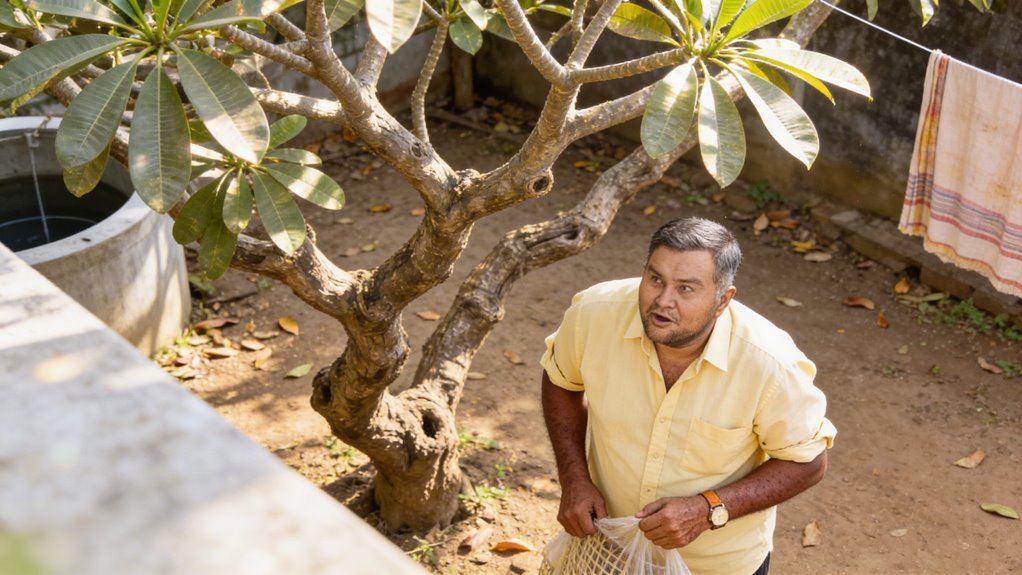
You’re holding Terminalia catappa, the Indian almond leaf, from a tree that grows across Southwest Asia, Africa, and Australia. It belongs to the leadwood family, Combretaceae, and its leaves have fallen into tropical rivers for millions of years.
Terminalia catappa—Indian almond leaf from Southwest Asia, Africa, and Australia, falling into tropical rivers for millions of years.
Organic sourcing matters to you since these leaves aren’t factory-made. They’re harvested after natural drying, then packaged for your tank. You want to know exactly what enters your water.
There’s cultural significance too. Communities near these trees have used the leaves for traditional fish medicine for generations. You’re connecting to that lineage when you drop one in.
How Indian Almond Leaf Tannins Change Your Water Chemistry
Once your leaf hits the water, it starts working right away.
The tannin leaf releases acids that turn your water amber, like tea steeping in a cup. You’re witnessing chemistry in motion, not dirtiness.
- Tannins lower pH gradually, avoiding shocking your fish.
- They reduce water hardness, making your aquarium feel like home.
- The antibacterial properties protect your community.
- Leaf decomposition feeds tiny creatures your shrimp adore.
This slow transformation invites you into a circle of aquarists who understand that brown water means healthy water. Welcome.
Why Lower pH Helps Soft-Water Fish Flourish
When you pour vinegar into baking soda, you watch it fizz and settle into something calmer, and that’s exactly what happens in your tank when tannins gently push the pH downward.
You see, soft water fish feel at home in this mild acid, just like you’d relax in a room with soft lights and familiar smells.
The tannin pH shift isn’t sudden—it’s gradual, giving your fish time to adjust without shock.
Leaf chemistry creates pH stability, that steady comfort fish need to thrive.
With proper leaf dosage, you’re building dark habitats where shy species come out of hiding.
You’ll notice water coloration turning tea-brown, a sign your leaf tea or leaf substrate is working.
This environment boosts breeding success, as pairs feel secure enough to spawn.
Shrimp nutrition improves too, since leaf decay feeds tiny creatures they love.
You’re not just changing water—you’re making a home where every fin finds peace.
How Almond Leaf Tannins Fight Bacterial and Fungal Infections
How do you protect a scraped knee from getting worse? You clean it, cover it, and let your body heal. Your fish need the same gentle care.
Scraped knees heal with gentle care—and so do your fish, when given the same thoughtfulness.
When you drop Indian almond leaves into your tank, they release tannins, a natural medicine that shields your finned friends from harm. Consider what these brown waters truly do:
- Tannin antimicrobial compounds weaken dangerous bacteria before they spread
- Fungal suppression keeps fuzzy infections away from wounds and fins
- Natural acids coat fish bodies like armor, lowering their stress
- Immune systems strengthen as fish absorb protective compounds
You’re not just changing water color. You’re building a sanctuary where healing happens naturally, and every creature feels safe enough to thrive.
Why Shy Breeders Need Darker, Quieter Tanks
Since bright lights and open spaces make you want to hide, your shy fish feel the exact same way. You’re creating a sanctuary when you add almond leaves to your tank. The tannins stain water brown, and that quiet lighting helps nervous breeders feel safe. You see stress reduction happen right before your eyes as fish stop darting and start displaying. Your picky spawners finally settle in, too.
| What You Give | What Leaves Do | What Fish Feel |
|---|---|---|
| Bright open tank | Darkened water | Exposed, scared |
| Quiet lighting from tannins | Dim, dappled shade | Calm, hidden |
| No cover | Natural leaf canopy | Secure, brave |
| Harsh conditions | Blackwater mimicry | Ready to spawn |
| Stress | Stress reduction | Belonging |
You’re building a home where shy fish, and you, both relax.
Why Bettas Love Floating Almond Leaves
Where does a betta lay its head when sleep calls? You find your betta resting beneath a floating leaf, tucked like a child under a favorite blanket.
Floating leaf aesthetics serve practical purposes you notice immediately. The curved surface cradles your betta’s delicate fins, preventing tears that long, flowing fins suffer on harsh decorations.
Your betta recognizes leaf leaf, bonding patterns coloration floating leaf aesthetics, associating the dappled shade with safety. You watch stress fade, replaced by exploratory confidence.
Betta courtship behavior intensifies near these leaves. Males construct bubble nests beneath them, using the overhang as shelter. You observe:
- Surface anchoring for bubble-nest construction
- Shade-reduced stress encouraging display behaviors
- Visual barriers preventing territorial overstimulation
- Decomposing edges harboring infusoria for fry
You belong here, creating home.
How Leaves Feed Baby Fish and Bottom Feeders
A thin film of bacteria coats the crumbling leaf edge, and you lean closer to watch your baby fish uncover it. You’ve created something alive there, a tiny ecosystem where fry thrive.
This leaf lar feeding happens naturally. Microscopic creatures, called infusoria, swarm the decomposing surface. They’re perfect first food for newborn fish too small for flakes.
Your bottom feeders—shrimp, corydoras, loaches—discover substrate enrichment as leaves settle. They sift through fragments, finding nourishment you’d otherwise buy in plastic bottles.
You’re not just decorating. You’re feeding.
Watch your shrimp graze. See your fry grow stronger. That crumbling brown leaf means belonging, for them and for you.
How to Add Almond Leaves: Four Methods Compared
You know the leaves help your fish eat, and you feel glad for that. Now you wonder how to place them, and you have choices, four of them, each with its own leaf preservation benefits.
- Submerge whole leaves so they sink slowly, releasing tannins over weeks.
- Float them on top for shade, letting bubble-nest builders feel safe beneath.
- Tear them into fine pieces, spreading a soft leaf litter layer across your gravel.
- Steep them overnight into dark leaf tea, then pour the liquid straight in.
You might try a leaf-swap with fellow hobbyists, trading extras, building community.
How Many Leaves Per Gallon (Calculator Rules)
Once you settle on how to place your leaves, you’ll need to know how many to use so your fish don’t swim in soup-thick water. One medium leaf treats ten gallons nicely, like one sugar cube sweetening a small cup of tea.
For stronger leafient leaf anti protection, you can layer two leaves in the same space, giving shy fish darker corners to hide. Think of tannin dosing as seasoning — start small, taste often, add more only if your fish seem comfortable.
Leaf tea works differently: steep overnight, then add two tablespoons per gallon. This method lets you control the color drop by drop, like adding ink to water on purpose.
Trust your eyes. If shrimp or fry fade into shadows, you’ve found their happy place.
Is Brown Water From Almond Leaves Safe?
That murky, tea-colored water swirling in your tank might look alarming, like someone spilled coffee where fish belong.
You’re witnessing tannins, natural compounds that stain water amber to deep brown. This color signals leafwater safety, not danger.
Here’s what you need to know:
- The brown tint comes from tannic acids, which fight bacteria and fungus
- Zero leaf toxicity exists when you use proper Terminalia catappaleaves from pet stores
- Your fish evolved in this exact tea-stained water throughout Southeast Asian streams
- Darker water reduces stress, letting shy fish feel hidden and secure
You’re not failing as a keeper. You’re replicating nature.
When to Remove Old Leaves (and When to Let Them Decay)
Those soft, browning leaves resting on your tank bottom are not trash.
Monitor leaf aging closely, since leaf breakdown follows its own clock.
Shrimp tanks thrive on extended leaf decay; decomposition speed feeds your colony precious leaf nutrient. Leaf cycling rebuilds ecosystems naturally.
For fish-only setups, practice selective leaf removal after three to four weeks, before leaf waste overwhelms leaf sanitation. You control decay timing, balancing leaf health against tannin release.
Watch leaf density—too many accelerate leaf turnover unpredictably. Spent leaves completing leaf lifespan darken water excessively; replace them then.
You’re managing living chemistry, trusting decay’s gentle rhythm.
How Beginners Ruin Almond Leaves (and How to Fix It)
Where do those crisp, promising leaves go wrong? You toss in too many at once, watching your tank turn murky brown like over-steeped tea. That’s tannin control slipping away from you, friend. You panic, rip out every leaf leaf, and wonder why your fish seem stressed.
Where do those crisp, promising leaves go wrong? One rash move, and your tank turns murky brown like over-steeped tea. That’s tannin control slipping away from you, friend.
- You skip rinsing, so dust clouds the water
- You add carbon filters, stripping away those healing tannins
- You replace leaves too often, wasting their slow-release goodness
- You ignore your pH test kit, letting acidity swing wild
Start small. One medium leaf per ten gallons. Watch, wait, and trust the process. Your aquarium family will thank you.
Use Almond Leaves to Heal Injured or Sick Fish Faster
When your betta’s fin looks frayed like torn cloth, you reach for medicine but forget the leaf already in your drawer.
You steep a leaf leaf overnight, creating leaf tea, and pour the amber liquid into his tank.
The tannin therapy begins immediately, wrapping your fish in protective compounds that fight infection like a warm blanket.
You watch pH modulation soften the water, matching the leaf habitat of his wild ancestors.
Disease prevention happens quietly, without harsh chemicals.
Water darkening calms his stress, letting healing begin.
You belong to a community that trusts nature’s pharmacy.
Why Shrimp and Snails Thrive on Dying Leaves
What draws shrimp and snails to a crumpled leaf turning soft and brown in your tank? You’ll find them clustered there, busy and content, since dying leaves offer something alive.
This is leafultural enrichment—a simple way you build their world.
Consider what happens beneath the surface:
- Tannins soften the leaf, making it edible for tiny mouths
- Biofilm blooms, a living blanket of food you cannot buy in stores
- Symbiotic decomposition creates shelter, warmth, and purpose
- Shrimplets hide in folds, safe from hungry neighbors
You’re not just keeping pets. You’re growing a community where every creature belongs, contributes, and thrives together.
Quick-Start Checklist: Your First Week With Almond Leaves
Pick up a single dried leaf, and you’re holding the first tool you’ll need this week.
Day one, you’ll rinse your leaf leaf under cool tap water, removing dust and tiny travelers. Drop it in, watch it sink or float, your choice.
Rinse the leaf, watch it sink or float—your aquarium’s first quiet ritual begins.
Day two, the water softens, turns honey-gold. That’s tannins working, gentle medicine for your fish.
Day three, you’ll notice calmer swimmers, bolder shrimp exploring.
By day five, algae control begins naturally, as leaf tannins slow unwanted green growth.
Day seven, you’ll belong to something ancient, this practice older than aquariums themselves. Replace the leaf, or let it feed your smallest creatures.
Frequently Asked Questions
Can Indian Almond Leaves Stain Aquarium Decorations?
Yes, Indian almond leaves can stain your decorations with a yellow-brown tint.
The tannins, which are natural acids from the leaves, cling to porous surfaces like driftwood, rocks, and even plastic plants. This stain permanence varies; smooth glass or sealed ceramics resist it, but unsealed materials absorb the color deeply.
For decorative impact, you’ll notice the change within 24 to 48 hours, and lighter ornaments show it most. You can scrub some stains gently, though aged tannins often remain as a warm, natural patina many aquarists actually prefer.
Do Almond Leaves Expire if Stored Long-Term?
You’ll find that dried Indian almond leaves don’t truly expire, but long storage weakens their potency.
Over months or years, the leaves lose moisture and vital oils, so they release fewer tannins—that’s the brown, beneficial compound—into your tank water. Your water won’t darken as deeply, and the pH-softening effect grows milder.
For best results, you’ll want to use leaves within one to two years, storing them in airtight containers away from heat and light.
You’ll notice stale leaves feel brittle and smell faint, not earthy-fresh. They won’t harm your fish, but you’re missing the full benefits you bought them for.
Check your stash, replace anything older than two years, and you’ll keep your aquarium thriving.
Will Leaf Tannins Harm Live Aquarium Plants?
You can relax—tannin toxicity won’t touch your plants, and your leaf tannins actually support healthy plant growth.
Picture a soft brown leaf, like the one you’d find floating in a forest stream, releasing its amber stain into your tank. Those tannins don’t poison plants; they’re simply weak acids, gentle as lemon juice in tea.
Most aquarium plants, especially the sturdy ones like Java fern or Anubias, thrive in this slightly acidic, softened water. Some delicate stem plants may slow their growth just a little, like a child walking carefully on a gravel path, but they won’t die. Rarely, you’d need to remove carbon from your filter, since carbon strips tannins away, stealing their benefits.
Think of tannins as a cozy blanket: they comfort your fish, and your plants don’t mind the extra warmth. You’ll likely notice deeper greens and lusher leaves, actually. If you’re worried, start with one medium leaf in a 10-gallon tank, watch for two weeks, and trust what you see. Your plants will tell you they’re fine by growing steady and strong.
Can I Use Fresh Green Almond Leaves Instead of Dried?
You can’t use fresh green almond leaves instead of dried ones.
Fresh leaves release different chemicals, you see, and they decompose too fast, causing cloudy water and ammonia spikes that stress your fish.
Drying method alternatives like oven-drying at low heat for 30 minutes help, but they lack the natural conditioning benefits.
Store-bought dried leaves undergo proper aging, releasing tannins gradually for safe, stable water chemistry your aquarium community truly needs.
Do Almond Leaves Affect Aquarium Lighting Requirements?
Yes, almond leaves change your aquarium’s light lighting. They release tannins that stain water brown-yellow, creating a spectral shift toward dimmer, warmer tones. You won’t need to buy new lights, but you’ll notice the glow softens significantly. Many fish feel safer in this subdued environment, almost like they’re tucked beneath tree roots in their wild home. You’ll see their colors pop against the shaded backdrop, and picky spawners often relax enough to breed.
Rounding Up
Indian almond leaves are simple, brown tools that do quiet work in your tank. They soften water, heal fish, and feed tiny creatures you might never notice. You drop them in, wait, and watch. The change comes slowly, like a seed growing roots you cannot see. Trust that slow work. Your aquarium will feel safer, calmer, more alive. That patience, that care, builds something worth keeping. Start with one leaf tomorrow.