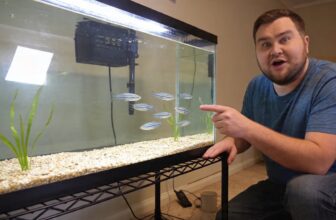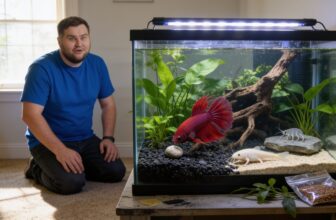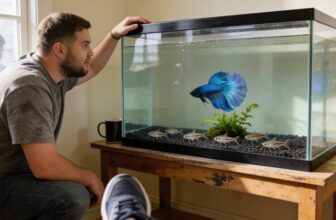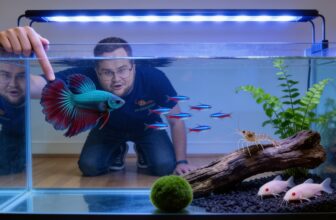
You’ll want fine, dark sand under 2 mm for safe barbel sifting (no sharp gravel)—a 2–3 inch depth supports burrowing loaches.
Caves, driftwood, floating plants, and dim LEDs mimic moonlit streams, reducing stress and algae.
Pick your fish wisely: rosy loaches need groups of five in 6+ gallon nano tanks; Amano shrimp eat hair algae but require soft, acidic water; dwarf chain loaches hunt snails but need 30 gallons and a six-fish crew; peaceful corydoras need six plus sand to avoid barbel damage.
Avoid mixing aggressive species like solitary crayfish with shy bottom dwellers—overcrowding spikes ammonia.
Spot-feed sinking wafers after lights out for nocturnal species.
For the full breakdown on all 15 species and their quirks, keep scrolling.
At A Glance
- Fine sand substrate under 2 mm prevents barbel damage on sensitive bottom feeders.
- Bottom feeders like corydoras require groups of six or more for health and confidence.
- Dim lighting with floating plants reduces stress for nocturnal species and curbs algae.
- Sinking wafers placed near hideouts ensure bottom dwellers get adequate food.
- Dwarf chain loaches thrive in groups of six but require tanks of at least 30 gallons.
Bottom Feeder Tank Setup: Key Elements to Consider
Since you’re setting up a tank for bottom feeders, you’ve got to flip your usual thinking upside down—literally. Substrate isn’t just decoration; it’s the stage. Fine, dark sand (avoid sharp gravel) lets them sift safely without scraping delicate barbels.
- Layer depth: at least 2–3 inches for burrowing species.
- Hiding spots: caves, driftwood, and dense plants—shyness thrives without them.
- Lighting: dim it. Low wattage LEDs or floating plants keep nocturnal guys calm.
A mature algae layer on decor supports grazers. Skip bright, showy lights; they’re for showoffs. Cut corners here, and your tank’s heart—the bottom—goes silent. Build their ground, and they’ll belong.
For additional hardscape options, consider using spider wood bundles which offer varied shapes ideal for creative layouts in these setups.
Rosy Loach: A Tiny Bottom Dweller for Nano Tanks
Now you’ve got that bottom‑feeding zone dialed in, but maybe your tank’s on the smaller side—nano territory. Enter the rosy loach—tiny, peaceful, and social. You’ll want a group of five or more for that active, sifting behavior. They’re shy at first, so load up on plants.
| Need | Rosy Loach Fit |
|---|---|
| Tank size | 6 gallons minimum |
| Group size | 5+ for confidence |
| Diet | Sinking wafers, small foods |
| Personality | Curious, not aggressive |
Feed them twice daily, right after lights out. They’ll patrol the substrate like tiny vacuum cleaners. You’ll belong with this crew—just keep parameters stable, and they’ll thrive in your nano setup. Like other social bottom feeders, they do best with soft sand substrate to mimic their natural sifting environment.
Amano Shrimp: Algae-Cleaning Bottom Feeder for Mature Tanks
Ever wonder who’ll clean up the mess your other fish leave behind? Meet the Amano shrimp—your tank’s unpaid janitor with a taste for algae. They thrive in mature setups, munching on stubborn green growth without fuss.
Here’s why they’re your algae-cleaning ally:
- Algae appetite: They devour hair algae and brown diatoms, not just leftovers.
- Peaceful nature: No aggression, so they bond with gentle tank mates.
- Low bioload: They eat but barely pollute, keeping water stable.
- Hiding need: Provide caves or plants; they’re shy until settled.
Sink sinking wafers for them, and they’ll earn their keep. The verdict? A shrimp that pulls its weight. For optimal health, maintain soft, acidic water between 75–85 °F to mimic their natural habitat.
Dwarf Chain Loach: Semi-Aggressive Snail Hunter
If the Amano shrimp is your tank’s unpaid janitor, the dwarf chain loach is the freelancer you hire for a specific pest problem: snails.
If the Amano shrimp is your tank’s unpaid janitor, the dwarf chain loach is your snail-control freelancer.
You’ll need a 30‑gallon minimum and a group of six—they’re social busibodies that establish a pecking order.
They’re semi‑aggressive, but that’s just loach politics; larger tanks mellow them out.
They live 8‑12 years, so this isn’t a short gig.
Spot‑feed sinking pellets after lights off, and watch them demolish pest snails.
Like other loaches, they need a continuous moderate current to thrive in the aquarium.
For snail control with character, they’re your fish.
Corydoras Catfish: Classic Schooling Bottom Feeder
Why do Corydoras catfish show up in almost every beginner’s tank? Simple: they’re tough, adorable, and do the cleanup work you’ll forget about.
These little armored catfish—over 170 species—sift sand for leftovers, gulping air at the surface when oxygen dips. They’re your tank’s janitors, but way cuter.
- Group size matters: Keep six or more or they’ll hide. Lonely corys stress out.
- Sand is vital: Rough gravel damages their delicate barbels (those whisker‑things).
- Surface gulping is normal: Don’t panic; they breathe air, not sickness.
- Wafers beat flakes: Sinking pellets guarantee they eat before mid‑dwellers snatch dinner.
Stick with a 20‑gallon shoal, add sand, and you’re part of the club. Install a magnetic aquarium lid to prevent jumpy tankmates from escaping during water changes.
Hillstream Loach: Current-Loving Bottom Dweller
Since your average aquarium is a lazy river, not a white‑water rapid, most fish just float around like they’re waiting for a bus.
Not the Hillstream Loach. You’ll need a 50‑gallon tank with a strong current—think canister filter or powerhead.
Keep a group of three or four; they’re peaceful but get territorial in small numbers. Their dappled pattern lets them blend right into rocks.
They munch on algae and need oxygen‑rich, cooler water.
Want a bottom dweller that actually does something? This loach’s your ticket to belonging with the flow‑loving crew. For strong biological filtration, consider a supplement with documented CFU counts that supports water stability.
Crayfish: Aggressive Bottom Dweller to Handle With Caution
Crayfish don’t so much swim as march—claws out, attitude on, ready to claim the nearest cave or fin. You’re not keeping a pet; you’re negotiating territory with a tiny, armored demolition crew. They’ll bulldoze plants, snatch food from slower neighbors, and pinch anything that moves.
Crayfish don’t swim; they march, claws out, ready to claim every cave and fin.
- They’re escape artists, so seal that lid tight or you’ll find a dried‑out crustacean behind your dresser.
- Molting leaves them vulnerable, requiring extra hiding spots or tank mates become snacks.
- They’ll bully peaceful bottom dwellers, so stick with robust mid‑water fish only.
- Omnivores that’ll eat anything, including your expensive shrimp or slow‑moving fish.
Handle with caution—they’re fascinating, but they’re not community‑friendly. For a peaceful alternative, consider a bottom dweller that thrives in a calm environment, such as the twig catfish, which requires soft, dark sand substrate and driftwood for hiding.
Pictus Catfish: Active, Shy Bottom Dweller for Large Tanks
If the crayfish is the tank’s demolition crew, the pictus catfish is more like the shy, curious teenager who stays in their room, but occasionally zooms out for snacks.
You’ll need a 55‑gallon minimum—these silver, black‑dotted guys hit 5 inches. They’re peaceful, active at night, but easily spooked. Dim lighting and floating plants make ’em feel safe.
Watch those serrated pectoral fins when netting—ouch. They’ll eat sinking pellets, but smaller fish might disappear. Keep yours solo or with larger tank mates. They’re the quirky loner you root for, not a troublemaker.
Bottom line: big tank, calm vibes, quirky payoff.
To maintain low nitrite levels, perform weekly water changes of about 30%.
Siamese Algae Eater: Top Bottom Feeder for Stubborn Algae
So, you’ve got algae that just won’t quit—green spot, black brush, the stubborn stuff that laughs at your scrubber. Enter the Siamese Algae Eater, your tank’s cheat code.
- Algae‑eating powerhouse – It’s the rare fish that munches black brush algae, saving you from tearing your hair out.
- Peaceful community member – Plays nice with others, no fin‑nipping drama—just calm, steady work.
- Tank size matters – Needs 30 gallons minimum; cramped quarters stress them out, killing their appetite.
- Live plants are key – They thrive on natural algae growth from driftwood and plants; skip sterile setups.
Bottom line: This is your algae’s worst nightmare, and your best ally. For bottom-dwelling cleanup, ensure you have a fine sand substrate to protect sensitive barbels from injury.
Feeding Bottom Feeders: How to Avoid Losing Food
The star algae eater from the previous section earned its keep, but food that never hits the bottom is just wasted cash and nutrition.
You’ve got greedy mid-dwellers, right? They’ll inhale flakes before they sink. Don’t let them. Use sinking pellets or wafers—drop them near your bottom feeder’s hideout. That’s spot-feeding. No more fighting for scraps.
You’re part of the crew that keeps everyone fed, not overfed. Feed nocturnal types after lights out; they’ll thank you.
Multiple small meals? Your active loaches dig that. Stick to this, and you’ll stop flushing your money down the drain—literally.
These sinking foods also provide long‑term nutrients for any sterile tissue culture plants you add to your tank.
Dim Lighting: Why It Matters for Nocturnal Bottom Dwellers
Since nocturnal bottom dwellers evolved under moonlit streams and shady riverbanks, bright tank lights stress them out—plain and simple. You want them to feel at home, not like they’re in a fishy interrogation room.
- Mimics their natural vibe—dim light lets them forage without panic.
- Reduces algae explosions—less light means less scrubbing for you.
- Boosts bold behavior—they’ll explore more when shadows rule.
- Saves on gear—skip fancy LEDs; a cheap dimmer or floating plants work wonders.
Your crew hides less, eats more, and stays chill. Keep it subdued. They’ll thank you by acting like fish, not ghosts. A dim lighting setup also helps prevent algae that would otherwise require frequent use of magnetic cleaners.
Substrate: Choosing Right Grain Size and Depth for Foraging
Substrate grain size and depth aren’t just decor decisions—they’re the foundation of your bottom feeders’ daily foraging success. You’re part of the crew that gets this right.
For corydoras or loaches, pick sand or fine gravel under 2mm. Sharp edges? That’s a no-go—they’ll shred delicate barbels. Go with rounded silica sand or CaribSea’s Peace River, about $15 per 20-pound bag.
Depth matters: 1–2 inches for light sifters, 3 inches for burrowers like dwarf chain loaches. Too deep? Trapped gas forms. Too shallow? Nothing to sift.
You want them thriving, not surviving. That’s the whole point. For additional structural variety, consider incorporating ceramic frag plugs which offer stable, heavy bases that resist shifting in strong currents.
Water Flow and Oxygenation: Tips for a Healthy Bottom Zone
Even if your bottom feeders have the perfect sand bed, they’ll still suffocate without enough flow and oxygen down there—literally.
You’re part of a crew that gets it: the bottom zone isn’t a dead zone.
- Point a powerhead or spray bar toward the substrate to create a gentle current; it’ll whisk away debris while keeping oxygen moving.
- Add a bubbler or air stone near the tank floor—cheap insurance against hypoxia (low oxygen), costing maybe five bucks.
- Use a canister filter with a return nozzle aimed low; it’ll push flow right where your corys, loaches, and shrimp need it.
- Avoid still water pockets under decorations; rearrange them so flow circulates freely, preventing dead spots.
- For a reliable low-turbulence current, a Fluval spray bar distributes return water evenly across the sump or tank surface.
Your bottom feeders deserve to breathe easy.
Set it up right, and they’ll thrive.
Social Grouping: Schooling vs. Solo for Bottom Feeders
Whether your bottom feeder thrives in a crowd or prefers flying solo depends entirely on the species—get it wrong, and you’ll either have a lonely, stressed fish or a tank full of bickering roommates.
Corydoras, for instance, demand groups of six or more; they’re chatty little socialites.
Dwarf chain loaches also need a squad of six to curb their semi‑aggressive pecking order.
Hillstream loaches? Keep three or four together, or they’ll get territorial.
Amano shrimp work fine solo or in packs, but crayfish? They’re lone wolves—one per tank, or you’ll have crustacean drama.
Check your species’ needs, then build a crew that clicks. For Black Skirt Tetras, a school of fewer than five leads to hiding and muted colors. That’s the belonging you’re after.
Common Mistakes: Aggressive Tank Mates and Overcrowding
Your social grouping decisions don’t matter much if you pair a peaceful bottom dweller with a fin‑nipping bully or cram ten fish into a twenty‑gallon tank. Trust me, I’ve learned this the hard way.
- Aggressive tank mates — like crayfish (Cambarus sp.) or semi‑aggressive dwarf chain loaches — stress out peaceful corydoras, causing hiding and lost appetite.
- Overcrowding spikes ammonia and drops oxygen, turning your tranquil bottom into a suffocating mess.
- Fast‑eating bullies — pictus catfish or even greedy tetras — outcompete bottom feeders for those sinking wafers you carefully drop.
- Territorial fights break out when hillstream loaches are crammed in small groups, so stick to four plus in a 50‑gallon.
Match temperaments, respect tank sizes, and your crew will thrive. For a more peaceful community, pair bottom feeders with species like cherry shrimp and avoid clown loach or pea puffers, which can nip antennae and cause stress.
Frequently Asked Questions
Can Bottom Feeders and Shrimp Share a Tank Safely?
Yes, you can keep bottom feeders and shrimp together safely, but you’ve got to choose tank mates wisely.
Peaceful species like Corydoras ($3–$8 each) or Amano shrimp ($4–$6) work great—they’re calm, won’t nip, and share the bottom without drama.
Avoid aggressive types like crayfish (they’ll eat shrimp) or Pictus catfish (they’ll snack on tiny ones).
Stick with docile, shrimp-safe picks for a chill community tank.
How Do I Prevent Algae Eaters From Starving in a New Tank?
You can’t starve algae eaters in a new tank by rushing them in. First, let the tank mature for 4–6 weeks—that’s when natural algae growth really takes off.
Add live plants and driftwood early; they’re like a free buffet starter kit. During that time, supplement with sinking algae wafers (try Hikari, $8 a tub). Feed just a pinch after lights out, so shy eaters get their share.
Starvation’s a common newbie mistake, but a little patience? That’s all it takes.
Do Bottom Dwellers Need a Separate Feeding Area During the Day?
No, you don’t need a separate feeding area.
Spot-feed sinking wafers or pellets near a single spot—like under a plant—and they’ll find it.
Their whisker-like barbels (those little sensory feelers) are pros at sniffing out food, even in dim light.
Contractions help: they’re bottom dwellers, not picky diners.
Just drop food where greedy top fish can’t grab it first.
What Is the Best Way to Quarantine New Bottom Feeder Fish?
You’ll want a separate quarantine tank—just a simple 10‑gallon setup with a sponge filter and a heater. That’s your best move.
- Cycle it first (or use seeded media).
- Keep bottom feeders in there for 2–4 weeks, watching for issues like clamped fins or lethargy.
- Dose with a mild medication if needed—copper‑free for shrimp.
It’s a bit of a chore, certainly, but skipping it risks crashing your main tank. Bottom line: quarantine’s your new best friend.
Can I Keep Multiple Bottom Feeder Species Together in One Tank?
Yes, you absolutely can, as long as you play matchmaker, not bouncer.
Peaceful species like Corydoras and Amano shrimp pair well—they’re the quiet neighbors.
Avoid aggressive crayfish or territorial hillstream loaches except your tank’s a mansion.
Start with a 20‑gallon minimum, provide plenty of hiding spots, and use sinking wafers for everyone.
Mixing is fine; chaos isn’t.
Stick with chill tank mates.
Rounding Up
So, you’re basically building a tiny, wet ecosystem—and the bottom is where the real party happens. Go with Corydoras (five-pack, ~$15). They’re bulletproof, need sand (not sharp gravel), and a group of six keeps stress low. Forget the solo suckerfish; they get grumpy. For algae, grab Amano Shrimp (about $5 each)—they’re tiny lawnmowers. Pair them with a sponge filter ($10) for oxygenation. Your bottom won’t just survive; it’ll thrive. You’ve got this.