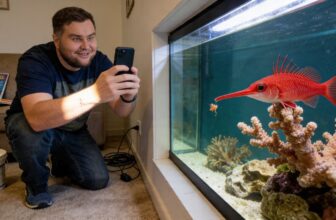
A Bicolor Angel needs at least 55 gallons of stable, mature water – six months minimum, since these fish detest drama.
Keep pH 8.0–8.4, temperature 72–80°F, and gentle flow; they’re picky about currents.
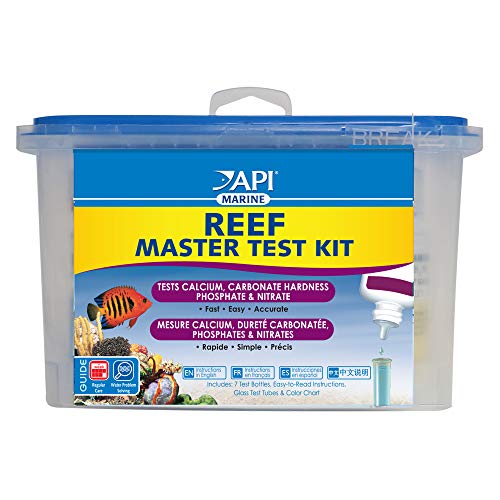
Monitors calcium, alkalinity, and pH to keep your Bicolor Angel's water stable.

Maintains 72–80°F reliably, preventing temperature swings that stress sensitive angels.

Creates gentle flow for grazing without exhausting your angel.
Check discounted items inAquarium Equipment
Now, reef safe?
Absolutely not. They’ll munch LPS, soft corals, even zoanthids like popcorn. Pair them with bold tangs, not delicate wrasses or shy gobies who’ll crumble.
Feed aggressively – algae morning, meat midday, seaweed evening – and drip-acclimate for 2–3 hours to avoid shock. I mean, they’re gorgeous, but your coral budget might disagree.
Copper-free ich treatment means hyposalinity or herbal formulas if trouble hits. And if you’re hoping to sex them, good luck – males show a fleeting eye stripe, but behavior matters more than looks.
Breeding?
Nearly impossible at home; they’ve got opinions about tank size. There’s more to unpack if you’re still curious.
At A Glance
- Minimum 55-gallon mature tank (six months old) with stable pH 8.0–8.4, temperature 72–80°F, and gentle flow.
- Not reef-safe; consumes LPS corals, softies, sponges, and zoanthids – use fish-only or SPS-dominant systems.
- Compatible with bold, territorial fish like tangs; avoid delicate species such as fairy wrasses or gobies.
- Feed algae-heavy diet two to three times daily including spirulina, seaweed, and varied meaty foods to reduce coral nibbling.
- Quarantine new arrivals and treat ich with hyposalinity or herbal formulas – never copper in reef environments.
What Size Tank Does a Bicolor Angel Need?
Now, the absolute floor here sits at 55 gallons for a single specimen. I mean, that’s entry-level membership, right? Flow dynamics stay gentle – weak bottom currents guide feeding behavior without exhausting these curious swimmers. Lighting intensity? Crank it, since algae growth needs encouragement, supplemental natural light totally acceptable.
55 gallons minimum for one – entry-level, really. Gentle flow, crank the lights, let that algae grow.
Filtration type matters for stability. Standard systems handle pH buffering, keeping things above 8.0, whereas hardness control prevents those dangerous fluctuations that wreck health. Substrate choice? Secondary, honestly. Temperature stability sits between 72-80°F, dependable and boring, which is perfect.
Acclimation methods require patience – slow drip, 2-3 hours minimum. Tank age? Six months, no exceptions.
For optimal water quality and reduced maintenance, consider installing adjustable baffle chambers in your sump to create gentle flow zones that won’t stress your angelfish during feeding.
Which Water Parameters Keep Bicolor Angels Healthy?
So what exactly keeps these fish ticking, water-wise? Water chemistry and flow dynamics, mainly – though nobody’s handing out gold stars for getting close enough. Temperature holds steady between 72°F and 80°F, pH sits pretty at 8.0–8.4, and specific gravity hovers around 1.023–1.025. General hardness needs 8–12 dKH, or you’re asking for trouble.
Now, here’s what actually matters:
- Stable parameters, since swings crash immune systems faster than bad news
- Gentle flow dynamics, letting them graze without fighting a current
- A tank matured six months minimum, so the crew feels at home
Get this right, and they thrive. Miss it, and, well, good luck.
A protein skimmer pump with needle‑wheel impeller technology can help maintain those stable water parameters by removing organic waste before it degrades water quality.
Are Bicolor Angels Reef Safe?
Whether one ought to trust a Bicolor Angel with a prized reef tank hangs on a simple truth: these fish eat coral.
Trusting a Bicolor Angel with your reef tank? Simple truth: they eat coral. Period.
I mean, there’s no gentle way around it. Their reef impact is documented, predictable, and personally disappointing if you skipped assignment. LPS corals, softies, sponges, zoanthids – fair game.
Now, coral protection isn’t impossible, just inconvenient:
- Fish-only systems eliminate risk entirely
- SPS-dominated tanks with no fleshy polyps reduce temptation
- Aggressive feeding (2–3 times daily) dulls the nibbling urge
Still, “reef-safe with caution” means “probably not.” Accept the trade-off, or join the club that keeps them in FOWLR setups.
The same vigilance applies when selecting a proper habitat for any sensitive species, as even a 2-gallon glass tank with curved front edges can provide a controlled environment for observation before introducing fish to more complex systems.
How Mature Should Your Tank Be Before Adding One?
How old is old enough when you’re tempting a Bicolor Angel into your watery living room? Six months minimum, though some whisper a year when they’re feeling cautious, and honestly, who’s to judge – your tank’s acclimation window matters more than bragging rights.
Now, quarantine timing isn’t negotiable unless you enjoy heartbreak with your morning coffee.
- A young tank kills slowly, stealing color while you weren’t watching
- Patience builds the community you’re desperate to belong to
- Rushing betrays the fish, and yourself, and everybody knows it
Wait. Let it breathe. Then introduce your angel last, always last.
A stable six-month environment benefits from environment monitoring to track temperature stability before the delicate Bicolor Angel arrives.
What’s the Safest Way to Acclimate a Bicolor Angel?
Gather your acclimation equipment – tubing, siphon, maybe vice grips for pacing that flow. The drip method remains the gold standard, two to three hours of gradual temperature and pH matching, since rushing belongs to amateurs, and nobody wants that fish floating at dawn.
Set the drip slow, steady, almost boring – exactly right. Let the Bicolor Angel absorb its new chemistry like a traveler adjusting to altitude. Skipping this step? That’s how communities fracture, how tank veterans shake their heads. Do it properly, belong with the careful ones.
Once fully acclimated, consider offering slow-sinking micro-granules like those found in protein-rich tropical diets to encourage natural foraging behavior as the fish explores its new environment.
What Do Bicolor Angels Eat?
So what exactly lands on the menu for a fish that looks like it raided a painter’s palette?
These omnivores demand variety, and I mean real variety. Algae grazing keeps their systems running – think live rock films, not salad bars – but meaty proteins drive that electric color enhancement everyone craves.
- Blackworms, brine shrimp, mysis – the wet, wriggling stuff that makes fish feel alive
- Spirulina-enriched pellets, because nobody wants a washed-out angel in their community tank
- Live rock microalgae, nature’s slow-release supplement for the curious nibbler
Now, algae composes maybe a quarter of their intake, so don’t go overboard. Balance matters, and your tank crew notices who brings the good stuff. The trace element stability found in quality reef salts also supports the vibrant coloration that proper nutrition alone cannot achieve.
How Often Should You Feed to Prevent Coral Nipping?
Feeding frequency, honestly, matters more than most reef keepers want to admit – two to three daily meals, spaced reasonably, keep these opportunistic nibblers occupied enough that your corals might actually survive the arrangement.
Now, coral protection demands commitment. Sparse feeding? Your angel treats LPS like a buffet. Generous, consistent meals – think quality over quantity – redirect that destructive curiosity toward actual food.
I mean, these fish aren’t evil, just hungry and easily bored.
- Morning: algae-heavy offering
- Midday: meaty bits
- Evening: seaweed clip
Skip a meal, pay in polyps. It’s not rocket science, just disciplined timing your reef will thank you for.
A well-maintained protein skimmer helps remove dissolved organic waste before it degrades water quality, reducing the overall bioload that can trigger increased feeding aggression in angels.
Which Fish Can Live With Bicolor Angels?
Where exactly does a Bicolor Angel fit in the grand aquarium society, anyway?
Turns out, it’s complicated. These fish crave community, yet demand respect – Tank compatibility hinges on matching temperament, not just water chemistry. Behavioral hierarchy matters more than you’d think; size alone won’t protect a timid tankmate.
Now, choosing companions feels like assembling a dinner party where one guest might bite:
- Bold tangs that hold their ground, not shrinking violets
- Robust wrasses with enough speed to dodge attitude
- Confident dwarf angels, roughly equal in swagger
Skip the delicate darlings – fairy wrasses, gobies, seahorses – they’ll crumble. And mandarins? Basically decorative snacks.
Maintaining stable water parameters is essential for these community setups, so investing in a reliable water quality monitor helps prevent stress-induced aggression from parameter swings.
Why Add Your Bicolor Angel Last?
Why exactly does a Bicolor Angel demand the red-carpet treatment of last arrival? Well, these fish, they establish territories fast, and a newcomer in settled waters faces bruisers who’ve already staked claims under your lighting design.
Now, adding the Bicolor last lets aquarium aesthetics settle – existing fish find their grooves, tension drops, and your angel slides in without starting World War Three over rockwork. I mean, even bold fish need fair introductions.
Peace matters here. Root-feeding plants like crypts and swords establish secure territories through substrate fertilizers, demonstrating how settled foundations prevent conflict. Everyone belongs when nobody starts desperate.
What Diseases Most Commonly Affect Bicolor Angels?
Peace in the tank matters, truly, but peace doesn’t stop microscopic troublemakers from hitching rides on frozen foods or sneaking through quarantine gaps. Disease prevention starts before symptoms show, as once these fish ail, recovery tests everyone’s patience.
Three threats lurk most often:
- Marine ich, those white salt-grain spots that spread like gossip, stressing fish until they breathe too fast and hide from the crowd
- Marine velvet, a golden dust that kills quick, often mistaken for lighting glints until it’s too late
- Bacterial infections, the slow rot of fins and flesh following any wound or stress dip
Solid health demands stable water, clean food, and that quarantine tank you keep meaning to set up.
A self-priming canister filter helps maintain the pristine water conditions that reduce stress and prevent disease outbreaks in sensitive angelfish.
How Do You Cure Marine Ich Without Copper?
Marine Ich Life Cycle Advantage
Now, here’s the thing they don’t always print on the box: ich has a life cycle, and that cycle is your advantage. The parasite can’t survive without fish hosts, so remove them, and you’re halfway home.
Alternative Dosing-Free Treatment – hyposalinity. Drop salinity to 1.009 for 3–4 weeks. Cheap, effective, but watch your hydrometer.
Herbal Anti-Parasitic formulas. Garlic-based extracts, really, or commercial blends with Artemisia. Results vary – some swear by them, others shrug.
Raise temperature to 82°F, speed that life cycle up. Then wait. Patience, not copper, keeps your reef intact.
How Can You Tell Male From Female Bicolor Angels?
Sexing Bicolor Angels
Ich is manageable, certainly, but breeding? That’s where you need to know who’s who. Bicolor angels keep their secrets close – sexual dimorphism exists, sure, but it’s subtle, frustratingly so.
- The hopeful aquarist squints at fins, searching for belonging in a hobby that rarely gives easy answers
- That dark courtship line under the male’s eye? Fleeting, unreliable, gone when you need it
- Two-word verdict: basically impossible
Visual cues disappoint. Juveniles all look female, because technically they are. Protogynous hermaphrodites, these fish – capable of switching teams in about twenty days. So your “female” today, given dominance and circumstance, becomes tomorrow’s male. The tank community shrugs.
Now, size helps sometimes. Larger specimens, 2.4 to 2.7 inches, might reveal themselves through behavior rather than appearance. But honest assessment? You mostly guess, and guessing builds the fellowship of the humbled.
I mean, fishkeeping was never about certainty, was it.
Can You Breed Bicolor Angels in Captivity?
Breeding Bicolor Angels in Captivity
So can you breed Bicolor Angels in captivity? Technically, yes, though “success” remains a loose term among hobby circles.
| What Works | What Wrecks You |
|---|---|
| Multiple females, one dominant male | Expecting parental care – male bolts immediately |
| Massive systems, 100+ gallons | Tiny larval mouths starving day one |
| Dedicated plankton sourcing protocols | Skipping larval feeding research |
Protogynous flexibility helps – fish swap sexes in roughly twenty days if pair dynamics collapse. Sexual maturity hits at 2.4–2.7 inches, so patience matters.
Spawning itself? Straightforward enough. Circling, grunting, eggs released, male gone. The real trial begins after: microscopic larvae drift upward, mouths impossibly small, demanding live food cultures most aquarists abandon within weeks. Plankton sourcing becomes obsession, larval feeding a midnight microscope ritual. Commercial operations manage it; home aquarists mostly celebrate accidental survival.
Why Is Captive Breeding So Difficult?
Captive Breeding Challenges
And the male doesn’t help. He grunts, circles, spawns – and vanishes, off to woo another female as the eggs drift alone. Now, the breeding challenges stack fast.
- Eggs abandoned, left to tides and luck
- Larvae rise toward light, mouths too tiny for standard feeds
- No flock to guide them, no safety in numbers
I mean, larval nutrition? It’s guesswork dripping into plankton soups, rotifers, copepods – maybe. Aquarists watch, hope, measure twice. The fish remain stubborn, beautiful, indifferent. Success belongs to the patient, the obsessive, the slightly unhinged. Welcome to the club. Bring snacks, not expectations.
Frequently Asked Questions
How Long Do Bicolor Angels Live?
Bicolor angels typically survive five to ten years in captivity, though longevity factors – water stability, diet variety, tank maturity – push that toward twelve when luck cooperates.
Growth rate runs slow, about two inches yearly, with sexual maturity hitting near seven months.
Now, wild specimens reportedly stretch longer, maybe fifteen, but proving that gets fuzzy.
I mean, fish years aren’t dog years, yet these guys reward patience with glittering, stubborn persistence.
Do Bicolor Angels Change Color as They Age?
Bicolor angels experience color evolution throughout maturity, though pigment genetics lock their core pattern – deep blue front halves, bright yellow rears.
Juveniles display more intense contrast, whereas adults may subtly dull or shift under stress, lighting, or diet changes.
Age itself isn’t transformative; environmental factors drive perceptible shifts.
Stable conditions preserve vibrancy.
Can You Keep Two Bicolor Angels Together?
Two Bicolor Angels can coexist, though success hinges on breeding compatibility and tank hierarchy dynamics.
A bonded male-female pair requires 75 gallons minimum; multiple unsexed individuals demand 100–150 gallons to diffuse aggression.
Introduce them simultaneously, or add the angel last to an established community.
Dominance disputes flare without adequate space, hiding spots, and visual barriers.
Stable water parameters, 72–80°F, reduce stress-driven conflict.
Monitor closely – problems escalate fast.
Why Does My Bicolor Angel Hide All Day?
Hiding all day signals stress behavior, plain and simple. The fish feels exposed, unsafe, or overwhelmed.
Now, tank lighting often fixes this – too dim, and angels skulk; too harsh without cover, same result. Aim for eight to ten hours, strong enough to grow algae but broken by shadows.
Check parameters too, since swings in pH or temperature send them into corners. Give it rocks, time, maybe a calmer tank mate selection. Patience wins.
Is a Protein Skimmer Necessary for Bicolor Angels?
A protein skimmer isn’t strictly necessary for Bicolor Angels, though plenty of people sleep better with one humming away.
These fish, packed into their minimum 55-gallon tank size (or 75 for pairs), create moderate waste loads that standard filtration can usually handle.
But skimmers remove dissolved organics before they rot, keeping water crisp.

Protein-rich pellets boost color and satisfy meaty cravings.

Nutritious algae sheets support natural grazing behavior.

Mysis shrimp deliver meaty protein for energy and vibrant color.
Browse discountedAquarium Fish Foodon Amazon