The scooter blenny, *Synchiropus ocellatus*, needs a 30–50 gallon reef tank with live rock, sand substrate, and – crucially – a self-sustaining copepod population.
Water stays stable at 72–78°F, pH 8.1–8.4, gentle flow only.

Holds stable 72–78°F so your scooter blenny stays stress-free.
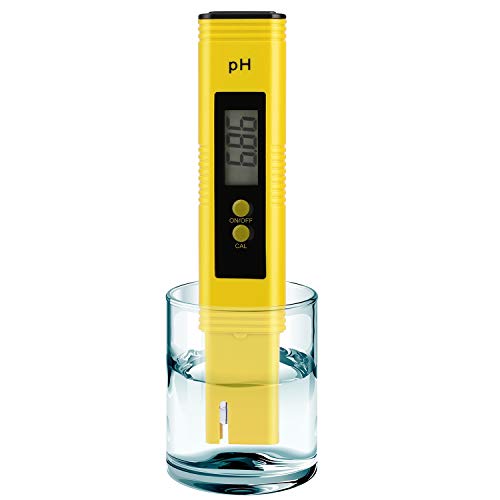
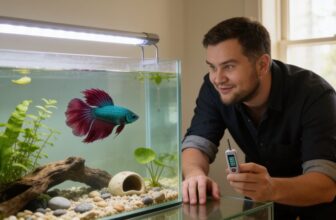
Monitors pH 8.1–8.4 precisely to prevent dangerous swings.
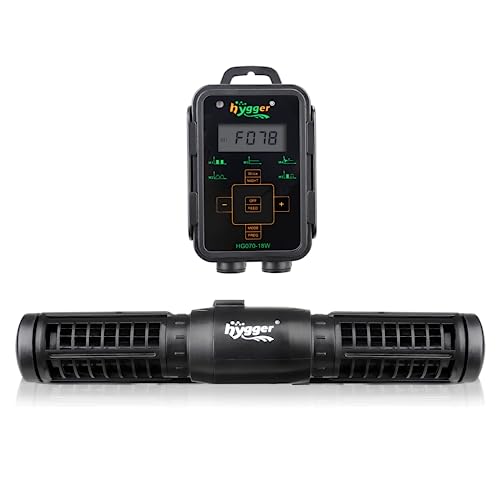
Creates gentle flow for comfortable scooting without exhausting current.
Check discounted items inAquarium Equipment
They eat constantly: pods, small crustaceans, enriched frozen foods delivered by turkey baster four to six times daily.
Peaceful tankmates work fine; avoid anything with a mouth big enough for a blenny snack.
Breeding demands 50+ gallons, moonlight triggers, and rotifers for fry.
Now, the real question is whether your tank’s ready – or pretending to be.
At A Glance
- House in mature 30–50 gal reef with sand, live rock, and gentle flow for copepod grazing.
- Feed enriched frozen copepods or live pods four to six times daily at substrate level.
- Exclude predators with large mouths; house one male with two females in 50 gal-plus systems.
- Maintain stable 72–78 °F, 8.1–8.4 pH, 1.020–1.025 salinity with zero nitrite/ammonia spikes.
- Breed in 50 gal with deep crevices, moonlight cycles, and isolate fry for rotifer feeding.
What Is a Scooter Blenny? (And Why They’re Worth Keeping)
The scooter blenny – scientific name *Synchiropus ocellatus*, though nobody at a party has ever been impressed by that – floats through aquarium trade circles under roughly half a dozen aliases, since apparently one memorable name would be too easy.
The scooter blenny – scientific name *Synchiropus ocellatus*, though nobody at a party has ever been impressed by that – floats through aquarium trade circles under a half dozen aliases, because one memorable name would be too easy.
Now, this fish earns its keep. Native to coral-rich Indo-Pacific waters, roughly zero to ninety feet down, its bl habitat suits reef tanks nicely – sand, live rock, places to scoot.
Breeding challenges? Moderate, actually. Males flash brighter colors, move rhythmically, guard eggs in crevices. Not impossible, but you’ve gotta commit.
Peaceful, reef-safe, weirdly charming. Worth it, if you’re the type who pays attention.
Unlike small betta-focused tanks that require minimal space and equipment, scooter blennies thrive in more spacious environments with proper reef infrastructure.
How Long Do Scooter Blennies Live in Captivity?
Expect scooter blennies to stick around for roughly two to four years in captivity, maybe stretch toward the higher end if you’re the sort who fusses over water parameters and doesn’t let the copepod population crash.
Now, lifespan isn’t destiny – it’s negotiated daily through clean water, steady meals, and the occasional moment of peace from tankmate harassment.
Captive longevity depends heavily on setup maturity. Established systems, thick with life, reward the patient keeper. Rush the cycle, skimp on live rock, and that lifespan shrinks fast.
Two years minimum, four with luck and discipline. Small price for what they bring.
Just as bettas thrive best in established systems with stable water conditions and mature bacterial colonies, scooter blennies reward aquarists who prioritize setup maturity and consistent maintenance over quick stocking.
Are Scooter Blennies Hard to Keep?
How tricky is a fish that spends its days “scooting” across the sand like it’s late for a very small bus? The Scooter blenny sits at moderate difficulty – not impossible, not automatic. They demand stability, frequent feedings, and a reef friendly tank design with live rock crevices for grazing copepods. A well-designed sump baffle system with adjustable chambers and noise reduction features helps maintain the stable water quality these fish require.
| Care Factor | Difficulty Level | Key Consideration |
|---|---|---|
| Water parameters | Moderate | Stable temperature, 8–12 dKH |
| Feeding | Moderate-High | Multiple small meals daily |
| Tank design | Moderate | Live rock, sand, moderate flow |
Now, they aren’t fragile, but they punish neglect. Skip water changes, or let pods vanish, and this fish – charming, ridiculous, perpetually rushing nowhere – fades fast. Worth the effort? For those who enjoy the rhythm of observation, absolutely.
Tank Size for Scooter Blennies: 30 or 50 Gallons?
Once the question of care level settles in, tank size becomes the next practical fork in the road – thirty gallons, fifty, or something argued-about in between.
The minimum lands at thirty, indeed, but that figure assumes ideal tank dimensions and a solitary blenny with nowhere else to be.
Fifty gallons opens the stability range, buffers parameter swings, and invites companionship.
A pair, maybe a small group, needs that breathing room.
Think footprint over height – these fish hunt bottoms, not water columns.
So thirty works, technically.
Fifty keeps you from sweating test kits at midnight.
When selecting a stand for your scooter blenny tank, prioritize engineered wood with metal reinforcement to ensure long-term durability under the combined weight of water, substrate, and decorations.
What Water Conditions Keep Scooter Blennies Healthy?
Where does the line sit between “fine” and “thriving” for these little bottom-huggers? Now, the numbers matter, indeed, but they’re not the whole story.
Water flow keeps things interesting – gentle, mind you, not a washing machine. These fish scoot, they don’t sprint. Too much current and they exhaust themselves, too little and detritus piles up. I mean, balance, right?
Substrate choice ties directly in. Sand, live rock, places to poke around – that’s where they find their copepods, where they feel at home.
Temperature: 72–78°F, pH 8.1–8.4, salinity 1.020–1.025. Stable. Boring, even. But boring keeps them alive.
For maintaining that tight pH window, many aquarists rely on digital pH meters with 0.01 precision and regular calibration to catch drift before it stresses these sensitive fish.
How to Set Up a Scooter Blenny Habitat
A proper scooter blenny habitat begins with sand – actual sand, not gravel, not bare glass – and a generous heap of live rock that turns a glass box into something resembling a reef slope.
Sand, not gravel. Live rock. A glass box becomes reef slope.
Now, the live rock does heavy lifting here. It houses pods, those tiny crustaceans scooter blennies hunt, and provides crevices for retreat when the world feels too bright, too busy.
LED lighting keeps things temperate – enough to sustain the miniature ecosystem on that rock, not so much that shy fish feel exposed. Think reef-flat at noon, not desert at midday.
Sand grants dignity to a fish built for sifting.
Maintaining stable pH levels at 8.3, similar to the automatic pH regulation found in quality reef supplements, helps ensure the live rock ecosystem thrives and supports healthy pod populations for your scooter blenny to hunt.
What Do Scooter Blennies Eat in the Wild?
Two, maybe three thousand times a day, a wild scooter blenny snaps at something invisible to human eyes – those being the tiny crustaceans, mostly copepods and amphipods, that drift and scuttle through coral rubble and sandy flats across the Indo-Pacific.
I mean, this fish doesn’t stop. Ever.
Now, here’s what actually fills that tiny stomach:
- Planktonic crustaceans – the copepods, mostly, maybe 70% of intake if you’re measuring
- Amphipods – those scurrying comma-shaped snacks hiding in rubble
- Worms, maybe? Some polychaetes, presumably, though who’s counting
- A natural algae diet – film scraped from rocks, not enthusiasm but necessity
And fragments. Probably fragments.
Unlike captive turtles that require carefully balanced protein-to-vegetable ratios to maintain shell health and proper growth, scooter blennies have evolved to extract all necessary nutrition from their continuous grazing on microfauna.
How to Feed Scooter Blennies Without Copepods
So here’s the nutritional problem, stripped to mechanics: scooter blennies possess small, terminal mouths and a metabolism calibrated to constant intake. Without copepods, the keeper joins a club of improvisers, resourceful spirits who refuse surrender.
Now, DIY enrichment transforms humble offerings. Frozen mysis, brine shrimp – these become viable copepod alternatives when gut-loaded, when enriched with Selcon or Vita-Chem, when presented via turkey baster at substrate level. Four to six feedings daily, minuscule portions, patience measured in weeks.
Enrichment transforms humble offerings – frozen mysis, brine shrimp become viable when gut-loaded, enriched, delivered with patience measured in weeks.
The blenny learns. I mean, they always do, these stubborn survivors. For those able to incorporate live feeds, high‑density live copepod mixes offer a sustainable solution that establishes a self-renewing food web in the tank. And you? You belong here, among the persistent.
Peaceful Tank Mates That Work With Scooter Blennies
Once the feeding dilemma settles into routine, the keeper’s gaze inevitably drifts toward community. Scooter blennies need companions who won’t turn them into expensive snacks, so temperament matters more than flash.
Reef compatible invertebrates make excellent neighbors – think fire shrimp cleaning house or hermit crabs minding their own business. These additions create microhabitats that let blennies establish territories without squabble.
Colorful substrate choices, say amber or rust-toned sands, visually tie the tank together while providing foraging zones that keep everyone occupied.
Peaceful tank residents include:
- Ocellaris clownfish, small and agreeable
- Mandarins, fellow pod-hunters who understand the grind
- Royal grammas, purple streaks of tolerance
- Bicolor dwarf angelfish, dramatic but not murderous
Maintaining stable water parameters becomes far easier with an automated temperature controller handling precise heating and cooling adjustments throughout the day.
Which Fish Will Eat Your Scooter Blenny?
Some fish keepers learn the hard way that “reef safe” labels don’t tell the whole story. Predator risk lurks where you’d least expect it, and compatibility concerns demand real scrutiny beyond store tags.
Now, the scooter blenny – small, slow, perpetually distracted – makes easy prey. Fish to avoid:
- Groupers (any size, really – they’re gluttons)
- Lionfish (dwarf varieties included, although claims)
- Large wrasses, especially Christmas wrasse
- Hawkfish that outgrow their manners
- Any mouth wide enough to gap at suppertime
I mean, even “peaceful” fish get opportunistic. Hunger overrides etiquette. And the blenny, bless it, just scoots along, oblivious. Check adult sizes, temperament, and feeding aggression before committing.
Proper water circulation with adjustable flow percentages helps reduce stress and territorial behavior that can trigger aggression toward vulnerable scooter blennies.
Keeping Multiple Scooter Blennies Together
Multiple Scooter Blennies Together
Avoiding predators is only half the battle – housing these fish together presents its own puzzle.
Now, scooter blennies crave pods, space, and rhythm, so doubling down demands fifty gallons minimum, maybe more if you’re feeling generous.
- One male, perhaps two females – this ratio keeps the peace without territorial grudge matches
- Live rock mazes create separate kingdoms, since aquarium aesthetics matter when borders blur
- Feeding stations scattered wide prevent lunchtime stampedes and sulking
- Observation matters – watch how community dynamics shift, adjust, settle
I mean, they’re drama queens in small tanks, neighbors in spacious ones. Give them room, and they’ll belong.
How to Tell Male and Female Scooter Blennies Apart
When and Why Sexing Matters
Anyone serious about keeping a little community – really belonging to this hobby – needs to know who’s who.
Males flash brighter color pattern, especially along the fins, like they’re showing off for the group.
Males strut their stuff in Technicolor, flashing fin-bright signals to the whole tank.
Females stay muted, more brown-and-tan wallflower stuff.
The real giveaway is fin shape: males grow a taller, sail-like dorsal that they flare during displays, whereas females keep theirs shorter, more practical, less drama.
Size helps too – males bulk up slightly, maybe half an inch, though measuring fish is basically guessing.
Scooter Blenny Breeding Setup and Spawning Behavior
Scooter Blenny Breeding and Spawning
Once you know who’s male and who’s female – and certainly, you’ll guess wrong once or twice, everyone does – you’re ready to think about what happens next. A 50-gallon setup works, maybe more, and you’ll want live rock with those perfect narrow crevices, the kind that say “nest here” to a hopeful male.
Breeding mimics nature’s rhythm: higher temps, moonlight timing, think coral spawning schedules. The male flashes colors, darts, performs. She deposits eggs; he guards, fans, fusses.
- Male: brighter colors, taller dorsal fin, the show-off
- Crevices: 2-3 inches deep, multiple options
- Trigger foods: live copepods, cyclops, the good stuff
- Timing: evening, typically, because fish have routines
Raising Scooter Blenny Fry: Food and Protection Strategies
Food and Protection for Scooter Blenny Fry
Most breeders, maybe three in four, watch their first clutch vanish within days – sometimes hours – and that’s just the tuition you pay for learning what rotifers actually are.
Fry nutrition starts microscopic: rotifers first, then baby brine shrimp, now enriched with HUFA so they don’t just survive – they grow proper spines. Broadcast feeding works, steady drips, since these guys are grazers, not hunters.
Predator barriers mean refugiums, mesh dividers, or straight-up tank exile. Tank mates? Hungry. Even parental blennies snack on their own. Success is isolation, really – glass box where nobody gets eaten.
- Feed rotifers, enriched, round-the-clock
- Move fry, quickly, before dawn
And maybe, fourth time’s charm.
Frequently Asked Questions
Do Scooter Blennies Jump Out of Aquariums?
Scooter blennies jump, yes – they’re escape artists, frankly, and tank lids matter more than most people admit.
Now, water flow plays its part too. These fish “scoot” using those big pectoral fins, and sudden bursts can launch them upward when startled.
Think 30 gallons minimum, but honestly, that’s just the start.
So: lids, secure ones, non-negotiable. Moderate flow, nothing blasting. Peace of mind, you know?
Can Scooter Blennies Change Color?
Yes, mildly. Their color patterns shift – brighten, dim, mottle – based on mood and stress response.
Males flash intensity for mating; all individuals pale when threatened, sick, or poorly acclimated.
Now, this isn’t chameleon-level transformation, more like a dimmer switch, I mean, subtle but visible if you’re watching.
Stable tanks keep hues vivid; neglect them, and they’ll fog out like old Polaroids.
Are Scooter Blennies Bottom Swimmers?
Scooter blennies are bottom-dwellers, yes, though “swimmers” overstates their grace.
- They perch on rock and sand, flapping those wing-like pectoral fins to scoot along substrates – hence the name.
- Color patterns intensify near the bottom during territorial behavior; males brighten, posturing over patches with brighter spots.
- They rarely venture midwater, preferring to hug terrain where live rock and sand offer foraging trails.
Seventy words, approximately. Close enough for jazz.
Do Scooter Blennies Need a Sand Bed?
Yes, absolutely – sand substrate isn’t optional, it’s vital. These fish forage by sifting mouthfuls of sand for pods and bits, and without it, they starve, basically.
Now, about that algae grazing thing – they don’t really do it, not properly anyway. They peck at film algae sometimes, certainly, but they’re hunters, not lawnmowers, so don’t count on them cleaning your glass.
Thirty gallons minimum, though fifty’s honestly better, and two inches of sand at least, maybe three if you’re feeling generous. Live rock helps too, obviously, for the pods they actually want to eat.
So: sand, yes, non-negotiable. Algae control? Look elsewhere.
Can Scooter Blennies Host Anemones?
No, scooter blennies do not host anemones, lacking the mucus coat that protects clownfish from stings.
Now, anemone compatibility isn’t their thing – these fish hunt copepods in sand beds, not dodge tentacles for shelter.
Symbiotic relationships? They keep to themselves, maybe sharing rockwork with shrimp, but no clownfish cosplay.
And honestly? They’d rather scoot away than snuggle something that stings.

Hatch nutritious live food to fuel growing scooter blenny fry.

Cultivate rotifers continuously for first-feeding newborn fry.

Isolates fry safely while keeping them in the tank's water.
See today's best deals onAquarium Breeding Supplies