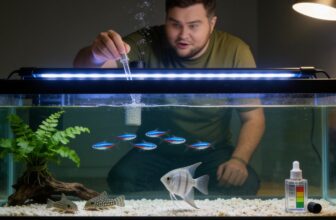
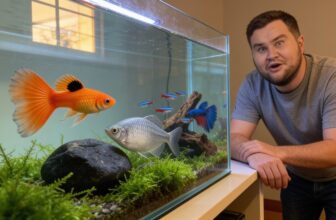
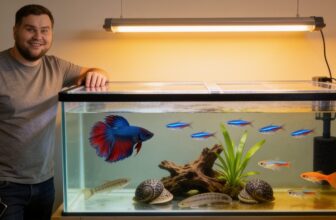
Balloon mollies need a 20‑gallon tank with soft sand, four inches deep, so their round bellies don’t scrape.
You’ll keep the water hard and alkaline, pH 7.5‑8.5, temperature steady at 75‑80°F.
Feed them vegetables like blanched spinach and zucchini twice daily, plus spirulina flakes.
They live 3‑5 years when water stays clean and warm.
A sponge filter and gentle current keep them happy.
The right setup brings out their best colors, and there’s more to uncover about keeping them thriving.
At A Glance
- Keep water alkaline (pH 7.5–8.5) with hardness 20–30 dKH for healthy bone development.
- Feed plant-based meals twice daily: blanched vegetables and spirulina flakes two to three times weekly.
- Maintain 75–80°F with gentle sponge filtration and weekly 30% water changes.
- Use one male per two to three females; isolate pregnant females with thick plant cover.
- Expect 3–5 year lifespan with stable water, varied diet, and clean, warm conditions.
Tank Size and Setup for Balloon Mollies
A twenty-gallon tank sits on your stand like a small, clear pond, and that’s where your balloon mollies will feel at home.
A twenty-gallon tank sits like a small, clear pond where your balloon mollies will feel at home.
You’ll want to add soft sand on the bottom, four inches deep, so their bellies don’t scrape rough gravel. Live plants help with algae control, and you should tuck java ferns along the back glass.
Light placement matters for growth, so position your light strip six inches above the water surface, running it ten hours daily. A sponge filter keeps things gentle, since these round fish aren’t strong swimmers.
Consider adding a digital temperature controller to maintain stable water between 75-80°F, as these sensitive fish suffer from fluctuations.
Check your water weekly, and you’ll see them thrive.
Water Parameters: Hardness, pH, and Temperature
Balloon Molly fish look sturdy with their round bellies, they feel stress you can’t see when water chemistry drifts from their comfort zone.
You must anchor your care in numbers that matter. Here’s how you protect them:
- Temperature range: Keep your heater steady at 72–78°F, like a warm summer afternoon they remember.
- pH balance: Aim for 7.5–8.5, the alkaline water their bodies expect.
- Water hardness: Maintain 20–30 dKH, minerals that build their bones strong, just like calcium does for you.
Test weekly. Stable parameters mean calm fish, and calm fish live longer, fuller lives beside you.
If you need to raise alkalinity to reach the ideal pH range, multi‑component carbonate buffers designed for aquariums can help maintain consistent water chemistry without introducing harmful phosphates or silicates.
Do Balloon Mollies Need Brackish Water?
When you walk past the fish store, you might see balloon mollies swimming in tanks labeled “brackish,” and you’ll wonder if your living room aquarium needs salt too.
You’ll feel relieved knowing they don’t require brackish water.
These rounded fish descend from freshwater ancestors, and you’ll succeed with standard hard, alkaline freshwater. Some keepers add one teaspoon marine salt per five gallons since it supports immune function, but you’re not failing if you skip it.
Their breeding genetics create that compact body shape, not brackish adaptations.
You’ll maintain 7.5-8.5 pH, and your balloon mollies will thrive. The salt helps, but kind water changes matter more.
Just as you would with a 3‑gallon betta tank, performing regular weekly water changes of approximately 30% helps maintain stable water quality and supports beneficial filter bacteria that keep your balloon mollies healthy.
Filtration and Oxygenation for Active Swimmers
Since your balloon mollies zip and dart through the water all day long, you’ll need to move more water than you might expect.
These little swimmers work hard, and hard work needs clean air to breathe.
Here’s how you’ll keep their water right:
- Choose a filter rated for at least double your tank size—strong filter flow scrubs waste and keeps ammonia from building up where their gills touch.
- Add an air stone or bubbler—breaking the surface pumps dissolved-oxygen into every corner, especially warm water that holds less air.
- Position outputs so current spreads throughout—dead spots feel stuffy, like a closed room on a summer day.
Consider adding a spray bar to your return line for gentle, rain-like water distribution that prevents turbulence stress on your active fish while maintaining efficient circulation throughout the tank.
Feeding Balloon Mollies: Plant-Based Diet and Supplements
The green leaf of lettuce, soft and sinking, teaches you what these fish need most. Feed your balloon mollies a plant-based foundation, since their bodies work best with greens. Consider adding liquid aquarium fertilizers to any live plants in their tank, as healthier plants provide richer grazing for your mollies.
Diet enrichment matters. Blanch spinach, zucchini, cucumber until tender, then drop pieces in. They’re soft, easy to nibble, full of vitamins. Plant supplements round out what nature misses. Add spirulina flakes, small amounts, two or three times weekly.
Algae-based nutrition keeps their digestion steady, their colors bright. Notice the difference in how they swim, calm and eager. Feed small meals, twice daily, watch them flourish.
Tank Mates for Balloon Mollies: Safe Choices and Aggressive Species to Avoid
Green vegetables settle in the tank, and your mollies nibble in peace, but you notice how their fins flick faster when something moves outside the glass.
Green vegetables settle in the tank, and your mollies nibble in peace, but you notice how their fins flick faster when something moves outside the glass.
Choosing companions carefully protects your fish from compatible stress, which weakens disease prevention.
Good neighbors keep everyone calm.
- Safe friends: Platies, Cory Catfish, and Harlequin Rasboras share space gently.
- Watch closely: Cherry Barbs nip fins, so add thick tank decor for hiding.
- Never mix: Tiger Barbs and Oscars chase mollies, ruining breeding genetics through panic.
Peaceful communities help your rounded friends thrive without fear. Regular twice‑weekly testing keeps water parameters stable when housing multiple species together, preventing stress from invisible chemical shifts.
Balloon Molly Behavior: Shoaling, Breeding, and Stress Signs
A small, rounded shadow drifts through your tank, and you’ll notice it quickly—your balloon molly feels safer with friends nearby. These peaceful fish establish a social hierarchy through gentle chasing and fin displays, not violence.
During breeding, males pursue females persistently, which can exhaust them. You’ll spot stress when fish hide, fade in color, or gasp at the surface. Territorial disputes flare over prime plant spots but rarely cause harm. Larger tanks reduce stress for community fish like balloon mollies, giving females more escape routes from persistent males.
| Behavior Sign | What You See | Your Response |
|---|---|---|
| Shoaling | Fish swim together loosely | Keep groups of 4+ |
| Hierarchy | Mild chasing, no damage | Maintain 2 females per male |
| Breeding stress | Female hides, males circle | Add plants for escape |
| Territorial flare | Brief fin-spreading at caves | Rearrange décor occasionally |
Watch your mollies daily. Stable groups bring calm, active fish who investigate every corner confidently.
Balloon Molly Color Variations: Black, Dalmatian, Gold, and Lyretail
When you peer into a tank full of balloon mollies, you’re greeted by living ornaments in jet-black, spotted white, shimmering gold, and fan-tailed grace—each color pattern tells a story about careful breeding and genetic inheritance.
You’ll notice four beloved varieties crowding pet store shelves, shaped by decades of selective color genetics and shifting market demand.
- Black balloons carry a dramatic, velvet-dark sheath that catches light like polished stones.
- Dalmatian balloons scatter black freckles across pale bodies, no two fish wearing identical spots.
- Gold balloons gleam with metallic warmth, sometimes edged in fiery orange.
- Lyretail balloons trail split, flowing fins resembling ancient hooked pens.
Choose colors that spark joy in your chest.
Maintaining stable water chemistry is essential for preserving their vibrant colors, which is why many aquarists rely on automatic temperature compensation devices when monitoring salinity levels in brackish setups.
How Hardy Are Balloon Mollies?
Balloon mollies hang tough in aquariums that would stress out pickier swimmers, but let’s look closer at what “hardy” really means for these round-bellied fish.
You see, market demand ballooned for these cute, compact fish, and breeders responded by selecting the roundest bellies generation after generation.
That focused breeding squeezed out genetic diversity, much like copying the same photocopy until the picture blurs.
You can keep them alive with steady 75°F water, zero ammonia, and gentle filtration, certainly.
Their shortened spines and compressed organs mean they tire faster, heal slower, and can’t bounce back from the surprises tougher fish shake off, so maintaining zero ammonia with the help of live nitrifying bacteria products becomes especially critical for their long-term health.
Preventing Disease: Ich, Fin Rot, and Swim Bladder Care
Their rounded bellies might look sturdy, but you’ve already seen how that compact shape hides real fragility. You must watch closely, since balloon mollies fall ill faster than their sleek cousins.
- Check for tiny white spots, like salt, signaling ich—raise temperature to 82°F slowly, and treat quickly. For confirmed ich outbreaks, consider API Liquid Super Ick Cure, which kills parasites fast and protects the slime coat while working in both freshwater and saltwater environments.
- Practice fin rot prevention by keeping water pristine, testing weekly, removing sharp decorations that tear fins.
- Master swim bladder therapy when your fish floats sideways or sinks: fast them 24 hours, feed thawed peas with skins removed, and maintain stable warmth.
You hold their health in your steady hands.
How Long Do Balloon Mollies Live? Lifespan Factors
Factors That Shape Balloon Molly Lifespan
A well-cared-for balloon molly will keep you company for three to five years, maybe a little longer if you are very attentive. Their genal genetics—traits passed from parents—set the foundation, but your daily choices shape the actual outcome.
Watch for stress indicators like faded color, clamped fins, or hiding; these signals mean something’s wrong in their world. You can fix most problems early if you pay attention.
What tips the balance between a short life and a long one
| Helps Them Live Longer | Shortens Their Life |
|---|---|
| Clean water, steady warmth | Ammonia spikes, cold drafts |
| Varied vegetables, gentle friends | Overcrowding, bullies, skipped meals |
| Quiet tank placement | Loud TVs, tapping glass, sudden lights |
Breeding Balloon Mollies: Ratios, Setup, and Gestation
Once you’ve helped your balloon mollies live a calm, healthy life, you might notice the females growing rounder in the belly. That plumpness means babies are coming, since these fish carry their young inside, like tiny water balloons of life.
Getting the breeding ratios right keeps everyone safe. Aim for one male to two or three females, so no single girl faces too much attention.
Here’s your simple setup list:
- Move the expectant mother to a 10-gallon tank heated to 78°F.
- Add thick plants or a breeding box for hiding.
- Mark your calendar, since gestation timing lasts 35–45 days.
You’ll spot her squared-off belly when birth nears.
Raising Balloon Molly Fry: First 8 Weeks
Baby Balloon Molly Care in the First Eight Weeks
Is your tank suddenly full of tiny shadows darting between the leaves?
You’ve got fry, and they’re hungry. For the first three days, feed infusoria—tiny floating food your eyes can barely see. Then switch to powdered flake, and by week two, add baby brine shrimp. Fry nutrition builds their bones and bright colors, so feed small amounts five times daily. Change twenty percent of the water twice weekly to keep ammonia away.
Molly genetics mean some fry will show balloon shapes while others stay slender. That’s nature’s lottery. Separate larger fry from smaller ones so everyone eats. By eight weeks, they’ll look like miniature adults.
Acclimating New Balloon Mollies: Your First 48 Hours
Acclimating New Balloon Mollies in the First 48 Hours
Where do balloon mollies feel safest when everything around them feels strange and new? They seek shelter, just like you might hide under blankets during a thunderstorm.
Start with a proper quarantine protocol—two weeks in a separate tank prevents disease from spreading to your established community. You’ll watch for signs of stress, like clamped fins or faded colors, which mean the fish feels scared.
Follow this acclimation flowchart carefully:
- Float the sealed bag for fifteen minutes to match temperatures
- Add small amounts of tank water every ten minutes for one hour
- Release gently near a hiding spot
Your patience now builds trust that lasts their whole lives.
Frequently Asked Questions
Do Balloon Mollies Change Color as They Age?
Yes, your balloon mollies’ hues shift over time. You’ll notice their coloration genetics express differently as age related pigments fade, especially when stress or poor water quality accelerates the dulling of their once-vibrant patterns.
Can Balloon Mollies Recognize Their Owners?
Balloon mollies develop owner recognition through behavioral conditioning—you’ll notice they swim toward you during feeding time. They associate your presence with food rewards, and you’ll see this learned response strengthen with consistent daily interaction.
Should I Add Salt to My Balloon Molly Tank?
You can add salt to your balloon molly tank since they’ll tolerate brackish conditions, but you’ll need to monitor salt dosage carefully and guarantee water hardness stays within 20-30 dKH for peak health.
Why Is My Balloon Molly Swimming Upside Down?
Your fish likely suffers from a swim bladder disorder affecting its swim pattern. You’ll notice disrupted tank orientation as gas fills the organ. You’re observing classic signs—fasting 24-48 hours helps, then feed peeled peas.
How Can I Tell if My Balloon Molly Is Pregnant or Just Bloated?
You’ll spot pregnancy signs by checking for a dark gravid spot near her anal fin—true belly swelling from pregnancy shows that mark, whereas simple bloating lacks it and often clears after fasting.
Rounding Up
You’ve got all the tools now, friend.
Your balloon molly’s round belly, that balloon shape you picked them for, needs gentle care. Keep their water steady, feed them greens with a little protein—think of it like your own balanced plate—and give them space to swim, at least 20 gallons for a small group.
Watch them closely. When fry arrive, move them fast, or they’ll become snacks.
These fish live two to three years, sometimes four if you’re attentive. That’s not long, but it’s enough time to build a small, quiet bond. Start with healthy stock, acclimate them slowly, and you’ll do just fine.