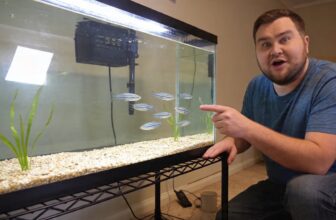
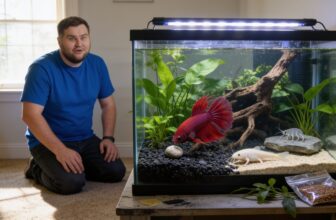
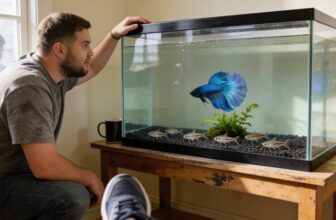
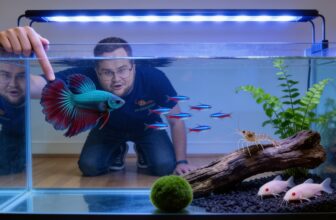
You’ll find ghost shrimp with their see-through bodies perfect for peeking at tiny hearts beating inside. Cherry shrimp glow like little fires and clean your glass as they snack.
Blue velvets shimmer like denim underwater, calm and easy to keep. Amano shrimp work like tiny goats, mowing down green hair algae faster than you can blink.
Snowballs carry pearly eggs you can watch grow for thirty days. If your tank’s bigger, grass shrimp join groups of eight to feel safe.
Each one teaches patience, like tending a garden that breathes back. Keep looking, there’s more living color ahead.
At A Glance
- Cherry, Ghost, and Amano shrimp suit beginners with flexible water parameters and algae-eating habits.
- Blue Velvet, Blue Pearl, and Snowball shrimp add vibrant color but need stable, clean conditions.
- Crystal Red, Pinto, and Blue Bolt shrimp demand precise temperature, pH, and advanced filtration.
- Bamboo shrimp filter-feed in gentle currents and require tanks larger than twenty gallons.
- Grass shrimp thrive in planted groups of eight or more, supporting natural filtration and breeding.
Ghost Shrimp: The Transparent Starter for Small Tanks
What’s the first thing you notice when you peer into a tank full of Ghost Shrimp?
Peer into a tank of Ghost Shrimp and you’ll see nearly invisible creatures, their glass bodies both everything and nothing at once.
You see nearly invisible creatures, their bodies like glass, and that transparency makes you feel curious, maybe a little puzzled. You’re watching a defense mechanism—these shrimp hide by showing everything and nothing at once.
For tank size, you’ll need at least five gallons, a small space that feels cozy, not cramped.
Water parameters stay simple: keep temperature between 65–82°F, pH 7.0–8.0. You’re maintaining conditions like keeping a room comfortable for a friend.
They’re active scavengers, continuously consuming algae while you observe their quiet, constant work.
Many beginners start with a compact desktop setup, such as the 1.25‑gallon rimless glass cube that offers minimal visual clutter and simple LED lighting for aesthetic appeal.
Cherry Shrimp: Bright Red Algae Control for First-Time Keepers
When you look into a tank holding Cherry Shrimp, you’re greeted by small creatures burning like tiny embers against green plants, their bright red bodies impossible to ignore.
You’ll appreciate how they graze algae from leaves and glass, keeping your aquarium tidy without much effort from you.
For success, you’ll want to remember a few things:
- Tank cycling matters: You must run your filter and establish bacteria for 4-6 weeks before adding shrimp, so ammonia won’t hurt them
- Breeding tips: Keep water stable at 72-78°F, and you’ll soon spot tiny shrimplets hiding in moss
- Feeding lightly: Offer small amounts of algae wafers, since overfeeding fouls their water quickly
You’ll find they’re forgiving pets, asking only for clean, cycled homes where they can multiply.
If temperatures climb above their comfort zone during summer months, consider a 6.4 W fan chiller like the PAIZOO model designed for ultra-quiet operation in small tanks.
Blue Velvet Shrimp: Easy Blue Color That Pops in Planted Tanks
Cherry Shrimp glow like living coals, but Blue Velvet Shrimp carry a different kind of light, the calm, steady blue of deep water on a clear afternoon.
You’ll spot their bright shells easily among green leaves.
Planted Tank Compatibility
Their planted tank compatibility shines since they crave dense vegetation for hiding.
They feel safest when roots and stems surround them.
Algae Grazing
You will appreciate their algae grazing habits.
They patrol your decorations, gently scraping away green film like tiny window washers.
This keeps your glass clearer without you lifting a finger.
Tank Mates
Keep them with peaceful fish.
Their vivid color makes them targets for bullies, so choose tank mates carefully.
Display Enhancement
For showcasing your colony, consider clear acrylic trays designed for aquatic displays—their polished surfaces and rounded edges keep shrimp visible without distracting from their natural beauty.
Amano Shrimp: Heavy-Duty Algae Eating for Established Aquariums
Their gray-transparent bodies, flecked with tiny dark spots like freckles on a sun-worn arm, vanish among thick leaves until you look closely, and that’s when you notice them working.
You watch them scrape the glass, a quiet army doing algae bioremediation as you sleep. They’re hungry, these Amanos, hungrier than most.
You add them not to new tanks, but to ones that have grown into themselves, where tank biofilm management matters. They need something to eat, you see, and baby tanks don’t offer enough.
Protect them further by wrapping intakes with 40 PPI sponge to prevent these diligent workers from being drawn into filters.
- One Amano clears a softball-sized patch of hair algae daily
- They thrive at 72-78°F, pH 6.5-7.5, in tanks ten gallons or more
- When frightened, they freeze, then dart, like children playing statue
Snowball Shrimp: Beginner-Friendly Breeders With Visible White Eggs
Amano Shrimp work hard, but they don’t give you babies.
Snowball Shrimp do, and you’ll see exactly how. Their bright white eggs look like tiny snowballs pressed against their bodies, making egg development visible even to your naked eye. You won’t need special lights or tools.
They’re additionally called White Pearl Shrimp, and they remind you of Ghost Shrimp but milkier, less see-through. Breeding cycles run fast—about thirty days from egg to baby shrimp. You’ll watch generations unfold in a single season.
Keep them in five gallons or more. They ask little, show much, and reward your patience with life you can actually witness growing.
Just as acrylic slot design holds filter socks securely in reef setups, a stable environment with consistent water flow helps Snowball Shrimp thrive and breed successfully.
Blue Pearl Shrimp: Soft Color Variants From German Breeders
German breeding programs developed these delicate creatures from Pearl Shrimp stock during the early 2000s. You’ll notice their semi-transparent bodies carry soft pastel hues, like watercolor washes on glass, with random red splashes that catch your eye.
- Their greenish-blue sheen shifts under different lighting, creating gentle movement in still water
- They graze algae steadily, keeping plants clean without demanding your constant attention
- You’ll need a 10-gallon minimum, as they grow to 2 inches and appreciate swimming room
Feed them commercial shrimp food occasionally, though they’ll mostly fend for themselves. They’re forgiving beginners, quietly beautiful, and ask little beyond stable water and patience. For optimal tank setup, consider using fine natural sand such as the Classic SandPlay Natural Aquarium Sand, which provides a gentle substrate that won’t damage their delicate feelers while maintaining stable water parameters.
Grass Shrimp: Schooling Scavengers for 10-Gallon Setups
Those gentle Blue Pearls move like quiet watercolor, but now imagine something busier, something that never really stops.
Grass shrimp dart everywhere, tiny swimmers in constant motion.
You’ll notice these one-and-a-half-inch scavengers thrive when kept in groups of eight or more.
Their constant grazing helps maintain biological filtration balance similar to how specialized pond media supports water clarity in larger aquatic systems.
| Grass shrimp, tank dynamics | Grass shrimp, feeding strategies |
|---|---|
| Need 10 gallons minimum, dense planting for security | Graze plant detritus, phytoplankton, organic matter constantly |
| Strong swimmers reach all tank areas using legs | Supplement with sinking pellets if algae runs low |
| Prefer bottom plants and decorations for grazing zones | Avoid overfeeding; they clean efficiently on their own |
Their restless energy keeps your aquarium polished.
Babaulti Shrimp: Hardy Striped Variety for Temperature-Fluctuating Tanks
If you’ve ever worried about keeping your tank steady through a drafty winter or a summer heat wave, you’ll find comfort in these adaptable little survivors.
Babaulti shrimp shrug off temperature swings that stress other species. Their impressive temperature tolerance spans 64.5°F to 82.5°F, letting you relax when your heater sputters or summer warms the water.
These hardy shrimp stay stress-free through equipment failures and seasonal shifts, thriving from 64.5°F to 82.5°F without missing a beat.
You’ll notice their striped markings—dark vertical bands crossing green or brown bodies—steady as the shrimp adjust to shifts.
They’re low maintenance, unfussy about food, and their hardy breeding means you’ll spot tiny shrimplets without special effort.
A 4.5 W air stone combo from the Carefree Fish line adds gentle oxygenation that benefits mixed fauna tanks housing these temperature-hardy shrimp alongside other species.
- Accept wide temperature range with steady health
- Display bold stripes that stay visible through changes
- Breed reliably without demanding perfect conditions
Bamboo Shrimp: Gentle Giants for Spacious Filter-Feeding Setups
With their fan-shaped front legs spread like tiny nets, Bamboo Shrimp invite you into a slower, quieter corner of aquarium keeping.
You’ll watch them perch on driftwood or rocks, catching floating particles. They’re filter feeders, not cleaners, so they won’t scrape algae from glass.
Your filter design matters. You’ll need gentle water flow, like a soft stream, not a rushing river. Strong currents exhaust them.
They grow to three inches, so you’ll give them twenty gallons minimum, with spaces to anchor and feed.
Earth-brown bands stripe their bodies, sometimes blazing red. Every month or two, you’ll find a perfect, hollow shell they’ve left behind.
When housing these delicate filter-feeders, consider a nano aquarium kit with adjustable flow and pre-glued leveling mat to ensure stable, gentle water conditions in their spacious setup.
Crystal Red Shrimp: High-Contrast Stripes for Stable Water Conditions
Against a backdrop of moss and driftwood, Crystal Red shrimp catch your eye like living candy canes, their red and white stripes demanding that you look closer.
Living candy canes darting through moss—Crystal Red shrimp demand you look closer.
You’ll notice each Crystal Red carries a unique pattern, some with bold bands, others with delicate patches, the Stripe Contrast making every shrimp special.
These beauties need your attention to detail.
Water Stability matters deeply here, swings in temperature or chemistry stress them quickly.
- Keep parameters steady at 72-76°F, pH 6.2-6.8
- Test weekly, change water gently, no sudden shifts
- Feed sparingly, remove uneaten food within two hours
If illness strikes your colony, medications like Seachem MetroPlex can be administered safely through food-bound delivery using a polymer binder, protecting your sensitive shrimp from water-column exposure.
Patience rewards you with vivid, breeding colonies.
Pinto Shrimp: Black-and-White Patterns Demoting Pristine Parameters
Black-and-White Patterns and Pristine Parameters
As Pinto shrimp carry themselves like tiny zebras in a glass world, you’ll find they’re far more delicate than their bold stripes suggest.
They’re small—three-quarters to one inch long—and need twenty-five gallons minimum. Temperature stays between sixty-two and seventy-six degrees Fahrenheit, pH five-point-eight to seven-point-four.
With Pinto shrimp, water stability matters deeply. A sudden shift, even a degree or two, shocks their systems. You’ll test conditions weekly, change water gradually, never rushing.
The pattern genetics create those zebra markings through careful breeding. Each stripe arrangement passes parent to offspring like eye color in families.
Feed them algae biofilm from decorations, plus commercial foods and leaf litter.
Panda Shrimp: Bold Banded Look for Species-Only Nano Tanks
Banding and Stripes
A single Panda shrimp carries stripes so crisp you’ll think someone’s painted them on with a tiny brush. You’ll want to keep these delicate creatures alone, or with snails, since fish find them irresistible snacks.
You can set up your nano tank décor with small caves and smooth stones, giving each shrimp a private corner to feel safe. Add algae‑friendly plants like java moss or anubias, which grow slowly and let film algae build up for grazing.
Here’s what you’ll need:
- A stable 5-10 gallon tank with gentle filtration
- Hiding spots: driftwood, rocks, or plant thickets
- Patient water testing, as swings stress them badly
These shrimp demand attention, but reward you with living artwork.
Blue Bolt Shrimp: Gradient Coloration Requiring Advanced Filtration
Watercolor Gradients and Gentle Care
Since you’re peering into a tank and spot a shrimp with a tail like fresh snow fading into a head the color of clear sky, you’ve found a Blue Bolt.
Their gradient coloration creates a watercolor effect, white melting into patches of pale blue across their inch-long bodies.
You’ll need advanced filtration, particularly sponge filters, as these shrimp bruise easily and can’t tolerate ammonia or nitrates.
They graze algae from dense vegetation and require hiding spots among plants to feel secure, like corners where you retreat when overwhelmed.
Keep them away from hungry fish.
Stable water matters more than elaborate decoration.
Blue Tiger Shrimp: Dark Stripes With Signature Orange Eyes
Midnight armor striped like a tiger, with eyes burning amber in the dark.
You look for a creature that looks like midnight wearing stripes. The Blue Tiger Shrimp is a small crustacean about one inch long with dark blue armor and bold black vertical bands.
Their stripe pattern resembles a tiger’s markings, painted sharp against deep indigo. You’ll notice their orange eye genetics immediately—two bright amber spots glowing like tiny lanterns in dim water.
These shrimp need clean homes. You must check water often, keeping ammonia low.
- Dark blue body with black tiger stripes
- Glowing orange eyes from inherited traits
- Requires 10-gallon tank with stable, filtered water
Indian Whisker Shrimp: Aggressive Bottom-Dwellers for Experienced Keepers
Indian Whisker Shrimp Basics
When you peer into a tank and spot what looks like a Ghost Shrimp with extra-long, twitching whiskers, you’re probably looking at an Indian Whisker Shrimp.
You’ll notice these creatures reach two inches, slightly larger than their Ghost cousins.
Don’t let their transparent bodies fool you. They show aggressive feeding behavior, snatching food before gentler tank mates reach it.
You must provide territorial shelter—caves, driftwood, dense plants—where each shrimp claims private space.
They’re bottom-dwelling scavengers, not algae eaters. You’ll supplement with sinking pellets and vegetables.
Experience matters here. Their bullying can overwhelm passive shrimp or even harm slow fish.
| Feature | Description | Your Action |
|---|---|---|
| Size | ~2 inches | Plan adequate space |
| Temperament | Aggressive, territorial | House alone or with fast fish |
| Feeding style | Aggressive feeding, scavenging | Target food to multiple spots |
| Habitat need | Territorial shelter required | Add caves, driftwood, plants |
| Difficulty | Experienced keepers | Monitor behavior daily |
Frequently Asked Questions
Can Different Shrimp Species Interbreed?
Yes, different shrimp species can interbreed if they’re closely related, so you’ll need to check genetic compatibility before mixing them. Hybrid vigor sometimes occurs, but offspring often prove sterile or display unpredictable traits you’ll want to avoid.
Do Shrimp Need Calcium for Healthy Molting?
Yes, you need to provide calcium sources like cuttlebone or mineral supplements since shrimp require calcium for healthy exoskeleton formation. Without adequate calcium, you’ll notice irregular molting frequency and failed molts that can kill your shrimp.
How Many Shrimp per Gallon Is Ideal?
You’ll find ideal density guidelines suggest 5–10 shrimp per gallon for small species like Cherry or Ghost Shrimp, whereas larger types need more space. Remember, you’ve got to complete tank cycling before adding them to guarantee their survival.
Will Shrimp Eat My Aquarium Plants?
You won’t lose plants to most shrimp—they’re algae control specialists, not leaf eaters. Check each species’ plant preferences compatibility: Amanos, Cherry, and Blue Velvet graze algae safely, whereas only starving Ghost or Bamboo Shrimp might nibble tender growth.
What Shrimplet Survival Rate Should I Expect?
You’ll see 20–40% survival rates if shrimp disease and unstable water parameters strike, but you’ll boost survival to 60–80% when you maintain stable conditions, feed properly, and provide abundant hiding spots for vulnerable shrimplets.
Rounding Up
You’ve seen fifteen shrimp that could live in your tank, each with its own care level and color. Start with Ghost Shrimp or Cherry Shrimp, they’re hardy and forgiving. Watch how they move, what they eat, how they interact. Your tank will teach you what works. Patience brings rewards in this hobby. You’ll know when you’re ready for the sensitive types. The water is waiting.