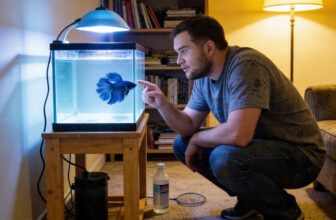
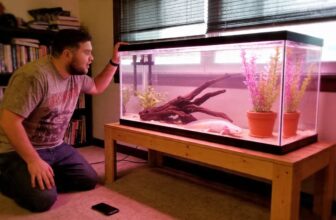
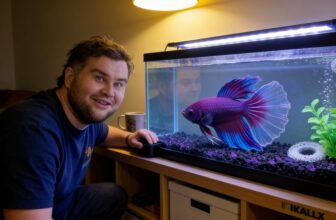
A glass tank sits on a table, half-filled with water, half-climbing into air. Roots dangle, fish dart, and mist rises from a hidden pump. This is a paludarium, a room for both wetland and shore. It asks patience, rewards attention, and holds a quiet kind of wonder. Children understand this instinctively. Adults sometimes forget. The tank waits, neither urgent nor indifferent, for someone willing to begin. What follows is how to answer that call.
At A Glance
- Paludariums combine deep water and terrestrial zones, supporting fish, frogs, and diverse plant ecosystems in one integrated habitat.
- Minimum 10-gallon tanks work, but 40+ gallons enable waterfalls, better biodiversity, and more stable environmental conditions.
- Three microhabitats require distinct lighting: submerged plants under bright LEDs, marginal plants at waterline, canopy species near top.
- Weekly 20% water changes, pH monitoring (6.5-7.5), and filter maintenance preserve water chemistry and biological balance.
- Common problems include algae blooms, humidity issues, and equipment noise, solvable through light timers, scheduled misting, and pump padding.
What Is a Paludarium? (And Why You’ll Want One)

Envision a glass box that holds both a pond and a forest at once, split like a slice of earth cut from a marshy riverbank.
This is a paludarium, from Latin *palus* meaning marsh and *arium* meaning place.
The ecosystem benefits unfold like a small world finding balance. Fish swim below whereas frogs rest on moss above, and the plants clean each other’s air and water without complaint.
A self-sustaining world where water meets land, each life quietly serving the whole.
You belong here too, watching life negotiate its own peace.
The glass holds a community that needs no master, only witness.
Paludarium vs Terrarium vs Riparium: Which Fits You?
Pick up three glass boxes in your mind, each holding a different slice of nature.
The first, a terrarium, keeps only dry land, moss, and small reptiles, quiet and contained. The second, a riparium, grows plants right at the water’s edge, roots drinking while leaves reach upward. The third, the paludarium, merges both worlds, fish swimming below, frogs hopping above, waterfalls threading through.
| Habitat | Water Amount | Best For |
|---|---|---|
| Terrarium | None | Succulents, snakes, tight budgets |
| Riparium | Shallow edge | Marginal plants, simple lighting options |
| Paludarium | Deep and land | Diversity seekers, ecosystem builders |
Budget trends favor starting small, then expanding. Lighting options vary: LEDs for plants, warmth lamps for basking spots. Choose where you belong.
How to Choose the Right Tank Size and Material
A single pane of glass stands as the quiet boundary between chaos and balance, the unseen foundation upon which every thriving paludarium rests.
Selecting a vessel begins with honest appraisal of budget selection, the practical limit that shapes every dream. Ten gallons marks the absolute minimum, though cramped quarters demand more attention, more patience, more care.
Material durability matters deeply here. Acrylic, like that in SeaClear tanks, resists the slow creep of cracks that glass invites. It weighs less, forgives small bumps, endures years of humidity and heat without growing cloudy or weak.
Size determines possibility. Forty gallons allows waterfalls, diverse species, the layered world readers long to build together. Smaller spaces still welcome creation, simply with fewer seats at the table.
Choose substance over spectacle.
Supplies Checklist: Everything You Need to Build
Once a tank sits waiting, empty and full of promise, the real work begins with gathering pieces.
Smart budget budgeting starts with needs over wants. A 10-gallon minimum holds small worlds; 40 gallons invites waterfalls.
Budget lighting, meaning affordable LED strips or clip lamps, sustains plants without draining wallets. Aquarium-safe silicone seals glass barriers between land and water. Plexiglass dividers, measured to fit, cost less than custom builds.
Wood, sand, rocks form terrain. A small pump moves water. Filter, heater, thermometer guard life. Soil, moss, ferns, and aquatic plants complete the living room.
Each item chosen with care builds belonging.
How to Build Land and Water Zones in Your Paludarium
Map the boundary first, measuring where water ends and land begins with a pencil line on glass or acrylic, since this line shapes every living choice that follows. Seal this division with aquarium-safe silicone and a plexiglass barrier, creating a dam that holds soil above water.
Soil zoning requires careful layering: coarse drainage material at bottom, then nutrient-rich earth above, sloping gently toward the waterline. This slope feels natural, like a real shoreline, and invites creatures to move between worlds.
Moisture control depends on this slope and your misting routine. Too wet, roots rot. Too dry, ferns crisp. The balance brings calm.
Best Plants for Every Paludarium Zone
Every thriving paludarium begins with three distinct neighborhoods of green, each with its own rules of root and leaf.
Lighting zoning matters here, like assigning seats at a dinner table.
- Submerged zone: Anubias and Cryptocoryne root in gravel, needing modest light, about 8 inches below bright LEDs.
- Waterline edge: Java moss and Salvinia float, catching 6-8 hours of diffused glow.
- Land slope: Ferns and pothos grip substrate layering—peat over gravel, 2 inches deep—feeling safe in humidity.
- Canopy top: Bromeliads and small orchids reach for bright, direct beams, 12 inches from lights.
Each plant finds its place, and so does the keeper.
How to Filter and Heat Your Paludarium Water
A bright light on green leaves is only half the story, since roots and fish need steady water and warmth to truly live.
Filtration begins with a simple hang-on-back filter or canister unit, rated for your tank’s gallon size plus ten percent.
Mechanical sponges trap debris, whereas biological media (little ceramic houses for bacteria) break down waste, keeping ammonia at zero parts per million.
UV integration means adding a sterilizer light that kills floating algae and harmful germs, like sunshine purifying a stream.
Heaters maintain temperature stability, usually set between seventy-five and eighty degrees Fahrenheit for tropical life. A submersible unit with a thermostat prevents dangerous swings, protecting sensitive amphibian skin and fish metabolism.
Check water parameters weekly.
How to Build a Working Paludarium Waterfall (Optional)
Place a small pump at the water’s edge, and watch how a silent current transforms into falling music.
A waterfall invites the keeper into a shared rhythm, water falling, rising, falling again.
- Pump selection: Choose a submersible pump rated for your tank’s gallons per hour, typically 40-80 GPH for small builds.
- Waterfall design: Stack flat slate or driftwood to create a gentle slope, 3-6 inches above water level.
- Tubing: Run flexible vinyl hose, half-inch diameter, from pump to crest.
- Testing: Run water for 24 hours before adding plants, checking for leaks, adjusting flow.
The sound becomes belonging.
Best Fish for Paludariums (Plus Compatible Invertebrates)
Paludarium fish-keeping requires careful thought about water depth, temperature, and the quiet temperament of species that share space with frogs, snails, and land-dwelling neighbors.
| Fish or Invertebrate | Best Feature | Care Level |
|---|---|---|
| Killifish | color water aesthetics with bright scales | Easy |
| Dwarf Gourami | gentle swimming at dusk | Moderate |
| Cherry Shrimp | Night-time lighting makes them glow red | Easy |
| Amano Shrimp | eat algae like tiny gardeners | Easy |
| Nerite Snails | patterned shells, peaceful cleaners | Very Easy |
Small tanks suit these choices. They feel calm together, like neighbors who wave instead of shout.
Amphibians, Reptiles, and Semi-Aquatic Animals That Thrive
Fish glide through currents, but some creatures need both solid ground and liquid depth to truly live.
A paludarium welcomes these boundary-dwellers.
- Frogs, like dart frogs and green frogs, move between water and land, using shallow pools for amphibian breeding.
- Salamanders and newts rest on mossy banks, then slide into cool depths to hunt.
- Reptile basking matters for painted sliders and water dragons, who need dry rocks under warm lamps to digest and grow strong.
- Mudskippers and fiddler crabs claim the in-between, where water meets shore.
Together, they build a living home.
Daily and Weekly Paludarium Maintenance (Simple Schedule)
Consistency keeps a living system calm. Every morning, check water temperature with a thermometer, aim for 75-78°F for tropical species. Trim yellow leaves with scissors, removing decay before it spreads. The lighting schedule runs twelve hours daily, dawn to dusk, using a timer; this rhythm feeds plants and prevents algae control problems through balance, not harsh chemicals. Weekly, replace twenty percent of water with treated freshwater, matching temperature to avoid shock. Wipe glass walls with a soft pad to limit algae control buildup naturally. Test pH weekly, keeping range 6.5-7.5. Clean filters monthly, rinse in old tank water to preserve bacteria.
Common Paludarium Problems (And How to Fix Them)
Even the most carefully tended glass world can develop troubles that disturb its quiet balance.
Even the most carefully tended glass world can develop troubles that disturb its quiet balance.
- Green fog: algae blooms choke the view, so algae management—reducing light, adding plants—clears the glass heart.
- Sticky air: poor humidity control wilts ferns; mist on schedule, watch the gauge.
- Grumbling machines: pump noise breaks the peace; pad the base, check placement.
- Fading life: plant decay, pest infestation, substrate depletion—fix with fresh soil, neem oil, new root space.
Watch water chemistry, lighting balance, temperature stability like a friend checks pulse. The ecosystem answers care with calm.
Frequently Asked Questions
Can Paludariums Be Converted Back to Regular Aquariums?
Yes, paludariums can undergo conversion maintenance to achieve aquatic restoration.
The process demands patience, like untangling a garden hose that has served many summers. One removes the glass barrier, the soil, the stones, and the roots that once held the land above water. The empty tank stares back, waiting. A person scrubs away residue, checks seals, and slowly fills the space with water alone. The fish return to a simpler world, though they do not know what changed. Some feel quiet satisfaction in this reversal, a return to origins. The work takes approximately three to four hours, spread across two days to allow silicone to cure. Memory of the marsh remains in faint water lines upon the glass, ghost marks of what lived before.
Do Paludariums Smell Bad or Cause Mold Issues?
Well-maintained paludariums do not smell bad or cause mold issues, though neglect invites both problems.
A working filter, changed every two to four weeks, removes decay before odor develops. Fresh airflow, achieved by keeping lids slightly open or adding small fans, limits dampness where mold spores thrive.
Mold prevention requires wiping glass weekly and avoiding overwatering, which means soil should feel like a wrung sponge, never sodden.
Good odor control comes from balanced inhabitants, approximately one inch of fish per gallon, and cleanup crews like shrimp and snails that scavenge waste. Healthy systems smell faintly of earth and green growth, nothing foul.
Mistakes feel discouraging but correct quickly with attention and patience.
How Long Does a Paludarium Take to Fully Establish?
A paludarium’s establishment timeline spans roughly six to eight weeks, though patience rewards the keeper. Biological filtration, meaning helpful bacteria colonies, require four to six weeks to mature and stabilize water chemistry. Plant growth rate varies: mosses establish in two weeks, whereas ferns and vines need six to eight weeks to fill their spaces. Full ecosystem balance, where waste cycles naturally and inhabitants thrive, typically emerges around the two-month mark. Rushing invites algae and animal stress.
Are Paludariums Safe for Children or Classrooms?
A properly built paludarium offers solid child safety through secure lids, stable bases, and non-toxic plants selected carefully. Classroom integration works smoothly when students share feeding duties, measure water levels weekly, and record temperatures in science journals. Adult supervision remains crucial, especially with electrical pumps and small animals. The contained ecosystem teaches patience, responsibility, and quiet wonder as living things grow and change together.
Can You Keep Turtles With Fish in a Paludarium?
Turtles and fish can share space, but the match needs care.
A painted slider, commonly kept, possesses a turtle diet of aquatic plants, insects, and small fish. This creates tension, since fish compatibility suffers when a turtle views tankmates as food. Larger fish, five inches or more, fare better. Fast swimmers, like danios, escape more often than slow guppies.
Space matters greatly. Forty gallons minimum prevents crowding stress, which feels like worry in tight rooms. Separate feeding zones reduce competition, similar to family members having their own dinner plates.
Filtration demands increase, since turtles produce heavy waste. Weekly water testing, using simple strips, maintains health for both groups. Success brings quiet satisfaction, like watching neighbors share a garden path peacefully.
Rounding Up
A small glass box, no bigger than a kitchen drawer, holds both fern roots and fish scales.
Patience builds it. Observation keeps it alive.
Children pressing noses to the glass learn what adults forget: that boundaries blur, that wet and dry need each other, that care repeated becomes love made visible.
Start with one plant, one gallon, one small light.
The colony grows. So does the keeper.