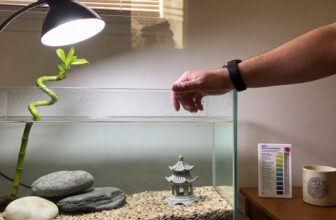
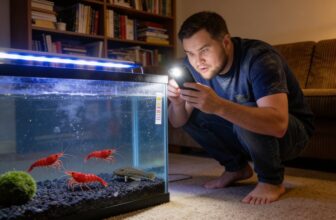
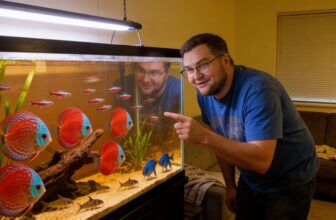
A five-gallon glass box sits on a windowsill, no bigger than a loaf of bread. Water fills it halfway, and a single sponge filter hums soft and low. Inside, six Ember Tetras flicker like living coals, their bodies no longer than a paperclip. Someone chose them carefully, matching soft water to soft water, gentle flow to gentle fish. That same person now wonders what else might fit, what else might glow. The answer isn’t simple, and that’s exactly why it matters.
At A Glance
- Ember Tetras, measuring just 0.6 inches, thrive in soft water with dim lighting and need groups of eight or more.
- Celestial Pearl Danios display galactic shimmer and prefer temperatures between 70–77°F with slightly acidic to neutral pH.
- Pygmy Corydoras require smooth sand substrate, gentle filtration, and schools of eight-plus to exhibit natural behaviors.
- Scarlet Badis are territorial micro-predators needing live or frozen foods and should not be housed with small shrimp.
- White Cloud Mountain Minnows tolerate cooler waters (65–75°F) and suit unheated nano tanks with basic flake diets.
5-Gallon Nano Tank Fish: Your Smallest Options
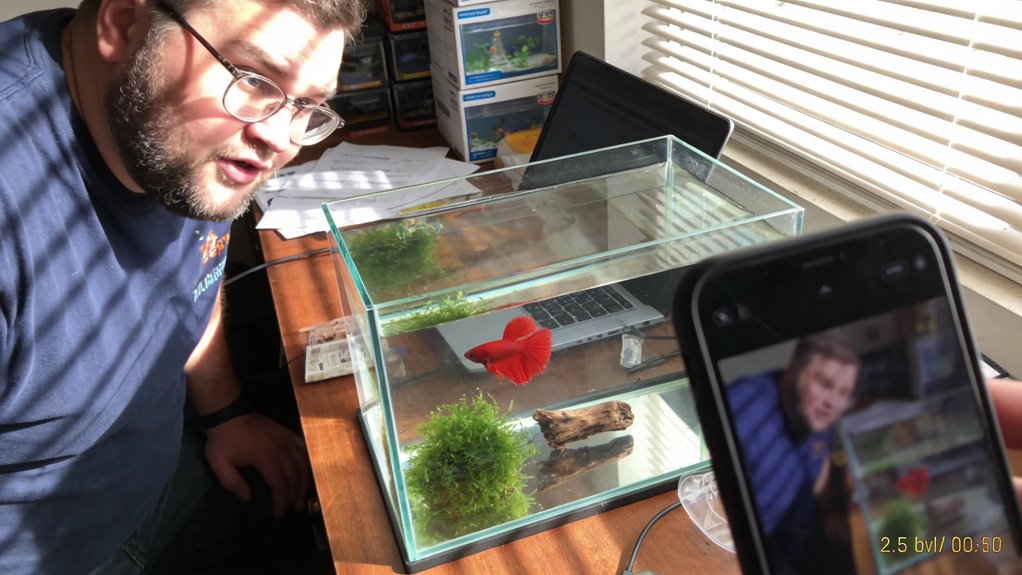
What fits inside a space smaller than a shoebox? A living world, waiting.
Nano tanks—vessels holding five to ten gallons—invite beginners into aquarium keeping without overwhelming them. These compact ecosystems demand respect: nano filtration runs constantly, cleaning water through tiny mechanical and biological stages, and lighting cycles mimic sunrise and sunset, usually eight to ten hours daily, so plants thrive and fish feel at home.
Small tanks welcome beginners, but demand constant care: filtration, light, and rhythm create life in miniature.
Least Killifish, reaching just 1.5 inches, flourish here. Ember Tetras, barely 0.6 inches long, school in shimmering orange clouds. Green Neon Tetras glow under proper bulbs.
Small spaces teach big lessons: care creates belonging.
10-Gallon Nano Tank Fish: The Sweet Spot for Beginners
A 10-gallon tank sits on a desk like a small window into another world, and this size changes everything.
Beginners find comfort here, enough water to forgive small mistakes, enough space for a few friends to swim together.
A nano plant setup — java fern, anubias, small patches of moss — grows easily with modest light, creating softness and hiding spots that make fish feel safe.
Filtration options stay simple: a quiet hang-on-back unit, or a gentle sponge filter bubbling in the corner, both cleaning water without fighting currents.
This tank welcomes the uncertain, offering practice without punishment, community without overcrowding.
15-20 Gallon Nano Tank Fish: Room for Schools and Pairs
Twenty gallons of water holds steady like a small pond on a kitchen counter, and that extra space changes how fish live together.
Harlequin Rasboras gather in six or more, their pink-orange wedges flickering through the water like small flames at home.
A pair of Dwarf Cichlids guards separate caves, each fish knowing its own corner.
Nano tank filtration must handle the waste of these groups, running quietly without crowding the glass box.
Lighting design brings out true colors, soft beams mimicking dappled forest floors.
In this space, fish find safety in numbers, and keepers find belonging in watching them thrive.
Ember Tetra: Smallest Schooling Nano Fish?
Tiny orange embers flicker through the water, each fish barely longer than a paperclip at just 0.6 inches, and this is why people wonder if the Ember Tetra holds the title of smallest true schooling fish for nano tanks.
- Ember tetra coloration glows like coals, shifting from pale amber to deep scarlet when happy
- Ember tetra breeding happens quietly; eggs scatter among fine-leaf plants, fry hide in moss
- Groups of eight or more weave together, each fish finding safety in numbers
They need soft water, gentle filters, and dim light to feel at home. Their small size means small mistakes hurt fast, so careful watchers thrive here.
Celestial Pearl Danio: Galaxy Colors in Miniature
Beneath still water, a handful of stars have fallen.
Beneath still water, stars fall soft as breath, and the dark holds light we almost missed.
The Celestial Pearl Danio carries galactic shimmer on fins no longer than a paperclip, about 0.8 inches. These Myanmar natives turn any dwarf aquarium into a private observatory.
They school in groups of six to ten, pressing close like neighbors at a summer gathering. Water stays cool, 70-77°F, with gentle acidity around pH 6.5-7.5.
Feed them micro-pellets, quality flakes, or frozen daphnia—protein keeps their colors bold.
They welcome beginners. They don’t fight. They simply glow, moving together, and that quiet harmony reminds us: belonging needs no words, only presence.
Scarlet Badis: Micro-Predator for Planted Nano Tanks
One fish carries a warning in its name.
The Scarlet Badis, a Micro‑Predator, reaches barely 0.75 inches. It patrols dense Planted Nano tanks, hunting tiny creatures among leaves.
Owners observe three key traits:
- Coloration—shimmering scarlet with deep blue stripes, brightest in males
- Feeding Strategies—demands live or frozen foods; flakes won’t sustain them
- Compatibility—avoid shrimp as Tankmates; they’ll become snacks
This Species thrives in soft Water, pH near 6.5. Set up gentle Filtration, dim Lighting Needs, and leafy Plant Selection for cover. They’re peaceful with own-kind, territorial toward outsiders. Keep Tank Maintenance steady, and this miniature hunter rewards patience with quiet, burning beauty.
Pygmy Corydoras: Bottom-Dweller for Nano Tanks
A mottled squadron of whisker-faced scavengers stays closer to the glass bottom than their cousins ever manage.
Pygmy Corydoras, barely an inch long, patrol fine gravel with soft bellies vulnerable to rough edges. They’ll sift through Pygmy Corydoras substrate of sand or smooth pebbles without injury.
They’re social creatures, huddling in groups of eight or more, sharing small findings like children trading secrets.
Nano tank filtration must stay gentle; strong currents exhaust these tiny fish, leaving them stranded in corners.
| Requirement | Specification |
|---|---|
| Group size | 8+ individuals |
| Substrate depth | 1-2 inch sand |
| Filtration type | Sponge or adjustable |
They bring quiet purpose to small spaces, teaching patience through their steady, whisker-twitching routines.
Otocinclus: Algae Control That Fits Small Spaces
Where does a busy aquarist turn when green fuzz creeps across glass and leaves, yet space stays stubbornly small?
The Otocinclus, a tiny catfish no bigger than two inches, offers quiet companionship and practical help. These gentle creatures cling to surfaces like living vacuum cleaners, their small mouths perfectly designed for Algae Scrubbing.
In a Compact Habitat, they thrive with simple care:
- Driftwood and broad leaves give them familiar territory to investigate
- Groups of four or more prevent the loneliness they feel when alone
- Blanched vegetables supplement their diet when algae grows thin
They ask little, give much, and fit where larger fish cannot.
Sparkling Gourami: Can Gouramis Work in Nano Tanks?
How might a fish no longer than a paperclip bring quiet wonder to a small glass world? The Sparkling Gourami does exactly this, shimmering like living jewelry in planted nano tanks.
| Care Factor | Measurement | Why It Matters |
|---|---|---|
| Minimum tank size | 10 gallons | Leaves room for swimming and exploring |
| Ideal temperature | 75–82°F | Mimics their Southeast Asian home waters |
| Tank filtration | Gentle sponge filter | Protects their delicate, sensitive barbels |
| Water pH | 6.0–7.5 | Keeps stress low and colors bright |
| Gourami breeding trigger | Slightly warmer water, 80°F | Encourages bubble nest building |
They’ll eat flakes, frozen brine shrimp, and live daphnia. Tank filtration must stay gentle—strong currents exhaust them. Gourami breeding happens when conditions feel safe, and males craft floating foam nests under leaves. Two or three create a peaceful community you’d belong inside, watching evening light catch their blue-green sparkle like stars you can keep.
Least Killifish: The Self-Replacing Nano Tank Colony
Though they measure barely longer than a sharpened pencil, Least Killifish carry the quiet magic of a living thing that makes more of itself without fuss or fanfare.
These tiny native fish, about 1.5 inches long, build a self replacing colony right before your eyes.
Tiny fish, endless generations—nature’s quiet colony building itself before your eyes.
- They birth live young, no eggs to fuss with, nothing to hatch.
- Adults don’t eat their babies, so generations swim together.
- They graze constantly, keeping algae‑free water without help.
A five-gallon tank holds enough room for this gentle cycle. You’ll never feel lonely watching them.
White Cloud Mountain Minnow: Cold-Water Nano Option
A small silver fish flashes blue in water cooler than most tropical tanks demand, and that alone makes White Cloud Mountain Minnows worth notice.
These fish, reaching one-and-a-half inches, thrive between sixty-five and seventy-five degrees Fahrenheit. Their coldwater suitability means no heater battles, no failed equipment nightmares, just steady, simple living.
Tank size optimization matters: ten gallons minimum, though more brings out their best. Six fish form the starting school, darting together like sparks in water.
They eat basic flake, forgive beginner mistakes, and school with quiet coordination. For those wanting aquarium success without tropical complexity, they offer genuine belonging.
Betta Fish: Solo Nano Setup or Community Risk?
Betta fish carry a reputation that precedes them, and that reputation often leads newcomers into trouble.
Those flowing fins, like silk flags underwater, enchant many keepers into sharing a five-gallon tank with unsuspecting friends.
Betta aggression surfaces without warning, like a spark in dry grass, burning through community harmony. Males attack reflections, females, even snails.
A solo setup creates peace. One fish, one planted home, no casualties.
Consider three truths before deciding:
- Tank size below five gallons stresses any Betta
- Mirror play exhausts them; it isn’t friendly interaction
- Community tanks demand ten gallons, ten eyes, endless vigilance
Belonging starts with safety, not crowded tanks.
Matching Water Parameters Across Nano Species
Precision keeps fish alive, and water is where that precision starts.
A Harlequin Rasbora wants soft, acidic water near 74°F, pH 6.5, as a guppy prefers harder, alkaline conditions closer to 7.5-8.0. These differences matter. Parameter compatibility means checking each species’ needs before they share space. Mixing a soft-water Scarlet Badis with hard-water livebearers creates silent stress, shortened lives. Tank cycling considerations come first: beneficial bacteria need 4-6 weeks to establish, converting ammonia to nitrite, then nitrate. Skip this, and fish suffocate in their own waste. Patience builds the invisible home they deserve. Match parameters, cycle properly, and tiny tanks thrive.
Stocking Rules That Keep Nano Fish Alive
Every inch of water matters when tanks stay small.
In small tanks, every drop of space becomes precious real estate for aquatic life.
Stocking wisely builds a community where every fish belongs. Filtration cycling—growing helpful bacteria in the filter before adding fish—takes 4-6 weeks. This process protects tiny swimmers from invisible toxins.
Light spectrum matters too. Plants need red and blue wavelengths to grow, and healthy plants make fish feel sheltered.
Follow these three rules:
- Add fish slowly—two small fish weekly, never all at once.
- Stock one inch of fish per gallon maximum.
- Match peaceful species; harlequin rasboras welcome ember tetras.
Patience creates homes where nano fish flourish together.
Nano Tank Mistakes That Kill Fish Fast
A small tank can turn deadly when invisible poisons build faster than anyone expects. Over cycling crashes the filter—good bacteria die, ammonia spikes within days, and fish gasp at the surface. Novices panic, they change water too fast, and they strip away what little protection remains. Substrate choice matters more than decoration; sharp gravel tears delicate barbels, whereas inert sand traps waste in pockets that rot. One wrong stone turns a home into a hazard. Smart keepers test water twice weekly, they cycle patiently for six weeks, and they choose smooth, nutrient-rich bottoms that harbor life, not death.
Frequently Asked Questions
Can I Mix Nano Fish With Shrimp?
Compatible species compatibility exists between many nano fish and shrimp, though shrimp coexistence demands careful selection. Peaceful fish like Ember Tetras, Otocinclus, and Dwarf Pencilfish won’t hunt adult shrimp. Scarlet Badis, Bettas, and Dwarf Cichlids pose threats, as they’ll eat young or small shrimp. A 10-gallon tank with dense plants creates hiding spots, helping shrimp feel safe. Success requires matching temperaments, not just sizes.
Do Nano Fish Need Air Stones?
She doesn’t need air stones if her filtration methods include gentle water movement, since air filtration through surface agitation matters more than bubbles. Good water chemistry keeps oxygen stable, and temperature control affects how much dissolves. Dense planting helps, but behavioral enrichment through flow patterns keeps fish calm. Surface movement, that’s the secret, not the stone itself. It’s like opening a window, not running a fan.
How Long Do Nano Fish Live?
Most nano fish live two to four years, though some reach five with excellent care.
A small glass tank holds their whole world, so diet feeding matters daily—tiny flakes, frozen brine shrimp, or algae wafers matched to each mouth. Water chemistry stays steady through weekly testing, keeping pH and temperature stable, since sudden shifts stress their compact bodies. Size compatibility means choosing tankmates who won’t bully or outgrow the space. Breeding cycles bring new life, or careful planning prevents overcrowding.
Good care creates belonging, for them and for you.
Should Nano Tanks Have Lids?
Yes, nano tanks need lids. A proper lid design prevents jumpers from escaping, since many small fish leap when startled. Water temperature stays stable too, as lids reduce evaporation, which chills the surface. Glass or mesh covers work well. Without one, owners lose fish and heat. It’s simple protection, like a roof on a house, keeping everyone safe inside.
Can Nano Fish Recognize Their Owners?
Small fish can recognize their owners through consistent patterns. They link feeding schedules to human presence, noticing subtle shifts in owner behavior like approaching footsteps. Fish don’t see faces clearly, but they’ll remember routine, lighting color changes during tank visits, and gentle vibrations. This recognition builds slowly, across weeks of patient interaction. It isn’t love, exactly—more like familiar safety, the comfort of expected care.
Rounding Up
A small glass tank, no bigger than a lunchbox, holds living color. Patience builds it: soft water, tested twice each week, fish added slowly. Ember Tetras school like copper coins, Celestial Pearls glimmer like stars trapped in water. Mistakes happen—too many fish, skipped tests—but learning feels calm, not scary. The reward waits in quiet moments, watching tiny lives thrive. That’s the wonder. It’s enough.