You hold three small packages at the pet store: a damp container that feels cool, a frosty brick wrapped in foil, and a crisp paper pouch light as air. Each holds bloodworms—tiny, bright red larvae that make your fish flash with hunger. You wonder which one matches your life, your freezer space, your budget. The answer shifts like water, and you need to know how each choice changes what your fish actually receive.
At A Glance
- Live bloodworms require 35‑40 °F refrigeration and last only 2‑3 days.
- Frozen bloodworms preserve most nutrients for months at 0 °F without thaw cycles.
- Freeze‑dried bloodworms offer pantry storage but lose some nutrients from heat drying.
- Freshness degrades protein and vitamins within hours, making proper storage critical.
- Choose type based on your tank’s needs, budget, and available storage capabilities.
What Are Bloodworms and Why Do Fish Crave Them?
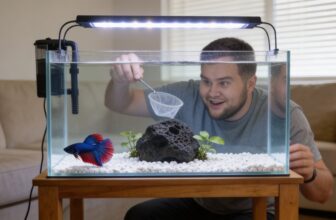
Have you ever wondered why your fish dart toward the glass when you open a little packet of brown-red worms?
You’re witnessing bloodworm ecology in action, a movement between predator and prey that spans rivers and aquariums alike.
These aren’t worms at all, they’re midge fly larvae, plump with protein-packed bodies that signal survival to your fish’s ancient instincts. In nature, they thrive where water meets rotting leaves, becoming concentrated energy sources. Your tank’s feeding behavior mirrors wild rivers, each strike connecting your fish to something larger than glass walls.
You feel that pull too, the quiet satisfaction of nourishment given and received, of belonging to a circle you didn’t choose but cherish.
Live, Frozen, or Freeze‑Dried: Which Bloodworms Suit Your Tank?
The packet you just opened holds a choice, not just a treat.
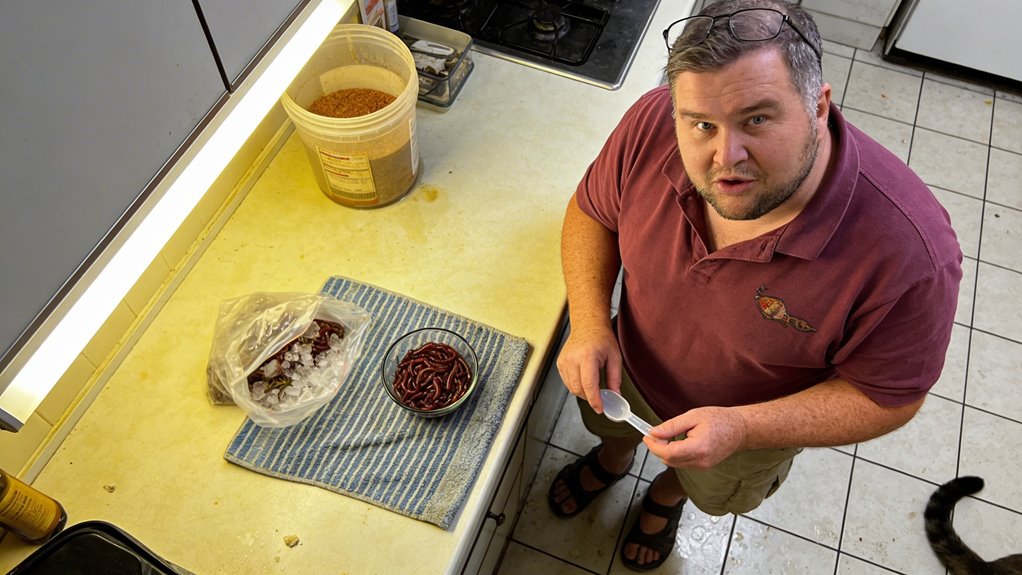
Live bloodworms wriggle, waking your fish’s hunting spirit, but they demand fridge space and quick use. Frozen bricks wait patiently for six months, their cold sleep trading convenience for slightly softened essential. Freeze-dried flakes need only water and a shaker, though they whisper rather than shout nutrition.
You’ll budget the monthly cost against your tank’s appetite. A quick price comparison shows live highest, dried lowest. Consider environmental impact too: live ships fast, frozen needs insulation, dried travels light. Your fish don’t judge your choice. They simply trust you chose with care, and that trust builds your belonging here.
How Freshness Affects Bloodworm Protein and Vitamin Levels
When you open a container of bloodworms, you’re holding time itself in your hands.
Fresh bloodworms brim with complete proteins and vitamins, like a just-picked apple.
As hours pass, proteinutrient degradation begins—enzymes break chains you cannot see.
Within two days at room temperature, you’ve lost thirty percent of what your fish need.
Vitamin loss accelerates faster, especially B-complex and C, which dissolve like sugar in rain.
Frozen bloodworms pause this clock, preserving most nutrition for months.
Freeze-dried worms trade convenience for content, having shed dry and some goodness through heat.
You choose where time stops.
Storing Bloodworms by Type: Shelf Life and Safety Rules
Your kitchen counter holds three small containers, each a different color of time.
Live bloodworms demand immediate cool temperature storage, 40°F or below, like milk on a warm day. Frozen blocks need steady temperature control at 0°F, no thaw cycles, or ice crystals ruin the cells. Freeze-dried curls want a dark, dry spot, pantry-cool, away from steam.
Check packaging integrity every time you open the cupboard; torn bags mean spoilage. Mark expiration tracking on every container with a felt pen, since trusting your memory feels risky when friends swim below.
| Type | Temperature Rule | Safety Check |
|---|---|---|
| Live | Refrigerate at 35-40°F | Use within 2-3 days, smell first |
| Frozen | Keep frozen at 0°F, no thawing | Inspect block for freezer burn monthly |
| Freeze-dried | Store in cool, dry pantry below 75°F | Verify seal intact, discard if clumped |
| All types | Label with purchase date | Trust but verify; your fish depend on you |
| Emergency | Never refreeze thawed worms | When in doubt, throw it out |
You belong to a community that chooses care over convenience.
Weekly Bloodworm Feeding: Portions That Protect Water Quality
A small measuring spoon settles the question before it starts.
One-eighth teaspoon serves ten small fish comfortably.
Portion dosing optimization means measuring once, feeding once, and watching them eat every morsel. Uneaten bloodworms rot quickly, turning your water cloudy and sour. You’re not just feeding fish; you’re tending a living system where bacteria work invisible jobs. Microbiome balance depends on your restraint. Overfeeding starves oxygen and breeds ammonia spikes that stress every resident.
Feed Tuesday and perhaps Saturday, never back-to-back days. Your fish stay eager, your water stays clear, and you belong to a community that honors limits as care.
Where to Buy Quality Bloodworms Without Overpaying
Where does a careful keeper turn for bloodworms that won’t empty the wallet?
You scan the budget market first.
Local shops carry live, frozen, and freeze-dried tubs, usually priced higher per ounce. You feel relief when you spot shelf-stable bricks behind glass, knowing they last six months sealed.
Online retailers reward patience. You click slowly, comparing grams to dollars, watching for bulk discounts that drop per-serving costs by half. You imagine your fish thriving, your account still breathing.
You choose freeze-dried wisely, checking labels for pure bloodworms, no fillers. San Francisco Bay Brand runs about fifteen dollars, clear packaging lets you inspect.
You belong here.
Do Bloodworms Bite? Safety Myths Every Aquarist Should Know
How do you hold a bloodworm without flinching? You relax your fingers, breathe, and remember what these creatures actually are.
- Aquarium bloodworms are midge fly larvae—they don’t bite, although the biteroom myth that circulates in hobby circles.
- True biters, Glycera bloodworms, carry venom risk but live in marine mudflats, not your tank.
- That prickle you feel is just their bodies wriggling, not teeth searching for skin.
You belong among aquarists who check facts, not fears. Hold your worms with confidence, pass knowledge gently, and build community through clarity.
What to Feed Between Bloodworm Meals for Complete Nutrition
Your bloodworms sit in their container, waiting for the next feeding day, and your fish circle the glass with hopeful eyes.
You want them thriving, not just surviving, so you fill the gaps between weekly treats with care. Rotate in brine shrimp for protein variety, and smear algae paste on tank glass for grazing—this mimics how fish nibble in wild currents. Add vitamin supplementation through quality flakes or pellets, ensuring complete nut balance across the week. You’re building a routine, a small promise of health, and your fish feel it, flashing brighter colors back at you.
Frequently Asked Questions
Can I Breed Bloodworms at Home for My Aquarium?
You can try home breeding, but you’ll face real challenges.
Bloodworms need still water, organic matter, and about two weeks to mature. Your substrate choice matters—mud or decomposed leaves work best, about two inches deep.
You’re managing the full midge fly life cycle here, which means containing adults that lay eggs. Most aquarists feel frustrated by the time and smell, so they buy instead.
Do Bloodworms Turn Into Flies if Not Fed Quickly?
You wonder if bloodworms turn into flies if not fed quickly.
Yes, they do.
Bloodworms are midge fly larvae, and they’ve got a built-in fly lifecycle timer. If you leave them sitting, even a week at room temperature, they’ll pupate and hatch. Feeding speed matters—you’ve got maybe five to seven days with live ones before they transform. Frozen or freeze-dried bloodworms, though, they’re paused, safe in your cabinet for months.
Are Bloodworms Safe for Shrimp and Snails?
Bloodworms are safe for your shrimp and snails when you feed them properly.
You’ll notice shrimp health improves with occasional protein treats, since bloodworms supply iron and amino acids they don’t get from algae alone. For snail nutrition, these larvae offer calcium-friendly fuel that supports steady shell growth without overwhelming their slow digestion.
Feed tiny portions, roughly what vanishes in two minutes, once weekly alongside their regular diet. Watch them gather, excited but not frantic.
You’re nurturing a balanced little world.
Why Did My Bloodworms Turn White in the Freezer?
Your bloodworms changed color since freezer burn got them, or they’ve thawed and refrozen without you noticing. That white, dry look means ice crystals sucked out their dampness and nutrients. You should toss them, friend—texture’s gone, and your fish won’t get the protein they need. Keep future bags sealed tight, use within six months, and don’t let the door stay open.
Can Bloodworms Carry Diseases to My Fish?
Yes, bloodworms carry path risks, especially live ones from uncertain sources. Frozen bloodworms reduce this danger significantly. Freeze-dried options eliminate pathogens entirely through dehydration, though they bring nutrient loss. You’re protecting your fish community when you choose safer forms, and that care builds trust in your tank. Inspect packaging dates, buy from reputable sellers, and you’ll keep your aquatic friends healthy without worry.
Rounding Up
Your freezer holds the answer most aquarists need.
Frozen bloodworms balance nutrition, cost, and convenience, whereas live worms suit dedicated hobbyists with time to spare.
Freeze-dried works for emergencies, though you’ll sacrifice some vitamins.
Match your choice to your routine, not someone else’s rules.
Rotate with other foods, watch your fish thrive, and trust the quiet satisfaction of getting it right.