Your aquarium glass waits, clear and still, as beneath the surface, a decision lingers. You want a carpet that softens the bottom, something living that spreads like a green meadow, and dwarf hairgrass offers exactly this promise. It asks for patience, not magic—just 1.5 inches of soft sand, light held 8 to 12 inches overhead, and your willingness to trim every few weeks. You’ll feel quietly proud when runners finally connect, that small satisfaction of tending something correctly. But first, you must know if your water will welcome it, or watch it thin and brown instead.
At A Glance
- Plant plugs every 0.5 inch for rapid runner connection and carpet formation.
- Maintain 40–50 PAR lighting with consistent CO₂ to prevent thin, weak growth.
- Use fine gravel, sand, or soil to enable easy runner spread and anchoring.
- Trim after three weeks of full coverage, then dose nutrients within 24 hours.
- Keep nitrates above 5 ppm and substrate nutrients adequate to avoid brown tips.
Dwarf Hairgrass: Species Traits and Aquarium Benefits
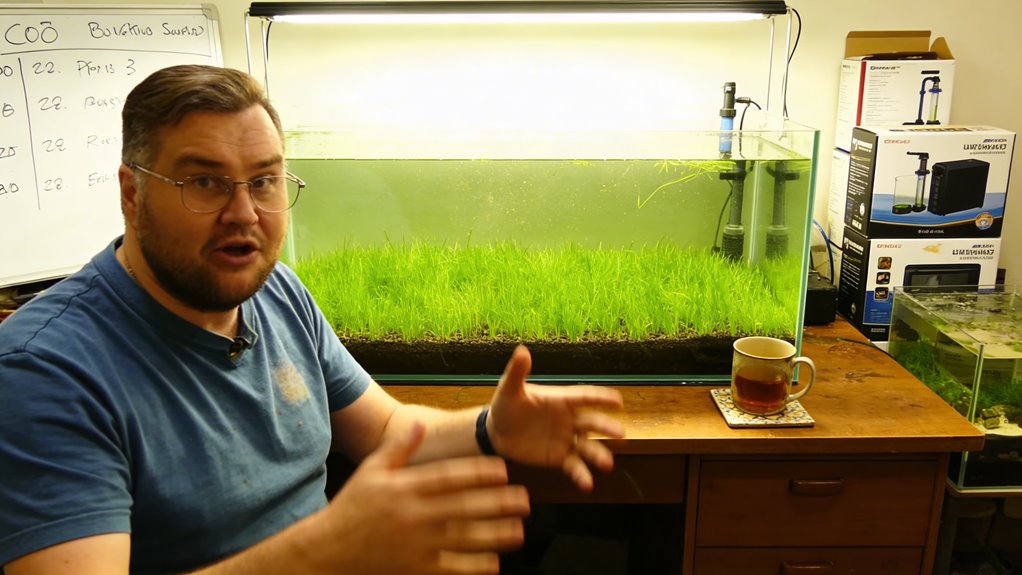
When you look at a patch of Dwarf Hairgrass, you’re seeing more than just a pretty green carpet—you’re looking at a living filter that works day and night to keep your aquarium clean.
You anchor this plant, *Eleocharis parvula* or *E. acicularis*, into soft substrate about 1.5 inches deep.
Its roots draw in waste, preventing nut nutrient bloom before it clouds your water.
You watch runners spread, creating hiding spots for shy fish who need safe spaces.
The roots tunnel through gravel, providing substrate aeration that keeps everything breathing below.
You belong to a community that understands: tiny plants build healthy homes.
Is Dwarf Hairgrass Right for Your Tank? (Water Conditions and Hardiness)
That filter and those hiding spots you just read about? They’ll work best when you’ve got the right space. Dwarf Hairgrass needs a minimum tank size of ten gallons, anything smaller cramps its roots, and you’ll feel the frustration of stunted growth. You’re in luck with water conditions, since this plant tolerates temperatures from fifty to eighty degrees Fahrenheit and pH between six-point-five and seven-point-five, so you won’t strain your budget with fancy equipment. Skip heavy nutrient dosing at first, start lean, observe, then adjust. With patience, you’ll belong to the community of aquarists who’ve grown lush carpets from modest beginnings.
Lighting Requirements for Thick Dwarf Hairgrass Carpets
Light is the currency your carpet craves, and you’ll need to spend it wisely.
Your dwarf hairgrass comes from shallow stream edges where sunlight pours unfiltered. In your tank, this means LED intensity matters more than you might expect. Choose a fixture offering medium-to-high brightness, roughly 40–50 PAR at the substrate level. This measurement tells you how much usable light reaches those tiny leaves.
- Position your light 8–12 inches above the water surface for even coverage.
- Run photoperiods of 8–10 hours daily to mimic natural daylight patterns.
- Pair proper LED intensity with CO₂ supplementation so your carpet doesn’t starve while it grows.
Without enough light and carbon together, you’ll watch your hopeful planting turn thin and sad. But give it both, and you’ll belong to a community of aquarists who’ve coaxed life from glass boxes.
Substrate Types That Anchor Dwarf Hairgrass Runners
Since your dwarf hairgrass spreads through thin underground stems called runners, you’ll need something soft for those tender roots to push into. Think of it like your fingers sinking into fresh garden soil, how that feels safe and right. The substrate texture matters deeply here. Fine gravel, sand, or specialized planted-tank soil lets those delicate runners travel easily beneath the surface, sending new blades upward wherever they please. You’ll want about one-and-a-half inches of depth. This gives proper root anchorage, holding each plant steady when fish swim past or water moves. Your carpet stays connected, whole, belonging together.
Planting Dwarf Hairgrass for Faster Carpet Coverage
Once your substrate is ready and waiting, you’ll want to think about how you actually place those little grass clumps into the tank.
You’re building something together, you and this plant, so spacing matters more than you’d guess. You’ll feel hope when you see those first runners stretch out, reaching for neighbors.
Here’s how you help them connect faster:
- Plant plugs every half-inch, like stitches closing a wound, so roots touch quickly and share soilutrient riches.
- Press each clump deep enough to anchor, shallow enough to breathe, finding that friendly middle ground.
- Keep water crystal clear at first, algae controling through patience, not chemicals, letting light reach every blade.
You’re not just growing a carpet. You’re growing patience, and that belongs to everyone who waits.
Runner Timeline: How Long Until Your Carpet Fills In
A single runner, no thicker than a thread, pushes sideways through your substrate, carrying tomorrow’s green inside it.
Growth speed depends on conditions you control.
| Factor | Slow Carpet (6-8 weeks) | Full Carpet (3-4 weeks) |
|---|---|---|
| CO₂ timing | None, or irregular | 8 hours daily, consistent |
| Nutrient cycling | Poor, clogged substrate | Active, root zone flows |
You watch the runners creep, feeling hope mixed with doubt. That’s natural. Patience wins here. Your plants belong to you, and you belong to this waiting.
When and How to Trim Dwarf Hairgrass
Your runners have finally knitted together into a carpet you can run your palm across, and now you’re wondering when to bring out the scissors.
You’re not alone in this moment of hesitation. Every carpet keeper reaches this threshold, standing before glass with blades in hand, hoping for clean cuts that honor the work already done.
- Wait three weeks after full coverage, matching your growthing schedule, so roots anchor firmly before stress arrives.
- Trim when blades exceed two inches, keeping carpets low and light reaching every leaf.
- Dose nutrients within 24 hours of cutting, since nutrient dosing fuels the burst of healing your plants need.
You’re cultivating patience here, shaping living thread into something that holds its ground.
Splitting Runners Without Killing New Growth
Before you lift a single cutting tool, you’ll notice something subtle happening at the base of your carpet—thin white threads, no thicker than sewing string, reaching sideways through the substrate like fingers feeling for open ground.
These runners carry new growth, and rushing breaks them.
Wait three weeks, you’ll feel patience building like a held breath.
Snip where roots anchor, leaving half-inch stubs in the mother plant.
Time your CO₂ timing with morning light, or algae greets you by Tuesday.
Replant divisions two inches apart.
Your tank fills slowly, like friendship deepening, and that’s exactly right.
Tank Mates That Won’t Uproot Dwarf Hairgrass
When you kneel beside the tank, you’ll notice how loose gravel shifts under your palm, and that’s exactly what trouble feels like to a root system finding its feet.
You’re choosing companions who respect that fragility.
- Neon Tetras swim in shimmering middle waters, their silver-blue flash matching compatible reef aesthetics without touching bottom.
- Kuhli Loaches burrow gently through soft substrate, loosening pockets where oxygen reaches roots, aiding algae competition management by disturbing detritus before it blooms.
- Cory Catfish sift with whiskered precision, their barbels detecting food without yanking strands.
You belong here, building quiet harmony where nothing fights the carpet you’ve tenderly laid.
When Your Carpet Stalls: Diagnosing Slow Growth and Brown Tips
If algae starts winning territory your Dwarf Hairgrass has already raised a quiet white flag, since a stalled carpet speaks in whispers before it shouts.
You notice the runners stop reaching, the green dulls, and brown tips spread like rust.
Check your light first—too little invites algae competition, too much burns what’s already struggling.
Feel your substrate. Nutrient depletion hides there, starving roots you cannot see. Test for nitrates below 5 ppm, phosphates near zero.
You’ve joined a quiet fellowship of aquarists who learn to read these signs.
Trim brown blades gently. Dose ferts like feeding a tired friend—small, steady, patient.
Your carpet remembers how to grow.
Dwarf Hairgrass vs. Monte Carlo, HC Cuba, and Glosso
Why stand in the aquascaping store, frozen between four green carpets that all look alike at first glance?
Frozen between four green carpets that all look alike, you forget the choice isn’t in the leaves—it’s in your hands.
You crave a space where your hands create belonging, where roots anchor community beneath glass walls.
Each plant fights for light and food—nutrient competition shapes your aquarium aesthetics.
- Dwarf Hairgrass spreads like whispered secrets, runners creeping outward, forgiving your early mistakes with low CO₂ demands.
- Monte Carlo laughs at your impatience, growing faster, rounding into soft cushions when you trim gently.
- HC Cuba and Glosso beg for brighter lamps, finer grains, more attention—you feel their need like a shy friend asking twice.
Choose the plant that matches your care, not your dreams alone.
Frequently Asked Questions
Does Dwarf Hairgrass Need Co₂ Injection?
You don’t need CO₂ injection for Dwarf Hairgrass, but you’ll see thicker carpets if you use it. Without added CO₂, you’ll wait longer and need stronger light. Your substrate composition matters more—you’ll want soft, nutrient-rich material like Stratum or dirt, about 1.5 inches deep, so roots can spread. Patience brings results either way.
Can Dwarf Hairgrass Grow Floating or Attached to Wood?
No, you can’t grow Dwarf Hairgrass floating or attached to wood. It needs its roots buried in soft substrate, like soil or fine gravel, to survive. When you compare floating vs anchoring, the plant clearly prefers anchoring—its roots must grab nutrients from below. Without that substrate preference met, it’ll wither and die. You’re planting it about one and a half inches deep, or you’re not planting it at all.
Is Dwarf Hairgrass Safe for Shrimp and Snails?
You’d find Dwarf Hairgrass welcomes shrimp and snails into its grassy world with open arms. Your shrimp compatibility shines here—tiny crustaceans love grazing algae off those thin blades, finding shelter between runners. Snail safety holds too, as gentle species won’t harm roots or get tangled. Avoid plant-nibbling snails, and you’ve built a peaceful community. That lively carpet becomes shared space, where everyone’s needs meet in soft, green harmony.
How Do I Remove Algae From Dwarf Hairgrass Blades?
Grab a soft toothbrush for gentle algae scrubbing, working upward along each blade with slow, steady strokes.
Trim heavily coated leaves at the base using leaf pruning, which means snipping damaged growth so new, clean blades emerge.
You’ll feel relief watching clarity return, like combing tangles from familiar hair.
Boost water flow slightly, reduce light by two hours daily, and algae loses its grip within ten to fourteen days.
Your carpet breathes easier then.
Can Dwarf Hairgrass Survive in a Pond or Outdoor Setup?
Yes, you can grow Dwarf Hairgrass outdoors, but you’ll need to watch your pond temperature and sun exposure carefully. Keep water between 50°F and 80°F, and provide bright light without harsh midday sun, which browns the blades. Plant in soft mud or sand at pond edges, where currents stay gentle. You’ve got this—just move pots deeper if summer heats up, and bring small containers inside before frost hits.
Rounding Up
A patch of dwarf hairgrass, soft as a welcome mat, waits for your hand.
You’ve learned what it needs: two fingers of fine gravel, light bright enough to read a picture book by, and patience as runners creep outward like shy friends joining hands. Trim when it gets tall, feed when it looks hungry, and don’t worry when progress feels slow. Good things grow where care is steady, not rushed. Your carpet will come.