A 5-gallon fish tank is a micro-aquarium, not a training wheel for beginners. Stock it wrong and your fish pay the price.
Guppies (1.5–2.5 inches) remain forgiving staples for new aquarists with hardy constitutions. Chili rasboras (1.25 inches) demand tight schools of six and pristine, stable water to show their best colors.
A lone betta thrives as the undisputed centerpiece, producing minimal bioload in tight quarters. Skip the goldfish and cichlids entirely—they’ll outgrow this volume before your water changes stabilize.
For a calmer, algae-managing crew, consider cherry shrimp or nerite snails as micro-scale alternatives. Whatever you choose, hold firm to fish under one inch at maturity.
Overstocking crashes your cycle fast and turns glass boxes into death traps. Which seven species round out this list? Keep reading.
At A Glance
- Choose tiny fish under 1.5 inches like Chili Rasboras or Pygmy Corydoras for proper stocking.
- Cycle your 5-gallon tank fully before adding any fish to avoid suffering.
- Guppies, bettas, and clown killifish thrive alone or in small groups with stable water.
- Cherry shrimp and nerite snails offer stress-free non-fish alternatives for beginners.
- Use low-flow filtration, dim lighting, and dense plants for delicate nano species.
The 5-Gallon Tank Reality Check: What Fish Actually Fit
So, why start with bad news? The 5-gallon tank is a pint-sized paradise, not a swimming pool. Many beautiful fish simply won’t fit—they’ll be cramped or aggressive.
Tank cycling is your first, non-negotiable step; skip it, and your dream fish will suffer.
Tank cycling is your first, non-negotiable step; skip it, and your dream fish will suffer.
Water hardness matters too, as some species need soft, acidic conditions others despise.
You’re joining a community that respects limits. Overstocking leads to disaster; two to four tiny fish, each under an inch, is the max.
Skip the goldfish myths.
Bottom line: master the cycle, match the hardness, and choose only true nano fish. Your tiny world thrives with tiny, careful choices.
Additionally, three-stage filtration provides comprehensive debris and chemical removal for stable water quality. For surface film removal, a compact suction-cup mounting skimmer can keep the waterline crystal clear.
Guppies: Colorful, Playful, and Perfect for 5-Gallon Beginners
- Size: 1.5–2.5 inches; fits the 1-inch-per-gallon rule perfectly.
- Water: pH 6.8–7.8, temperature 74–82°F; forgiving of slight changes. For accurate temperature monitoring, consider a digital thermometer with an LED display.
- Diet: Simple flake food works, plus occasional frozen treats. For a balanced diet, consider a formula like TetraMin Tropical Flake for immune support and disease resistance.
- Tank mates: A snail helps clean; avoid fin-nippers.
A 5-gallon guppy tank is your low-risk ticket to a thriving underwater community.
Chili Rasboras: Tiny Torpedoes That Thrive in Small Tanks
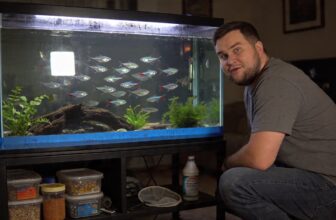
Contrary to what the name might suggest a spicy kick, Chili Rasboras are anything but aggressive—these tiny, torpedo-shaped fish bring a fiery red color to your 5-gallon tank without any of the heat.
Contrary to their name, Chili Rasboras bring fiery color, not aggression, to your nano tank.
At just 1.25 inches, they’re active swimmers, zipping around in shoals for hours. Stable water parameters—pH 5.0-7.0, 72-82°F—are vital. They’re easy keepers, living 4-8 years.
Choose gentle tank mates like snails or shrimp; avoid anything pushy. A group of 6-8 works perfectly, offering a sense of community without drama.
They’re affordable, peaceful, and visually striking—ideal for small setups. These tiny fish can thrive in setups featuring nano clip‑on LED lighting for optimal viewing. Bottom line: Chili Rasboras are a colorful, low-fuss choice that makes your nano tank feel alive and inclusive. For a natural daytime look, aim for a light with a color temperature near 8000K to enhance their vibrant red hues.
Dwarf Pea Puffers: Why They Need a Species-Only Setup
- Aggression: They see other fish as targets, not friends.
- Feeding: Hunt live prey; flakes won’t cut it.
- Social: Best solo or in a group with ample space, but watch for fighting.
- Size: Even though being 1.4 inches, they rule their tank.
Bottom line: A specialized choice for the dedicated aquarist; skip if you want a chill community.
Least Killifish: Gentle Nano Fish for Planted 5-Gallon Tanks
If the Dwarf Pea Puffer sounds like a tiny tank bully, the Least Killifish is its complete opposite. These gentle nano fish, with their subtle, shimmering fish anatomy, glide peacefully through planted 5-gallon tanks. Pairing them with sterile tissue culture plants ensures a pest-free start and healthy aquarium environment.
They demand minimal effort: just stable water parameters and regular tank maintenance—a weekly 25% water change does the trick. Hiding spots are a must, but aggression is nonexistent. For under $5 each, you get a calm community member. They are the aquatic equivalent of a quiet neighbor who never borrows tools. Adding live aquatic plants like Java Fern or Water Spangles provides natural cover and helps maintain water quality.
Bottom line: perfect for beginners seeking harmony, not headaches.
Strawberry Rasboras: Schooling Beauties for Well-Planted Tanks
Even though the Least Killifish is a master of subtlety, the Strawberry Rasbora is a showstopper. This tiny fish, barely 0.7 inches, flashes brilliant red hues in a well-planted tank—its Schooling Behavior brings a flock of living jewels to your setup. They thrive in groups of six or more, feeling safe and bold with company. As Active Swimmers, they constantly weave through stems and open spaces, making every scape feel alive.
- The Strawberry Rasbora is a Dwarf Rasbora that tops out at just 0.7 inches.
- Its Schooling Behavior requires a shoal of six for ideal comfort.
- As Active Swimmers, they need both dense plants and open water lanes.
- Perfect for a 5-gallon tank with soft, acidic water (pH 5.5–7.0).
Pair them with fine sand to replicate their natural habitat and keep the tank pristine.
Bottom line: You get a lively, peaceful community fish that rewards a planted setup with nonstop motion. They’re easy keepers, too.
To support their vibrant color and health, insert slow-release root tabs into the substrate for a steady supply of essential nutrients.
Dwarf Rasboras: Active Swimmers for Soft Water Setups
The Strawberry Rasbora’s red flash is hard to beat, but the Dwarf Rasbora brings a quieter kind of energy. Imagine a tiny, peaceful fish that darts around your 5-gallon like it owns the place—without bullying anyone. These guys need soft, acidic water, so skip the hard tap stuff.
- Lighting needs: Dim, please. Bright lights stress them.
- Tank layout: Go heavy on plants, leave open swimming lanes.
They’re active but not showy. A micro-school of six fits perfectly. You get constant motion, no drama. For nano-tank harmony? Dwarf Rasboras are your easy win. To support their planted environment, consider using a liquid potassium specialist like Seachem Flourish Potassium to boost fast-growing stems without adding algae-triggering phospates. Using an air stone with fine bubbles improves plant root health and fish respiration in this small setup.
Asian Stone Catfish: Camouflage Experts for Bottom-Dweller Fans
Want a fish that plays hide-and-seek better than any of its tank mates? The Asian stone catfish is a master of disguise, blending into gravel like a pebble.
Want a fish that plays hide-and-seek better than any of its tank mates? The Asian stone catfish is a master of disguise.
Ideal for a bottom dweller tank setup, it stays small (1.5 inches) and peaceful.
- Camouflage experts: Their mottled brown pattern mimics stones, making them nearly invisible—perfect for nervous nano-tank residents.
- Cool water lover: They thrive at 65–75°F, so skip the heater if your room stays warm. A floating breeder box can serve as a temporary isolation space if one catfish shows signs of stress.
- Shy but hardy: Provide caves or driftwood; they’ll navigate confidently once settled. Small-Tank Driftwood pieces under 3 inches are ideal for creating hiding spots in a 5-gallon setup.
- Easy care: pH 5.6–7.6, lifespan 5 years. A trio fits your 5-gallon without crowding.
Bottom line: If you want a stealthy, low-maintenance bottom-dweller, this catfish delivers—without drama.
Clown Killifish: Rocket-Shaped Surface Dwellers for Nano Tanks
Forget the usual top-dweller—clown killifish are micro predators shaped like tiny rockets, hovering near the surface to snatch insects.
Their surface feeding behavior means you’ll need a species specific tank setup: a 5-gallon with a tight lid, dense floating plants, and dim lighting.
They’re shy, darting away if startled. Keep a small group, just males for colors—blues, reds, yellows.
They peak at 1.4 inches, living 2–3 years. Costs? Around $10–15 per fish.
Bottom line: these are perfect nano-tank top-dwellers if you love watching precision hunters. Just don’t expect them to venture into the depths.
For their safety, use low-flow filtration to avoid stressing their delicate fins, as gentle water movement is essential for betta-like nano fish. A piezoelectric air pump is ideal for this setup because it creates silent airflow with no moving parts.
Betta Fish: Stunning Solo Stars That Own a 5-Gallon Tank
You might think a betta is just a pretty face, but it turns out they’re full of personality—and they absolutely own a 5-gallon tank. Their vivid betta colors, from deep blues to fiery reds, make them living art.
Yet betta behavior is the real show: they flare at reflections, build bubble nests, and even recognize their owners.
- Solo setup: One betta thrives alone—no tank mates needed, reducing stress.
- Low bioload: Their small waste output keeps water stable with weekly changes.
- Hardy nature: They tolerate beginner mistakes, forgiving minor water parameter slips.
- Interactive pet: They’ll swim to the glass when you approach, begging for food.
A 5-gallon tank with a self-cleaning system reduces water-change frequency, making betta care even easier. For example, the 2.5 gal Self-Cleaning Starter Kit includes a 3-in-1 pump and 7-color LED to maintain water quality with minimal effort.
Bottom line: A betta turns a 5-gallon into a personal kingdom.
Non-Fish Alternatives: Shrimp, Snails, and Frogs for 5 Gallons
While fish often steal the spotlight, a 5-gallon tank truly shines as a haven for invertebrates and tiny amphibians—no fins required.
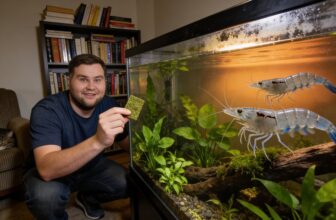
For your first shrimp crew, Cherry Shrimp are hardy, tiny, and breed easily. Just keep water parameters stable, pH around 7.0. A dense foam sponge filter ensures gentle circulation and protects vulnerable shrimp.
Your tank setup needs a sponge filter to avoid sucking up babies.
Nerite Snails are algae-eating tanks; they won’t overpopulate.
Two African Dwarf Frogs can work but need gentle filtration and planted hiding spots—they’re clumsy swimmers.
Avoid changes, keep things stable, and you’re part of the small-tank club.
Bottom line: skip fish stress, go shrimp and snails.
For isolating newborn shrimp or fry, consider using a mesh net breeding box to promote water circulation and prevent stagnant corners.
The 1-Inch-Per-Gallon Rule: Why Stocking Limits Keep Fish Healthy
- Biological burden: More fish means more ammonia; even cycled filters have limits. Tanks with low-iron glass enhance your ability to monitor waste buildup.
- Swim space: Each inch needs room to dart, turn, and breathe.
- Oxygen demand: Overstocking steals dissolved oxygen, especially in warm water.
- Error margin: Light stocking gives you wiggle room when life gets hectic.
- For example, rimless tanks like the Landen 45P offer ultra‑clear visibility that helps you monitor fish health and spot overstocking signs early.
Bottom line: stick to the rule, and your fish stay calm and healthy.
Fish to Avoid: Goldfish, Cichlids, and Angelfish Don’t Fit Here
Restraint is a rare virtue in the fishkeeping world, and nothing tests it like a 5-gallon tank.
Restraint is a rare virtue in the fishkeeping world, and nothing tests it like a 5-gallon tank.
Avoiding goldfish is non-negotiable—they grow over a foot, produce waste like a factory, and need 30+ gallons. Even a small goldfish in a 5‑gallon tank would cause ammonia spikes within hours.
Cichlids? Territorial nightmares that fight in cramped spaces.
Angelfish problems start with their 6-inch height; they need a 29-gallon tank minimum.
These fish aren’t just cramped—they’re stressed, sick, and short-lived.
Stick to nano species like rasboras or a single betta.
Your 5-gallon tank is a cozy home, not a prison.
Choose wisely, and your fish will thrive, not just survive.
For such small volumes, accurate interior volume verification prevents overcrowding and stress.
Frequently Asked Questions
Can I Keep Guppies and Bettas Together in a 5-Gallon Tank?
No. A 5-gallon tank is too small for both. Betta aggression means the betta will likely attack the guppies, and guppy nipping can stress the betta’s fins.
Although they start calm, cramped space turns them into frantic roommates.
A single betta alone is the safe move, or a small guppy group with a snail.
For this tiny space, peaceful solitude beats a messy conflict.
What Plants Are Safest for a 5-Gallon Fish Tank Setup?
Think of a 5-gallon tank as a studio apartment—cozy, not cramped. Safe plants include Amazon sword, though it may outgrow small spaces, and slow-growing Java fern, which attaches to driftwood.
These thrive without fancy gear, forgiving beginner mistakes. Avoid finicky stems; instead, choose Anubias, which tolerates low light.
This combo builds a stable, welcoming home for fish, making everyone feel part of a peaceful little community. Bottom line: keep it simple, and you won’t regret it.
How Often Should I Change Water in a 5-Gallon Tank?
For a 5-gallon tank, partial changes of 20-30% should follow a weekly schedule. This keeps waste low without shocking fish. Skip the lazy “just top off” routine—that traps toxins.
A betta, some shrimp, or a snail (like the Nerite Snail, $5-8) thrive with this rhythm. Use a gravel vacuum ($10-15) to stir debris, and match new water temperature.
Consistency beats guesswork; stick to Sunday sips for a clean, stable home.
Can I Use Tap Water Directly for My 5-Gallon Fish Tank?
No, tap water used directly is risky. Tap water safety depends on removing chlorine and chloramines, which harm fish gills.
Water conditioner use neutralizes these chemicals instantly. A good conditioner costs about five bucks.
For a 5-gallon tank, add conditioner before the water touches the fish. Think of it like de-chlorinating a pool, but smaller and more personal.
Seriously, skipping it is like serving your aquatic buddies a bleach cocktail. Trust the bottle.
Do I Need a Lid for My 5-Gallon Aquarium?
The short answer is a resounding yes. A lid is not optional; it’s the frontline defense against jump prevention, especially for active fish like bettas or rasboras—they’ll launch out for a bug.
It likewise slows evaporation control, saving you from topping off water every day. A basic glass lid runs about $15.
Skip it, and you’re scheduling an autopsy. Bottom line: buy one, install it, stop worrying.
Rounding Up
So, five gallons isn’t much. It’s a teacup, not a pool. You can fit a Betta, a few Chili Rasboras, or a clean‑up crew of shrimp and snails—anything bigger is just cruel. The 1‑inch‑per‑gallon rule? Bend it slightly, but don’t break it. Your wallet will thank you: a shrimp colony costs $20–$40, whereas re‑homing an angry Goldfish costs your sanity. Bottom line: Pick one nano species, over‑filter it (a $15 sponge filter works), and accept the limits. Less water, more life.