5 Gallon Betta Fish Tank Setup Guide: The Perfect Starter Home
A 5 gallon betta tank hits the sweet spot for beginners—compact enough for desktops, yet spacious enough for stable water parameters and happy, patrolling fish.
Skip the DIY rabbit hole. A complete Marina 5‑gallon kit bundles essentials: light, filter, and setup guide. Add a reliable heater and thermometer, and you’re ready to roll.
Placement matters more than you’d think. Keep the tank away from windows and air vents to dodge algae explosions and dangerous temperature swings.
Always leak‑test in a bathtub first. Once dry, add 1.5–2 inches of substrate and betta‑safe decor to complete the hardscape.
Acclimate your fish properly: float the bag 15 minutes, then release him—never dump that pet store water in. Consider cherry shrimp or nerite snails for gentle cleanup crew.
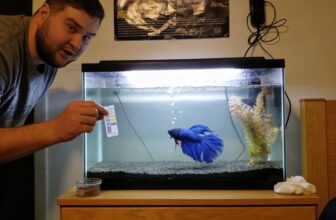
Test water weekly with a liquid kit. Lock the heater at 78–80°F. Watch for clamped fins as your early warning system.
Follow these fundamentals, and thriving betta keeping becomes second nature.
At A Glance
- A five-gallon tank is the minimum size for stable water chemistry and betta health.
- Place tank away from sunlight, drafts, heaters, and AC vents to avoid temperature swings.
- Use 1.5–2 inches of smooth substrate and soft silk or live plants to prevent torn fins.
- Cycle the tank for 4–8 weeks by adding fish food daily until ammonia and nitrites reach zero.
- Perform weekly 25% water changes with a gravel vacuum and test water with a liquid kit.
Why a 5-Gallon Tank Is the Perfect Betta Starter Size
Though a smaller bowl might seem simpler, a five‑gallon tank is the minimum size that actually works for a betta.
Though a smaller bowl might seem simpler, a five‑gallon tank is the minimum size that actually works for a betta.
In a cramped space, you can’t mimic natural Betta behavior; they need room to investigate, hide, and patrol.
Plus, water hardness swings wildly in tiny bowls, which stresses them out.
A five‑gallon gives you stable chemistry and a forgiving learning curve.
- Bettas are active swimmers; cramped tanks cause lethargy.
- Water hardness fluctuates less in larger volumes, keeping conditions steady.
- It’s big enough for a heater and filter without crowding.
Five gallons isn’t huge, but it’s the sweet spot where beginner mistakes rarely become fatal.
Start here, and your betta will actually thrive.
Premium 5‑gallon kits like the Fluval SPEC come with a gentle flow three‑stage filter that keeps water clean without stressing your betta’s fins.
A dimmable LED with adjustable brightness settings can help replicate natural day‑night cycles for your betta.
Buy a Kit or Individual Parts: What You Actually Need
Starting with the basics, there are two main routes: buying a full aquarium kit or piecing everything together separately.
The Marina 5 Gallon kit, loved by beginners, includes a light, filter, and care guide. That’s a solid brand comparison for ease.
For cost analysis, buying it plus a heater, thermometer, and substrate saves money versus buying parts alone. You’ll still need water conditioner and fish food.
A kit simplifies belonging, removing guesswork. Smaller kits often require gentle sponge filtration to avoid stressing bettas. For betta tanks, a filter with quiet operation at or below 30 dB is ideal to prevent stress from noise. The key? Pick your path and gather everything before starting.
It’s about choosing your comfort level, not stressing over gear.
Place Your Tank Away From Sunlight and Drafts
Place your tank away from direct sunlight and drafts—bettas dislike temperature swings more than a cat dislikes a bath. A sturdy tank stand prevents wobbles and water spills, but location matters more. Sunlight fuels algae, drafts chill the water fast. Keep things stable.
| Problem | Cause | Fix |
|---|---|---|
| Algae bloom | Sunlight hits tank | Move away from windows |
| Temp drops | Drafty room | Avoid vents, doors |
| Heater overwork | Cold air exposure | Place in stable spot |
Choose a spot away from heaters and AC vents too—your betta craves consistency, and you’ll avoid chasing temperature ghosts. Using an aquarium leveling mat under the stand absorbs vibrations and prevents pressure points that stress tank seals. A stand with six non‑slip leveling feet helps keep the tank perfectly stable on uneven floors.
Leak-Test and Clean Your New Tank Properly
Once the tank is in a stable spot, it’s time to confirm it doesn’t turn your floor into a swimming pool.
Fill it in a bathtub or sink—yes, like washing a giant glass casserole dish—checking for hidden cracks or leaks.
Use a clean, damp cloth to wipe the interior, removing any dust or residue.
Never move it once full; that’s a disaster waiting to happen.
A leak-free tank is your foundation for everything ahead, from substrate depth to decor placement.
Skip this step, and you’ll regret it.
Do it right, and you’re already part of the club.
For convenient water removal, consider keeping a lightweight collapsible 5‑gallon bucket nearby to siphon out test water without splashing the floor.
A manual siphon power source allows you to drain the tank without electricity, keeping the process simple and safe.
Choose Substrate Depth and Betta-Safe Decor
Substrate depth is a quiet hero in betta tanks. Aim for 1.5–2 inches—enough for root growth, but not so deep it breeds gas pockets.
That depth anchors plants and lets you slope it higher in back for visual depth, a key substrate depth benefit.
For plant placement tips, tuck java moss or anubias nana into the gravel gently, never burying rhizomes.
Avoid sharp rocks or painted decor that leach toxins; bettas tear fins on anything rough. Stick to shop-treated driftwood or smooth river stones.
Keep it soft and secure—your betta will thank you with calm, confident swimming.
For a natural aesthetic, choose a pre-washed fine sand like Classic SandPlay to prevent dust storms and keep water clear. Gravel that supports stable cycling enhances bacterial colonization and plant growth.
Set Up the Filter and Heater Before Adding Water
Alright, after getting the substrate and decorations settled in, the focus turns to the filter and heater setup.
Secure the heater placement near the filter’s outflow for even heat distribution, but keep it fully submerged. Position the filter intake low, pointed away from delicate plants, to avoid sucking in curious betta fins. For a 5-gallon tank, a mini heater like the Hygger 50W with an external controller helps avoid wet hands when adjusting.
These gadgets are your tank’s heartbeat—get them right before water, or you’ll redo everything.
These gadgets are your tank’s heartbeat—get them right before water, or you’ll redo everything.
A 50-watt adjustable heater, like the Tetra HT Submersible, works well for 5 gallons. Attach the filter snugly; a hang-on-back model, such as the Aqueon QuietFlow, is beginner-friendly. This heater includes dry‑burn prevention to automatically stop heating if the water level drops too low.
Bottom line: set it dry, adjust later, and avoid burnt fingers.
Add Water and Conditioner Without Disturbing the Scape
Patience is a virtue when filling a betta tank, and not just since it tests your self-control.
Place a plate on the substrate, then pour water onto it—slowly. This prevents your carefully arranged scape from becoming a muddy mess.
Add water conditioner as you fill, neutralizing chlorine immediately.
For instance, API Stress Coat enhances slime‑coat protection to promote fin healing in bettas.
A stable scape means less debris for your filter to handle, simplifying filter maintenance later. It likewise reduces nutrient spikes, aiding algae control before it starts.
Fill to just below the rim, then stop. Your future self will thank you for this calm, deliberate approach. No rushing, no regrets.
For bettas with low-demand plants like Java fern, a Pawfly 11 W clip-on light provides respectable PAR at a budget-friendly price.
Cycle Your Fishless Tank for 4–8 Weeks (Non-Negotiable)
Cycling is the single most important step in betta tank preparation, and it is not optional.
This process, called fishless cycling, grows beneficial bacteria that eat toxic ammonia. For 4–8 weeks, add a pinch of fish food daily to produce ammonia, which feeds the bacteria.
Test your water weekly; when ammonia and nitrites hit zero, you’re done.
Yes, it’s boring—like watching paint dry—but skipping it stresses or kills your betta.
You want a stable home, not a chemistry disaster.
Patience now means a healthy, happy fish later.
Trust the cycle; your betta will thank you.
For a faster start, products like FritzZyme 7 can reduce cycling time to roughly ten days.
During the cycle, a liquid ammonia neutralizer like API Ammo‑Guard can provide temporary protection if an emergency spike occurs.
Already Have Your Betta? Cycle With Ammonia Detoxifiers
If you already have a betta, don’t panic—it’s not ideal, but it’s doable. An in-fish cycle uses ammonia detoxifiers to render waste harmless whilst beneficial bacteria grow. You’ll need to test water daily and do frequent small changes. Your betta’s Betta temperamento may show stress, so watch for clamped fins or lethargy.
Don’t panic if you already have a betta—an in-fish cycle is doable with daily testing and detoxifiers.
- Add a quality detoxifier like Seachem Prime every 48 hours to neutralize ammonia without stalling the cycle.
- Dose a biological supplement (e.g., Tetra SafeStart) to jumpstart bacteria; skip Nutrient dosing until the cycle finishes.
- Test water with a liquid kit; aim for zero ammonia and nitrites after 4-6 weeks.
- Keep the heater at 78-80°F to boost bacterial growth and your betta’s metabolism.
Bottom line: patience and daily testing get you through.
For accurate daily monitoring, use ion-selective membranes to improve color matching of test strip results. Store your test kit in a cool, dark place to preserve accuracy, as heat above 30°C can reduce reliability by about 30%.
Add Easy Live Plants: Java Moss, Anubias, and Duckweed
Once the tank is cycled and stable, it’s time to make it feel like home—for the betta, not you, though you’ll probably stare at it more.
Java moss is a no-brainer: grows fast, needs occasional trimming, and should just float or be tied down. Anubias nana works as a background plant, leaves broad and calm. Duckweed floats up top, giving cover without stealing swim space.
Marimo moss trimming is nearly nonexistent—these slow-growing balls almost care for themselves. Anacharis grooming, though, is real; it can hit three feet fast, so keep it on the sides where you can snip it back. For a low-maintenance alternative, consider an artificial moss that provides visual décor with only occasional rinsing. For steady root growth, bury slow-release root tabs beneath the substrate near heavy feeders like sword plants.
These three plants make a betta feel part of something, not just housed.
Avoid Sharp Decor, Toxic Paint, and Stuck Spots
Decorations can turn a tank into a betta’s kingdom, but the wrong ones turn it into a hazard zone. Every betta parent knows that safety comes first.
- Sharp decor can tear delicate fins, so run your hand over everything—if it scratches you, it hurts them.
- Jagged edges on plastic plants or resin hides are a no-go; silk or live plants are gentler.
- Toxic paint leaches into water and poisons fish; buy only from reputable sellers who guarantee pet‑safe materials.
- Stuck spots are deadly—bettas squeeze into tiny gaps and can’t back out, so seal or avoid any cramped opening.
A safe tank means your fighter thrives, not just survives. Check each piece twice. Choosing fin‑friendly silk leaves ensures soft edges that prevent tears.
Opt for BPA‑free plastic decorations like the FISHNOSH Natural Wood‑Like Aquarium Cave, which resist water absorption and mold, ensuring no harmful leaching.
Acclimate Your Betta by Floating the Bag (Don’t Dump Water)
Acclimating a betta is a simple but critical ritual—never dump the bag water into the tank. Those few ounces might carry pathogens that wreck your careful tank cycling progress.
Float the sealed bag for 15–20 minutes, letting temperatures equalize. Then, every 10–15 minutes, scoop out a cup of tank water and slowly add it to the bag. This gentle shift prevents shock.
After 45 minutes, net your betta out, releasing it into its new home. Dumping bag water risks introducing contaminants and triggering betta aggression from sudden parameter shifts. A calm introduction now saves grief later. Using weekly test strips can help you monitor water quality for any sudden ammonia or nitrate spikes after the introduction. For comprehensive monitoring, consider a kit that checks phosphate, nitrate, nitrite, and pH in one sweep.
Choose Tank Mates: Cherry Shrimp, Ghost Shrimp, or Nerite Snails
A 5-gallon tank gives you room for a few small tank mates, but it’s not a community aquarium—more like a studio apartment for your betta and a couple of low‑maintenance roommates. Adding shrimp or snails keeps things lively, just watch your betta’s temperament.
- Cherry shrimp flit about in bright red color, happy nibbling algae and a shrimp diet of leftover flakes.
- Ghost shrimp are see‑through and cheap; if your betta snacks on them, shrug—it’s live food.
- Nerite snails are algae‑eating pros; they won’t overrun the tank, since snail reproduction requires brackish water.
- Malaysian trumpet snails stay small, but can reproduce like crazy in fresh water.
Pick nerites for worry‑free cleanup, or ghost shrimp as a trial. For treating any hitchhikers on new plants or decor, a coral dipping solution can be used to safely remove pests without harming delicate tissue. Nerite snails also thrive in tanks because their low reproductive risk makes them a safe choice for small setups.
Maintain Stable Water With Weekly Changes and Parameter Checks
The secret to a happy betta isn’t a fancy tank—it’s stable water. You want water quality that doesn’t swing like a mood ring, since that stresses your fish.
Do a 25% water change weekly, using a gravel vacuum to suck up waste. Test ammonia, nitrites, and nitrates with a liquid kit, not strips. For precise results, choose a ±5% lab-grade liquid reagent kit over typical strips that offer ±10-20% accuracy. For weekly pond monitoring, API Pond 5‑in‑1 Test Strips provide a convenient 2-second dip with a 4.6-star rating.
Temperature stability matters too; keep that heater locked at 78–80°F with a thermometer you actually check. Driftwood or plants help buffer pH, saving you fuss.
Consistent parameters mean fewer surprises, and a calmer betta. That’s the goal, really: no drama, just steady care.
Monitor Your Betta for Stress, Lethargy, or Unusual Behavior
- Clamped fins, pressed tight like a bad comb-over.
- Faded colors, turning pale as a ghost shrimp.
- Gasping at the surface, like it ran a marathon.
- Hiding constantly, refusing your food offering.
Catch these early, and you’re golden. Ignore them, and you’re in for a headache. Bottom line: be nosy, it pays off.
Keep a remedy like API Melafix on hand to treat fin rot and open wounds if symptoms appear early. For additional fin health support, consider using Crystalpro Betta Minerals, which enhances coloration and fin health through a specialized mineral blend.
Frequently Asked Questions
Can I Use Tap Water Directly From the Faucet?
No. Tap water straight from the faucet contains chlorine and chloramines, which are toxic to bettas. Both must be removed before the fish touches the water; that’s chlorine removal. A water conditioner, like Seachem Prime, does this instantly for under $10.
Additionally, pH balance matters—bettas need stable, neutral pH. Conditioner won’t adjust pH, but clean, treated water avoids harsh swings.
Skip the trust fall with your tap; just add conditioner. Simple rule: condition first, fish later. Your betta will thank you.
How Often Should I Replace the Filter Cartridge?
Replace the filter cartridge only when it literally falls apart, not on a fixed schedule.
A single, stubborn tank owner swapped cartridges monthly, crashed the cycle, and lost a betta.
That’s the danger: frequent replacement nukes beneficial bacteria.
Instead, rinse the cartridge in old tank water during water changes—think “carbon rinsing” to remove gunk, not full “media replacement.”
Replace only when it’s torn or clogged beyond cleaning.
This keeps the tank stable, your betta happy, and you in the club of savvy keepers.
Bottom line: rinse, don’t replace.
Do I Need a Lid if My Betta Never Jumps?
Yes, a lid is still necessary. Regardless of whether a betta never jumps, a lid reduces surface biofilm buildup (that oily film on the water’s top) and cuts evaporation rate significantly.
In a 5‑gallon tank, without a lid, water levels drop fast, spiking ammonia. Plus, lids keep curious cats out and block dust.
Marina’s 5‑gallon kit includes one—use it. It’s cheap insurance against mess and stress.
Bottom line: always use a tank lid.
Can I Keep Two Bettas in a Divided 5-Gallon Tank?
No—a divided 5-gallon tank is too small for two bettas. Territorial stress spikes in cramped quarters; each fish needs its own space to feel secure.
Water quality issues multiply fast, since waste accumulates quicker in a small, divided setup. Even with a divider, bettas sense each other, causing chronic stress.
Save yourself the hassle—stick to one betta in a 5-gallon, or upgrade to a 10-gallon for a divided setup. Bottom line: single betta, single tank.
What Temperature Should the Heater Be Set To?
The heater should be set between 78°F and 80°F—the ideal temperature for bettas. A 25-watt heater is sufficient for a 5-gallon tank; it provides steady warmth without overheating such a small space. Set it a day before adding the fish. This range keeps your betta active and healthy, preventing stress or disease.
Heater wattage matters: too high cooks them, too low leaves them cold. Bottom line: 78-80°F is the sweet spot. Stick to that, and your betta will reward you by not needing a tiny sweater.
Rounding Up
So, that’s the long and short of it. A five-gallon tank isn’t a mansion, but it’s a proper bachelor pad for a betta—far better than that martini glass some people call a home. Your fish won’t write a thank-you note, but it’ll stop looking like a grumpy raisin. Set the stage right, let the filter do its invisible waltz, and you’ll both earn a few years of peaceful coexistence. Bottom line? Spend the forty bucks up front to avoid a guilt trip down the line.