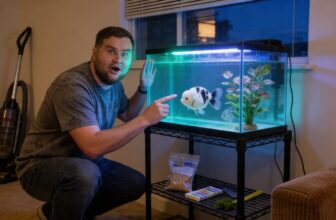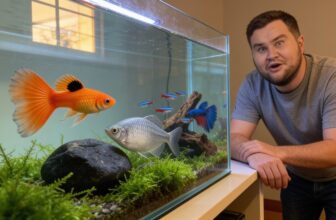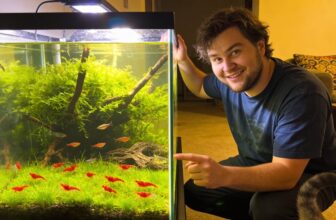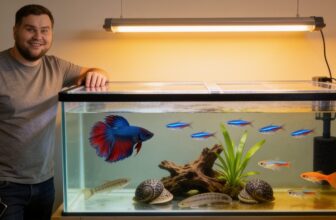
How to Maintain Ideal Guppy pH Levels (Easily): Stop chasing perfect numbers and start chasing consistency. These resilient livebearers handle 6.8–7.8 without fuss, but they’ll crash fast if your parameters swing wild.
A steady pH protects their slime coat, prevents gill burns, and keeps their immune system firing. Test biweekly, not obsessively—your test kit will outlast the panic. Natural tannins from Catappa leaves or driftwood gently acidify water, while a small bag of dolomite chips in your filter buffers upward when needed. Routine water changes lock in that stability.
An unwavering 8.0 beats a yo-yo 7.0 every time. Ready to dial in your guppy parameters?
At A Glance
- Maintain guppy pH between 6.8 and 7.8 for ideal health.
- Test pH every one to two weeks to monitor stability.
- Use driftwood or Catappa leaves to lower pH naturally.
- Add dolomite chips or macroalgae to gently raise pH.
- Prioritize steady pH over achieving a perfect number daily.
Why Stable pH Matters More Than the Perfect Guppy pH Number
Ignore the pH number on your test kit. Seriously, stop obsessing. What truly matters, what separates the pros from the panicked, is stable water chemistry.
Imagine living in a house where the temperature swings wildly every hour; that’s stress reduction impact for your guppies. Constant pH shifts—say, from 7.0 to 7.8 in a week—wreck their immune system.
Guppies can adapt to a steady 8.0, but not to daily chaos. Test pH once every two weeks, not daily.
Listen: pick a number in the 6.8–7.8 range and lock it in. Stabilize with air stones (cheap, $5) or regular water changes. Many non‑phosphate formulas also prevent algae blooms while keeping pH consistent.
Your guppies will thank you by not dying.
For aquarists seeking to lock in higher pH, a KH Buffer Supplement designed for reef tanks can provide multi‑component carbonate buffering that targets a stable pH of 8.3.
What’s the Ideal Guppy pH Range and What’s Safe?
The ideal guppy pH range is 6.8 to 7.8, a sweet spot that mimics their natural soft, slightly alkaline waters. Keeping it steady matters most, not hitting a perfect number daily.
The ideal guppy pH range is 6.8 to 7.8, but steady water beats a perfect number every time.
- Weekly pH monitoring helps spot drift early—catch problems before they stress your fish.
- Driftwood or Catappa leaves offer natural pH adjustment, slowly releasing tannins to lower high pH.
- Macroalgae or dolomite chips gently raise low pH, mimicking their native seabed.
Stick to this range, test regularly, and your guppies will thrive without drama—no fancy gear needed, just consistency. Using a CE ISO certified test kit ensures lab-accurate pH readings for reliable weekly checks, and storing test supplies in a cool, dark place preserves reagent accuracy over time.
Can Guppies Live at pH 8.0 or Higher?
While guppies can technically live at a pH of 8.0, it’s like living in a house that’s slightly too warm—doable, but not ideal.
They survive, but their immune system weakens, making them prone to gill damage and appetite loss.
Low pH tolerance doesn’t apply here; instead, this alkaline water slowly stresses them.
Acidic tank risks are absent, but stable 8.0 is safer than fluctuating pH.
For most aquarists, aim for 6.8–7.8.
Bottom line: 8.0 works short-term, but your guppies will thank you for keeping it within their comfort zone.
Consistency beats a perfect number every time.
Using a reliable digital meter for real-time Wi‑Fi alerts helps catch dangerous pH swings before they stress your guppies.
A controller like the DANOPLUS Smart pH/ORP Controller offers automatic temperature compensation to keep measurements accurate as the tank warms up.
Why a pH of 5.5 Will Harm Your Guppies
If 8.0 is the warm-but-okay house, a pH of 5.5 is the basement with no heat and a leaky pipe. This is well past the Guppy pH limit, where acidic death risks become real.
Here’s why it’s a no-go:
- pH 5.5 is far below the safe 6.8–7.8 range, stressing fish immediately.
- Rapid pH drops from ammonia or tannins can hit this level, shocking guppies’ systems.
- Even brief exposure causes labored breathing and fatal stress, not just slow decline.
- Using liquid reagents for testing ensures higher precision than strips to detect such dangerous shifts early.
- Placing affected fish into a Fish Breeder Box with Suction Cups temporarily isolates them for immediate monitoring.
Stick to stable, neutral water. Your guppies thrive in a steady home, not a leaky basement.
How Bad Guppy pH Damages Skin, Gills, and Immunity
| pH Extreme | Primary Damage | Secondary Effect |
|---|---|---|
| Low (below 6.0) | Skin erosion, fin rot | Open wounds, bacterial entry |
| High (above 8.5) | Gill tissue harm, mucus loss | Labored breathing, appetite loss |
| Both extremes | Immune suppression | Increased disease susceptibility |
Stable pH between 6.8-7.8 keeps their defenses intact. Using a copper-free gel fertilizer can help avoid adding stress to guppy skin and gills during nutrient dosing. For freshwater species, supplementing with Seachem Flourish can provide essential trace elements to support overall health and reduce stress from environmental fluctuations.
How Often Should You Test Your Guppy Tank’s pH?
So if your guppies aren’t looking like they’re in a low-budget horror flick with shredded fins or gasping gills, the next sensible question is: how often do you actually check that pH number?
Adding stable pH live rock can help buffer your guppy tank’s water chemistry naturally.
For a stable tank, test every one to two weeks, but certain moments demand immediate attention:
- After adding any new decoration, like catappa leaves or driftwood, which release tannins that can drop pH.
- Whenever you perform boiling decor for cleaning—this removes lingering bacteria but may alter water chemistry.
- If you notice any sudden behavior changes, even slight ones.
- When using untreated woods such as Mopani, a 50-60 min boil is required to prevent tannin clouding that lowers pH.
You belong to a community that values proactive care. Simple habit, fewer surprises.
What Causes pH Spikes and Drops in Your Aquarium?
A pH spike or drop usually comes from one of two culprits: chemistry buildup or a decorative sneeze.
Irregular water changes let chemicals accumulate, causing sudden pH fluctuations.
Meanwhile, decorations like driftwood or Indian Almond Leaves release tannins, dropping pH fast.
That’s why testing after adding décor is key.
Sudden pH shifts spike guppy stress, weakening their immune system.
Sudden pH shifts spike guppy stress, weakening their immune system.
Their pH tolerance is decent between 6.8 and 7.8, but water stability matters more than the exact number.
So, keep your tank stable, not fancy.
Regular testing prevents surprises, and testing iron at least weekly helps track hidden mineral changes that can also affect pH stability, and using a liquid pH test kit provides the most precise measurement for consistent monitoring.
Bottom line: prioritize steady pH over quick décor fixes.
Your guppies will thank you.
How to Raise Low Guppy pH Without Shocking Your Fish
When your guppy tank’s pH drops too low—say, below the 6.8 sweet spot—the instinct is to fix it fast. But shocking your fish with sudden changes is worse than the low pH itself. Instead, raise it gradually using these three gentle methods:
- Swap filter media slowly—replace only a third at a time to avoid pH swings.
- Remove carbon filtration temporarily, as it can trap buffering minerals.
- Add dolomite chips to your filter; they release calcium and magnesium steadily.
This approach keeps pH stable, not spiking. Your guppies will thank you—no drama, just steady improvement.
Quick Ways to Raise pH: Boiling Driftwood and More
If your guppy tank’s pH has dipped too low, boiling driftwood before adding it is one of the quickest ways to stop the drop. This simple step removes tannic acids that lower pH, giving you a stable, safe environment. Another fast fix is using macroalgae, which mimics their natural habitat and gently raises pH. Using full‑spectrum lighting on macroalgae optimizes its photosynthesis for stable pH increase. Choosing lights with IP67 rating ensures the fixture withstands humidity and splashes during aquarium maintenance.
| Method | How It Works | Best For |
|---|---|---|
| Boiling driftwood | Removes tannins and bacteria | Quick pH stabilization |
| Using macroalgae | Mimics natural seabed | Gradual, natural increase |
| Frequent water changes | Reduces pollutants | Long-term pH balance |
Both methods are easy, effective, and help your guppies thrive.
Raise pH With Macroalgae and Dolomite Chips
Macroalgae and dolomite chips offer two different routes to the same goal: raising your guppy tank’s pH without harsh chemicals.
- Macroalgae benefits include mimicking their natural habitat whilst gently lifting pH—no sudden swings, just steady, plant-driven stability.
- Dolomite chips release calcium and magnesium, slowly buffering water to a comfortable 7.0–7.8 range.
- Both methods work best with stable filtration; a bag of chips costs about $8, whereas macroalgae adds natural beauty. A 36‑W electric vacuum with an automatic shut-off timer simplifies water changes without disturbing pH.
Bottom line: choose macroalgae for a living, self-regulating boost, or dolomite chips for a set‑and‑forget mineral approach. Either way, your guppies stay comfortable.
For sensitive setups, Kordon NovAqua+ provides chloramine breakdown without irritating invertebrates.
Lower pH Naturally With Catappa Leaves, Driftwood, and the Right Rocks
Why let high pH stress your guppies when a few natural additions can gently nudge the water back into their comfort zone?
Catappa leaves, likewise called Indian almond leaves, release tannins that lower pH gradually—this helps avoid pH shock.
Driftwood works in a like manner, but soak it first to remove toxins.
Both add cozy hiding spots.
The right rocks, like slate or lava rock, won’t leach carbonates, helping maintain stability.
Add these slowly, test weekly, and your guppies will thank you.
It’s a simple, natural fix that keeps everyone happy.
For additional texture and hiding spots, consider natural driftwood that supports beneficial bacteria while softening water.
Red lava rock provides porous texture that supports beneficial bacterial colonization and natural cave hideaways.
Which Rocks and Substrate Keep pH Steady
Not all rocks are created equal regarding keeping guppy pH steady. The wrong ones, like limestone or marble, slowly dissolve and spike alkalinity—bad news. The right picks work as passive buffers.
- Crushed coral: Coarse, calcium-carbonate gravel; slowly dissolves to raise pH. A five-pound bag costs $8–$12, good for a 10-gallon tank. Use it as substrate or in a filter bag.
- Dolomite chips: Rich in calcium and magnesium; they boost pH gently. A 10-pound bag runs $15–$20. Pair with regular gravel for steady stability.
- Smooth river rocks: Inert and safe, they don’t alter pH. Wash them first, boil to kill hitchhikers. A bulk option like FANTIAN Mixed Color River Rocks provides natural stone without any chemical coating that could affect pH.
Bottom line: for a stable 7.0–7.8, mix crushed coral or dolomite chips with inert gravel. Your guppies will thank you—steady wins. For additional pH stability, consider a black sparkle sand that provides inert mineral inclusion without altering water chemistry.
Prevent pH Problems With Regular Water Changes
Dirty water is the silent pH killer—ammonia from fish waste and uneaten food slowly drags the pH down, and fluctuations follow.
Regular water changes are your best defense since they directly perform pollutant removal. By swapping out a portion of the tank water weekly, you flush out those nasty chemicals before they can wreak havoc. Think of it as hitting the reset button on your guppy’s environment.
Regular water changes flush out pollutants, hitting the reset button on your guppy’s environment.
This simple habit keeps the pH stable, saving you from emergency fixes later. Manual siphon power sources make this task straightforward and safe, requiring no electricity and reducing shock risk. Consistent water changes mean fewer surprises, which means healthier fish and a calmer owner. Using a 5‑gallon collapsible bucket for clean water storage makes the weekly routine even more convenient and space-efficient.
Bottom line: commit to the schedule.
Daily Checks and Weekly Water Changes for Stable Guppy pH
Since consistent pH starts with what you see every day, making daily checks and weekly water changes your go-to routine is the simplest way to avoid sudden crises.
You’re part of a community that knows stable water means happy guppies, so here’s your quick checklist:
- Daily checks: Look for cloudy water, uneaten food, or fish acting weird—these hint at pH shifts before a test kit confirms.
- Weekly water changes: Replace 20-30% of the tank water every seven days; this flushes out pollutants that drop pH, like leftover food waste.
- Test after changes: Use an API Master Kit ($35) to verify pH stays between 6.8-7.8, ensuring your routine works.
For precise readings, incorporate 3-second dip test strips that deliver results almost instantly. Many strip kits, such as those offering 99% accuracy claims, also check phosphate and nitrate alongside pH, giving you broader water quality insight.
Stick with this, and you’ll belong to the calm, crisis-free tank club.
Frequently Asked Questions
Can pH Changes Affect Guppy Breeding Success?
Yes, pH changes can definitely affect guppy breeding success. pH stress effects from unstable levels can reduce fertility and fry survival rates.
Guppies prefer a stable pH between 6.8 and 7.8 for ideal spawning. A sudden swing, like from 7.0 to 8.0, can cause ph shock impact, disrupting hormone function and egg development.
Consistent levels matter more than hitting 7.4 exactly—keep it constant, and those little wigglers will show up reliably.
How Fast Can I Safely Adjust Guppy Tank pH?
The safe speed is a gradual shift of no more than 0.2 pH per day. Guppies tolerate a pH of 8.0 fine, but sudden jumps shock them.
Use buffering agents—these are aquarium products that slowly adjust and hold pH steady—instead of harsh chemicals. Think of it like adjusting a thermostat: small, patient changes keep everyone comfortable. Stick to this pace, and your fish will thrive without stress.
Do Live Plants Help Stabilize Guppy pH Levels?
Yes, live plants help stabilize guppy pH levels. They act as natural plant buffers, absorbing CO₂ and waste compounds that cause pH swings.
This pH stabilization keeps the water steady, which is more important than hitting a perfect number. For best results, use fast-growing plants like hornwort or java fern. They’re cheap, easy, and do the job without fuss.
Just remember: plants help, but they won’t fix extreme pH issues alone. Pair them with regular water changes for a stable, happy tank.
Is There a Difference in pH Needs for Fancy Guppies?
No, fancy guppies share the same pH needs as their wild guppy origins—6.8 to 7.8. Fancy guppy genetics don’t change that; they’re just prettier, not pickier.
Stable pH matters more than the number, so avoid swings. A constant 8.0 works, but 5.5 kills. Test weekly with an API kit, and use driftwood or crushed coral to adjust.
Bottom line: keep it steady, and your fancy fish will thrive without drama.
What pH Level Is Best for Guppy Fry Growth?
The best pH for guppy fry growth sits at 6.8–7.0—like a Goldilocks zone, not too acidic, not too basic. This narrow range boosts fry survival rate by reducing stress on developing bodies.
A hardness correlation exists: softer water (low GH) pairs with lower pH, which fry tolerate better for growth.
Keep it stable; constant swings kill more fry than an off number ever will.
Stable pH equals happy, growing guppies.
Rounding Up
So, keep your guppy pH steady—not perfect. Think of it like your favorite coffee shop: you don’t need gourmet beans, just no sudden flavor swings. Test weekly with an API kit ($30), drop in a catappa leaf to gently lower pH, and avoid limestone rocks that spike it. A pH of 5.5? That’s a fishy disaster. For $15 worth of driftwood, you get stable numbers and happy guppies. Bottom line: stability beats obsession every time.