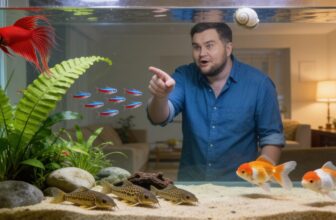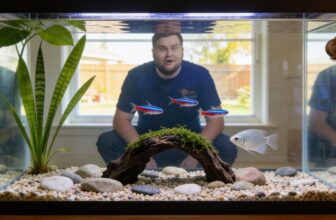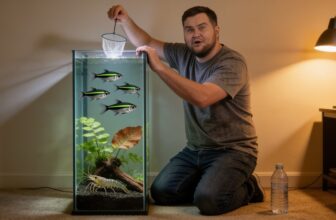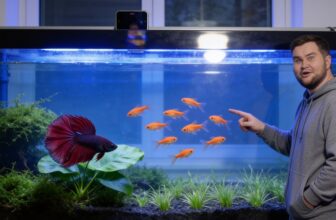
Betta vs goldfish—which is best for you depends on your setup, time, and tank size. These two popular beginner fish couldn’t be more different in care needs.
Bettas need 10 gallons minimum with warm 80°F water and gentle filtration; goldfish demand 50+ gallons, cooler 70°F temps, and strong flow to thrive. Lifespan differs dramatically too—bettas live 3–5 years while goldfish can reach 15 years or more with proper care.
Waste production is another key factor. Goldfish are messy, heavy bioload fish needing robust filtration and weekly water changes. Bettas produce minimal waste and are far more forgiving of beginner mistakes.
Temperament sets them apart as well. Bettas can show aggression toward reflections or tankmates; goldfish are peaceful community fish that rarely cause trouble.
Feeding habits contrast sharply. Bettas need small, protein-rich meals twice daily. Goldfish lack self-control and will overeat until they become ill.
Your lifestyle matters here. Want a vibrant, low-maintenance centerpiece? Choose the betta. Ready for a long-term aquatic companion with more demands? The goldfish awaits.
At A Glance
- Bettas need warm, still water; goldfish thrive in cool, high-flow tanks.
- Goldfish require 50+ gallons; bettas do well in 10-gallon tanks.
- Goldfish live up to 15 years; bettas live only 3–5 years.
- Bettas are aggressive loners; goldfish are peaceful, social fish.
- Goldfish produce heavy waste; bettas have light, manageable waste loads.
Why Bettas and Goldfish Are Always Compared
Why are bettas and goldfish always lumped together? For beginners, both seem like easy, low-cost pets, common in pet stores.
Their striking Betta colors and stunning Goldfish varieties catch the eye, but that’s where the similarity ends.
Bettas need warm water, around 80°F, whereas goldfish thrive in cool 70°F temps.
One’s a tropical fighter, the other a cold-water hoover.
Matching them in a tank is like pairing a cactus with a fern—a recipe for failure.
For a hassle-free start, pick one, not both. Your sanity will thank you.
For a betta, you will need a heater like the Hyger 50W Mini Heater with a digital display for their warm water.
This heater includes overheat protection to automatically shut off if the water gets too warm.
Betta Lifespan and Size: 3–5 Years, 3 Inches
Bettas come in stunning color morphs—marble, koi, galaxy—each a tiny masterpiece. But breeding challenges? Real. Males fight, females eat eggs, and fry need microscopic food. It’s not for beginners. For a healthy betta, choose a tank with low-flow filtration to avoid stressing its delicate fins. Many nano tanks offer pump noise below 20 dB, making them bedroom-friendly and quiet for sensitive fish.
Bottom line: If you want a low-space, high-personality fish that fits a desk tank, betta’s your buddy. Just don’t expect a decade-long commitment.
Goldfish Lifespan and Size: 15 Years, Up to 12 Inches
A goldfish is a living time capsule, not a disposable pet. They can live up to 15 years—longer than many dogs—and grow to a staggering 12 inches. That’s a fish that needs space, not a bowl. Tank decorations must be sturdy, not jagged, since goldfish will rearrange them. Their breeding habits are prolific: 1,000 eggs per batch, so plan ahead. For a goldfish this size, you must choose a stand with a 660‑lb load capacity to safely support the water, equipment, and heavy decorations. Many heavy-duty stands also include built-in power outlets to simplify managing your filter and heater cords. Here’s what you’re committing to:
| Factor | Reality | Your Role |
|---|---|---|
| Lifespan | 10–15 years | Decades of care |
| Max Size | 12 inches | Upgrade tank yearly |
| Waste Output | 3× more than betta | Weekly water change |
A goldfish is a long-term buddy, not a short-term hobby. Bottom line: buy a 40-gallon tank now, or don’t bother.
Can Bettas and Goldfish Live Together? No
First, let’s lay this one to rest: no, bettas and goldfish cannot live together. It’s not just about aggression—their needs clash brutally.
Water flow, for instance, is a major issue. Bettas prefer still, gentle currents, whereas goldfish thrive in stronger flow that generates oxygen. Their decor preferences similarly conflict: bettas love dense plants and hiding spots; goldfish uproot everything and need open swimming space.
Water flow is a dealbreaker: bettas need stillness, goldfish demand strong currents.
- Temperature mismatch: Bettas need 75–81°F; goldfish prefer 65–75°F.
- Waste overload: Goldfish produce tons of ammonia; sensitive bettas get poisoned.
- Feeding chaos: Goldfish scarf betta pellets; bettas ignore plant-based flakes.
- Size disparity: Goldfish grow huge, potentially bullying or eating a betta.
Bottom line: keep them separate or risk heartbreak. For betta tanks, using a gentle biological media like Ceramic Bio Filter Media can help manage waste without strong currents. A 10-gallon tank with low-iron ultra-clear glass offers a pristine, rimless view for bettas while supporting their need for stable water conditions.
Tank Size: Bettas Need 10 Gallons, Goldfish Need 50
Alright, since we’ve settled the cohabitation debate, the next big question is tank size. Bettas thrive in a 10‑gallon. It’s enough for behavioral enrichment—room to investigate, hide, and flare without stress.
Tank decoration impact is huge: plants and caves boost confidence. Goldfish? They need 50 gallons minimum. That’s non‑negotiable. They grow a foot long, and small tanks stunt them. Small bowls cause ammonia spikes within days.
You get more waste, more cleaning, but additionally a community vibe. A 50‑gallon setup runs $200-400; a 10‑gallon, $50-100. Pick based on space and wallet. A 55‑gallon stand must support at least 1,100 lb total load to safely handle the water and substrate.
Bottom line: betta fits a desk; goldfish owns a corner.
Water Temp and pH: The Real Dealbreaker
Temperature is the silent dealbreaker here, and it’s worth unpacking before anyone buys a heater. Bettas need 78-80°F water, whereas goldfish thrive at 65-75°F. Putting them together is like expecting a cactus to love a swamp.
Temperature is the silent dealbreaker here, and it’s worth unpacking before anyone buys a heater.
- Heater requirement: Bettas need a reliable heater ($15-30); goldfish don’t, so one aquarium is impossible for both.
- pH mismatch: Bettas want 6.5-7.5 pH; goldfish need 7.0-8.4 pH.
- Aquarium decoration: Bettas enjoy soft plants; goldfish uproot everything, ruining that look.
- Lighting requirements: Goldfish need bright light for color; bettas prefer dimmer setups.
Bottom line: separate tanks, separate temp and pH—or pick one fish.
Monitoring the betta’s 78-80°F target range requires an aquarium digital thermometer for precise readings and heater failure alerts. A digital floating model with ±1 °C accuracy ensures reliable temperature checks for these sensitive tropical fish.
Betta Aggression: Why They Attack Their Own Reflection
It’s called the Mirror Stress Response, and it’s exhausting. He’ll keep fighting that “rival” until he’s worn out. A simple tank sticker can break the reflection, reducing his stress. For owners wanting a peaceful home, this quirk isn’t cute—it’s harmful. Respect his wiring, or risk a constantly stressed fish. To prevent jump-related injuries during aggressive episodes, you can also install a magnetic aquarium lid with strong magnets that snaps tight for security. These lids also allow high light transmittance for plant growth while keeping the fish secure.
Which Tank Mates Can Survive a Betta?
The short answer is: not many. A betta’s aggression means only a few tank mates have a prayer.
Snail survival is decent with hard-shelled species like nerites, but mystery snails may get nipped.
Shrimp compatibility is hit-or-miss—neocaridina often become expensive snacks.
- Snails (nerite, mystery): low risk of harm, but bettas may eat small ones.
- Ghost shrimp: cheap, fast-moving, sometimes ignored.
- Amano shrimp: too large to eat, blend into decor.
- Corydoras catfish: bottom-dwellers, rarely provoke bettas; need a 10-gallon minimum.
For pairing a betta with shrimp, consider using a breeding box to isolate vulnerable fry or smaller individuals. Using a feeding ring can also help reduce aggression by keeping food contained and preventing shrimp from competing directly with the betta.
Goldfish Temperament: Peaceful but Always Hungry
If the previous section made bettas sound like the aquatic equivalent of a grumpy neighbor who yells at kids to get off the lawn, goldfish are more like that overly friendly dog that will eat your sandwich if you blink. Their food motivation is legendary, driven by strong foraging instincts that make them constantly search for snacks. They are peaceful with tank mates, but will try to eat anything that fits in their mouths. For a balanced diet, consider Tetra Goldfish Flakes enriched with Vitamin C to support their immune system and longevity. Goldfish digestive health can be improved with probiotic-rich foods that aid in nutrient absorption.
| Trait | Goldfish Behavior |
|---|---|
| Temperament | Peaceful, social |
| Food motivation | Extremely high |
| Foraging instincts | Constant, never rest |
| Aggression | Low, but opportunistic |
| Feeding risk | Eats until sick |
The takeaway? Feed them on a strict schedule, or they’ll convince you they’re starving—because, to them, they always are.
Betta Diet: Strict Carnivore on a Schedule
Unlike the perpetually ravenous goldfish, whose stomach is fundamentally a biological suggestion, the betta is a strict carnivore with a built-in portion-control problem—or rather, a lack thereof.
Unlike goldfish, bettas are carnivores with no off-switch for hunger.
Their survival instinct drives them to eat until bloated, so a precise feeding technique is mandatory.
Here’s how to avoid food competition within your own tank:
- Feed two to three pellets, twice daily. No more, or risk fatal constipation.
- Soak pellets first to prevent swelling inside their stomach.
- Offer thawed bloodworms weekly, as a high-protein treat.
- Skip flakes; they’re plant-heavy and cause bloat.
- Binding medication to food using Focus Binder ensures sick fish receive treatment even if they refuse to eat.
Bottom line: stick to a rigid schedule, and your betta thrives. For automated care, consider a feeder with precision portion control to ensure exact portions are dispensed reliably.
Goldfish Diet: Why They’ll Eat Themselves Sick
Feeding a goldfish is less like caring for a pet and more like managing a tiny, scaly garbage disposal with no off switch. Unlike Betta digestion, which handles protein in small doses, a goldfish has no stomach—so it never feels full.
This means a loose feeding schedule spells disaster: they’ll gorge until they bloat, then die from constipation or swim bladder issues. Adding a beneficial bacteria supplement to the water can help break down excess waste from overfeeding and maintain biological filtration.
Stick to a strict feeding schedule: two tiny meals daily, skipping one day per week. More food equals more waste, fouling the tank faster.
Your goldfish’s survival depends on your self-control, not theirs. A powdered supplement like Gargeer Reptile Multi-Vitamin can be lightly dusted on food to support calcium absorption and overall health.
How Smart Is Each Fish? Memory and Training
- Goldfish memory lasts up to three months, recalling feeding routines and owner faces.
- Betta fish master tricks like hoop jumping or target feeding within days.
- Both species respond to clicker training, associating sound with reward.
- A simple mirror exercise reduces betta stress, enhancing mental engagement.
- Using water test kits to monitor ammonia levels prevents illness during training sessions.
- For optimal accuracy, store such kits in a cool, dark place to preserve reagent stability.
Bottom line: they’re clever pets if you invest in smart play.
The Waste Problem: Goldfish vs. Betta Maintenance
In terms of tank maintenance, the waste problem is where goldfish turn your hobby into a part‑time janitorial gig. Their lack of a stomach means waste management is constant. Bettas, carnivores with efficient digestion, produce far less mess. For goldfish, forgiving biological media helps support bacteria that process their heavy waste load. Dense foam filters provide high surface area for robust beneficial bacteria colonies to handle heavy waste.
| Fish | Waste Output | Tank Cleaning Frequency |
|---|---|---|
| Goldfish | Heavy, constant | Weekly 25-50% water change |
| Betta | Light, manageable | Bi-weekly 20-30% water change |
Goldfish need robust filtration and frequent gravel vacuuming. Bettas, in smaller setups, handle waste with less effort. For those wanting a cleaner routine, bettas win the waste war.
Which Fish Fits Your Time Commitment?
The waste problem is settled, but it leads to a bigger question: time.
Your Commitment level determines which fish fits your life.
Your Commitment level determines which fish fits your life.
A Betta‘s short 3–5 year lifespan demands moderate Time investment—weekly water changes and daily feeding.
Goldfish, living 10–15 years, require heavy, long-term commitment.
- Daily feeding: Bettas need 2–3 pellets; goldfish, timed portions to prevent overeating.
- Tank cleaning: Goldfish waste means weekly gravel vacuums; Bettas, biweekly.
- Tank upgrades: Goldfish outgrow small tanks, needing 20+ gallons; Bettas max at 10.
- Health checks: Bettas need heater and pH monitor; goldfish, stable temperature and filtration. Efficient LED lighting fixtures often feature near‑silent fans to maintain stable temperatures, reducing coral shock in reef setups.
Consider that efficient pinwheel pumps draw as little as 2.5 watts, reducing electric bill impact for your filtration needs. Choose the Betta for less hobby weight—or the goldfish for a decade-plus partner.
Frequently Asked Questions
What Is the Average Cost of Owning Each Fish?
The average cost of owning a betta fish lands around $100 for a basic setup with a betta tank heater and small filter.
A goldfish, on the other hand, can run $200–$300 since a proper goldfish tank filter and larger tank (at least 20 gallons) are must-haves.
That bigger tank is for their massive waste—and they can live 15 years.
Bettas cost less upfront but need consistent heater investment; goldfish demand more gear and space.
Choose based on your budget and patience.
Can Bettas and Goldfish Be Kept in a Pond Together?
No, bettas and goldfish cannot thrive together in a pond. Water temperature is the big issue—bettas need tropical warmth, around 75-81°F, whereas goldfish prefer cooler 65-75°F.
Combine that with goldfish’s massive waste and tank size requirements (they can hit 12 inches), and you’ve got a recipe for stress. Bettas are additionally territorial; a goldfish might eat them.
Bottom line: keep them separate for their own sakes.
How Do I Know if My Fish Is Happy and Healthy?
A happy, healthy fish shows active swimming, clear eyes, and bright colors. Watch fish behavior—a content betta builds bubble nests, while a goldfish investigates its tank environment steadily.
Maintain clean, properly sized tanks with correct temperature and pH; goldfish need cooler water, bettas warmer. Overeating or lethargy signals trouble. Fins clamped tight? Check parameters.
A thriving fish eats eagerly, interacts, and looks plump—like a friend who just finished leftovers. Bottom line: steady behavior plus ideal tank setup equals a fish that’s living its best life.
Do Bettas or Goldfish Need Live Plants in Their Tank?
Neither bettas nor goldfish *need* live plants, but plant compatibility matters. Bettas love them for hiding—they reduce stress. Goldfish? They’ll uproot everything; stick to hardy plants or fake ones.
Lighting requirements differ: bettas prefer moderate light (8 hours daily), goldfish tolerate low light.
More cleaning for goldfish, less for bettas.
Bottom line: plants optional, but not for everyone.
How Often Should I Fully Clean My Fish Tank?
Cleaning a tank is like brushing your teeth—do it too little, and things get ugly. For most tanks, a full clean every 2 to 4 weeks works, but it is determined by tank size and your water parameters.
Smaller tanks need more frequent care, goldfish produce tons of waste, so check pH and ammonia weekly.
A 50% water change, scrub the glass, rinse the filter in old tank water—never tap water—keeps parameters stable.
Bottom line: test often, clean when levels shift, and your fish will thrive without you messing up.
A weekly glance beats a monthly panic.
Rounding Up
Betta owners relax; goldfish owners scrub filters. It’s that simple. One fits a 10‑gallon, a heater, and a weekly feeding. The other demands a 50‑gallon, a canister filter, and a second mortgage on your cleaning time. Both recognize your face; only one will survive your next apartment lease. Bottom line: a betta matches a busy life; a goldfish is a live‑in hobby. Choose wisely, or you’ll get a very wet lesson in regret.