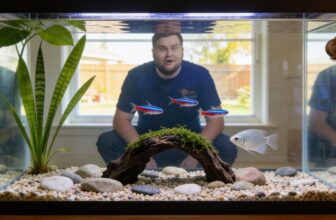
How many guppies in a 20 gallon tank? It’s the question every new aquarist asks, and the answer might surprise you. While ten to twelve sounds like a sweet spot, your real limit depends on gender ratios and hardscape choices.
The classic one-inch-per-gallon rule helps: males peak at 1.5 inches, females stretch to 2.5. Mix eight females with four males and you’re already at 16 inches of fish—tight quarters for active swimmers. Ammonia spikes don’t forgive beginners who overstock.
Live plants, driftwood, and filters steal swimming room too. Smart stocking means calculating displacement, not just gallons. Want the full formula for a thriving guppy colony? The breakdown continues below.
At A Glance
- Use the one-inch-per-gallon rule: males need 1.5 gallons, females 2 gallons each.
- For a mixed group, aim for a 1:2 male-to-female ratio to reduce stress.
- A standard 20-gallon tank can safely house 10 to 12 total guppies.
- Subtract 1-2 gallons for hardscape and decorations from total tank volume.
- Overcrowding causes ammonia spikes, aggression, stunted growth, and disease outbreaks.
How Many Guppies Can a 20-Gallon Tank Really Hold?
So, how many guppies can a 20-gallon tank really hold? For a comfortable group, ten to twelve guppies is your sweet spot.
Tank height matters less than surface area for oxygen, but standard 20-gallons work fine. Keep a 1:2 male-to-female ratio to reduce stress—males are smaller, topping out at 1.5 inches, whereas females hit 2.5 inches.
Tank height matters less than surface area for oxygen, but standard 20-gallons work fine.
Overcrowding shortens guppy lifespan fast, thanks to ammonia spikes. For safety, stick to ten total, especially if you’re new.
A filter and heater are non-negotiable. A reliable setup with a quiet pump and stable heater supports a healthy guppy environment. For optimal water clarity, choose a filter with activated carbon to remove odors and discoloration. Bottom line: twelve max, but ten keeps them healthier and happier.
The One-Inch-Per-Gallon Rule Made Simple for Guppies
The one-inch-per-gallon rule is a handy shortcut for stocking a 20-gallon guppy tank. Picture it: one inch of fish per gallon of water. A male guppy, at 1.5 inches, needs 1.5 gallons. A female, at 2.5 inches, needs more.
This simple math prevents overcrowding, which stresses fish and weakens guppy genetics over time. Lifespan effects are real—crowded tanks mean shorter, sicker lives.
So, for a 20-gallon, aim for 12 to 14 males, or 10 to 12 females. Mix genders? Keep the ratio 1:2, male to female. It’s like party seating—too many guests ruins the fun.
Start small, and your guppies will thank you. To keep water clean for this stocking level, choose a filter with a minimum flow rate of 80 GPH. For a quiet bedroom setup, a filter with < 35 dB noise rating ensures undisturbed sleep.
How Big Do Male and Female Guppies Actually Get?
Male guppies stay slim and trim, topping out around 1.5 inches long—think of them as the showy, small‑town celebrities of the tank.
Male guppies stay slim and trim, topping out around 1.5 inches—the showy celebrities of the tank.
Females, on the other hand, are the curvy matriarchs, reaching 2 to 2.5 inches.
This size gap isn’t random; it’s driven by guppy genetics, which likewise influence guppy lifespan.
A larger female body supports more eggs, but it likewise means she needs more space.
So when you’re counting inches for your 20-gallon, remember: one male equals one inch, one female equals two.
That’s the simple math for a peaceful, properly stocked community. When using a rimless tank, the ultra‑clear low‑iron glass improves visibility and reduces distortion for accurately estimating fish size and health.
Proper sizing is essential because small bowls cause ammonia spikes within days or hours.
Calculate Your Maximum Guppy Count Step by Step
You now know male and female sizes, so it’s time to put that ruler to use. A two‑inch female needs two gallons; a 1.5‑inch male needs one‑and‑a‑half. Multiply that by the number of each gender you want. For a mixed school of twelve, say eight females and four males? That’s sixteen inches total, which fits your 20‑gallon tank—barely, like a slightly overstuffed suitcase. Before adding fish, finish tank cycling; ammonia spikes are a party nobody wants. Good guppy genetics additionally matter—pick healthy stock, not flashy but fragile. Aim for ten to twelve total, leaving wiggle room for mistakes. You’ll thank yourself later. Using lab-grade precision with a liquid kit ensures results stay reliable through the cycling process. Use API Freshwater Master Test Kit to accurately monitor ammonia, nitrite, and nitrate throughout cycling.
How Gender Ratios Affect Your Final Guppy Count
Gender ratios in a 20-gallon tank aren’t just about numbers; they’re about behavior, breeding, and avoiding a tiny underwater war.
Too many males spike male aggression, turning your peaceful community into a fin-flashing contest. That disrupts the tank hierarchy, stressing everyone out.
Too many females leads to constant female pregnancy, quickly overcrowding the tank and overwhelming your filter. Adding beneficial bacteria can support biological filtration and reduce waste buildup.
The right balance, nonetheless, boosts genetic diversity, producing healthier fry. So, aim for one male to two females. It’s about managing chaos, not just counting fish.
The right balance boosts genetic diversity, producing healthier fry—one male to two females.
A stable social order means fewer headaches and more thriving guppies—a win for your underwater world.
Choose a sinking pellet like Aqueon Shrimp Pellets to ensure bottom-dwelling fish get their share without clouding the water.
Why the 1:2 Male-to-Female Ratio Matters
Since a 1:2 male-to-female ratio isn’t just a random number pulled from a hat, it’s the result of watching guppies do what guppies do best—being a little chaotic. Male guppies, ever the show-offs, relentlessly pursue females. Too many males wreck the behavioral dynamics, turning the tank into a stressful race.
This imbalance crushes the social hierarchy, with females constantly harassed, never resting. A proper ratio gives females safe zones, spreads male attention out, and keeps the peace. You want a happy community, not a fishy soap opera. Stick to one male for every two females, and your guppies will thank you with calm, lively schooling. For temporary isolation of an injured or over-stressed female, a small reptile terrarium provides easy water observation and quick spot-cleaning access. A mesh net design promotes free water circulation, preventing waste buildup and keeping the water around the isolated fish clean.
What Happens When You Overcrowd a 20-Gallon Tank?
| Consequence | What It Looks Like |
|---|---|
| Ammonia Spikes | Gasping at surface, red gills |
| Fish Stress | Hiding, clamped fins |
| Aggression | Chasing, nipped tails |
| Stunted Growth | Smaller, deformed bodies |
| Disease Outbreaks | White spots, fin rot |
You want a thriving community, not a cramped, hostile dorm. Stick to 10-12 guppies, max. Your fish will thank you, and you’ll avoid becoming a fish funeral planner. Products like Seachem Prime can temporarily detoxify ammonia for 48 hours during emergencies, giving your biological filter time to catch up. To prevent disease outbreaks from stress, keep API Melafix on hand for treating fin rot and open wounds naturally.
Breeding: How Your Tank Gets Overcrowded Fast
Guppies breed prolifically, often without any warning or permission from their owner. One female can spawn dozens of fry every month. That tiny 20-gallon tank becomes a nursery overnight. For optimal viewing and growth, consider using a 6W clip-on light like the WEAVERBIRD LED Aquarium Clip Lamp.
Guppy fry survival is high in warm, planted tanks, which means numbers skyrocket fast. Without careful separation, you face inbreeding depression—weak, deformed guppies with short lifespans. Your peaceful community turns into a crowded, stressed mess. Using a fine-mesh net helps safely transfer fry without damaging their delicate fins.
The fix? Separate males from females, or rehome extra fish quickly. Otherwise, your tank overflows before you realize it. Belonging to the wise guppy keeper club means planning ahead, not scrambling later.
Can You Keep Other Fish With Guppies in a 20-Gallon Tank?
Yes, but with math and a little self‑restraint. A 20‑gallon tank can host a community, but every fish needs its own swimming zones. Guppies occupy the top and middle; bottom‑dwellers like corydoras use the lower areas, reducing food competition. Twice‑weekly testing for crowded setups with a kit like the API Reef Master Test Kit ensures precise phosphate and nitrate monitoring for a healthy balance.
For example, six neon tetras, four guppies (1:2 male‑female), and four corydoras total 14 inches. That leaves six inches for a small snail or shrimp. Overcrowding spikes ammonia, stressing everyone. Remember, a filter doesn’t create extra space—it just cleans the water you already have. Regular testing with accurate ammonia test kits helps ensure levels stay below 0.25 ppm to prevent stress.
Stick to that total inch‑count, and your tank stays harmonious. Less is more, always.
Best Tank Mates and How Many to Add
The easiest way to think about tank mates is as roommates—they need their own space, and you’re the landlord.
For a 20-gallon, stick with peaceful species like neon tetras (six minimum), corydoras (three), or cherry shrimp.
Avoid fin-nippers; they trigger Guppy aggression. Add only three mollies or platies alongside your guppies.
Overcrowding spikes waste, raising Inbreeding risks if fry appear.
Keep total fish under 20 inches. A school of six guppies plus six tetras works well.
To ensure a healthy environment, follow general betta tank maintenance tips like regular water changes to prevent nitrite spikes.
To keep your filter running reliably, choose one with power recovery features that self-prime after outages, reducing stress on your fish.
Bottom line: less is more. Your community thrives when everyone has breathing room—and you avoid becoming a stressed fish landlord.
Why Beginners Should Start With Fewer Guppies
Since beginners often misjudge water chemistry or tank maintenance, starting with a smaller group makes sense—think of it as a safety net for your learning curve. Fewer fish give you a bigger Mistake Margin; an ammonia spike won’t wipe out the whole crew.
Your Learning Curve gets gentler, less frantic. Start with four or five guppies. That’s enough to learn water changes, feeding, and behavior without chaos. Additionally, maintaining stable pH and alkalinity is critical in a new tank, as unpredictable swings can stress fish and complicate your learning process. Using a non‑phosphate buffer helps prevent algae blooms while keeping water chemistry steady.
You’ll feel part of the hobby, not overwhelmed by it. Bottom line: less really is more when you’re new. Add more later, once you’ve earned your stripes—literally.
How Tank Setup Changes Your Guppy Limit
Empty tank volume means little once you add hardscape. That rock pile, driftwood branch, and heavy sponge filter each nudge guppy count down.
Plant biomass—think thick Java fern clumps—takes up space but offers hiding spots, reducing stress.
Hardscape volume might steal 2 gallons of swimming room, turning a 20-gallon tank into an 18-gallon reality. A fully planted, decorated setup holds 8 to 10 guppies, tops. Beginners often miss this, then wonder why their 12 guppies seem cramped. For example, a large Mopani wood piece can require up to 60 minutes of boiling to prevent tannin clouding. Using a fine, pre‑washed sand like Classic SandPlay can also reduce dust storms and improve filtration in a planted tank.
For a happy, balanced community, subtract the scenery before stocking. Your tank’s personality matters.
Essential Equipment That Affects Your Guppy Capacity
Equipment changes everything. A bigger filter, for instance, takes up space, reducing your tank’s true water volume. That filter size matters—a hang-on-back unit displaces less than a bulky canister. More displacement equals fewer guppies. Using an aquarium leveling mat helps distribute weight and prevents tank warping, which can alter effective water volume over time.
Equipment changes everything—a bigger filter means fewer guppies.
- Choose a sponge filter: it’s gentle, cheap ($10–$20), and doesn’t hog floor space, keeping your real gallon count high.
- Go with an HOB filter: compact, powerful, but check its footprint; some models steal three inches of tank length.
- Avoid large decorations: a heavy rock or driftwood can eat two gallons of water volume displacement.
- Use a slim heater: a 50-watt model fits neatly, leaving more room for fish.
- For precise measurement, always use a NIST‑traceable hydrometer to accurately check your water volume and density adjustments.
Bottom line: measure everything, and subtract the displacement from your 20-gallon total.
How to Maintain Water Quality for a Healthy Guppy School
A 20-gallon tank means nothing if the water inside is poison. Weekly 10-20% water changes keep ammonia low. A proper filter selection is mandatory. Sponge filters work well for guppies, costing around $15. Overfilter; canisters, at $80, handle heavy waste. Adding a conditioner like Seachem Prime detoxifies ammonia while preserving beneficial bacteria during water changes.
Overcrowding creates toxic soup. Test parameters: ammonia and nitrite must stay zero. Nitrate should remain below 20 ppm. Guppies need stability; neglect invites disease.
Think of water quality as the invisible foundation for a thriving school. Keep it clean, test often, and your guppies will reward you with color and energy—no drama required. Adding a water clarifier can help bind fine particles and reduce cloudiness without harming fish or plants.
Frequently Asked Questions
Can Guppies Live in a 20-Gallon Tank Without a Filter?
Guppies cannot thrive in a 20-gallon tank without a filter. Unfiltered water quickly accumulates toxic ammonia from waste, causing stress, disease, and death.
Even with perfect natural lighting needs, a filter is critical for biological filtration. Proper tank cycling methods, which establish beneficial bacteria to neutralize ammonia, rely on a filter.
Without one, water quality degrades, harming guppies rapidly. A sponge filter, affordable at $10–$20, provides gentle flow and ample surface area for bacteria—it’s a non‑negotiable addition for any keeper wanting a healthy, stable guppy community.
How Often Should I Clean a 20-Gallon Guppy Tank?
A 20-gallon guppy tank needs a 10-20% water change weekly, plus a consistent lighting schedule of 8-10 hours daily.
This keeps ammonia low and algae manageable.
Skip a week, and you’re basically hosting a fishy frat party—stressful and smelly.
Stick to this routine, and your guppies stay healthy, colorful, and social.
It’s not glamorous, but it’s the secret to belonging in the clean-tank club.
What Is the Ideal Water Temperature for Guppies?
The ideal water temperature range for guppies is 72–82°F. A heater size of 50–75 watts suits a 20‑gallon tank, keeping the water stable.
Guppies hate cold, stagnant water, so a reliable heater is non‑negotiable. Aim for 78°F to boost activity and color.
You’ll feel like part of the crew when your guppies thrive, not shiver.
A simple fix? Grab a preset 50‑watt heater; it’s cheap, effective, and forgiving. No one wants shivering fish.
Can I Keep Only Male Guppies in a 20-Gallon Tank?
Yes, a 20-gallon tank can hold only male guppies. For a group of all males, keep 12 to 14, as they’re smaller than females.
But beware: male aggression spikes without females. You need heavy tank scaping—lots of plants, driftwood, and hiding spots—to break line-of-sight and reduce bullying.
A crowded, open tank invites nipping. Space them out. Give them places to hide. It works, but it takes planning, not just filling the tank with water and hoping for peace.
How Do I Know if My Guppies Are Stressed?
Guppy color fading is a clear sign of stress. Fin clamping, where fins are held close to the body instead of fanning out, is another red flag.
These indicate poor water quality or overcrowding. Check those ammonia and nitrite levels immediately.
A stressed guppy loses its bright colors and looks clamped up. Nobody wants a drab, unhappy tank.
Fix the water, and their colors will return, fins will relax. Simple as that.
Rounding Up
So, how many guppies in a 20-gallon tank? Stick to twelve for a mixed group, but here’s the kicker: a single female guppy can birth over 200 fry in one go. That’s a population explosion you didn’t budget for. Except you’re running a second tank or a rigorous culling program, that twelve-fish cap will feel more like a suggestion. Start with fewer, monitor your water parameters religiously, and remember: overstocking is the fast track to heartbreak. Your bottom line: less is always more stable.