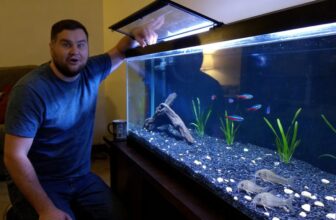
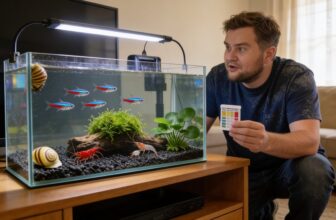
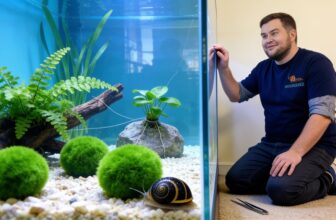
Yes, you can absolutely grow a lush planted tank on sand—just don’t expect it to hand you dinner on a silver platter.
Sand is chemically inert, meaning it won’t mess with your pH, but it’s certainly nutrient-empty, so you’ll be popping root tabs like vitamins every month.
Coarse sand (1–2 mm grains) beats fine stuff hands-down, letting roots breathe and water flow instead of suffocating in compacted muck.
Stick to 2–3 inches deep to dodge stinky anaerobic pockets, grab something like Seachem Flourite Black Sand ($25–$30) if you want porous clay that actually holds nutrients, or cheap out with pool filter sand if you’re feeling thrifty and don’t mind the extra legwork.
Hardy plants—think Cryptocoryne, Vallisneria, Java Fern—won’t complain much, but heavy root-feeders like Amazon Swords will give you the side-eye without regular fertilizing.
It’s more hands-on than soil, indeed, but you get precise control and a clean, bright look that pops under high light.
The real kicker? Sand costs a fraction of aquasoil, and if you’re willing to stay on top of maintenance, your tank won’t know the difference.
Stick around and you’ll pick up the exact brands, grain sizes, and anchoring tricks that separate gorgeous sand tanks from algae-covered regrets.
At A Glance
- Yes, sand supports aquatic plants with proper root-tab fertilization and regular maintenance.
- Coarse sand (1–2 mm) prevents root suffocation; fine sand compacts and harms plant health.
- Hardy plants like Cryptocoryne and Amazon Sword tolerate sand substrates well.
- Limit sand depth to 2–3 inches to avoid dangerous anaerobic pockets.
- Inert sand requires monthly root tabs, unlike nutrient-rich soil.
Does Sand Work for Planted Tanks? (Yes: Here’s Why)
Draw-offs? It’s lazy on nutrients. You’ll feed plants through root tabs, buried like tiny treasure every six inches. No shame in that.
Bottom line: sand demands commitment, not genius. Some sands like Aqua Natural Prairie Sand contain live nitrifying bacteria to instantly cycle the tank.
Sand, Gravel, or Aquarium Soil: Which Substrate Wins?
Since you’ve already wrestled sand into submission, you’re now wondering if you picked the right horse—or if gravel or fancy soil would’ve been smarter.
The verdict: Soil wins for lush growth, sand texture wins for looks and simplicity, gravel sits awkwardly in between—decent at nothing, master of none.
Aquarium soil packs nutrients upfront, so you skip root tabs, though you’ll pay $30–$50 per bag.
Gravel offers better root penetration than fine sand texture, yet demands just as much fertilizer.
Gravel’s roots run deeper than sand, but your fertilizing bill won’t shrink.
Sand? It’s cheap, inert, and stunning under high lighting intensity, but you’re signing up for monthly root tab duty.
Pick soil if you want a jungle, sand if you want control, gravel if you enjoy compromise.
For planted tanks, Aqua Natural Diamond Black Gravel provides a dark substrate that enhances plant root visibility without chemical additives.
Fine vs. Coarse Sand: Which Protects Plant Roots?
If you’re staring at two bags of sand and wondering which one won’t murder your plants’ roots, you’re asking the right question, though maybe slightly too late in the shopping process.
Fine sand compacts like wet cement, suffocating roots and blocking nutrient diffusion—think of it as a botanical straitjacket.
Coarse sand, with its larger particle size, creates tiny gaps that let roots can breathe and spread. For root protection, you want that looser sand texture, period.
- Fine: dense, cheap, root‑killing potential (the bad boyfriend of substrates)
- Coarse: better water flow, easier anchoring, happier plants
Bottom line: grab coarse sand, roughly 1–2 mm grains, and your carpet plants will actually thank you.
A spider wood bundle provides multiple small tanks with budget-friendly natural shapes for creative layouts.
6 Sand Types Ranked for Plant Health
You’ve settled on coarse sand, good call. Here’s your field guide to six sands, ranked by how they treat your plants.
Seachem Flourite Black Sand tops the list—porous clay base, stable sand grain size, root tabs slide right in. Plant nutrient uptake thrives here.
CaribSea Super Naturals Moonlight follows, dye‑free and neutral, though you’ll wash off that oily film first. Dad joke: it’s like doing dishes, but wetter.
Black Diamond Blasting Sand—cheap, sharp, pretty; just don’t expect nutrients built‑in.
Play sand clogs filters, compacts.
Pool silica looks fancy, costs too.
Artificial dyed stuff? Hard pass—chemicals leach, roots suffer.
This sand’s low phosphate content helps maintain stable conditions for plant growth.
Will Sand Alter pH in Freshwater Planted Tanks?
Sand won’t mess with your pH, mostly.
Standard quartz sand stays chemically inert, meaning it won’t swing your water chemistry wildly—no frantic testing required, unlike that one friend who checks parameters daily.
But here’s the catch: not all sands play nice.
- Cichlid-specific blends (like CaribSea Cichlid Mix) deliberately alter pH, buffering water toward alkaline conditions—great for rift lake setups, disastrous for soft-water plants.
- Artificial dyed sands risk nutrient leaching and chemical contamination into your tank.
- Clay-enhanced varieties trade stability for planted tanks often contain heavy-metal sequestration polymers that support sensitive shrimp while keeping pH stable.
You want neutral? Stick to pool filter sand, blasting sand, or Seachem Flourite Black.
Test your tap water, match your sand choice, and you’ll sleep fine.
5 Root Tabs That Work in Sandy Substrates
Seachem Flourish Tabs ($9/10-pack): Trace minerals, gentle pH, solid starter choice for starters. Easy Root Tabs ($13/80-pack): Red clay base fights nutrient diffusion loss in any sand color. API Root Tabs ($8/10-pack): Organic carbon boost, budget-friendly workhorse. Thrive Caps ($15/60-pack): Iron and copper traces, plus algae control built in. Easy Life Root Sticks ($12/20-pack): Slow-release clay, high iron for demanding roots. Since sand’s about as nutritionally generous as a blank sheet of paper, you’ll need to feed your plants directly—and that’s where root tabs earn their keep. For larger setups, you may also benefit from desktop-size large tanks that offer more stable water conditions for rooted plants.
Space them 5–6 inches apart, replace monthly, and bury deep so they don’t float up like tiny submarines. Your sand bed stays clean, your roots stay fed—everyone wins.
How Deep Should Sand Go to Avoid Dead Zones?
If you’re piling sand like you’re building a beach for a tiny vacation, stop at three inches. Two to three inches hits the sweet spot for sand depth.
Keep your sand bed vacation-sized: two to three inches, no deeper.
Here’s why you shouldn’t go deeper:
- Anaerobic risk drops sharply under 3″—deeper and you choke gas exchange
- Root anchoring works fine; roots grab coarse grains without battling substrate compaction
- pH stability holds steady when oxygen flows freely
- Nutrient diffusion reaches roots effectively
- Plant oxygenation stays healthy with decent bacterial colonization
Too shallow? Roots flop, tabs float. Too deep? You’ll trade filter clogging worries for stagnant nightmares. Keep it shallow, roll with the flow. For sealing any leaks from a deep sand bed, ISO 11600‑F/G compliant silicone creates a fish-safe, non-toxic bond.
Can Deep Sand Beds Release Toxic Hydrogen Sulfide?
– Keep it under three inches, people.
Implementing proper weekly 25% water changes helps maintain stable water parameters and prevents conditions that foster harmful bacteria in deep sand beds.]
How to Prevent Toxic Gas and Filter Damage in Sand
Since sand can turn from friend to foe when you aren’t looking, you’ve got to stay two steps ahead of the two big risks: invisible gas pockets and filter grief.
Keep your bed shallow—two to three inches max, since deeper layers turn into stinky chemistry experiments. For toxic gas mitigation, grab a chopstick and poke around weekly; it’s like aerating your lawn, but wetter. You’ll break up anaerobic pockets before they belch rotten-egg death into your water.
Now, for filter clog prevention, slap a pre-filter sponge on your intake. It’s cheap insurance against grain damage to your filter impeller. You can also pair your sand setup with a clear mesh lid to maintain high light transmission for plant health.
How to Clean Sand Without Removing Beneficial Bacteria
Cleaning sand sounds like a recipe for disaster—after all, you’re literally stirring up the very place your beneficial bacteria call home—but it doesn’t have to be an all-or-nothing massacre. You’ve got this.
- Hover, don’t plunge. Gently wave your siphon above the sand, sucking debris without substrate flushing your hard-won bacterial cycling colonies into oblivion.
- Spot clean only. Hit visibly dirty patches, leaving the rest undisturbed like a protective neighborhood.
- Stir, then wait. Lightly surface-rake weekly, letting bacteria recolonize before your next pass.
- Keep it shallow. Two to three inches max, since anaerobic pockets are nobody’s friend.
For rooting heavy plants, flexible metal strips provide a rust‑free wrap‑around anchor that stays put in sand without disturbing bacteria.
10 Hardy Plants That Thrive in Sand
You can absolutely grow a lush planted tank on sand, but you’ll want to pick species that don’t throw tantrums when their roots hit compact substrate.
- Java Fern (rhizome attaches to rocks, ignores sand texture entirely)
- Anubias (slow, patient, basically the aquarium equivalent of that friend who’s always late but worth waiting for)
- Cryptocoryne (small roots, iron-hungry, loves root tabs)
- Vallisneria (runners spread like gossip, tolerates most anything)
- Amazon Sword (heavy feeder, needs those tabs every month)
- Hornwort (floats or roots, your call)
- Java Moss (carpets anything, even your mistakes)
- Dwarf Sagittaria (spreads into lawns, sand texture be damned)
- Water Sprite (forgives bad lighting, bad decisions)
- Frogbit (roots dangle, never touches bottom)
Plant compatibility matters more than you’d think, so stick to these veterans.
How to Anchor Plants in Sand (Step-by-Step)
When you’re staring at a fistful of loose sand and a bunch of floppy plant stems, the whole situation feels a bit like building a house on a beach—technically possible, but you’re going to need some clever engineering.
Without the right approach, your plants will float away like sad little salad.
Here’s your anchor game plan:
- Choose coarse sand texture; those gaps let roots grab hold instead of sliding around helplessly
- Slide root tabs deep, maybe 2 inches down, so hungry roots find them fast
- Rubber-band stems to small rocks first, then bury the rock—lazy genius move
- Keep rhizomes above the surface, or they’ll rot and you’ll feel silly
Plant stability comes from strategy, not magic.
At two to three inches deep, you’re golden.
More than that? Hello, stinky anaerobic pockets.
Dip your fingers in, wiggle stems gently, and you’ll feel when things set.
Trust your hands.
5 Sand Products Ranked by Root Performance
Since your plants deserve more than a bed of quicksand, picking the right sand substrate separates thriving gardens from sad, floating stems.
Here’s your cheat sheet for root-friendly sand, balancing cost economics with micro-habitat aesthetics.
| Sand Product | Root Performance Verdict |
|---|---|
| Seachem Flourite Black Sand | Best overall; clay-based nutrients feed roots directly, though you’ll pay premium prices for that dark, earthy look |
| CaribSea Super Naturals Moonlight | Great mid-range choice; fine grains need root tabs, but that natural color blends seamlessly into any aquascape |
| Black Diamond Blasting Sand | Budget winner; coarse texture aids root spread, letting you spend spare cash on plants instead of substrate |
Your move: match grain size to root depth, and you’re golden.
3 Signs Your Plants Need Nutrient-Rich Substrate
Picking the right sand gets your roots started, but even the best substrate runs empty eventually.
You’ve got to spot the warnings before your tank turns into a plant graveyard.
Here are the red flags:
- Pale, stunted new leaves — chlorosis screams “feed me,” and you’re watching nutrients vanish through soil leaching faster than you can say “root tabs.”
- Roots surfacing like desperate snorkelers — they’re gasping, since your sand chokes off root‑zone aeration; compact grains suffocate what lies beneath.
- Algae everywhere, plants nowhere — when your greenery starves, algae throws a party, and nobody invited you.
Bottom line: don’t wait for a funeral. Swap to nutrient-rich substrate, or at least jam root tabs deep.
Frequently Asked Questions
Can I Mix Sand With Gravel for Better Drainage?
Yes, you can mix sand with gravel, but it won’t improve drainage much.
Sand filtration actually works against you here—fine particles fill gaps between gravel, reducing substrate porosity and trapping water.
You’d create a compacted layer where roots suffocate.
Stick to one or the other, or layer coarse sand *over* gravel if you must.
Honestly, it’s more hassle than it’s worth, and your plants will thank you for picking a side.
Do I Need to Replace Sand Annually Like Gravel?
Verdict: No annual replacement needed. Sand’s compact packing means you’re not battling nutrient leaching like with gravel, and there’s no sand turnover schedule to stress over—rinse it well at setup, maintain 2–3 inches depth, and you’re set for years.
You’ll periodically stir to prevent anaerobic pockets, indeed, but that’s maintenance, not replacement.
Your wallet stays heavier, your back stays happier. Keep it clean, keep it shallow, keep it simple.
Will Shrimp Disturb Sand and Expose Root Tabs?
Yes, shrimp bioturbation—basically their constant digging and sifting—can expose root tabs, but it won’t ruin your tank, just watch for floating capsules and push them back down.
You’ll spot buried root-tab exposure when those little brown cylinders pop up like unwanted mushrooms, so here is your gameplan:
- Bury tabs 2 inches deep, not shallower—shrimp are persistent, not excavators.
- Pierce capsules first; they sink better, lesson learned the hard way.
- Space tabs 5–6 inches apart, fewer holes means fewer opportunities for disaster.
Cherry shrimp? They’re light diggers. Amano shrimp? They bulldoze like they’re rented.
Your sand stays put, mostly, and frankly, replanting a tab takes ten seconds—less time than you spend debating dinner. I’ve lost maybe three tabs to shrimp in two years, hardly a crisis worth losing sleep over, though I did panic the first time.
Bottom line: shrimp help more than hurt, just seat those tabs deep and check them monthly.
Can Sand Substrates Grow Carpeting Plants?
Yes, sand can grow carpeting plants, but you’ll need to work for it.
- Plant growth — Root tabs (about $8-12/pack) are non-negotiable; sand lacks built-in nutrients.
- Substrate stability — Fine sand compacts, so choose coarse grain or mix with clay sand; anchoring takes patience.
You’ll disturb the substrate occasionally to stop anaerobic pockets (toxic gas bubbles, basically swamp farts).
Short roots like Monte Carlo adapt better than deep runners.
Bottom line: doable, not ideal, grab aquarium soil if you want easy mode.
How Does Sand Affect Beneficial Bacteria Colonies?
Sand’s like a crowded subway—*packed tight*, with less room for bacterial colonization than porous gravel, since substrate porosity is basically how much empty space exists between grains for microbes to hang out.
You’ll still get biofiltration, just less surface area per inch.
Rinse well, keep depth under 3 inches, and don’t panic—your filter’s got your back on bacteria anyway.
Rounding Up
You’ve got this. Sand won’t hold you back, not when you work smarter, not harder. Think of it like baking with a finicky oven—you adjust, you compensate, you nail the result anyway. Root tabs are your cheat code, coarse grains are your ally, and plants? They’ll root, spread, thrive. Pick the right species, don’t cheap out on depth, stay patient. Your streambed paradise awaits. Go build it.