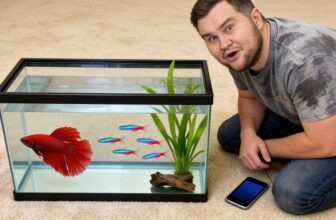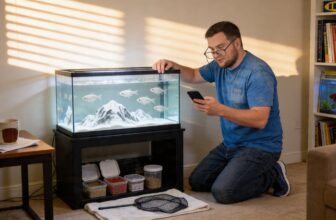
You need five gallons minimum, full stop. The Koller Panaview 5-gal ($30) gets you started cheap with basic LED, though it’s plastic and you’ll upgrade eventually.
The Marineland Portrait 5-gal ($60) saves desk space with its vertical design—tall, not wide, like a fish condo. Want to splurge? The Fluval Flex 9-gal ($120) hides its filter and curves like modern art, while the Aqueon 10-gal kit ($80) includes heater and quiet filter, no guesswork.
The Tetra 20-gal ($100) gives serious swimming room and stable water chemistry. Bigger tanks mean fewer water changes, less temperature drama, and fins that won’t shred on cramped corners.
Skip anything under five gallons—your betta isn’t a desk ornament, and you’re not that person. Pick based on your budget, your shelf space, and how much you hate algae scrubbing, because what follows breaks down filters, heaters, and décor choices that actually matter.
At A Glance
- Minimum five gallons prevents fin damage and stabilizes water chemistry for healthy bettas.
- Marineland Portrait and Fluval Flex offer vertical or curved designs saving space while looking modern.
- Kits including heaters, gentle filters, and LED lighting simplify setup and ensure proper temperature control.
- Adjustable flow rates below five watts per gallon protect delicate fins from strong currents.
- Cycling fully and maintaining ammonia at zero before adding fish ensures long-term survival.
What Size Tank Does Your Betta Actually Need?
So, how much water does a betta really need—five gallons, or is that just internet aquarium elitism talking?
Here’s the deal: your betta’s not being dramatic when he sulks in a puddle-sized bowl. Betta temperament demands space to patrol, flare, and actually swim somewhere. Five gallons is the floor, not the ceiling, and here’s why you shouldn’t cheap out.
- Water chemistry stabilizes in larger volumes—less ammonia spiking, fewer panic water changes.
- Temperature stays steady; no cooking or freezing your fish since you sneezed near the tank.
- Movement gets restricted in cramped quarters, and bored bettas tail-bite themselves. Not pretty.
You’re building a home, not a jail cell. Go five minimum, ten if you’ve got the desk space. Betta thrive with adjustable flow and low-light environments to prevent stress.
5 Best Betta Tanks Ranked by Budget and Space
Since you’ve committed to five gallons minimum—you did commit, right?—you’re now staring down the real headache: picking a tank that fits your apartment, your wallet, and your betta’s royal attitude. You need options, not overwhelm. Here’s your cheat sheet.
| Tank | Best For | Why It Works |
|---|---|---|
| Koller Panaview 5 gal | Tightest budgets | Budget friendly designs, plastic, color LEDs |
| Marineland Portrait 5 gal | Vertical nooks | Space saving solutions, footprint like a book |
| Fluval Flex 9 gal | Style-conscious renters | Curved glass, hidden filter, modern vibe |
| Aqueon LED Kit 10 gal | Set-it-and-forget-it individuals | Everything included, heater, quiet filter |
| Tetra Complete 20 gal | Room to grow | Glass, hinged hood, decor samples |
Pick what matches your life. Your betta won’t judge your square footage, just your water changes.
If you prefer a sleek desktop setup, the Fluval SPEC offers 3-stage filtration with gentle pump flow ideal for delicate betta fins.
How to Choose Gentle Filters and Reliable Heaters
The wrong filter turns your betta’s home into a washing machine, and the wrong heater turns it into soup—or ice. You need gentle filter flow, since bettas aren’t built for rapids. Their long fins tangle in strong currents, so look for adjustable outflow or add a sponge pre-filter.
Pick a silent heater, one that clicks on without waking you. Submersible models with thermostats keep temperatures steady at 76-80°F. Skip preset heaters; they’re guessing games.
A silent heater keeps your betta warm without stealing your sleep—skip the preset guesswork.
- Adjustable flow: vital
- 5 watts per gallon: the rule
Your betta belongs in calm, warm water—not chaos. A peristaltic dosing pump can also automate gentle supplement additions to keep water stable.
Safe Decor and Compatible Tank Mates for Bettas
Why stop at a fish when you could build a tiny underwater neighborhood? You’re creating a community, not just housing a pet—Live plants (think java fern or anubias, easy stuff) give your betta places to investigate, reducing stress like a good therapist but cheaper.
Snail companions, nerite or mystery varieties, keep algae in check without stealing the spotlight. However, you should avoid keeping Ramshorn Snail tank mates like bettas, as they may nip antennae or cause stress.
Now, four emotional truths about this shared space:
- You’re not alone anymore—watching your betta weave through greenery connects you to something living, breathing, waiting for your return.
- Small victories multiply—that first bubble nest, a snail’s slow journey, proof you nurture life.
- Mistakes become stories—overstocking once, learning alongside fellow keepers who’ve been there.
- Your tank mirrors intention—every plant placement says *I built this, I belong here*.
Avoid sharp plastic castles; they’ll shred flowing fins like cheap toilet paper. Choose soft, rounded decor, keep swimming paths open, and remember—compatible neighbors make you a better host.
Final Checklist: Buying and Setting Up Your Betta Tank
You’ve thought about decor and neighbors, now it’s time to get your hands wet—literally.
Your betta deserves better than a glorified soup bowl. Start with five gallons minimum—anything less invites trouble. Check your water chemistry before adding fish; ammonia and nitrites should read zero, or you’re throwing a welcome party nobody survives.
Prioritize betta health over flashy aesthetics. You’ll need a heater to hit 76-78°F, a gentle filter with flow control, and a lid—because bettas jump, and nobody needs a fish on the floor. A magnetic mesh aquarium cover provides strong hold and easy access for feeding.
Test strips, conditioner, and patience complete your kit. Cycle the tank first, add your betta second. Then? Enjoy the show.
Frequently Asked Questions
Can Bettas See Their Reflection in Glass Tanks?
Yes, bettas see their reflection in glass tanks, and they’ll mistake it for a rival.
You’ll notice reflection behavior like flaring, chasing, or stress pacing along the walls.
Dark backgrounds and busy tank design with plants help break up mirror images and keep your fish calmer.
It’s not harmful short-term, but constant flare-ups wear them down.
Bottom line: you’ll want visual barriers, not endless staring contests.
Do Bettas Prefer Still Water or Gentle Bubbles?
Bettas prefer still water over gentle bubbles since heavy bubble flow exhausts them, like trying to swim in a storm drain.
They’ll tolerate gentle surface movement, but you’ll want adjustable flow. Your substrate choice matters too—gravel or sand helps anchor plants that break up currents.
Bottom line: aim for calm water with minimal surface agitation, or use a flow reducer. Your betta isn’t training for the Olympics; skip the rapids.
Should Betta Tanks Be Cycled Before Adding Fish?
Yes, you should cycle your tank first.
Cycling benefits your betta by establishing the nitrogen cycle—basically, good bacteria that eat toxic ammonia from fish waste.
Without it, you’re tossing your fish into a chemical soup.
You’ll need 2-6 weeks, a test kit, and patience you probably don’t have.
But hey, nobody wants a floating betta on day three.
Do the cycle, thank yourself later.
Can Live Plants Survive With Just LED Tank Lights?
Like a sunbather soaking up golden rays, you’ll find live plants can thrive under LED tank lights alone, provided you’re not using a birthday candle.
You’ll need adequate LED intensity—typically 1-2 watts per gallon works—and proper nutrient balance through root tabs, or liquid fertilizers.
Your Anubias and Java Fern don’t demand expensive setups, but they’ll struggle if you’re stingy with brightness, or food.
Give them these basics, and you’re golden.
How Often Should Betta Tank Water Be Tested?
You should test your betta tank water weekly, or twice weekly if it’s new. Grab a **liquid test kit—strips lie**, don’t trust ’em.
Why it matters:
- Ammonia/nitrite spike? You’ll catch it before your fish sulks at the bottom
- Nutrient levels shift fast in small tanks (yep, even “cycled” ones)
- pH drifts; bettas hate surprises
Testing targets:
- Ammonia: 0 ppm, always
- Nitrite: 0 ppm
- Nitrate: under 20 ppm
- pH: 6.5–7.5 (they’ll adapt, don’t chase perfection)
After water changes, test again. You’re building a habit, not performing surgery.
Rounding Up
You need five gallons, period. Anything less is a fish jail with prettier walls.
Pick the Fluval Flex if you’ve got $150 and want to flex on Instagram—it hides gear, keeps temps steady, and your betta won’t look like it’s swimming in a teacup. Tight budget? The Aqueon LED Starter runs $40, heats poorly, so grab a $15 adjustable heater before your fish becomes a betta popsicle.
Skip the bowls. Your fish isn’t a decoration—it’s a tiny drama queen that deserves better.