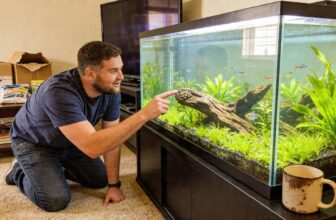
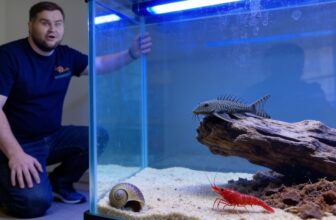
You stand in front of a glass tank, watching a slender, whiskered fish press its wide, flat snout against the current. That is the tiger shovelnose catfish, a creature built for rushing rivers, and it needs more room than you might first imagine. By the time it grows to its full three feet, your living room could hold a watery highway stretching six feet long, with filters churning eight to ten times the whole volume every single hour. The responsibility feels heavy, maybe even a little scary, but that weight is exactly why we need to talk about what comes next.
At A Glance
- Provide a minimum 180–200 gallon tank for juveniles, upgrading to 300+ gallons for adults.
- Maintain water temperature between 75–82 °F with strong filtration and steady current.
- Feed frozen fish, earthworms, or sinking pellets; adults need food only 3–4 times weekly.
- Use soft sand substrate to protect sensitive barbels and aid food visibility.
- Perform weekly water testing and changes to manage heavy bioload from rapid growth.
What Is a Tiger Shovelnose Catfish?
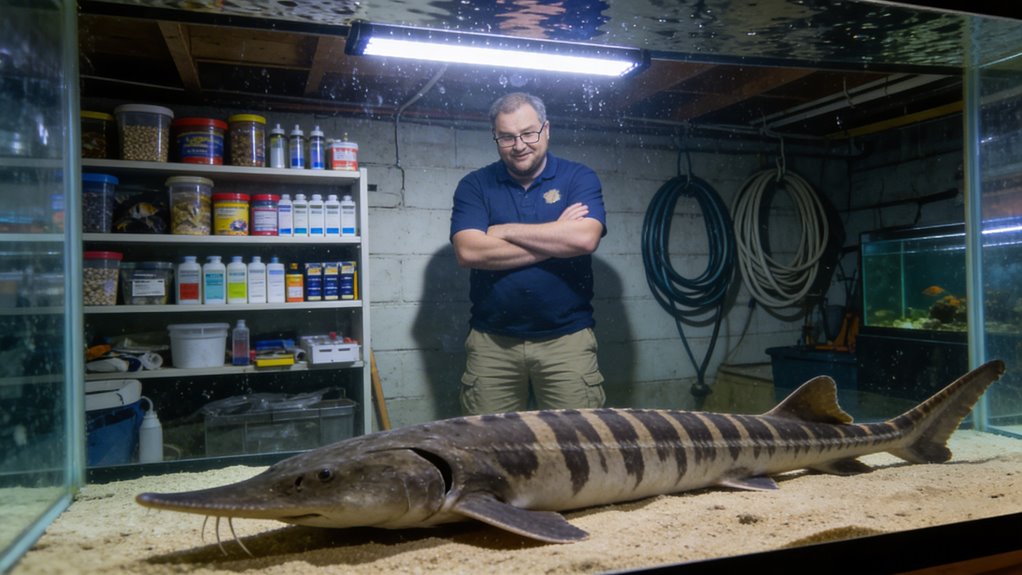
Picture a fish whose mouth spreads out flat and wide, like a shovel you might use in a garden, only this tool belongs to a creature that glides through dark, slow rivers half a world away.
You are looking at *Pseudoplatystoma fasciatum*, the Tiger Shovelnose Catfish, a South American native that carries its name honestly.
Its body stretches long and silver-dark, striped with bold black bars like a tiger’s coat, as whisker-like barbels angle forward from that remarkable shovel mouth.
You will not worry about breeding with this fish, for it demands enormous separate tanks and steals years from parents’ lives.
Your substrate choice matters little to this open-water swimmer, though soft sand protects delicate barbels during brief bottom rests.
How Big Do Tiger Shovelnose Catfish Get?
Just how big will your Tiger Shovelnose Catfish grow?
Expect 2.5 to 3 feet in captivity, with wild giants pushing 4 feet in South American rivers.
You can expect your captive fish to reach 2.5 to 3 feet, though wild specimens sometimes stretch toward 4 feet, shaped by habitat diversity across South American rivers.
Growth happens fast, almost stubbornly so, no matter how much you feed or the space you provide.
Breeding remains rare in home aquariums, partly since adults need enormous quarters just to stay healthy, let alone spawn.
Their size commands respect, like a growing child outgrowing every shoe you buy.
You feel a quiet pride watching them fill their tank, knowing you’ve welcomed something truly substantial into your home.
What Tank Size Do You Actually Need?
Before you bring home that striped, flat‑mouthed youngster swimming in the dealer’s tank, you’ll need to know exactly what walls can hold a fish that grows faster than your expectations, since a Tiger Shovelnose Catfish doesn’t politely wait for you to upgrade.
You’ll want 180–200 gallons for that six‑inch juvenile, then 250 gallons or more when adulthood arrives at 2.5–3 feet.
Your tank filtration must turn over water eight to ten times hourly.
Choose smooth river rock or sand for substrate choice, protecting those sensitive barbels from scrapes.
| Life Stage | Minimum Tank Size | Critical Equipment |
|---|---|---|
| Juvenile (under 12 inches) | 180–200 gallons | Powerful filtration, heater |
| Young Adult (12–24 inches) | 250 gallons | Upgraded filtration system |
| Adult (24–36 inches) | 300+ gallons | Heavy-duty tank filtration |
| Aquascaping Element | Purpose | Recommendation |
| Substrate choice | Protect barbels, aid digestion | Soft sand or smooth gravel |
| Open swimming lane | Reduce stress, display natural behavior | 6+ foot tank length |
What Water Conditions Keep Them Healthy?
Since your Tiger Shovelnose will swim through thousands of gallons in its lifetime, you’re not just filling a tank—you’re building a river, and that river has rules.
Your fish needs water flow mimicking South American currents, which means strong filtration handling heavy waste. Without this, toxins build like unchecked litter in a shared home, and everyone suffers.
- Keep temperature between 75–82°F, like a warm afternoon wade
- Maintain pH 6–8, the softness of natural riverbanks
- Target hardness 6–20 KH for stable, comfortable chemistry
- Invest in oversized canister filtration, since these fish produce rivers of waste
- Create gentle but steady water flow, not rapids, using powerheads or return jets
Test weekly. Change water regularly. You’re tending a living system, and precision shows care.
What Should You Feed Your TSC?
A hungry Tiger Shovelnose doesn’t ask what’s for dinner—it hunts. You’ll honor this instinct by offering meaty foods: frozen fish, earthworms, and sinking carnivore pellets. Feed juveniles daily, adults three or four times weekly. Watch carefully, since their feeding behavior involves explosive surface strikes and mid-water chases, not bottom-sifting. Overfeeding pollutes water fast.
Your substrate choice matters here. Dark gravel or sand lets dropped food stay visible so you can remove uneaten portions immediately. You’ll feel proud seeing your catfish engage its wild energy at mealtimes, knowing you’ve created a routine that keeps both belly and tank clean.
Which Tank Mates Can Handle Them?
Choosing companions for your Tiger Shovelnose means measuring both bodies and attitudes, kind of like pairing teammates for a rough game. You’re building a bre habitat where everyone feels safe, not scared.
- Pick fish at least half your catfish’s size, so nobody becomes a snack.
- Avoid skittish types like iridescent sharks; their panic spreads like a cold in a classroom.
- Large, calm swimmers—Arowana, pacu, giant gourami—hold their ground without starting fights.
- Skip breeding challenges by keeping single specimens; spawning tanks demand space you probably don’t have.
- Watch during feeding; hunger turns neighbors into targets.
Trust your eyes. If someone’s hiding, something’s wrong.
What Health Issues Should You Watch For?
Your net, when you lift it, tells a story before your fish ever speaks. You notice torn fins, faded stripes, or a belly that hangs too low. These are stress signs, warnings that something needs fixing.
External parasites, like anchor worm, show as tiny threads on skin or barbels. You spot them by turning your catfish gently, checking where stripes meet silver. Ich looks like salt scattered across the body. Both mean water quality failed somewhere.
Watch additionally for sluggish drifting, gulping at the surface, or hiding when your fish normally patrols. Fast action keeps your companion swimming strong for years.
Is a Tiger Shovelnose Catfish Right for You?
Look at the 250‑gallon glass box sitting in your living room, its heater humming at 78 degrees, and ask yourself if you’re ready to fill it for twenty years.
This fish grows three feet long. It eats tankmates smaller than your hand. You’ll test water weekly, change filters, and buy frozen food by the flat. That is cost suitability—knowing what you can truly spend, not just today, but in 2025, 2030, 2035.
Hobbyist commitment means showing up when you’re tired, when the fish is sick, when you’re moving apartments and no one wants the tank.
- Space: You need 250 gallons minimum, plus floor support.
- Time: Twenty years of daily attention, weekly testing.
- Money: Equipment, food, vet bills, unexpected leaks.
- Patience: The catfish outlives leases, relationships, maybe your interest.
- Community: You’ll join forums, share photos, belong somewhere.
If these feel heavy, you’re not failing. You’re being honest, and that’s where good keepers start.
Frequently Asked Questions
Can They Recognize Their Owner?
Tiger Shovelnose catfish show limited owner bonding compared to smarter fish. They don’t demonstrate true visual recognition of your face. Instead, they’ll learn you’re the food source. They’ll swim to the glass when you approach, excited by vibrations and routine. This isn’t love—it’s anticipation. You might feel a small connection, but remember, they’re responding to dinner, not to you personally. Keep expectations gentle, and you’ll avoid disappointment.
Do They Need a Lid on the Tank?
You’ll definitely need a sturdy lid safety setup for this fish. A tight tank cover prevents escape, since they jump when startled or hunting. Use a heavy, weighted lid that fully covers the aquarium, leaving no gaps wider than half an inch. You want to protect your fish from injury, and yourself from heartache, when something bumps the tank at night.
How Often Should You Change Their Water?
You’ll change 25-30% weekly, testing with strips each time. Your water filtration runs constantly, but it doesn’t remove everything. Tank cycling established your good bacteria, yet waste builds up regardless. Think of it like changing dirty socks—clean ones feel better, and so does your fish. Skip a change, and ammonia rises silently, stressing everyone. Keep a calendar, mark Sundays, make it routine. Consistency matters more than perfection.
Can You Keep Them in Outdoor Ponds?
You can keep them in outdoor ponds, but you’ll need careful temperature pond setup and seasonal temperature control to match their 75-82°F needs. Your pond must hold at least 250 gallons with shade from vegetation and driftwood, plus a reliable heater for cooler months. Rapid temperature drops cause stress, so you’ll monitor daily using a thermometer. Large, active fish like yours deserve stable homes where they feel safe, just like you do in your own cozy bedroom.
Do They Make Noise or Vocalize?
You’ll notice they don’t have true vocal communication. Instead, you observe their sound production comes from grinding bony parts together—like teeth clicking, or swishing air through their swim bladder. It’s subtle, and you’ll strain to hear it without quiet attention. These noises signal stress or feeding excitement, not conversation. You feel a small connection when you catch it, knowing you’re witnessing something private, shared between careful observers.
Rounding Up
You’ll need a big tank, strong filter, and steady hands for this fish.
The Tiger Shovelnose Catfish grows huge, lives long, and demands respect.
If you can commit space, time, and attention, you’ll share your home with a remarkable creature.
If not, that’s okay too—better to know now than wish later.