You hold a plastic bag from the pet store, water sloshing inside, and wonder if your tank is truly ready. A 75-gallon glass box, five buckets of filtered water, and three hiding caves wait for your Red Empress. She needs pH 7.7, like baking soda in a pool, and 80 degrees steady, or her colors fade like old paint. You have matched minerals, tested ammonia, planned her meals down to the Tuesday brine shrimp. But the real work, the part that keeps her alive past seven years, starts after you cut that bag open.
At A Glance
- House Red Empress Cichlids in 75+ gallon tanks with sandy substrate and strong filtration.
- Maintain alkaline water conditions with pH 7.7–8.6 and temperatures between 76–82°F.
- Feed spirulina-based pellets daily, supplemented with frozen foods and vegetables.
- Keep one male with three females to minimize aggression and establish stable hierarchy.
- Quarantine new fish for 2–4 weeks with prophylactic treatment to protect community health.
Red Empress Cichlid: Origin, Size, and Lifespan
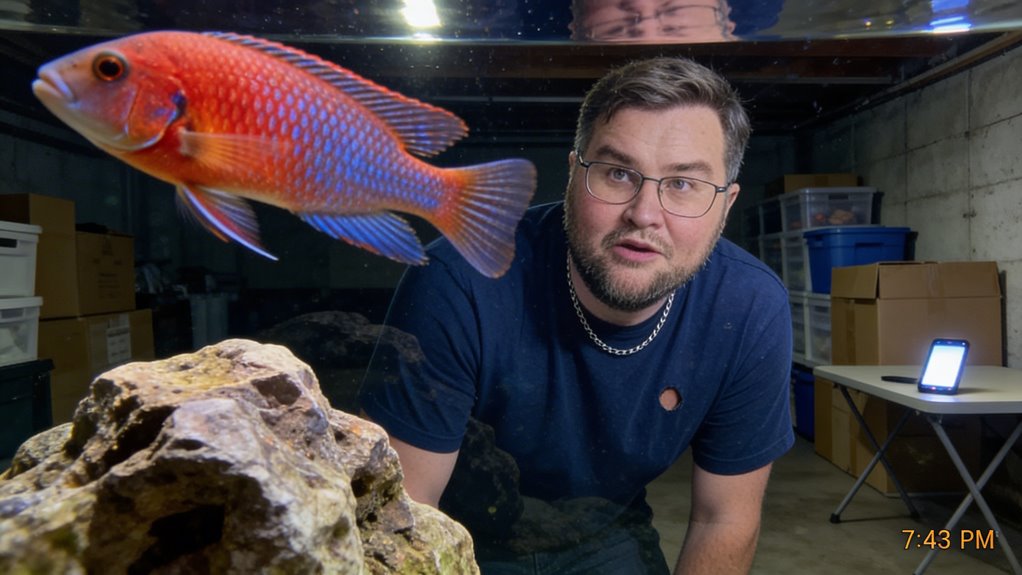
A bright flash of blue and orange draws your eye to the aquarium glass, and you’ve spotted the Red Empress Cichlid, a fish that carries the warm, slow heartbeat of Africa in its fins.
You’re looking at *Protomelas taeniolatus*, a creature whose colorpress origins trace to Lake Malawi‘s rocky shores. These waters, ancient and clear, shaped every scale you see.
Your fish will grow 4.5 to 6 inches, sometimes stretching to 8 if you’re patient and kind. That’s about the length of your hand, spread wide.
Lifespan trends favor the devoted. Five years come easily. Seven to ten await those who learn their needs, who show up daily, who notice small changes.
Minimum Tank Size for One Red Empress (or a Group)
Start with a tank that holds seventy-five gallons of water, enough to fill a small bathtub halfway up.
This space lets your Red Empress stretch, exploring rocks and sand like a homeowner claiming rooms. You need strong aqu filtration, moving water five times hourly, since these fish make waste that fouls corners quickly. Substrate cycling matters too, your sand bed hosting helpful bacteria that clean invisible messes. Add twenty-five more gallons for each extra fish, building a neighborhood where no one crowds. You feel calmer when your fish feel calmer, fins relaxed, colors bright, everyone belonging together.
Recreating Lake Malawi Water Parameters
Since Lake Malawi holds secrets in every ripple, you’ll need to copy its chemistry like a recipe passed down careful hands.
Lake Malawi’s secrets hide in every ripple—copy its chemistry like a recipe passed down through careful hands.
You’ll keep your water warm, between 76 and 82 degrees, since cold makes these fish sluggish and sad. The pH must stay alkaline, 7.7 to 8.6—think of baking soda, not lemon juice. Hardness matters too; 5 to 15 dGH keeps their bones strong and their spirits bright.
This Lake chemistry releases their best selves. Get it right, and Color genetics shine—reds blaze, blues deepen. Your fish becomes living artwork you helped create.
Test weekly. Adjust slowly. You’re not just keeping water; you’re keeping promises.
Build the Ideal Rock-and-Sand Habitat
When you’re ready to build their home, you’ll need sand that feels soft between your fingers, not gravel that scrapes.
You’ll want a sand depth of two to three inches, enough for your fish to sift through like they’re searching for treasure in their grandmother’s garden. This matters since sifting is how they find food and feel safe.
Choose rocks with rough rock texture, like pumice or lava stone, not glass-smooth river pebbles. Stack them to create caves and hiding spots, leaving open swimming space too.
Your fish will know this space belongs to them, and you’ll feel the quiet pride of making a home where another creature can truly settle.
What Do Red Empress Cichlids Eat?
Pull up a chair, and let’s look at what’s on your fish’s plate.
Your Red Empress eats like an omnivore, meaning plants and tiny animals both belong there.
| Food Type | Examples | How Often |
|---|---|---|
| Staple pellets | Spirulina-based cichlid pellets | Daily |
| Frozen treats | Brine shrimp, bloodworms, krill | Twice weekly |
| Vegetables | Blanched peas, spirulina flakes | Three times weekly |
| Color boosters | Color variationsitional foods with carotenoids | Weekly |
Good aquarium lighting helps you spot uneaten food that sinks. You remove it swiftly, protecting water quality. Your fish trusts you to choose wisely.
How Often to Feed (and Avoid Malawi Bloat)
A small scoop of food disappears into your fish’s mouth faster than you’d expect, and that’s exactly where trouble starts.
You must control feeding timing with discipline, offering tiny meals two or three times daily, never more than your fish consumes in thirty seconds.
Malawi Bloat threatens when you’re careless. This dangerous swelling kills quickly, and you’re not alone in fearing it.
Your water chemistry stability matters enormously. Uneaten food pollutes the tank, disrupting delicate balance, so remove leftovers immediately.
- Feed 2–3 times daily, small pinches
- Watch your fish’s belly, it should stay gently rounded, never swollen
- Test water weekly, keep conditions steady, and you’ll protect your community
You’re caring for lives that depend entirely on your attention.
One Male or a Harem? Social Structure Basics
The glass lid of your tank reflects your face as you peer in, wondering why the reddest fish chases his own shadow.
You’re witnessing territory mapping, the way one male claims space through color and motion. His red comes from color genetics, not just food, yet stress dulls him gray. Keep one male with three females, a small harem that lets him display without destroying rivals. Two males exhaust themselves, and you’ll see torn fins, pale fish, defeat. You’re choosing peace over spectacle, belonging over battle.
Watch where he patrols. Those invisible lines matter to him, and now they matter to you.
Red Empress Tank Mates That Actually Work
Your net drips as you lift it from the bucket, and you’re wondering which fish won’t turn this peaceful tank into a war zone. You deserve a community where everyone belongs, not a battleground.
Tank coloration genetics matter here—your Red Empress shows brighter hues when surrounded by calm, familiar faces, not stressed strangers. Your aquarium lighting design plays a role; softer, dimmable LEDs reduce territorial flare-ups during dawn and dusk hours when cichlids feel vulnerable.
Consider these proven companions:
- Blue Dolphin Cichlids — gentle giants, similar water needs, no fin-nipping
- Yellow Labs (Labidochromis caeruleus) — bright, peaceful, occupy different tank zones
- Synodontis Catfish — nocturnal bottom-dwellers, they clean without competing
You create harmony through careful choices, and your fish feel safe enough to show their true colors.
How Red Empress Cichlids Breed: Courtship to Free-Swimming Fry
When you dim the lights after dinner, you might catch two fish dancing near the glass, their bodies flashing silver and rose.
You’re witnessing breeding hormone cycles in action, nature’s ancient clock telling them it’s time. The male selects a flat rock, then shakes his body to charm her closer. She’ll lay forty to fifty tiny eggs, scooping them right into her mouth where they’ll stay safe and warm for three whole weeks.
Color morph genetics mean your fry might surprise you, some showing fire-red, others sky-blue. You didn’t know you’d become a grandparent tonight, did you? That’s the quiet magic you signed up for.
| Stage | What You See | Days |
|---|---|---|
| Courtship | Rock digging, flashing colors | 1-2 |
| Spawning | Female lays 40-50 eggs | 1 |
| Mouthbrooding | Female holds eggs, won’t eat | 18-21 |
| Free swimmers | Fry emerge, parents guard | 21-28 |
Malawi Bloat, Ich, and Other Diseases to Watch For
Even the brightest fish can fall quiet, and you’ll notice it first in how they hold themselves near the heater, fins clamped tight like folded paper.
You’ll spot Ich when tiny white dots salt their fins, like crushed sugar. Malawi Bloat swells their belly, stealing hunger. Both whisper of trouble in your tank family.
- Watch for color fading — dull color morphs often signal stress before illness shows.
- Test weekly — catching shifts early keeps your group safe together.
- Learn their patterns — knowing normal behavior builds trust, your sharpest tool.
Good disease care strategies honor the d genetics that shaped these fish.
Quarantine and Prevention: Keeping Your Red Empress Healthy
A net still wet from the fish store drips into your bucket, and that is where your guard must rise, for every new fish carries stories you cannot see written in its scales.
You set up a quarantine tank, a simple ten-gallon hospital room with a sponge filter and heater set to 78 degrees.
| Quarantine protocols | Duration |
|---|---|
| Observe new fish for hidden illness | 2–4 weeks |
| Treat with prophylactic medications | Days 3–7 |
| Test water daily for ammonia spikes | Ongoing |
This patience protects your community. Disease prevention means never skipping this step, even when excitement tugs.
Frequently Asked Questions
Can Red Empress Cichlids Eat Commercial Betta Pellets Safely?
You can feed betta pellets to your Red Empress Cichlid, but you shouldn’t rely on them solely. Betta pellets lack proper nutrient balance for this species, which needs more vegetable matter and protein diversity. You’ll want spirulina-based cichlid pellets as the staple instead. Occasional betta pellets won’t harm your fish, yet regular use leads to nutritional deficiencies. Your cichlid thrives when you match food to its natural omnivorous diet.
How Do I Distinguish Male From Female Juveniles Before Color Develops?
You’ll spot male juveniles by their faster growth, reaching 3 inches months before females stall near 2 inches. Examine the anal fin: males display pointed, elongated tips, whereas females keep shorter, rounded edges. Watch behavior too—males push others around, claiming corner spots early. These juvenile traits emerge around 3-4 months old. Size comparison works best when you’ve got several together, letting you notice who’s outpacing the rest. Patience rewards you; color follows later.
Is LED Lighting Sufficient to Enhance Their Red and Blue Coloration?
You need LED lighting with red and blue wavelengths to bring out their best hues. A spectrum around 660nm red plus royal blue triggers color intensity you won’t see under basic white bulbs. Keep light duration at eight to ten hours daily, nothing more, or you’ll stress the fish and grow algae. This hue improvement works gradually, patience matters here, you’ll notice deeper reds after two to three weeks of consistent use.
Can I Keep a Single Red Empress With South American Cichlids Like Angelfish?
You can keep a single Red Empress with angelfish, but you’ll need careful planning. Your tank tank mates must share similar size, about six inches, and water needs, since Red Empress prefer hard, alkaline water whereas angelfish like softer conditions. Compromise at a middle pH, around 7.5. Color compatibility works beautifully—their red and blue shimmer against angelfish stripes creates a living painting you’ll enjoy daily.
How Long Should Fry Remain With Parents Before Separation?
You’ll separate fry from parents after three to four weeks, when they’ve absorbed their yolk sacs and begun swimming freely. By this point, the female has finished mouthbrooding, and both parents’ protective instincts start fading. You notice this shift when chasing becomes gentler, or when fry scatter instead of clustering. Remove them promptly, as tank hierarchy tensions resurface and adult cichlids may view small swimmers as food, not family. Keep parent fry diet in mind—transition them to crushed flakes and baby brine shrimp immediately.
Rounding Up
A **75‑gallon tank, three females, and steady hands on the test kit give your Red Empress what she needs. You match the lake’s chemistry, feed with purpose, and watch. When you wait out quarantine, you choose patience over panic. That patience is trust—slow, quiet, and earned. She will color up, settle in, and live a dozen years**. You built the home; she brings the light.