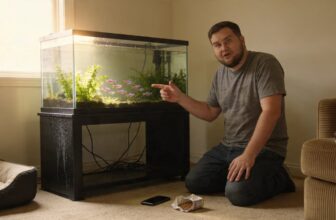
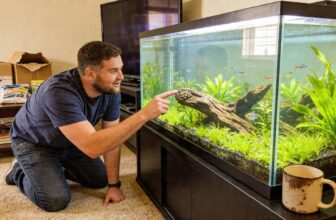
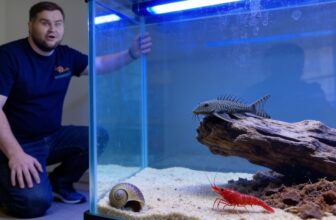
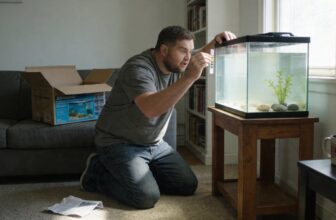
You’re standing before a glass tank, watching a flash of emerald and orange skirt behind driftwood. That splash of color is a Green Terror cichlid, a fish that carries both beauty and bite. You’ll need to know exactly which neighbors can survive beside that territorial instinct, and how much space keeps peace in the water. The answers start with one number you might already be guessing wrong.
At A Glance
- House single Green Terrors in 55‑75 gal tanks, pairs in 90 gal minimum.
- Keep water at 72–77 °F, pH 6.5–8.0, and perform weekly changes.
- Feed varied diet of pellets, frozen foods, and occasional vegetables twice daily.
- Choose sturdy tank mates like Jack Dempseys, Firemouths, or Silver Dollars.
- Provide rock caves and driftwood spaced six inches apart to reduce aggression.
What Are Green Terror Cichlids?
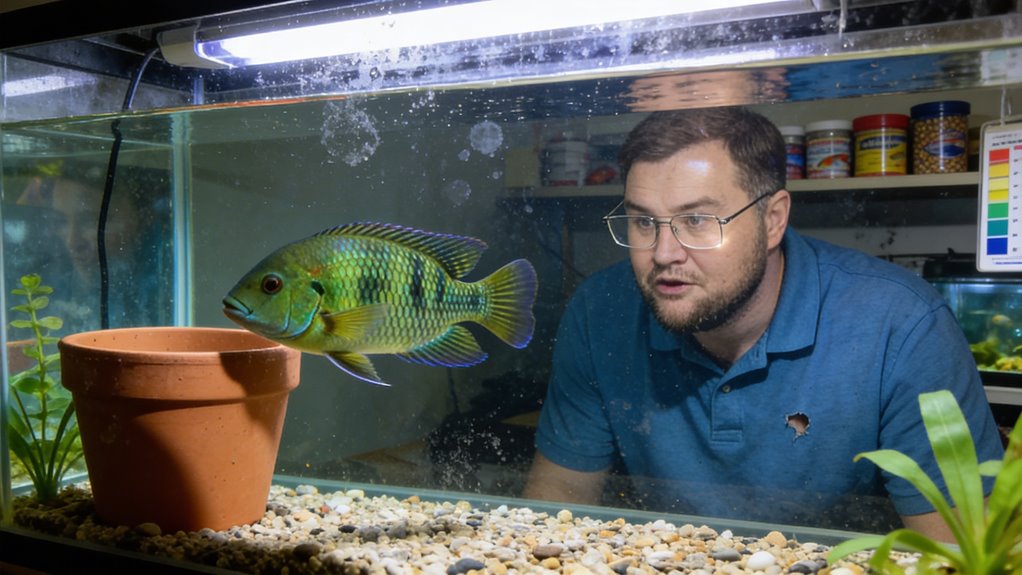
When you first lift the lid of a pet store tank, you might notice a flash of metallic green sweeping across the glass like a living jewel.
That’s your introduction to *Andinoacara rivulatus*, the Green Terror cichlid, a fish with many names—Gold Saum, White Saum, Orange Saum—depending on where it swims in Peru and Ecuador’s calm river basins. You’ll find them territorial, watchful, full of personality.
Their breeding behavior sparks curiosity, though breeding myths persist. Some people claim these fish pair for life; truthfully, bonds last as long as conditions please them. Seven to ten years of companionship awaits you with proper care.
How Big Do Green Terror Cichlids Get?
Your living jewel will not stay small.
Your living jewel will not stay small.
You’ll watch your Green Terror stretch toward eight inches, sometimes more. In spacious homes, they push past ten inches, their color behavior shifting from pale juvenile stripes to electric blues and golds.
- Wild giants reach twelve inches, though you’ll rarely see that.
- Males grow larger than females, developing a prominent forehead hump.
- Their size directly fuels territorial breeding rituals, demanding room to claim space.
- You’ll notice their confidence, their swagger, grows with every inch.
You’re not just keeping a fish. You’re hosting a developing personality, a creature who’ll recognize you, who needs you to plan ahead.
What Tank Size Do Green Terrors Need?
A fifty-five gallon tank is the smallest home where a single Green Terror can truly stretch its fins, though you’ll find yourself wishing you’d chosen seventy-five once you see how it patrols its corner.
Your tank design must create territory, since these fish feel safest when they own space.
Add rocks, driftwood, and caves so your Green Terror knows where it belongs.
For substrate choice, pick fine gravel or sand, as large pieces can hurt when they dig.
You will need at least ninety gallons for two fish, as sharing makes them cranky.
Bigger tanks mean calmer fish, and calmer fish mean you belong here too.
Which Water Parameters Keep Them Healthy?
The tank sits ready, rocks and caves in place, but water is where life truly happens for your Green Terror.
You hold the power here. Keep their home steady, and they’ll reward you with bold colors, fierce personality, and a sense that you belong to something alive.
- Maintain 72–77°F; swings stress their immune system.
- Lock pH at 6.5–8.0; avoid p hardness fluctuations that erode their famous lateral line.
- Hold hardness at 5–20 dGH; stability matters more than perfection.
- Manage algae control through gentle light, not chemicals that poison their world.
Test weekly. You’re their guardian.
How Should You Set Up Their Tank?
Why start with sand? Since Green Terrors sift through the bottom like curious children, and smooth grains keep their gills safe from harm.
Choose a dark substrate substrate, about two inches deep, so it mimics the riverbeds they know. You’ll need a fifty‑gallon tank for one fish, seventy‑five for two, with room to swim and claim territory.
Dark riverbed underfoot, space to roam—fifty gallons for one, seventy-five for two, territory claimed.
Add large rocks, driftwood, and caves for hiding when they feel shy. Floating plants, like Java fern, give shade and comfort.
Keep your lighting intensity low, bright enough to see but gentle, like morning light through curtains, so they don’t feel exposed.
What Should You Feed Green Terror Cichlids?
Since these fish are meat‑eaters by nature, you’ll want to build meals around protein that moves or once did.
A steady feeding schedule keeps your Green Terror healthy and calm, twice daily for adults, three times for little ones. Nutrient diversity matters—swap foods so their bodies get everything they need.
- High‑quality pellets made for cichlids, about the size of their eye
- Frozen bloodworms or brine shrimp, thawed first
- Occasional live foods, like small crickets or earthworms
- Rare vegetable matter, a bit of blanched spinach for their gut
Stop when they lose interest, usually two or three minutes. Leftovers foul the water, and sick fish make nobody happy.
Which Fish Can Live With Green Terrors?
Choosing tank mates for a Green Terror feels a bit like picking playground partners for a kid who’s strong, stubborn, and sometimes mean—you need someone who won’t cry, won’t start fights, and can hold their own if pushing happens.
You’ll find compatible compatibility with large, sturdy fish, like Jack Dempseys, Firemouth Cichlids, or Silver Dollars. These share your Green Terror’s size, about 8 inches, and their bold spirit. Armored catfish, such as Bristlenose Plecos, work too—their tough plates protect them. Different color morphs, like Gold Saum or White Saum, can live together if space exceeds 75 gallons. Always watch, always have backup plans, and remember you’re building a community where everyone belongs.
Which Tank Mates Should You Avoid?
A tiny neon tetra looks like a snack to a Green Terror, and that’s exactly what it becomes. You must steer clear of small, peaceful fish that share no habitat distribution with these proud cichlids from Peru and Ecuador.
Green Terrors view tiny neon tetras as snacks, not neighbors—avoid mismatched tank mates from different habitats.
- Slow swimmers with flowing fins, like guppies or bettas, become easy targets for frustration.
- Delicate gouramis lack the aquarantine coloration that signals “tough neighbor” in your tank.
- Peaceful schooling fish, such as rasboras, trigger predatory impulses you cannot train away.
- Other Green Terrors added carelessly, without space for territories, guarantee relentless warfare.
Choose wisely, and your community thrives together.
What Stops Green Terror Aggression?
A 75-gallon tank, measured corner to corner, gives your Green Terror room to pace without bumping into its own temper.
You create a territamental habitat by placing rocks and driftwood with six inches between piles. This spacing lets your fish claim clear borders, like fences between friendly yards.
You watch for breeding cues, such as digging pits or brightening colors. When you spot these signals, you add extra caves immediately. This prevents frustration from building.
You keep the temperature steady at 74 degrees. You perform water changes every fourteen days. These routines build trust, and trusting fish hold their anger loosely.
How Do You Trigger Green Terror Breeding?
Pull out a small glass jar, the kind you might save olives in, and fill it with live brine shrimp. You’re holding one of the strongest breeding cues these fish recognize.
Seasonal spawning happens when you mimic nature’s signals. Warmth tells their bodies it’s time.
- Raise water temperature slowly to 77–88°F over one week
- Feed live foods daily, like the shrimp in your hand
- Perform 30% water changes weekly to simulate rainy season freshness
- Add flat rocks or flowerpots for egg-laying sites
Watch them pair off. You’ll feel proud when they choose each other, since you created the right home for new life to begin.
What Diseases Affect Green Terrors?
Three common troubles wait in the water for your Green Terror, and you’ll spot them faster if you know what to look for.
Ich looks like tiny white grains of salt scattered across fins and body. Itchy, irritating, it spreads when water gets dirty or temperatures swing.
HLLE, that Head and Lateral Line Erosion, eats pits along your fish’s face and side. Hard water and diet deficiency feed this beast; you’ll prevent it with steady parameters and varied, meaty meals.
Then there’s fin rot, where edges fray like old cloth. It often follows stress, that condition when your fish feels crowded, threatened, or unwell.
You’ll keep your Green Terror strong through clean water, good food, and calm, steady care.
Frequently Asked Questions
How Long Do Green Terror Cichlids Live in Captivity?
Your Green Terror cichlid, *Andinoacara rivulatus*, lives seven to ten years when you care for it properly.
You extend its life through dietitat compatibility—matching its carnivorous needs with frozen bloodworms, brine shrimp, and protein-rich pellets twice daily.
You likewise respect its breeding cycles, which demand warmer water between 77 and 88 degrees Fahrenheit and abundant live food.
Clean water, stable pH from 6.5 to 8.0, and spacious tanks—fifty gallons minimum—keep your fish healthy.
You feel pride watching your territorial companion thrive, knowing patience and routine build trust between you.
Can Green Terrors Change Color Based on Mood?
Yes, you’ll notice mood color shifts when your Green Terror feels different emotions. Stress induced pigmentation makes them pale or dull when scared, whereas bright blues and greens flash during confidence or mating. Watch their scales like a mood ring, darkening with anger, lightening with fear. You’re learning their language, becoming someone who understands without words.
Do Green Terror Cichlids Need Tank Lids?
You’ll want a lid, friend.
These strong fish jump when startled, and a lid keeps them safe inside. It likewise cuts evaporation, which helps your filtration run steady. A tank décor of rocks and driftwood can snag your arm during cleaning, so a hinged lid, about 12 inches square or larger based on your 50-gallon tank, lets you reach in without full removal. You feel calmer knowing your green terror won’t carpet-surf at 2 a.m.
How Can You Tell Male From Female Green Terrors?
Green Terror Cichlid males show longer, pointed fins with flowing extensions on the tail and dorsal fin.
Females have shorter, rounded fins and a blunter profile.
You’ll notice males display brighter breeding patterns with more intense blue speckling across the face and gill covers.
The females carry a subtler, striped fin shape along their body.
Look for these differences once your fish reach about four to five inches, around six to eight months old.
Should Green Terrors Be Kept Alone or in Pairs?
You can’t keep them alone without causing loneliness, and pairs often fight unless you plan carefully. A spacious tank setup, 75 gallons or more for two, gives them room to claim separate corners. Compatible species selection—like Firemouth Cichlids or Bristlenose Plecos—spreads out aggression so no single fish suffers. You’ll watch their behavior closely, ready to separate bullies, because peace takes work and observation.
Rounding Up
Green Terror cichlids demand your steady attention, same as any living thing you bring home. You’ve learned they need room to swim, hiding spots to claim, and water kept clean through weekly work. You’re ready to choose tank mates wisely, feed them well, and watch for trouble before it spreads. Caring for them brings quiet pride, the kind that grows from showing up day after day. Trust your preparation, and enjoy the journey.