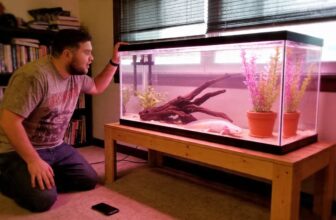
You hold a 50‑gallon tank in your hands, or perhaps you don’t yet, and you’re wondering if an elephantnose fish belongs in your living room.
These strange, long‑snouted creatures navigate dark water using electricity, like a bat uses sound, sending tiny pulses through their tail to map the world. They need soft sand to sift, driftwood caves to hide, and light dimmer than a nightlight—one watt per gallon or less. Get the water wrong, even once, and their electric sense falters. The result? Stress, then sickness, then a fish that dies before its ten‑year time. You’re patient enough to test water weekly, feed at night, and choose tank mates who won’t nip fins or fight back. But maybe you’re not. Four signs say you might quit early: you want bright colors, instant results, fish that beg at the glass, or zero equipment beyond a filter. Elephantnose fish offer none of that. They offer something quieter, which is why you’ll want to know what comes next.
At A Glance
- Provide a minimum 50‑gallon tank with soft sand substrate to protect the sensitive schnauzenorgan from abrasion.
- Maintain dim lighting, gentle flow, and stable parameters: 73–82 °F, pH 6.5–7.2, soft 0–10 dKH water.
- Feed live foods like blackworms and bloodworms at night to stimulate natural electroreceptive hunting behavior.
- House with peaceful, dim‑dwelling species such as black ghost knife fish, Congo tetras, or pearl gourami only.
- Avoid bright lights, sharp gravel, aggressive tank mates, and pair multiple elephantnose fish together.
Elephantnose Fish 101: Species Profile and African River Origins
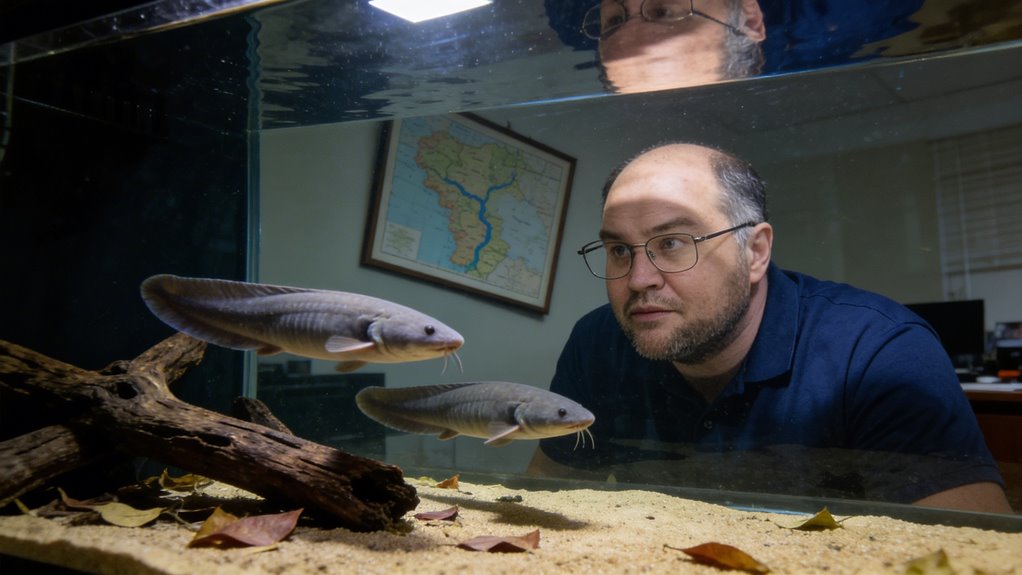
When you first glimpse an elephantnose fish, you’ll notice something odd and wonderful sitting where its mouth should be. It’s called a schnauzenorgan, a finger-like “nose” that waves and probes like a tiny elephant trunk.
This remarkable organ detects electricity through electroreception, a sixth sense that lets the fish navigate pitch-black water where eyes prove useless. The fish sends out weak electric signals, then reads the returning pulses to find food, friends, and hiding spots.
Your elephantnose carries river origins from murky West African waters, the Niger and Ogun, where visibility drops to near zero. Life there demanded innovation, not eyesight. The fish adapted, and you benefit from this ancient wisdom now swimming in your tank.
Ancient wisdom from murky West African rivers now swims in your tank, proof that innovation thrives where eyesight fails.
Caring for one connects you to millions of years of quiet survival, a gentle reminder that belonging often means finding your way through darkness using gifts you cannot see.
Adult Size and Lifespan: Growth Timeline From Juvenile to 9 Inches
That waving trunk you watched in the last section keeps growing.
Your juvenile Elephantnose likely measures four to five inches when you bring them home. Through proper care, they’ll reach eight or nine inches, occasionally stretching toward twelve. This growth unfolds gradually, two to three years of steady development ahead.
Their electroreceptive communication—that electric language pulsing through the water—strengthens as they mature. You’ll notice their coloration genetics expressing more vividly too, that brown-black body sharpening its contrast against the pale belly stripe.
With dedicated attention, your companion thrives six to ten years, sometimes eleven. Each stable day you provide extends your shared journey, deepening the quiet bond between you.
Minimum Tank Size: Why 50 Gallons Isn’t Negotiable
Your fish’s nose needs room to sweep the bottom like a metal detector searching for treasure.
You need fifty gallons, no exceptions, since cramped quarters destroy this creature’s spirit.
- Electroreceptor training demands wide territories for mapping electric fields, like learning a vast neighborhood by heart
- Breeding genetics stay locked away in small tanks, frustrating your hope of witnessing new life
- Territorial clashes erupt when adults share tight spaces, turning peace into constant conflict
- Water stability crumbles in tiny volumes, poisoning sensitive systems with sudden shifts
You’re building a home, not a cage. Give them room, and they’ll belong.
Build a Biotope: Substrate, Driftwood, and Dim Lighting Specs
Though the murky rivers of Africa hide their secrets in darkness, you can bring that same mystery home by building the right foundation.
You’ll want soft sand, two to three grains deep, since that substrate texture protects their delicate schnauzenorgan—their electric nose—from scrapes as they hunt beneath the surface.
Driftwood builds river aesthetics, creating caves and shadowed tunnels where they feel safe. Arrange pieces with an inch of swimming room overhead, enough for their nine-inch body to glide.
Dim lighting completes the picture. Use bulbs rated below one watt per gallon, or floating plants to filter the glow. You’ll watch them relax, confident, finally home.
Water Parameters That Prevent the #1 Killer of Pet Elephantnose Fish
A water test kit sits on your shelf, and you’ll open it more often than you’d like, since the fish you’ve built this shadowy home for can slip away fast.
Your elephantnose needs water that feels like home, not a shock. Keep these close:
- Temperature steady at 73–82°F, like a warm handshake
- pH hugging 6.9, between 6.5 and 7.2, so their Electroreceptor calibration stays true
- Water hardness limits soft, 0–10 dKH, matching their murky rivers
- Weekly tests, weekly partial changes, no surprises, no sudden shifts
You’re not just keeping numbers. You’re keeping trust.
Filtration and Flow: Gentle Currents for Electroreceptive Hunters
The filter you choose hums in the corner like a quiet promise, since elephantnose fish spend their whole lives reading tiny electric signals in the water, and a strong current scrambles that message.
You’re protecting their electrostatic mapping, the way they “see” prey and friends through invisible pulses.
Flow optimization means gentle turnover, four to six times your tank’s volume hourly, diffused through spray bars or baffles.
You want clean water without chaos.
They’ll thank you with calm, purposeful swimming, noses against sand, mapping their world in peace.
Feeding Guide: Live Foods, Portion Sizes, and Schedule by Age
When you set out the first pinch of frozen bloodworms, you’re offering more than a meal, you’re speaking a language these fish understand through millions of years of evolution.
These fish practice electroreceptive hunting, scanning the sand with their noses like metal detectors, feeling for tiny electric signatures of hidden prey. You mirror this patience when you feed them after lights dim.
Patience learned from fish who hunt secrets buried in sand with invisible senses.
Their nocturnal feeding patterns mean you’ll become a evening companion, sharing quiet moments after sunset.
- Feed juveniles three times daily, portions they finish in two minutes
- Offer adults twice nightly, equivalent to two eye-sized morsels
- Rotate live brine shrimp, bloodworms, and chopped earthworms
- Sprinkle food near substrate, never floating at surface
Not Eating? 6 Diagnostic Steps Before Panic
Your frozen bloodworms sit untouched at the bottom of the tank, and your heart sinks a little since you’ve started to love this strange, nose-down creature.
First, test your water—ammonia, nitrite, nitrate, pH, temperature—because elephantnose feel chemical changes through their sensitive skin.
Second, check your filter flow; too strong, and they’ll hide instead of hunt.
Third, dim your lights dramatically; bright spaces blind their electroreception training.
Fourth, inspect that remarkable Schnauzenorgan for damage, scratches, or fuzz—electro-sensor maintenance demands clean sand, never gravel.
Fifth, offer live blackworms; movement triggers their hunting instinct when frozen fails.
Sixth, wait three days calmly. These fish fast when adjusting, like you skipping breakfast in a new house.
You’re not alone in worrying.
Temperament: Solitary Peace vs. Tankmate Aggression Risk
Their quiet nature often surprises new keepers, who expect something stranger looking to act stranger acting, but you’ll find your elephantnose spends most evenings gliding over soft sand like a slow-moving shadow, bothering no one, asking only for stable water and room to think.
Your fish establishes an electroreceptive hierarchy, sensing neighbors through weak electric fields it generates. This invisible map guides its nocturnal activity, keeping peace until boundaries feel invaded.
- House yours alone to avoid stress you’ll both feel.
- Watch how it flares its fins when crowded, like a person claiming armrests.
- Notice tension rise in smaller tanks where escape routes shrink.
- Remember: one calm elephantnose belongs more than two restless ones.
8 Verified Tank Mates (and 5 Species to Avoid)
A soft gray stone sits at the bottom of your tank, and your elephantnose glides past it every night, searching for food it cannot see with its eyes.
You need friends who understand its quiet world. Choose tank mates that respect its electroreceptive communication, the special electric signals it sends to navigate dark waters.
| Tank Mate | Why It Works |
|---|---|
| Black Ghost Knife Fish | Speaks the same electric language, shares dim corners peacefully |
| Congo Tetra | Stays above, never steals from the bottom |
| Cory Catfish | Roots gently, doesn’t compete for the same hiding spots |
| Discus | Calm presence, matching warm water needs |
| Pearl Gourami | Mid-level swimmer, peaceful temperament |
Breeding challenges already test your patience, so avoid fin-nipping barbs, active cichlids, small shrimp they eat, other elephantnoses who fight, and large territorial bichirs who crowd their space.
5 Signs You’re (Not) Ready for This Advanced Species
Before you bring home a fish shaped like tomorrow’s question, you’ll need to check if your hands are steady enough for weekly water tests that read like small print.
Some fish arrive as riddles. Answer them with steady hands and eyes that read small print without blinking.
- You skip water changes since life gets busy, forgetting these fish feel every shift in chemistry like you feel static on a dry day
- You’re hunting quick wins, not understanding electroreceptive hunting demands patience as they map darkness with electric pulses
- The word “stable” makes you yawn, not nod
- Breeding challenges excite you more than the decade of care preceding them
This community waits for keepers who measure twice.
7 Errors That Cut 4 Years Off Their Lifespan
During the test strip sits in your drawer, your fish is breathing water that changed overnight.
You skip testing, and ammonia climbs to 0.5 ppm by Wednesday. Their electroreceptive navigation, that electric sixth sense pulsing from their schnauzenorgan, grows confused in polluted water. You add sharp gravel, scratching their delicate nose, and they stop foraging. You pair two males, ignoring breeding challenges that demand perfect 6.9 pH stability, and fight wounds invite infection. You keep lights bright, denying them the dim comfort of home waters. Each choice seems small, but stacked together they steal four years from a friend who trusted your hands.
Frequently Asked Questions
Can Elephantnose Fish Recognize Their Owners?
Yes, you’ll find your elephantnose fish develops owner memory through daily interactions. Their electroreceptive “nose” detects your unique bioelectric signature, and they’ll swim toward you at feeding times. This recognition creates a gentle bond, like a shy neighbor who waves each morning. You can strengthen this connection through consistent evening feedings, as their shelter preference keeps them near familiar tank zones where they feel safe observing you.
Do They Need Complete Darkness to Use Electrolocation?
No, they don’t need complete darkness. They use electrolocation constantly, even with lights on. You’ll want dim electrolocation lighting during the day, though, since bright lights stress them. Their darkness preference kicks in when resting. Think of it like wearing sunglasses—you still see, but you’re more comfortable. Give them shaded corners and dim periods. They’ll navigate fine, feeling secure in their murky, gentle home.
Can They Survive in Outdoor Ponds in Warm Climates?
You can house an elephantnose fish outdoors if your pond temperature stays between 73 and 82 degrees Fahrenheit year-round. They’re sensitive creatures. You’ll need predator proofing since their soft bodies attract birds and raccoons. A secure cover, gentle filtration, and planted hiding spots keep them calm. Test water weekly. Without stable warmth and protection, they’ll suffer stress, shortened lifespans, or worse. Plan carefully, and they’ll reward your patience.
How Do You Transport Them Safely Without Stress?
You’ve traveled with a fragile friend, and now you’ll learn silent transport for these electric-nosed swimmers. Pack them in thick, dark bags filled with original tank water, about one-third full, leaving room for oxygen. Keep trips under two hours, temperatures steady at 76 degrees, and bags cushioned in a quiet, dark box. This stress‑free method mirrors how you’d soothe a nervous child—gentle, predictable, and close to home.
Why Do They Sometimes Swim Upside Down?
You’ll notice upside-down swimming signals trouble. Your fish might investigate the surface, checking water clarity or hunting, but sustained flipping means distress.
Check your parameters first—unstable pH or temperature below 73°F disorients their electroreceptive system. Review diet preferences too; malnutrition weakens their swim bladder. Aggressive tank mates cause panic, as solitary stress or breeding behavior confusion disturbs balance.
Maintain stable conditions, choose peaceful companions, and observe closely. You’re building trust through patient attention.
Rounding Up
Elephantnose fish ask for steady hands and patient hearts. You have learned the numbers now: 50 gallons, 73‑82 degrees, dim light like morning fog. You know which friends fit and which ones fight. Perhaps you feel ready, perhaps you feel doubt—both are honest feelings. If you build their blackwater home with care, these electric fish will glide through your tank for ten years, a quiet reward for your attention.