You pick up a bright orange fish at the pet store, and it looks small in the bag, barely three inches long. That comet goldfish can grow to fourteen inches and live twenty years if you give it room to swim. You’ll need a fifty-five-gallon tank just for one. The water stays cool, sixty-five to seventy degrees, and you test it weekly since these fish breathe through gills that need clean conditions. Most people buy too small a home, then wonder why their fish stay stunted or get sick. You’re different, though, since you’re here before you buy, and that’s the first sign you’ll do right by this creature.
At A Glance
- Single comets need minimum 55 gallons; add 50 gallons per additional fish to prevent stunting.
- Maintain 65–70°F water with pH 6.5–7.5 and filter at least 10× the tank volume hourly.
- Feed 2–3 small meals daily, clearing within two minutes; halve portions in cooler months.
- Perform 30% weekly water changes and test ammonia twice weekly to prevent disease.
- Migrate fish between indoor tanks and outdoor ponds in spring and autumn, avoiding frost and extreme temperature shifts.
What Is a Comet Goldfish? (Species Overview and Varieties)
What exactly sits in that plastic bag you just brought home from the carnival?
You’ve got yourself a Comet Goldfish, *Carassius auratus*, a creature born from selective breeding in the 1880s. These fish carry mythical origins stretching back centuries, when Chinese emperors first treasured golden carp in palace ponds. That cultural symbolism of luck and perseverance still follows them today.
Your Comet displays a single, flowing forked tail, semi-transparent fins, and colors ranging from orange to vivid red. Some wear Sarasa patterns, spotted like scattered petals. At purchase, they’re just inches long. Given proper care, they’ll reach twelve inches. You’re holding history, beauty, and a quiet promise of companionship.
Tank Size: How Much Space Do Comets Really Need?
That small bag holds more than you expected, and now you’re wondering where it’ll live.
Your Comet goldfish grows fast, reaching twelve inches, so tank size optimization matters from day one.
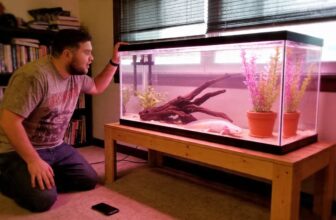
- Start with fifty-five gallons minimum for one fish; this gives room to turn, to stretch, to feel at home.
- Add another fifty gallons for each friend you invite; crowding stunts growth through hormones fish release when cramped.
- Upgrade before you need to; planning ahead prevents the sadness of a stunted companion.
You want your fish to thrive, not merely survive. Space is love you can measure.
Water Parameters for Healthy Comet Goldfish
Since your fish breathes water, not air, the invisible chemistry surrounding it becomes its entire world.
You keep the temperature between 65 and 70 degrees Fahrenheit, like a cool spring morning.
You test pH weekly, aiming for 6.5 to 7.5, since pH regulation protects your fish’s gills from burning or stress.
You maintain hardness at 5 to 19 dKH, minerals that steady the water’s mood.
You prioritize filtration efficiency, cleaning mechanical media monthly so beneficial bacteria keep converting ammonia to safety.
You add air stones, watching bubbles rise like hope.
You belong to a community that chooses patience over shortcuts, and your fish thanks you with bright, steady swimming.
Complete Tank Setup: Equipment, Cycling, and Beginner Mistakes
Your water is ready, and now you need a home to pour it into.
Your water is ready, and now you need a home to pour it into.
You’ll want a glass tank, forty gallons minimum, though seventy-five gives your comet room to stretch. Aqu filtration means a filter that moves water ten times your tank’s volume each hour—think of it as a river current cleaning itself. For substrate selection, skip gravel that fits in a fish’s mouth; use smooth river rocks or bare glass to protect their delicate fins.
- Cycle your tank for four to six weeks before adding fish, so helpful bacteria grow.
- Test water twice weekly; stability prevents heartache.
- Never skip the cycle—patience now saves tears later.
What Do Comet Goldfish Eat? Feeding Schedule and Portion Guide
When you open a can of fish food, you’re holding dinner for a creature that would rather pick through a pond all day than gulp one big meal.
You become part of your comet’s daily rhythm by feeding small amounts, two or three times daily, watching each bite disappear within two minutes before adding more.
Colorative feeding brings out those bright oranges and reds you love. Offer flakes rich in carotenoids, plus frozen bloodworms, soft peas, and lettuce. These foods build the pigments that make your fish glow.
Seasonal diet variations matter too. In cooler months, you’ll notice your comet’s metabolism slowing, so you cut portions by half. When spring warmth returns, metabolism quickens, and you restore full meals, mimicking nature’s cycle.
You’ll feel connected, knowing exactly when your fish needs you.
Common Comet Goldfish Diseases: Prevention, Symptoms, and Treatment
A flake of uneaten food settles on the gravel, and you might not notice it right away. That bit rots, and suddenly your fish feels heavy, wrong, alone in the water. You’re part of a community that watches closely, so let’s keep your comets bright.
- Prevention: You change thirty percent of the water weekly, test ammonia twice, remove old food daily.
- Symptom checklist: You spot white salt grains (ich), torn fins, or floating upside down.
- Treatment protocols: You quarantine sick fish, raise temperature two degrees, add aquarium salt.
Your disease monitoring protects everyone.
Best Tank Mates for Comet Goldfish and How to Introduce Them
The right neighbor in a tank can turn a glass box into a busy street, and you’re the one who picks who moves in.
Choose Shubunkin, Rosy Barbs, or Dojo Loaches, fish that share your Comet’s cool water, between 65 and 70 degrees. Avoid tiny swimmers, your Comet may mistake them for food.
Before introduction, rearrange your tank decor, so old territories dissolve and new maps emerge for everyone. Match your lighting schedule, twelve hours on, twelve off, to ease stress during the first weeks.
Watch carefully, you belong to this tiny world, and peace lives in patient observation.
Long-Term Care: Ensuring Your Comet Goldfish Lives 20+ Years
Once you’ve settled your Comet into good company, your real work begins, and it stretches across decades.
You’re joining a club of patient caretakers who measure success in years, not months. Your fish’s genetic lineage matters—strong stock from reputable breeders lives longer, shows truer color morphs like cherry-red Sarasa patterns or classic metallic orange.
- Test water weekly, keeping ammonia at zero, since invisible chemistry betrays you before fins fray.
- Upgrade tanks before growth stalls; cramped bodies age fast, like roots bound in small pots.
- Vary meals—algae rounds, frozen brine shrimp, soft peas—so nutrition builds resilience against time.
You’ll feel proud watching scales brighten across seasons.
How to Breed Comet Goldfish at Home
Breeding Comet Goldfish demands more room than you’d guess, since cramped quarters shut down the whole process before it starts.
You’ll need at least a 40-gallon breeding tank, though bigger gives your fish the comfort to spawn naturally. Start by cooling the water to 60°F for four weeks, then slowly warm it to 70°F. This temperature shift, a “spring signal,” tells their bodies it’s time.
Watch for males chasing females, their bodies brushing against plants. The female releases up to 1,000 eggs onto artificial spawning mops. Remove the adults immediately, or they’ll eat every egg.
Healthy brood fish carry genetic variation, which means stronger, more colorful offspring. Feed the fry infusoria, then baby brine shrimp after one week. You’re building a lineage now, part of something larger.
Seasonal Tank Maintenance: Summer Heat and Winter Cooldown
Your breeding tank now holds new life, but the seasons outside keep turning, and your fish feel every shift through the glass walls you built for them.
You track seasonal temperature like a promise kept, watching your thermometer climb past 75°F in July or dip below 60°F in January. Warm water holds less oxygen, so your fish gasp near the surface, telling you they need help. You install filtration upgrades before summer peaks, adding an air stone or extra sponge filter to keep water moving.
- Float frozen water bottles when heat spikes above 78°F.
- Insulate tank backs with foam boards before December chills arrive.
- Test water weekly, since temperature swings change ammonia readings.
You belong to their world now, keeper of steady seasons.
Moving Comet Goldfish: From Tank to Pond (and Back)
A five-gallon bucket sits on your porch, half-filled with pond water you’ve carried up from the garden. You’re preparing your comet for pond migration, that seasonal shift between glass walls and open sky. Float the sealed bag for twenty minutes, matching temperatures drop by drop. This move deepens their seasonal coloration, sunlight coaxing oranges into flame. Reverse the journey in autumn, before frost forms. Net gently, transfer slowly, watch for stress. You’ve joined a quiet fellowship of caretakers who understand: home expands, contracts, but care remains constant. Your fish remembers you. Trust builds across both boundaries.
Frequently Asked Questions
Why Does My Comet Goldfish Change Color Over Time?
Your comet goldfish changes color since genetics, age, and environment all play a role.
Juveniles often start brown or dull, then brighten as they mature, revealing their true orange, red, or yellow.
Your fish’s diet matters too—foods rich in carotenoids, like quality flakes and vegetables, boost red and orange pigments.
Water temperature affects metabolism and color intensity; cooler water, around 65–70°F, keeps colors vivid. Stress from poor conditions fades them.
Can Comet Goldfish Recognize Their Owners?
Yes, your comet goldfish can recognize you through owner interaction and consistent behavior patterns. They’ll learn your face, footsteps, and feeding routine, often swimming to greet you. This recognition builds trust over weeks, creating a quiet bond. You’ll notice excitement at feeding time, a gentle fluttering that means connection. That recognition, small but real, reminds you that attention—given regularly—creates belonging between any two living things.
Do Comet Goldfish Need Light at Night?
No, your comet goldfish don’t need light at night.
Darkness lets them rest, just like you need quiet dark for sleep. A simple timer on your tank light gives them day and night.
For moonlight simulation, use a dim blue LED, about 1-2 watts, if you want to watch their calm nighturnal feeding. It won’t disturb their rest. You’ll see them glide gently, peaceful in the soft glow.
Why Does My Comet Goldfish Gasp at the Surface?
Your fish gasps since he’s not getting enough oxygen, and that means something’s gone wrong with his home. Check your water quality first— ammonia, nitrites, pheromones from his own waste build up fast. Your tank size might be too small, your feeding schedule too heavy, or your filtration system clogged. Cool water temperature holds more oxygen than warm. This isn’t disease prevention yet, just fixing what’s broken. He needs you to notice.
How Do I Know if My Comet Goldfish Is Male or Female?
You’ll spot sexual dimorphism most clearly during breeding season. Males develop small white bumps, called tubercles, on their gill covers and pectoral fins. Females grow rounder, fuller bodies when carrying eggs. Fin shape differences appear too: males often have longer, more pointed pectoral fins. Watch for spawning behavior cues—males chase females persistently, nudging their bellies. Outside breeding times, it’s tricky, so you’ll need patience and close observation.
Rounding Up
A 55-gallon tank sits in your living room, water clear, comets gliding like orange flames against green plants. You’ve learned their needs: cool water, 65–70 degrees, ten times filtration, steady care. Twenty years stretches ahead, a promise between you and these fish. Keep watching, keep learning, they’ll reward your patience. You hold their world in your hands, small but complete. Tend it well.