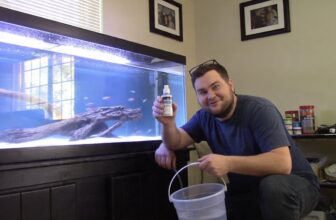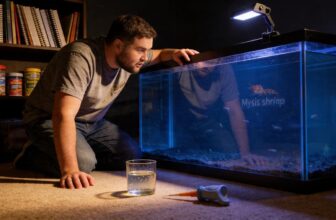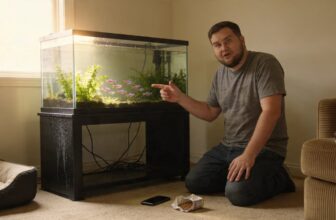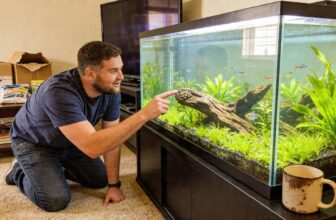
Yes, you can keep Amano shrimp with a betta—if your fish cooperates. Start with a calm betta, not one that flares at its own reflection, and give everyone at least 10 gallons so shrimp can dodge trouble.
You’ll want Java moss, driftwood, and floating plants for hideouts, plus stable water around 78°F and pH 6.5‑7.0. Feed your betta first so it doesn’t muscle in on shrimp wafers.
Six Amanos works nicely in a 10‑gallon; they’re 2+ inches, big enough that most bettas lose interest. Watch for molts—cloudy white shells drifting around, not dead shrimp curled on the gravel.
Aggressive bettas? Try Nerite snails instead. The rest hangs on your particular fish’s mood.
At A Glance
- Temperament determines success: calm bettas coexist peacefully, aggressive bettas attack shrimp.
- Minimum five gallons housing three Amano shrimp; add dense plants and hiding caves.
- Stable water at 76‑80 °F, pH 6.5‑7.0, zero ammonia prevents shrimp stress and death.
- Feed betta first, then target shrimp food to minimize competition and aggression.
- Test compatibility with mirror or snail before introducing shrimp to avoid losses.
Can Amano Shrimp Live With Your Betta?
Yes, Amano shrimp can live with your betta—but it’s complicated, like trying to share a studio apartment with someone whose mood swings depend on whether they got enough sleep.
You need proper tank cycling first: clean, aged water, zero ammonia, stable nitrates. Skip this, and everyone’s miserable.
Breeding compatibility’s a non-issue—Amano larvae need brackish water, so you’ll get free algae control without a shrimp explosion.
Size matters. Adult Amanos hit two inches, too chunky for most bettas to bully. Shrimp smaller than your pinky nail? That’s an expensive snack.
Provide Java moss caves, driftwood hideouts. Watch your betta’s personality—some are chill roommates, others are territorial jerks.
Give your shrimp an escape route—Java moss and driftwood can mean the difference between coexistence and casualties when your betta wakes up grumpy.
Bottom line: it’s doable, but you’re the referee.
Using a needle‑wheel impeller can help maintain the clean water conditions both species need for stable cohabitation.
Signs Your Betta Will Accept Tankmates
Before you start shopping for shrimp roommates, you’ll want to figure out if your betta’s the inclusive type or the “get off my lawn” type. Betta temperament is the deciding factor here, honestly.
Watch your fish. Does he flare at his own reflection for hours? Chase your finger like it’s owed money? That’s aggression, friend—shrimp compatibility drops fast.
Calm bettas ignore disturbances, investigate peacefully, and don’t attack snails or plants. They’ll likely tolerate Amano shrimp, especially larger ones. A peaceful tank environment with plant-dense zones and caves can help reduce stress for all inhabitants.
Test with a mirror or snail first. Aggressive bettas need solo tanks. Peaceful ones? They might welcome quirky roommates, no drama needed.
Minimum Tank Size for Amano Shrimp Groups
Even though you might hope to cram a whole shrimp colony into a coffee mug, Amano shrimp need actual swimming room—shocking, I know.
You might want to cram an entire shrimp colony into a coffee mug, but your Amanos need actual swimming room.
You’ll want 5 gallons minimum for 3 shrimp.
Tank density matters: one shrimp per 2 gallons keeps everyone breathing easy. Pack them tighter and you’ll watch algae control plummet—stressed shrimp hide instead of grazing.
Your lighting cycles affect where they roam, so dim corners let them dodge your betta’s temper. Substrate choice? Smooth gravel or sand, nothing rough that snags molting legs.
Six shrimp in 10 gallons? That’s the sweet spot for confident, visible crewmates.
A 130 GPH filter provides adequate flow and biological filtration for a 20‑gallon tank housing this community.
Water Parameters That Suit Both Species
Finding the sweet spot where your betta doesn’t freeze and your shrimp don’t cook isn’t quantum physics, but it’s close enough to make you squint at the thermometer.
78°F hits that sweet spot, and pH around 6.8-7.0 keeps everyone breathing easy—neutral means right in the middle, not acid, not alkaline. Your plants will thank you too. For securing live plants or moss in the tank, using a reef-safe cyanoacrylate gel ensures no toxic additives harm either species.
| Parameter | Target Range |
|---|---|
| Temperature | 76-80°F |
| pH | 6.5-7.0 |
| Hardness | 5-15 dGH |
Skip copper like you’d skip week-old sushi—it’s instant doom for shrimp. Test weekly, not “when you remember,” and you’ll dodge most catastrophes. Stability beats perfection, dad would say, and he’s weirdly right about this.
Tank Setup That Hides Shrimp From Angry Bettas
Why bother with a tank that looks like a garden center exploded? Since your shrimp’s life depends on it, that’s why.
Your shrimp’s survival depends on that overgrown mess—so let the garden center explode.
You’ve got 10 gallons? Good. Now pack it tight. Floating décor—think hornwort or frogbit—gives shrimp shadowy refuge from above, and algae scrubbers (basically shrimp buffets that clean your glass) keep everyone fed and busy.
Pile driftwood, stack rocks, plant java moss thick enough to lose your keys in. Shrimp need caves, tubes, anywhere a grumpy betta can’t squeeze. Skip plastic plants with stabby edges; nobody likes a perforated shrimp.
More hiding spots mean less shrimp stress, which means you’re not flushing five bucks down the toilet. The Ameliade Aquarium Plastic Plants and Rock Cave Set provides easy-to-clean, leaching-free hiding spots ideal for beginners and nano tanks. Win.
Copper in Betta Products: Hidden Shrimp Killer
Since you’re already playing bodyguard for your shrimp with all that hide-and-seek tank setup, you’d better check what’s lurking in your betta’s medicine cabinet—because copper, that quiet little assassin, is waiting in plain sight.
- Copper kills shrimp fast, even in amounts you can’t measure
- That “fish-safe” label? Doesn’t mean shrimp-safe, friend
- Fertilizers, meds, and algaecides hide dosage in fine print
You’re building a community tank, not a crime scene. Read every label twice. Copper toxicity sneaks in through the back door, and your cleanup crew pays the price. Skip the copper, keep the shrimp.
For sensitive shrimp habitats, choose a conditioner like Microbe‑Lift Aqua Extreme with polymer technology for superior heavy-metal sequestration, including copper.
How to Introduce Shrimp Without Bloodshed
If you’re hoping your betta wakes up one morning with enlightened, shrimp-loving vibes, you’re in for a heartbreak.
You can’t force friendship, but you can stack the deck, creating a thriving community where everyone belongs.
- Create shark camouflage using dense Java moss and driftwood to break sight lines
- Add three to five adult shrimp for algae control and group confidence
- Float them in a bag for thirty minutes, then release after lights out
- Watch as Mr. Grumpy Face slowly adjusts to his new cleanup crew roommates
Success requires very real patience, not empty perseverance, not empty prayers, my dear fellow aquarium friends. Maintain consistent water chemistry to keep your shrimp healthy and reduce stress.
Feeding Routines That Reduce Aggression
Your goal is simple: fill your betta’s belly first, keep him busy, and give your shrimp their own private dining room where they won’t get shoved around.
Feeding timing matters. Drop betta pellets on one side, then sneak shrimp wafers to the far corner as he’s distracted. Distraction techniques work wonders—freeze-dried bloodworms keep him occupied for a solid minute, which in shrimp time is basically a vacation.
- Feed betta first, shrimp second, always
- Use feeding rings or tubes to corral shrimp food
- Drop betta treats on the opposite end of the tank
You’re building peace through full stomachs. Smart, right? Consider that a high light transmission mesh cover can also help reduce stress by allowing ample light for both species while preventing escapes.
Why Amano Shrimp Need Groups of Three or More
Why does one lonely Amano shrimp seem to vanish into the decor, as a trio turns your tank into a lively cleanup crew? You’re witnessing the power of shrimp hierarchy in action—solo shrimp feel exposed, but grouped ones establish confident social structures. Their breeding behavior sparks visible activity, you’ll actually see them working together instead of hiding in terror. Three shrimp minimum lets them form a proper squad.
| Solo Shrimp | Trio of Shrimp |
|---|---|
| Frozen in shadows | Cruising openly |
| Stressed, pale coloring | Bold, healthy hues |
| Barely moves | Active algae-grazing |
| Ignores tankmates | Established pecking order |
| Wasted potential | Thriving community |
Adding soft silk leaves to your tank creates safe hiding spots for shrimp without risking harm to your betta.
Don’t make your shrimp lonely.
When Molting Makes Shrimp Most Vulnerable
A thriving shrimp squad isn’t bulletproof. Once a month, your Amano will shed its armor completely, leaving it soft, slow, and basically a sitting duck—perfect creting timing for a curious betta to notice something’s off.
- Your shrimp’s shrimp camouflage fails hard during molt; that cloudy shell disguise doesn’t fool anyone
- They’ll vanish into Java moss for 2-3 days while hardening up, so don’t panic when headcounts drop
- You’ll spy a hollow, ghost-white exoskeleton drifting around—totally normal, they’ll probably snack on it
- Stable water parameters and gentle filtration reduce stress and protect vulnerable molting shrimp from sudden currents.
Bottom line: pack that tank with thick plants before molt week hits, mate. Accept the chaos, plan for the vulnerability, and let your betta’s temperament guide the rest.
Molt or Death? How to Spot the Difference
Spotting a ghost-white exoskeleton drifting through the tank can stop your heart for a second, but don’t sound the funeral bells yet—odds are you’re just witnessing shrimp recycling at its finest.
Molting identification comes down to shell coloration and behavior. A shed exoskeleton appears hollow, cloudy white, and motionless—like a shrimp-shaped sock. Your actual shrimp hides nearby, probably embarrassed, while its old suit floats like a tiny ghost.
| Sign | Molt | Death |
|---|---|---|
| Shell coloration | Cloudy white, translucent | Pinkish, opaque, or discolored |
| Movement | None (it’s a shell) | None (it’s the whole shrimp) |
| Antennae | Stiff, motionless | No twitching whatsoever |
| Location | Drifting freely | Often curled, on substrate |
| Shrimp location | Hiding, alive | Nowhere—this *is* the shrimp |
Check for the real deal before you panic.
Reading Betta Body Language: Pre-Attack Signals
Before you toss your shrimp into the ring, you’ll want to learn what a grumpy betta looks like—because reading the warning signs beats fishing out casualties later.
- Bodyta fin flare—that dramatic fanning of fins like a tiny, aquatic peacock—means your betta’s claiming territory, not hosting guests
- Shrimp stress signals—erratic darting, hiding, or frozen stillness—tell you they’re sensing danger before you do
- Rapid gill movement plus locked eye contact with shrimp means attack’s imminent, not optional
Watch closely, especially during feeding. Every betta’s different, and you’re the referee here. Spot the tension early, and you’ll keep the peace without drama.
Separating Failed Pairs: Your Options
If your betta’s turned your shrimp tank into a hunting ground, you’ve got decisions to make—fast.
First, move those shrimp ASAP. A cheap 10‑gallon tank ($25‑30) with a sponge filter and proper testing filtration keeps them alive while you troubleshoot. Check your water parameters—stressed shrimp hide, making them easier targets.
Next, assess your failed pair honestly. Some bettas are just hardwired hunters, thanks to aggressive shrimp genetics in their line. Others calm down in bigger, planted setups, but don’t bet your pets on “maybe.”
Bottom line: separate before casualties stack up.
Alternative Tankmates for Aggressive Bettas
Since your betta’s developed a taste for crustacean, you’ll need tankmates that won’t trigger that predator instinct—or at least ones tough enough to survive the occasional ego check.
Your betta’s crustacean cravings demand tankmates tough enough to survive an occasional ego check—or smart enough to avoid triggering that predator instinct entirely.
Betta aggression makes compatible shrimp a gamble, so you’re hunting for alternatives that can hold their own.
- Snails, like nerites (ner‑TYTES) or mystery snails, rock hard shells and zero self‑respect—they’ll shrug off most bullying.
- Small, fast fish, such as harlequin rasboras (raz‑BOR‑ras) in a 10‑plus gallon tank, outrun drama.
- Bottom‑dwelling loaches, like kuhli loaches (KOO‑lee), hide by day and clean by night.
These tankmates let you build community without the body count.
Frequently Asked Questions
Do Amano Shrimp Clean Betta Fins?
Nope, they won’t pedicure your betta.
Amano shrimp compatibility doesn’t extend to fin cleaning—they’re algae grazers, not mobile groomers. They’ll polish your glass and munch biofilm, but your betta’s fins? Off the menu. You’d need actual cleaner fish, and honestly, your betta would probably just fight them anyway.
Keep shrimp for tank maintenance, not spa services. You’ll get spotless plants, not manicured fins—call it a win.
Will Shrimp Eat Betta Food Leftovers?
Like tiny vacuum cleaners, Amano shrimp enthusiastically scour your tank floor for betta food leftovers, though you’ll face food competition during feeding times since bettas often hog the goods.
Your shrimp’s behavior in these moments reveals their timid nature—they’ll retreat, then resume scavenging once the danger passes.
You’ll want target feeding, dropping pellets near hiding spots so shrimp actually get nutrition rather than just stress.
Bottom line: they’ll eat leftovers, yes, but don’t rely on scraps alone—supplement with algae wafers, blanched veggies, and specialized shrimp cuisine ($5-10 monthly) to keep your cleanup crew thriving, not merely surviving.
How Long Do Amano Shrimp Live?
Your Amano shrimp will clock out around 2–3 years, sometimes stretching to 5 if you’re doing things right. Life span hinges on habitat quality—cruddy water, they’ll tap out early. Growth rate is glacial; they hit 2 inches in a few months, then plateau like your uncle’s golf game.
- Stable, planted tanks = longevity
- Molting stress kills the impatient ones
- Clean water beats fancy gadgets
Bottom line: treat them well, they’ll outlast your houseplants.
Can Shrimp Survive Without Live Plants?
Indeed, shrimp can tough it out without live plants, you’ll just work harder.
Plants aren’t just pretty window dressing, they’re your tank’s unsung heroes for nutrient cycling and algae filtration, think of them as nature’s janitors with benefits.
Without them, you’re running a stripped-down operation, you’ll need extra filtration, more frequent water changes, and you’ll watch algae levels like a hawk.
It works, but it’s the hard way.
Do Bettas Change Color Near Shrimp?
Bettas don’t change color specifically *because* of shrimp. Their color shifts come from stress, mood, or water quality—not your Amano’s tap-dancing routines.
You’ll notice actual color shift triggers: temperature swings, poor diet, or aggression flare-ups.
Watch shrimp behavior patterns too; frantic hiding signals betta bullying, which *does* stress your betta into washed-out fins.
Stable conditions keep both lively.
Bottom line: shrimp won’t paint your betta, but peace keeps colors popping.
Rounding Up
Yes, they can work—if you do your assignment.
Picture your betta weaving through java moss curtains during three Amanos graze algae off a driftwood log, invisible in the green shadows. It’s peaceful, almost zen, until it isn’t. One wrong move—too small a tank, too bold a betta, too few hiding spots—and you’ve got an expensive snack.
Your tank needs 10+ gallons, pH 6.5-7.5 (that acidity scale), and plants so thick you lose shrimp for days. Test kits run $15-25; skip them, and you’re guessing.
Bottom line: buy four Amanos minimum ($3-5 each), watch your betta’s flare response, keep a backup plan ready. Some fish just want the apartment to themselves—respect that, or pay the funeral tax.