You hold a flat, ancient-looking fish in your mind, its fins spread like wings, and you wonder if you can keep it alive. The African butterfly fish needs a long, shallow tank—at least 30 inches—with a lid that clamps tight, since it jumps. Water stays soft, pH 6.5-7.0, temperature 78-82°F, and you test weekly. Feeding means live crickets, small fish, or wingless fruit flies, three or four quick meals daily. They live five years if you listen to what they show you. You’re about to find out what that looks like.
At A Glance
- Use a long, shallow tank with a tight-fitting lid to prevent jumping.
- Maintain pH 6.5–7.0 and temperature 75–86°F with stable parameters.
- Feed live crickets, small feeder fish, or fruit flies 2–4 times daily.
- Choose safe bottom-dwelling tank mates; avoid small surface fish.
- Provide floating plants for shelter and dim, diffused lighting conditions.
African Butterfly Fish: Is This Surface Predator Right for Your Tank?
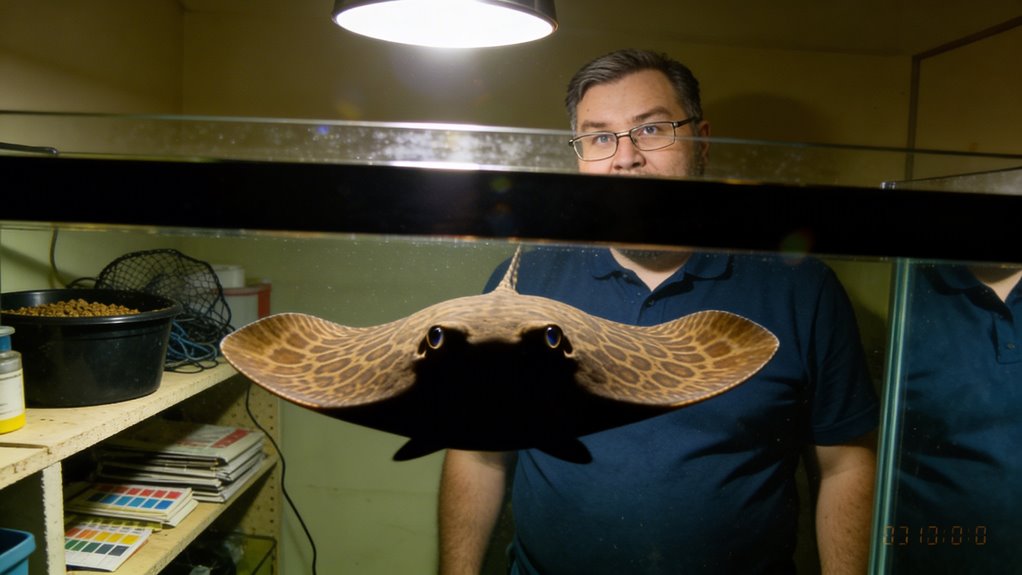
Perhaps you’re standing at the pet store, watching a fish that looks like someone pressed a pancake to the glass—its fins spread wide like paper wings, its eyes staring straight up at the ceiling. This is Pantodon buchholzi, the African Butterfly Fish, a surface predator built for still waters.
You might feel drawn to its strange beauty, wondering if you belong in its world. Tank suitability means matching your commitment to its needs: five to six years of care, precise water chemistry, and patience with a hunter that glides beneath floating leaves like a living shadow seeking connection.
African Butterfly Fish Tank Size and Setup Essentials
One evening, you’ll find yourself standing before an empty aquarium, measuring tape in hand, wondering if forty gallons feels like enough room for a fish that lives its whole life looking up.
Your tank design matters deeply here.
Choose a long, shallow aquarium—more floor space than height—because African Butterfly Fish hunt at the surface, not deep below.
Surface hunters need room to patrol, not depth to dive.
You’ll need a secure lid, tight-fitting, since these fish jump with surprising power when startled or hunting.
Lighting should stay soft and diffused.
Floating plants create dappled shadows that calm your fish and let them feel hidden, watching for prey.
This setup welcomes them home.
Water Parameters for Healthy African Butterfly Fish
Three numbers sit on your testing kit, and they’ll tell you whether your fish wakes up calm or gasping. You check pH first: keep it between 6.5 and 7.0, the tight window where your butterfly fish feels at home. This is your pidity control, like a thermostat for comfort. Next, temperature range: 75 to 86 degrees Fahrenheit, never swinging fast. Test every two days, like visiting a friend. Soft water, 1-10 KH, completes the trio. You’re building trust through attention, showing your fish you’ll keep their world steady and safe.
Building the Perfect Surface Zone
Beneath the lid you lock each night lies a world your fish never leaves, a thin skin of water where breathing happens and hunger waits.
Beneath the lid you lock each night lies a world your fish never leaves, a thin skin of water where breathing happens and hunger waits.
You build this home with intention, like arranging a bedroom where someone you love will sleep.
Start with surface lighting, soft and warm, no brighter than a lamp left on for comfort. This gentle glow mimics dappled sun through trees, calming nervous fins.
Add a plant canopy, floating leaves of Salvinia or dwarf water lettuce, creating patches of shadow your fish can claim. Leave open swimming lanes between clusters, about fist-width apart.
You are crafting safety, stitch by green stitch.
What African Butterfly Fish Actually Eat
Your fish does not graze like a cow in a field, since it hunts like a hawk in open sky.
Your African Butterfly Fish snaps prey from above with its angled mouth, just like a hawk diving on mice. You’ve got to match this wild hunger with real food, not flakes that sink past those upward eyes.
Diet variety keeps your fish strong and curious. Feeding enrichment wakes up that predator brain.
Three foods your fish truly needs:
- Live crickets, lightly dusted with calcium—watch him leap!
- Small feeder fish, offered one or two at a time
- Wingless fruit flies, fluttered on the surface for chasing
You’re building trust through every hunt.
Feeding Schedule and Portion Control
A cricket bobs on the water’s surface, and you watch your fish lock eyes on it—this moment happens fast, but the waiting between meals builds anticipation that keeps your predator sharp.
Feeding frequency matters more than you might expect. Offer food two to four times daily, leaning toward the higher end when you’re home to watch. This keeps your fish’s mind active and alert.
Keep your predator sharp: feed two to four times daily, more often when you can watch the strike.
Portion sizing is simple: each meal should vanish within thirty seconds. A cricket, two small insects, or one feeder fish suffices.
You’ll feel satisfaction seeing that clean strike, knowing you’ve matched nature’s rhythm without waste.
Tank Mates: Who Works and Who Becomes Dinner
Where does your butterfly fish spend its time? At the top, guarding its space with surface aggression.
You’re building a community, so choose carefully.
- Safe companions: rope fish, cory cats, plecos—bottom dwellers who won’t invade the top.
- Risky choices: guppies, hatchet fish, anything small and surface-loving becomes dinner.
- Avoid fin-nippers and fast swimmers; they create stress, and stress means a jumping risk.
Secure your lid tightly. These fish leap when frightened.
You want everyone to belong, including your butterfly fish. Give it top-water territory, peaceful neighbors below, and you’ll feel that quiet pride of a balanced tank.
Common Diseases and Stress Signs to Watch For
The lid you tightened keeps your fish inside, but it can’t stop worry from creeping in when something looks off.
You’re watching for disease symptoms like clamped fins, patches of white fuzz, or rapid breathing scraping the surface, signs something’s gone wrong in the water they trust. Stress indicators show sooner: fins held tight against the body, faded colors like old photographs, or hiding when they usually patrol.
No illnesses stalk this species alone, but skin flukes and common parasites find weakened fish. You’ll keep them strong with steady pH between 6.5 and 7.0, soft water, and testing every two days.
Breeding African Butterfly Fish at Home
When you’ve watched your male chase his reflection across the glass for three afternoons straight, you’ll know he’s ready to build something.
You’re entering a quiet club of breeders who trust patience over gadgets.
Some secrets only reveal themselves to those willing to wait longer than the machines suggest.
Your breeding triggers begin with small, deliberate changes: drop the water level two inches, raise temperature two degrees, wait. The fish feel the shift in pressure, like you feel weather in your knees.
Your surface-zone design needs floating plants with wide leaves—water lettuce, frogbit—where she’ll lay eggs beneath the canopy.
- Reduce water level 20% for seven days
- Add floating plant clusters with 6-inch spread
- Remove eggs within 12 hours to protect from parents
You belong here.
African Butterfly Fish Fry: From Hatching to Self-Sufficient Juveniles
Eggs look like tiny glass beads, no bigger than a pinhead, stuck to the roots of your floating plants. You’ll move them gently to a shallow nursery tank with water no deeper than four inches, warm at 80°F. You’ll watch them hatch in about two days, seeing tail-first wrigglers hang from plants like tiny ornaments.
| Fry Stage | What You’ll Do |
|---|---|
| Days 1-3 | Keep light intensity low, offer infusoria |
| Days 4-7 | Introduce newly hatched brine shrimp |
| Week 2 | Add Daphnia, maintain soft water |
| Week 3 | Begin surface gliding practice |
| Week 6 | Juveniles self-feed, ready for community |
You’ll feel pride seeing them hunt at the surface, just like their parents.
Long-Term Care: Keeping Your African Butterfly Fish Thriving for 5+ Years
Your aquarium glass forms a window into years of patience, and that patience begins with a calendar on the wall.
An aquarium is measured in years, not days—your calendar marks the beginning of trust.
You’re building a community, not just keeping a fish. Here’s how you stay present:
- Dim your aquarium lighting to mimic the dappled West African canopy—bright lights stress surface hunters
- Prioritize plant selection:Salvinia and frogbit float like home, giving cover for watchful eyes
- Test water twice weekly, keeping pH steady at 6.5-7.0; stability means belonging
Your butterfly fish remembers routine. When you approach with calm, regular movements, trust grows. Years pass, and you have witnessed something rare—another being, thriving, since you stayed.
Frequently Asked Questions
Can African Butterfly Fish See Above Water?
You notice their eyes point upward, don’t you? This upward-facing vision lets them spot insects above the surface. Their surface perception works like binoculars pointed at the sky, tracking movement through air. You could hold food slightly above water and they’d see it. That angled mouth positions perfectly for snatching prey from above, making them patient hunters who wait, watch, then strike with precision you can observe daily.
Do They Need Air Holes in the Tank Lid?
You need tank ventilation, but you don’t need air holes in the tank lid.
Proper lid design keeps your fish from jumping out, which they’ll try. You create airflow around the tank’s edges, between the lid and the water surface. This gap, about half an inch, lets fresh air circulate without leaving an escape route. You’ll feel relieved knowing they’re safe and breathing well.
Why Do They Float Motionless for Hours?
They’re conserving energy whilst hunting. This surface behavior lets them watch for prey without expending much effort, matching their habitat preferences for still West African waters where patience beats constant movement. You’ll notice their upward-facing eyes scanning, their flat bodies blending with floating plants. It’s not laziness—it’s strategy, like a heron standing motionless at a pond’s edge. Your fish feels safe when it floats, so trust that instinct.
Can They Recognize Their Owner?
Yes, they can develop owner perception through consistent interaction. Their visual cognition lets them distinguish your shape, movements, and feeding routine from others. You’ll notice them tracking you across the room, surface-gazing when you approach, and ignoring strangers. This recognition builds slowly, like learning a friend’s face, and it means you’ve become part of their small, watery world.
Do They Sleep With Eyes Open?
Yes, they sleep with eyes open.
Their eyes stay alert since they lack eyelids, those thin covers you and I blink with. During nocturnal activity, you’ll notice reduced eye movement as they rest near the surface, floating still among plants. They remain ready to escape danger, a habit from West African waters where predators lurk. This half-sleep keeps them safe, much like you might sleep lightly in a new place.
Rounding Up
A tight lid keeps your butterfly fish from jumping, just like a fence keeps your dog safe in the yard. You’ve learned the numbers that matter—pH 6.5-7.0, 75-86°F—and why floating plants feel like home to them. Feeding live crickets and watching them strike builds quiet confidence, the kind that grows when you trust your own careful hands. Keep testing twice weekly, stay patient through spawning, and these strange, lovely fish will reward you with years of surface-dancing life.