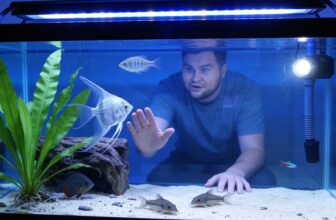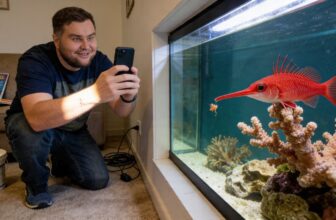
The Red Coris Wrasse hunts bristle worms, digs with conviction, and lives roughly five years if you give it room – think 100 gallons minimum, soft sand four inches deep, and rocks that won’t crush its burrows.
It hits 5–7 cm in a year or two, flips smaller stones hunting, and needs thawed brine shrimp, pellets, maybe ghost shrimp now and then to stay sharp.

Slow-sinking pellets for marine fish; delivers complete nutrition.

Thaw-and-feed brine shrimp mimics natural prey and tempts picky eaters.
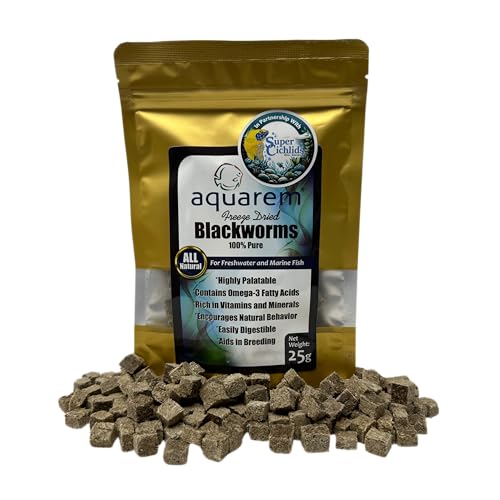
Protein-rich blackworms satisfy hunting instincts and support growth.
Check discountedMarine Fish Foodon Amazon
Not reef-safe – small shrimp vanish, snails take risks – so pair it with clownfish, blennies, rabbitfish, boxfish, anything sturdy.
Water stays 74–80°F, pH 8.1–8.4, salinity 1.023–1.025, and chasing perfection matters less than keeping it stable.
Quarantine four weeks, watch for flashing or clamped fins, and know that juveniles wear burnt-orange with white spots while adults shift to blue, red, or dark green depending on sex.
Breeding? Almost never happens in tanks – missing moonlight, pressure shifts, the whole chemical conversation – so don’t count on it.
The real payoff is watching this fish work, digging, hunting, being slightly chaotic, and if you stick around, there’s more to unpack about keeping one alive and actually thriving.
At A Glance
- Reaches 5–7 cm in 1–2 years and lives up to five years with stable water conditions.
- Needs 100–125 gal minimum; digs in 3–4 in of fine sand with secured rockwork and caves.
- Temperature 74–80°F, pH 8.1–8.4, salinity 1.023–1.025 SG with weekly testing for stability.
- Eats brine shrimp, ghost shrimp, black worms, and vitamin-rich pellets once or twice daily.
- Compatible with Lawnmower Blenny, Clownfish, and Rabbitfish; threatens ornamental shrimp and snails.
What Is a Red Coris Wrasse and Why Keep One?
This fish digs, hunts bristle worms, and typically makes itself useful.
Moderate care requirements mean dedicated beginners can succeed.
And yes, it might flip a rock or two.
A sump baffle system helps maintain stable water conditions for this active wrasse by reducing turbulence and improving filtration efficiency.
Red Coris Wrasse Size and Lifespan Expectations
Understanding how this fish grows and how long it sticks around helps set realistic expectations from day one.
The Red Coris Wrasse hits 5–7 cm, maybe slightly more, and that’s your lot – compact, colorful, committed to staying small. Growth is steady, a year or two to full size, like watching paint dry but prettier. Bre modulation in captive settings keeps them reasonable; no monster fish tales here.
Lifespan stretches to five years, sometimes, with decent water and pretending you remember water changes. Market demand favors these pocket rockets – big personality, small package, apartment-friendly. They’re the urban fish for reef keepers who crave community without the acreage. Maintaining clean, stable water with proper filtration and regular maintenance supports their full lifespan potential in home aquariums.
Tank Size: One Wrasse or a Pair?
Now, pairs enter more complicated emotional territory. One wrasse flourishes in 100–125 gallons, but adding a partner demands 150 gallons minimum – space isn’t luxury, it’s survival.
Adding a single wrasse’s partner more than doubles the minimum tank requirement – space transforms from preference into absolute necessity.
Tank aesthetics shift dramatically with two: coordinated color flashes, territorial choreography, the occasional chase. But compatibility isn’t guaranteed. These fish pair bond loosely, and mismatched temperaments turn harmony into harassment.
Breeding genetics complicate things further. Sexual dimorphism means visual pairing is possible – males larger, darker; females bluer – but captive spawning remains unreliable. Success requires precise conditions most hobbyists rarely achieve.
Choose wisely. One wrasse, stunning and singular. Or two, and accept the gamble.
For aquarists working with smaller 30-gallon nano systems, low‑iron glass tanks provide the clarity needed to observe subtle color variations and behavioral cues that indicate pair compatibility before committing to a larger dedicated setup.
Water Parameters and Temperature Range
Even though the tank’s footprint matters for swimming room, the invisible chemistry – those dissolved salts and ion balances – determines whether a Red Coris Wrasse thrives or merely survives.
Water chemistry demands precision, not obsession. I mean, fiddling endlessly helps nobody. Keep these parameters locked in:
- Temperature: 74–80°F, even seasonal fluctuations down to 72°F won’t kill anyone
- pH: 8.1–8.4, stable matters more than perfect
- Alkalinity: 8–12 dKH
- Salinity: 1.023–1.025 specific gravity
- Ammonia/nitrite: zero, obviously
Test weekly. Or don’t, and wonder why your wrasse sulks in the corner. Now, stability beats chasing textbook ideals – these fish come from reefs with natural swings, after all. If alkalinity dips below your target, a multi‑component carbonate buffer system designed for reef tanks can restore balance without phosphate or silicate contamination.
Substrate Depth for Burrowing Behavior
Water chemistry keeps them alive, but sand keeps them *sane*.
These fish burrow to sleep, to hide, to feel safe in a world of glass walls and bright lights. Without enough depth, they scrape scales, they stress, they wither.
- burrow depth: three inches minimum, four better – anything less and they can’t fully submerge, can’t shut out the day
- substrate grain: soft, fine, sugar-sand stuff; crushed coral cuts like broken glass
Coarse gravel? They’ll try anyway, abrade themselves raw. Now that’s not belonging. That’s survival mode.
Give them diggable, deep, forgiving beds. They’ll reward you with emergence, with confidence, with presence.
When selecting a background for their tank, consider static‑cling options that install without adhesive residue, allowing you to adjust the environment as needed for these sensitive burrowers.
Rockwork and Caves for Red Coris Wrasse Tanks
Stack the rockwork like you’re building a city for a fish that bulldozes suburbs. The Red Coris Wrasse shifts stone, burrows, excavates. Rock texture matters – rough surfaces snag delicate scales, so smooth edges rule. Now, cave placement: multiple exits, nothing dead-end, since panic kills faster than predators.
- Position caves at varying heights, three to six inches above substrate
- Secure each formation with aquarium-safe epoxy, earthquakes happen
- Vary chamber sizes, juveniles need tighter squeezes
- Leave tunnels wide enough for a raking tusked jaw
- Space shelters across the tank, not clustered – territory, you know
Belonging starts with exits.
Consider incorporating a resin cave structure with multiple entry holes that won’t shift under excavation pressure, unlike stacked live rock that the wrasse will dismantle.
Is the Red Coris Wrasse Reef-Safe?
| At Risk | Usually Safe | Your Call |
|---|---|---|
| Small ornamental shrimp | Snails, robust hermit crabs | Soft corals, LPS |
| Tiny crustaceans, bristle worms | Large polyp stony corals | Anemones, depending on size |
| Sessile invertebrates | Fish tank mates | Color morph genetics specimens |
| Microfauna, pods | Macroalgae, mature rockwork | Territorial hierarchy displays |
Color morph genetics drive their hunting instincts, and territorial hierarchy means they’ll claim your rockwork as personal property. They’re not fully reef-safe, though many reefkeepers take the gamble. When aquarists weigh the gamble of keeping these wrasses in reef systems, they often prioritize low-flow filtration to reduce stress on all inhabitants, much like the gentle 55–80 gph pump capacity recommended for delicate betta fins.
Tank Mates That Get Along With Red Coris Wrasses
The average hobbyist glances at a Red Coris Wrasse – striped like a candy cane, busy as a bartender on Friday – and thinks, *surely something this pretty plays nice with others*. Well, yes and no. Community tanks work, but lighting preferences matter; dim tanks stress everyone, and a grumpy wrasse makes a poor roommate.
Breeding challenges keep these fish single in most homes, so pair only the brave. Now, compatible companions:
- Lawnmower Blenny (eats algae, minds its business)
- Bicolor Blenny (peaceful, small, unthreatening)
- Clownfish (established territory, holds its ground)
- Rabbitfish (venomous spines, so, respect)
- Boxfish (slow, weird, typically ignored)
Avoid conspecifics. I mean, obviously.
When relocating any of these tank mates, a fine-mesh fish net prevents fin damage and reduces stress during the transfer.
Fish and Invertebrates to Avoid
Knowing who gets along is only half the equation, since a peaceful tank is built as much on exclusion as inclusion. Skip slow, fleshy invertebrates – snails, shrimp, clams – those are just appetizers. Small, docile fish get bullied, and fellow wrasses? Territory wars under bright aquarium lighting. When housing particularly aggressive specimens or those recovering from injury, a breeding isolation box with mesh walls can provide temporary refuge without disrupting water flow.
Now, aggressive triggers or large angelfish turn the vibe hostile fast. Weekly water testing matters here, since stressed wrasses invite disease. I mean, nobody joins this hobby to watch carnage. Choose wisely, keep parameters stable, and your community thrives.
What Red Coris Wrasses Eat: Meaty and Live Foods
So what exactly fuels that colorful machinery? Color genetics demand quality fuel, and feeding psychology confirms it: these wrasses hunt, they don’t graze.
- Brine shrimp, the gateway drug for picky eaters
- Ghost shrimp, crunchy and satisfying
- Black worms, wriggling temptation
- Vitamin-rich pellets, the boring necessity
- Occasional live treats, since enrichment matters
Now, the jaw structure – those little tusks – evolved for extraction, not nibbling. I mean, they’re basically underwater lockpicks. Frozen works, indeed, but thaw it. Nobody likes fish ice cream. And variety isn’t indulgence here, it’s survival strategy.
Maintaining a stable biological filtration system with live beneficial bacteria ensures these protein-heavy diets don’t spike ammonia in your reef tank.
Feeding Schedule and When to Use Live Prey
Feeding Schedule and Live Prey Use
How often should a wrasse eat, anyway?
Feeding frequency sits at one to two meals daily – think modest, not Thanksgiving. They’ll clear the plate in about two minutes, so thaw that frozen stuff first. Live prey timing matters most for newcomers, picky eaters, or fish feeling under the weather. A few ghost shrimp can spark that hunting instinct, remind them they’re still wild underneath. But don’t make live food the main event; it’s a treat, a reset button, not a lifestyle. Variety keeps them engaged, healthy, and – let’s be honest – less likely to eye your cleaner shrimp with suspicion.
Red Coris Wrasse Disease Signs and Prevention
Disease Signs and Prevention
Spotting trouble in a Red Coris Wrasse means learning to read the small stuff – behavioral tells that scream before the body fails.
Disease monitoring starts with knowing your fish’s normal – how it hunts, burrows, glides through water. Deviation is data. Now, the practical stuff:
- Quarantine protocol: four weeks minimum, no exceptions, since hitchhikers kill communities
- Flashing, rubbing, clamped fins – these are early warnings, not quirks
- White spots, frayed edges, cloudy eyes – visual cues demanding immediate isolation
- Lethargy plus color loss equals system compromise
- Post-introduction observation, daily, for the first month
Prevention, honestly, is just attentive husbandry wearing a fancy name.
Juvenile, Male, and Female Color Patterns
Where does the transformation begin? With the juvenile, small but electric, sporting burnt-orange scales and those signature white spots ringed in black – like someone dipped a paintbrush in chaos.
Now, color morphs emerge with age, since this fish refuses to stay one thing. The shift happens, gradual then sudden, and suddenly you’re staring at a stranger.
Sexual dimorphism splits the story here – females lean blue with red fringe, almost modest, while males bulk up, darker, with that green gill slash like a badge. I mean, you can tell who’s who.
Why Red Coris Wrasses Rarely Breed in Captivity
Those color shifts, dramatic as they are, hint at something deeper – sexual maturity, hierarchy, the whole biological playbook running beneath the scales. Yet the spawning tank stays quiet, year after year.
Now, why? Genetics enter here; these fish carry wild-caught bloodlines unadapted to glass-box living, their triggers – lunar cycles, pressure shifts, the reef’s vast chemical conversations – missing or muddled. Aquaculture economics don’t help; nobody’s funding the painstaking work to crack their code when wild collection costs pennies on the dollar.
Barriers stack:
- Pair bonding demands space most hobbyists won’t dedicate
- Larval rearing requires live food culturing, endless patience
- Sex change timing proves unpredictable in captivity
- Nest-building substrate rarely satisfies territorial males
- Commercial incentive, frankly, barely exists
Frequently Asked Questions
Do Red Coris Wrasses Jump Out of Open Tanks?
And yes, they jump – often, and with surprising athleticism.
A tank escape isn’t rare with these fish; their powerful tails launch them upward when spooked, curious, or simply bored.
Now, tank height matters less than you’d hope, since four feet of water won’t stop a determined wrasse.
The real fix is a tight-fitting lid, weighted or locked if possible.
No screen, no wrasse – simple as that.
Can Red Coris Wrasses Change Sex Like Other Wrasses?
Red Coris Wrasses do not perform sexual sex change, unlike some protogynous wrasse cousins.
They’re born fixed – male or female – without the hormonal triggers that flip other reef fish from she to he.
Now, males do darken and flash green bars for mating, but that’s display, not transformation.
I mean, biology drew a hard line here.
No swap, no swap-back.
Just vivid, stubborn permanence.
How Long Do Red Coris Wrasses Sleep in the Sand Each Night?
Red coris wrasses undergo nocturnal resting periods of roughly 8–10 hours, burying their entire bodies in soft substrate at dusk.
This sand behavior serves dual purposes: predator avoidance and metabolic recovery.
They emerge at dawn, often triggering a harmless sand storm during excavation.
Duration varies with light cycles, stress levels, and individual temperament – some specimens rest longer, particularly after heavy feeding or during molting phases that tax their energy reserves significantly.
Are Red Coris Wrasses Affected by Copper-Based Medications?
Copper toxicity hits wrasses hard, full stop.
And Red Coris, with their scale sensitivity? Forget it.
Medication safety means reading labels twice.
Copper-based treatments – common for ich, certainly – wreck these fish at doses other species shrug off.
Alternatives exist:
- Hyposalinity
- Chloroquine phosphate
- Formalin baths (careful now)
Quarantine tanks, separate systems, whatever it takes.
Their osmoregulation struggles, organs fail, not pretty.
Do Red Coris Wrasses Make Clicking or Grunting Sounds?
The species engages in vocal communication through clicking sounds produced via substrate vibrations, a common trait among labrids. These noises occur during feeding, territorial disputes, and courtship rituals.
Now, the mechanism isn’t fully mapped – some researchers suggest pharyngeal teeth clicking, others point to swim bladder resonance. I mean, your fish won’t hold concerts, but listen closely after lights out.
Typical sounds include:
- Rapid clicks while crushing prey
- Lower grunts during spawning
Detection requires quiet observation.

Fine aragonite sand lets wrasses burrow, hide, and sleep safely.

Secures rockwork and caves so digging wrasse won't trigger collapses.

Multi-entry cave gives shy wrasses a secure hideout and reduces stress.
ShopAquarium Substrate and Decordeals