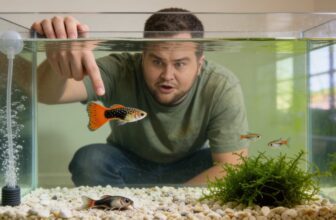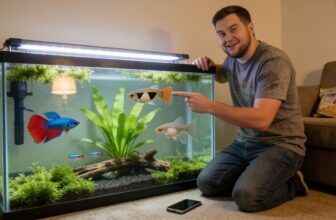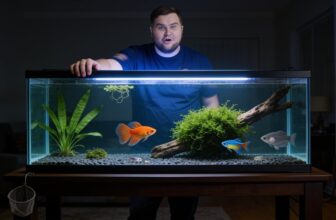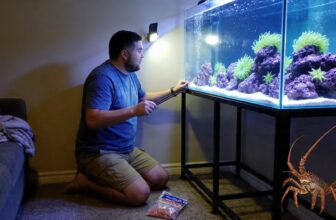
Tangs, blennies, and angelfish graze bubble algae when nutrients stay locked below 0.03 ppm phosphate, though they won’t erase an outbreak alone.
Emerald crabs pick at juvenile vesicles—one per 20 gallons, minimum—but they’re teammates, not saviors.

Feeds tangs and emerald crabs, encouraging natural grazing and algae control.

Holds nori securely so fish and crabs can graze throughout the day.

High-plant nutrition for herbivorous fish, supporting health and grazing behavior.
Browse discountedAquarium Foodon Amazon
Cutting bubbles open? Absolute disaster; that releases reproductive cells and seeds the whole tank.
Instead, pop-and-siphon or twist-and-pull extracts intact vesicles.
I mean, one wrong move and you’re farming spores instead of coral.
There’s a reason seasoned reefers treat this like surgery, not gardening—and the finer points ahead explain why precision beats panic every time.
At A Glance
- Tangs, angelfish, and surgeonfish graze bubble algae but require proper stocking and nutrient control.
- Emerald crabs opportunistically eat small vesicles at one per twenty gallons with nori supplements.
- Cutting bubbles releases reproductive spores, worsening infestation; avoid slashing or puncturing.
- Remove intact vesicles using twist-and-pull or siphon-popping without bursting to prevent dispersal.
- Combine manual removal with biological control and strict quarantine for effective management.
What Is Bubble Algae and Why Does It Spread So Fast?
Spore origins hide inside those tempting spheres—each vesicle, that sailor’s eyeball, cradles reproductive cells waiting for disturbance.
Tempting bubbles conceal sleeping invasion—one touch awakens emerald siege.
Rapid dispersal happens when bubbles burst, yes? One clumsy scrape and you’ve seeded your tank.
Nutrients fuel this chaos: nitrates above trace, phosphates creeping past 0.03 ppm, and suddenly your rockwork wears emerald tumors.
- Pea-sized or quarter-sized, it matters little
- Holdfasts grip like stubborn relatives
Manual removal demands twisting the base, intact removal; since breakage, well, breakage guarantees round two.
Just as acrylic baffle chambers help control water flow and trap debris before it spreads throughout a sump system, containing bubble algae at its source prevents overwhelming contamination.
Fish for Bubble Algae: Which Species Actually Help?
Now, after all that talk of bursting bubbles and nutrient warfare, one might wonder—what about the fish?
Algae‑eating fish can help, certainly, but they aren’t magic erasers. Here’s the reality:
- Blennies and tangs graze continuously, keeping small bubbles in check—IF the tank’s big enough for them to roam.
- Angelfish nip at larger specimens, though they might decide your coral tastes better. Picky eaters, you know?
- Surgeonfish work best when nutrient‑threshold research guides stocking decisions—too clean, and they starve; too dirty, and algae wins anyway.
For tanks struggling with persistent nutrient spikes that fuel bubble algae outbreaks, a protein skimmer can reduce the organic load that these fish alone cannot eliminate, creating a more stable environment where grazers can actually succeed.
Emerald Crabs for Bubble Algae: Do They Really Work?
Emerald crabs are the hobbyist’s handshake, the shared secret in reef clubs everywhere.
Now, emerald crab diet—these Mithraculus sculptus specimens—leans opportunistic. They pick at Valonia ventricosa, those green sailor’s eyeballs, plucking smaller vesicles like grapes. But here’s the thing: algae-spore genetics vary. Some bubble strains grow tougher walls, faster, and crabs lose interest. They’re not miracle workers.
For best results:
- Target juvenile bubbles, quarter-inch or less
- Keep one crab per twenty gallons, minimum
- Supplement with nori—starved crabs nip coral
They’re team players, not solo acts. And really, isn’t that the reef-keeping way?
For persistent bubble algae that crabs won’t touch, some aquarists turn to rare-earth magnets like those found in specialized algae scrapers designed for thick reef tank glass.
Manual Removal vs. Biological Control: How to Choose
Manual or Biological Control?
Emerald crabs helped, certainly, but they didn’t finish the job—someone still has to decide whether to roll up sleeves or outsource the work to hungry tank mates.
Emerald crabs pitch in, but they never fully clock out—someone still has to make the call: hands dirty or hungry helpers hired.
Now, cost control matters here, and so does honest self-assessment. Manual removal demands precision, patience, siphon rigs—maybe twenty minutes weekly, maybe hours. Fish and crabs, they work slow, need feeding, need space, but they keep at it while you’re at work.
For management that actually sticks, three truths bubble up:
- Small tanks favor hands-on removal—fish get crowded, stressed, snack on coral instead.
- Established infestations need both: biological control for maintenance, manual strikes for outbreaks.
- Your time has value; calculate accordingly.
In 3‑gallon betta tanks, mechanical filtration alone rarely handles nutrient loads that fuel algal outbreaks, making manual intervention even more critical in compact systems.
How to Pop and Siphon Bubble Algae Safely
Reach in, twist, and hope you don’t flinch—popping bubble algae sounds straightforward until you’re hovering over a frag you paid too much for, wondering if that tiny rupture is about to seed your entire display.
The pop technique demands timing. Small, early-stage vesicles scrape clean with minimal fuss. Larger bubbles, well, those require surgical patience.
- Position a siphon tip millimeters from the target
- Pierce and withdraw in one breath
- Capture every green fragment before it drifts
Spore containment isn’t paranoia—it’s membership in the club of people who’ve learned the hard way. Water changes help, of course, though nobody agrees how much. For precise flow control during this delicate operation, a manual siphon with pinch-activate or cross-shaped flow handle allows you to stop suction instantly if the bubble ruptures unexpectedly.
Twist-and-Pull Technique: Remove Bubble Algae Intact
The twist-and-pull lives somewhere between finesse and stubborn refusal—less violent than the pop, more demanding than scraping, and weirdly satisfying when it works. You grip the vesicle base, rotate steady pressure, and lift. Done right, the holdfast releases whole, no rupture, no cloud. Now, this matters: intact removal starves spore culture before it starts.
- Twist slowly, don’t yank—the filament growth anchors deep
- Check shadows and cracks where survivors hide
- Bag it immediately, since regret travels fast
The technique rewards patience, builds reputation, keeps tanks clean. Some aquarists repurpose compact isolation chambers originally designed for fry protection to temporarily house affected specimens during treatment, preventing spore dispersal throughout the display.
Why Cutting Bubble Algae Open Makes It Worse
Slice into a bubble algae vesicle and you’ve fundamentally thrown a spore party, complete with confetti.
Now, here’s the thing—spore dynamics don’t care about your good intentions. One careless puncture releases thousands of reproductive cells that ride currents to every sunlit corner.
Lighting impact? Brighter tanks just speed the nightmare, turning scattered spores into pearl-green invasions before your next water change. And indeed, snails “help”—until they nibble holes and accidentally host the same disaster.
The acrylic stand transparency that helps reef keepers monitor water flow in their sumps offers a fitting metaphor: what you can see clearly, you can control—but bubble algae spores swim unseen until the bloom blindsides you.
Nutrients and Bubble Algae: How Low Is Low Enough?
Spore explosions are spectacular failures, no doubt, but they’re only half the siege—bubble algae, patient as mold in a forgotten Tupperware, waits for its real ally: your water chemistry.
Now, nutrient thresholds aren’t suggestions, they’re walls. Miss them, and you’ve RSVP’d to your own invasion.
Phosphate limits demand respect:
- Below 0.03 ppm — stubborn, achievable, non-negotiable
- Nitrates under 20 ppm — higher invites the green bloom
- Test weekly — guessing tanked aquaria since forever
Biweekly water changes, skimming, restrained feeding—these become ritual, membership dues in the club of the algae-free.
A quality phosphate test kit that measures down to 0.01 mg/L precision gives you the accuracy needed to keep these invisible walls standing firm against bubble algae’s patient advance.
Tank Settings That Stop Bubble Algae From Coming Back
Lock the spigot, bolt the door, and blacklist the bubble algae at a molecular level—this is where prevention hardens into habit. The reef keeper’s covenant, see, rests on three pillars: starve, sweep, and shadow.
| Parameter | Target | Method |
|---|---|---|
| Nutrients | NO₃ <20 ppm, PO₄ <0.03 ppm | Water changes, skimming, refugium |
| Water flow | Moderate-high, no dead zones | Powerhead placement, 10-20x turnover |
| Lighting | 8-10 hours, moderate intensity | LED timers, gradual ramping |
Now, water flow matters—c’mon, stagnant corners breed bubbles like forgotten Tupperware. And lighting adjustment? Dial it back. Too much *flow light* spurs photosynthesis, too little stalls coral. Find that Goldilocks zone. I mean, you’re not running a disco.
Consistency wins. Test biweekly, tweak gradually, and trust the process.
For precise lighting control that keeps your photoperiod locked to that 8-10 hour target, consider Wi-Fi aquarium light controllers with programmable timers to automate your ramping schedule and eliminate the risk of extended light exposure fueling bubble algae regrowth.
Spot Bubble Algae Early: Where to Check First
Where does bubble algae hide before it announces itself? Early algae spotting demands knowing the shadows, the cracks, the places light forgets.
For early detection, inspect these first:
- Under rock ledges – holdfasts grip where fingers rarely reach
- Coral plug crevices – spores settle in factory-made gaps
- Filter intakes and overflow teeth – nutrients concentrate, bubbles follow
Now, early detection separates the seasoned from the surprised. Check weekly, check thoroughly, and join the ranks who spot trouble before it swells.
A well-planned substrate with fine natural sand can limit bubble algae anchorage by reducing micro-crevices where spores colonize.
Quarantine New Rocks and Coral: A Spore Screening Checklist
Catching bubbles early buys time, truly, but time means nothing if the invasion walks in through the front door. Quarantine protocols separate the vigilant from the merely hopeful. Every newcomer—rock, frag, sneezed-on coral plug—earns suspicion.
| Stage | Action |
|---|---|
| Inspect | Scan cracks, bases, shadows where vesicles hide |
| Isolate | Hold 14–28 days, watch for green pearls |
| Test | Spore microscopy reveals invisible stowaways |
| Verify | Clean signals before joining the display |
Spore microscopy sounds fancy. It means looking really, really close. The community notices who waits. Join them, or join the bubble brigade.
Bubble Algae Mistakes That Spread Spores Everywhere
Spore Disasters and How They Happen
Why, one wonders, do so many tanks go from clean to catastrophe in a matter of weeks?
Spore handling, mostly. And the way people poke at bubbles like they’re bubble wrap at a birthday party.
Tank monitoring fails when vesicles get punctured mid-tank, usually by well-meaning turbo snails or impatient fingers. Three moves separate the careful from the chaos-spreaders:
- Popping bubbles in place, releasing thousands of spores into current
- Skipping quarantine zones where early vesicles could’ve been caught small
- Neglecting nightly inspections of shadowed rock faces where holdfasts hide
The community notices who takes their time. And who learns the hard way.
Keep Algae Gone Without Overfeeding Your Tank
Nutrient math isn’t forgiving. One extra pinch of flakes, and suddenly her control slips, phosphates climb, and the tank rewards her with—surprise—more bubbles.
Now, overfeeding feels like kindness, I mean, watching fish dart and scramble, who doesn’t love that?
But algae‑masking happens when leftover food breaks down, invisible at first, then unmistakable. The bubbles return, green and smug.
When Bubble Algae Won’t Go Away: Call a Pro?
So the bubbles persist, defiant little orbs clinging to rockwork in spite of her best twisting, siphoning, and phosphate‑paranoia—now what?
She stands before the professional tank, that glass wall separating amateur from expert, and wonders if spore PCR—basically a DNA test for algae babies hiding in cracks—might finally name her enemy.
Sometimes the stubborn bubbles demand a scientist’s eyes, not just another Tuesday night with tweezers and hope.
- Spore PCR identifies hidden reservoirs before eruption
- Tank servicers bring tools she won’t buy for one war
- Community wisdom, swapped in forums, reminds her she’s not alone in this
Sometimes calling a pro isn’t surrender. It’s knowing which battles need fresh eyes, and which stubborn bubbles deserve professional laughter at her exhaustion.
Frequently Asked Questions
Will Bubble Algae Kill My Corals Directly?
No direct coral toxicity, but bubble algae kills softly through siege. It spreads, smothers, blocks light—slow suffocation, not poison.
Algae resilience means it outcompetes, clings stubbornly, and vesicles pop spores when stressed. Now, coral doesn’t fight back well here. I mean, they’re basically glued down, right?
So indirect death: shading, chemical warfare via nutrient theft, physical crowding. The algae wins by being annoying, not assassin-like.
Control it early, or watch colonies fade.
Can Dried Bubble Algae Vesicles Remain Viable in Rock?
Yes, dried bubble algae vesicles can remain viable in rock substrate.
Spore dormancy allows these organisms to survive desiccation, lying inactive until rehydrated by aquarium conditions.
Though desiccation reduces viability, it rarely achieves complete sterilization.
Rock substrate harboring dried remnants poses genuine reinfection risk upon reintroduction.
Quarantine inspection remains essential, as dormant spores reactivate unpredictably, sometimes weeks after apparent dryness.
Is Hydrogen Peroxide Dipping Safe for Bubble Algae Removal?
Hydrogen peroxide dipping carries hydrogen safety concerns, dosage guidelines suggest one to three percent solutions for brief exposure. It bursts vesicles, releasing spores, so containment matters.
Brief dips, five to ten minutes, may kill surface growth without guaranteed eradication. Rinse thoroughly, monitor inhabitants, accept uncertainty—reef keeping tolerates no absolutes.
Better yet, manual removal plus nutrient denial outperforms chemical shortcuts.
How Long Can Bubble Algae Survive Without Light?
Light tolerance varies among bubble algae species, but typically, reservoirs survive one to three weeks without illumination—sometimes longer in nutrient‑rich pockets, where nutrient consumption persists even in darkness.
Dead cells, decomposing matter, and dissolved organics sustain them underground, so blackouts aren’t silver bullets. Think of it as forced hibernation rather than execution. Combine light deprivation with nutrient starvation for actual results. desperation, meet desperation.
Does Activated Carbon Remove Bubble Algae Spores From Water?
No. Activated carbon doesn’t remove bubble algae spores, it’s built for organic compounds, not particle trapping.
Carbon filtration polishes water, certainly, but spore trapping demands mechanical means—micron socks, UV sterilizers, something with actual pores.
Hobbyists hoping carbon alone saves them, well, that’s wishful thinking with a bow on it.
Pair chemical and mechanical filtration, and maybe, just maybe, those vesicles won’t colonize every surface in sight.

Removes organic waste before it fuels bubble algae outbreaks.

Easy installation on reef tanks; keeps nutrient levels low for algae control.

Spare cup makes cleaning quick and keeps skimmer performance consistent.
See today's best deals onProtein Skimmers