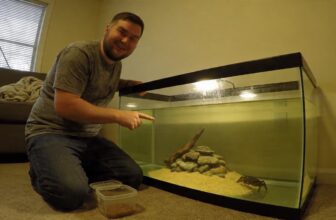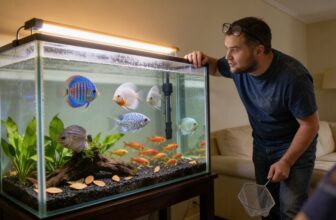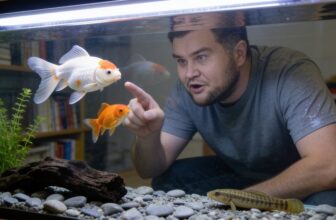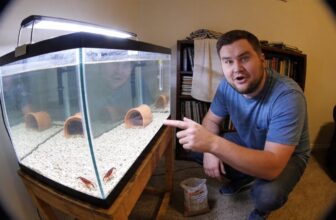
The bumblebee catfish, *Microglanis iheringi*, stays small—about three inches, maybe four if you’re generous—so a 20‑gallon tank works for one, add ten gallons per extra fish.
They like it dim and shadowy, nothing flashy, so soft sand, driftwood caves, and subdued lighting suit them fine.
Water’s gotta stay stable: 70–77°F, pH 6.5–7.5, no sudden swings or you’ll have funeral plans.
Tank mates? Small tetras, cory cats, dwarf cichlils—peaceful bottom‑sharers, basically.
Skip anything bite‑sized or aggressive; neon tetras are snacks, bettas are bullies, and you don’t need that drama.
Feed sinking pellets after dark, toss in frozen bloodworms now and then, and accept you’ll mostly watch shadows.
Breeding’s a no‑go without hormones and a dedicated setup, so don’t get hopeful.
Now, if you’re wondering whether these hide‑and‑seek specialists fit your vibe, or what actually happens when you ignore their need for caves, well, there’s more below that might save you from a very quiet, disappointing tank.
At A Glance
- Adults reach 2–3 inches, with slow growth and 4–5 year lifespan in proper care.
- Minimum 20-gallon tank per fish, with soft substrate and abundant hiding spots.
- Keep temperature 70–77°F, pH 6.5–7.5, and stable water chemistry always.
- House with small tetras, rasboras, corydoras, or dwarf cichlids peacefully.
- Avoid neon tetras, tiger barbs, large cichlids, and aggressive fin-nippers entirely.
What Is a Bumblebee Catfish? Species Overview and Origin
Now, the name’s not total nonsense. These little guys, *Microglanis iheringi*, rock bold yellow-black bands that’d make any bee jealous, and certainly, there’s some cultural symbolism baked into that—stripes signal warning, identity, belonging to something recognizable, which, let’s face it, resonates when you’re scrolling tank setups at 2 AM.
They’re South American natives, hailing from Colombia to northern Brazil, and they’ve carved out serious space in aquarium trends lately. Hobbyists love ’em for that cryptic, hide-and-seek energy, plus they stay manageable, personality-wise.
In their wild habitat, these catfish often seek shelter among dense aquatic vegetation such as Java Fern or Jungle Vallisneria, which provides natural cover and reduces stress in captivity when replicated in home aquariums.
How Big Do Bumblebee Catfish Get?
How big do they actually get?
Most bumblebee catfish top out at a modest 2–3 inches—don’t believe the four-inch hype.
You’ll find most bumblebee catfish—whether *Microglanis iheringi* or the substrate varieties from Southeast Asia—settle at 2 to 3 inches. That’s your ceiling, folks.
Now, some claim they’ve seen four-inch specimens, but let’s be real, that’s likely measuring tail included and calling it growth.
- Standard length: 2–3 inches (5–7.5 cm)
- Growth rate: Slow, steady, unimpressive
- Lifespan: 4–5 years if you’re doing things right
Here’s the thing about breeding challenges—they don’t get big because they barely breed. No home aquarist’s cracked it consistently. I mean, these fish practically invented “professional-only reproduction.” So you’re buying juveniles at full size, basically.
Tank sizing? Twenty gallons minimum, sure, but don’t crowding them. They won’t outgrow the space, but they’ll stress themselves into hiding forever. And nobody joins a fish-keeping community to own invisible pets.
Even compact tanks like a 5‑gallon aquarium can support small species, though bumblebee catfish need more room to establish proper territory.
Are Bumblebee Catfish Right for Your Tank? Temperament and Activity
Their substrate preference leans toward soft sand or smooth gravel—nothing abrasive on those sensitive barbels.
They’ll burrow, they’ll vanish, they’ll make you question if you even own fish.
But if your community tank houses peaceful tetras, rasboras, or fellow bottom-dwellers who respect personal space?
Welcome to the club. You’re one of us now.
A properly baffled sump incorporating gentle water flow and noise reduction features can help maintain the stable, low-stress environment these sensitive bottom-dwellers prefer.
What Tank Size Do Bumblebee Catfish Need?
20 gallons — baseline for one adult, assuming you’re actually maintaining the thing.
Now, if you’re keeping more than one — and honestly, who stops at just one — you’ll want another ten gallons per fish.
Space matters, but so does how you use it.
A quality 20-gallon steel stand with reinforced frame and adjustable feet ensures your tank remains level and stable once fully loaded with water, substrate, and hiding structures.
Bumblebee catfish need hiding spots, not swimming laps, so cram that tank with rocks, driftwood, and caves.
Your lighting needs stay dim; they won’t thank you for a spotlight.
Consider aquaspecies compatibility too — shy bottom-dwellers mean peaceful, likewise-sized tank mates only.
- 20 gallons minimum for one adult
- Add 10 gallons per additional fish
- Prioritize hiding spots over open water
Water Parameters: Temperature, pH, and Hardness
What makes a bumblebee catfish truly thrive—hint: it’s not luck, it’s water chemistry they can’t escape.
Now, these fish demand specifics, and here’s where fellow keepers find their footing:
- Temperature: 70–77°F (21–25°C). Their temperature shock tolerance? Minimal. Sudden swings kill, so keep it steady.
- pH: 6.5–7.5, though they’ll push to 7.8 without complaint. Test weekly, I mean, who’s got time for surprises?
- Hardness: 8–12 dGH, soft water. Water hardness fluctuations stress their systems badly.
Stable parameters build the community these shy creatures need. Get lazy with testing, and you’re gambling with tank-mates you promised care. For reliable results, consider using dip and read test strips that deliver answers in 30 seconds without bleaching or color confusion.
Tank Setup: Substrate, Caves, and Water Flow
Where exactly does a nocturnal bottom-dweller feel at home? You’ll want to nail three things.
- Substrate composition: Dark gravel or soft sand, nothing sharp—they root around at night, so protect those barbels.
- Caves everywhere: Driftwood tunnels, rock piles, PVC if you’re cheap. They need options, safe spots to vanish until lights out.
- Flow dynamics: Moderate current, not a raging river. Powerheads or filter returns angled right keep oxygen moving without exhausting them.
Now, stack these elements together and you’ve built something they recognize—rocky streams, hiding holes, water that breathes.
Plant around the edges if you want, but don’t block their routes. They’ll thank you by emerging occasionally, which is basically a standing ovation from a fish that hides 22 hours daily.
Place a 5–6 mm leveling mat beneath the tank to absorb vibrations from equipment and prevent stress cracks in the glass that could disturb their sensitive environment.
What Do Bumblebee Catfish Eat? Diet and Feeding Schedule
Since they’re bottom-feeders with night-shift hours, bumblebee catfish demand food that hits the floor and stays interesting. Sinking pellets work, certainly, but scented feeding gets them moving—garlicky, pungent stuff they can sniff out in the dark. Now, their seasonal appetite sometimes wanes, especially when temperatures drop or the barometer plays tricks, so don’t panic if they skip a meal. They’re omnivores with standards: bloodworms, daphnia, maybe a blanched pea. Feed small amounts twice daily, evening preferred. Like many aquarium inhabitants that produce waste, your bumblebee catfish will benefit from proper mechanical filtration to maintain water quality between feedings.
| Food Type | Frequency | Notes |
|---|---|---|
| Sinking pellets | Daily | High-quality, protein-rich |
| Frozen bloodworms | 2–3x weekly | Thaw first, obviously |
| Live daphnia | Weekly | Occasional treat |
| Blanched vegetables | As offered | Peas, zucchini bits |
Watch them hunt. It’s worth staying up for.
Why Is My Bumblebee Catfish Always Hiding?
If you’ve hardly laid eyes on your bumblebee catfish since bringing it home, don’t take it personally—they’re not ghosting you, they’re just being themselves.
Now, here’s what’s actually happening:
- Nocturnal stress—bright lights flip their switch to panic mode, pure and simple
- Lighting preferences—they want it dim, shadowy, like a perpetual golden hour that never ends
- Instinct, not insult—they’re hardwired for cracks and crevices, it’s comfort, not criticism
I mean, think about it: you’ve recreated a riverbed, not a stage. They’re thriving back there, really. So grab a seat, dim the bulbs, and join the club of aquarists who’ve learned that absence of sight doesn’t mean absence of life. Using a sunrise/sunset simulation timer can gradually ramp light intensity up and down, sparing your catfish the jarring shock of abrupt illumination changes.
How to Make Your Bumblebee Catfish Visible
Even though your bumblebee catfish has turned hide-and-seek into an art form, coaxing it into the open isn’t impossible—just requires some strategic bribery, really.
Dim that lighting, lighting—it’s harsh, you know? These guys’re nocturnal, and bright overhead glare sends them scrambling.
Now, try nocturnal feeding: drop in sinking pellets after dark, maybe 9 PM, and watch from across the room. I mean, patience, right?
Add driftwood tunnels facing the glass—observation windows, basically.
You’ll catch glimpses, brief ones, of those striped fins whisking about.
And hey, that’s membership in the club: fellow aquarists who’ve learned satisfaction lives in small, stubborn victories, 2 AM or not.
Consider placing a small magnetic algae cleaner on the glass near their hideout—maintaining a clear viewing window lets you observe their nocturnal activities without disturbing their habitat.
Best Tank Mates for Bumblebee Catfish
Although bumblebee catfish aren’t exactly social butterflies—more like social rocks that occasionally move—they do need company, the right kind, or they’ll spend their nights sulking in caves instead of patrolling the substrate with any confidence.
Now, here’s who actually works:
- Small tetras and rasboras—peaceful, mid-water swimmers that won’t compete for bottom space or stress your catfish with erratic behavior
- Cory catfish and Kuhli loaches—fellow bottom-dwellers with matching lighting preferences, meaning dim setups suit everyone; breeding compatibility isn’t an issue since none of these breed easily in captivity anyway
- Dwarf cichlids and bristlenose plecos—calm, appropriately sized, and equally fond of hiding spots
I mean, the goal’s simple: create a community where your bumblebee feels invisible enough to venture out. Too much activity or aggression, and you’ve got a very expensive rock decoration.
For housing these community setups, a 20‑gallon glass aquarium provides ample floor space for multiple bottom-dwellers while maintaining stable water parameters.
Fish to Avoid in Your Community Tank
But which fish turn a peaceful community into a stress factory for your bumblebee? Aggressive fin-nippers and tiny snacks—neon tetras, I’m looking at you—don’t belong in your community tank. Your catfish needs aquarium décor with caves, not chaos.
| Fish to Avoid | Why They Fail | Better Alternative |
|---|---|---|
| Neon tetras | Bite-sized snacks, basically | Ember tetras |
| Tiger barbs | Fin-nipping bullies | Cherry barbs |
| Cichlids (large) | Territorial nightmares | Dwarf cichlids |
| Red-tailed sharks | Aggressive space-hogs | Rainbow sharks |
| Betta males | Flaring stress-machines | Peaceful dwarf gourami |
Now, your bumblebee can actually relax.
Health Issues and Prevention
Bumblebee Catfish Health and Disease Prevention
Since your bumblebee catfish spends most of its daylight hours wedged into dark crevices pretending to be a rock, health problems can sneak up on you like that one relative who “just drops by” at dinner time.
Now, Ichthyophthirius multifiliis—yeah, ich—doesn’t care about your catfish’s reclusive lifestyle, and neither do skin flukes or bacterial infections lurking in neglected water.
But here’s where you fight back:
- Quarantine new arrivals; d p parasite prevention starts with that isolation tank you keep saying you’ll set up.
- Test parameters weekly—because ammonia spikes don’t send calendar invites.
- Stuff that tank with caves; fewer stress‑related skin lesions, more peace of mind.
Yeah, it’s work. But watching your bumblebee cruise out at dusk, healthy and bold? That’s the belonging you’re after.
Can You Breed Bumblebee Catfish at Home?
Breeding Challenges
If you’ve ever fantasized about your aquarium turning into a lively fish nursery, bumblebee catfish are here to temper those dreams with a healthy dose of reality. Breeding challenges plague these fish so stubbornly that hobbyists call it quits, and honestly? You’ll probably join them.
No one’s documented successful home setup breeding. Not once. The triggers remain mysterious—water shifts, moon cycles, who knows. Commercial breeders use hormone injections, something your living room lacks.
Your 20-gallon community tank won’t cut it. Separate spawning tanks, precise parameters, and pure luck can’t guarantee fry. Enjoy your bumblebees as they are: wonderful, stubborn, unavailable for multiplication.
Where to Buy Bumblebee Catfish: Selection Guide
Bumblebee Catfish Sources
Whether you’re haunting the neon aisles of a big-box pet chain or squinting at grainy photos from an online breeder in who-knows-where, finding a healthy bumblebee catfish demands more luck than skill—and slightly more patience than you’ve probably got.
Finding a healthy bumblebee catfish demands more luck than skill—and slightly more patience than you’ve probably got.
Now, here’s the insider’s playbook for steering price selection without getting fleeced:
- Scan local shops first, handling fish to check fin clarity and escape reflexes
- Cross-reference online vendors, though shipping stress runs maybe thirty percent mortality
- Haggle on multiples, since price comparison favors bulk and builds your community
Trust your gut. If the tank smells like doom, walk.
Frequently Asked Questions
How Long Do Bumblebee Catfish Live?
Bumblebee catfish typically live 4–5 years, though they’ll push past five with solid care. Their longevity hinges on tank size, water quality, and stress reduction—think warm, stable streams at home.
Now, breeding patterns? Nearly impossible in captivity, so don’t hold your breath.
Temperament’s shy, nocturnal, hiding ’til lights dim. Color fades with poor water; behavior, growth slow when cramped.
Care means caves, current, and patience. They’re worth it.
Do Bumblebee Catfish Eat Algae?
Bumblebee catfish don’t really do algae grazing, not in any serious way. They’re omnivores, certainly, but their diet and grazing tendencies lean toward protein—sinking pellets, worms, insect larvae.
They’ll pick at soft algae here and there, mostly by accident.
For tank cleaning, they’re unreliable.
If you’re hoping for algae control, get a bristlenose pleco instead. They’ll keep your glass cleaner, guaranteed.
Are Bumblebee Catfish Sensitive to Light?
Dim lighting suits them best. Their light sensitivity‘s high—blinding glare stresses these nocturnal hideaways. Photoperiod preferences lean dark: 8–10 hours gentle ambient light, plenty of shadows.
And here’s the thing—they’re not dramatic about it, just quietly miserable in bright tanks without caves, driftwood, rock piles. Think dim living room, not interrogation room. Provide that, they’re fine. Don’t, and they’ll vanish until lights out, sulking.
Do Bumblebee Catfish Need a Group to Thrive?
They don’t, actually. Bumblebee catfish feel perfectly content flying solo.
One fish thrives alone, though breeders occasionally claim small groups—maybe two or three—show subtle social patterns, not quite schooling, just… neighborly awareness, you might say.
Tank layout matters more than headcount: rocky caves, driftwood tunnels, dim corners. It’s architecture, not attendance, that keeps them secure.
Breeding benefits? Nonexistent in home tanks.
Can Bumblebee Catfish Jump Out of Tanks?
Yes, they’ll jump. Like, not Olympic-level stuff, but it’s there.
Bumblebee catfish possess modest jumping behavior, especially when stressed or chasing food. They’re bottom-dwellers, certainly, but spook easily.
A tank lid isn’t optional—it’s crucial. Glass canopy, tight-fitting hood, whatever works. Leave a gap, and someone’s carpet-surfing.
Secure the edges. Night feeders get adventurous, and nobody wants a dried-up catfish behind the dresser.