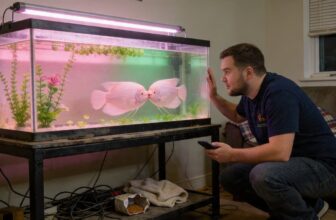
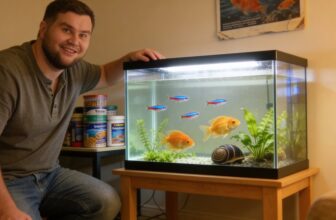
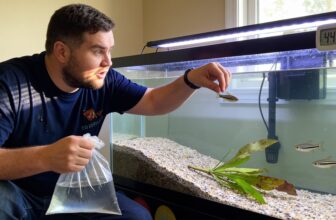
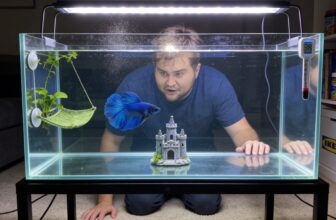
Discus fish need warm, soft water—think 82-86°F with pH around 6.0-7.0—and a group of five or more to prevent bullying.
Now, filtration matters more than the fish themselves; a quality canister filter running $200-300 keeps ammonia at zero, since these guys are basically swimming water quality detectors.
I mean, they’re not actually “kings” of anything—it was a 1960s marketing gimmick—but the name stuck, and so did the demands.
Feed them beef heart blends, quarantine every new fish for two-plus weeks, and accept that weekly water changes are non-negotiable.
Tank mates? Cardinal tetras handle the heat; tiger barbs will shred fins.
What follows gets into the gear, the diseases, and the why behind every number.
At A Glance
- Keep five or more discus to distribute aggression and stabilize social hierarchy.
- Maintain 82‑86 °F temperature with soft water (1‑4 dKH) and stable pH 6.0‑7.0.
- Perform weekly 25‑50 % water changes and keep ammonia and nitrite at zero.
- Feed beef heart blends with supplements like bloodworms and vitamin‑enriched brine shrimp.
- Quarantine new fish three weeks in bare‑bottom tanks before introducing to main group.
Are Discus Really the “King of Freshwater”? What That Actually Means for You
So, why exactly do people call discus the “King of Freshwater”?
Well, it’s mostly marketing, really—the kingdom myth baked into hobbyist lore since the 1960s when German breeders first popularized them.
The “King of Freshwater” was never biology—it was German marketing from the sixties, polished into lore.
But there’s something underneath it, color genetics being what they are, these fish hitting wavelengths no other freshwater species quite manages.
You see turquoise, cobalt, snakeskin patterns—that’s selective breeding over decades, not nature being generous.
Now, does this title mean anything practical? Probably not.
Yet people want in on that prestige, that club membership.
I mean, who doesn’t want to casually mention they keep royalty in their living room?
Unlike betta fish, which achieve their vibrant coloration through selective breeding over decades in smaller tanks with specialized LED lighting to enhance their appearance, discus demand an entirely different level of commitment and environmental control.
Can You Actually Keep Discus? Start With These Water Parameters
Where does one even begin with water chemistry, that invisible chemistry set swirling through glass walls?
Discus demand warmth—82-86°F, soft water around 1-4 dKH, pH hovering 6.0-7.0. Stability beats perfection; spikes kill faster than “wrong” parameters.
Now, here’s where it gets tricky. Colorfection control matters since stressed fish bleach to beige. And lighting design? Too bright, they hide; too dim, you miss early illness signs. Goldilocks territory.
Test kits become your rosary. Ammonia and nitrite must read zero, nitrates under 20 ppm. Weekly water changes, 10-20% minimum—more is more, really.
Join the club. Everyone’s fumbled pH strips at 2 AM.
If you’re considering live plants alongside your discus, note that hard water binds iron, making chelated forms necessary for proper nutrient uptake.
What Tank Size Do You Need for a Healthy Discus Group?
How does one measure enough when “enough” keeps moving, growing, demanding more? Start here: 55 gallons for five or six discus, though 75 feels right. Bre size matters—these fish grow tall, wide, socially awkward in cramped quarters. A minimum 80 GPH flow rate ensures four complete water turnovers per hour for tanks in this range, keeping ammonia and nitrite levels in check without overwhelming these gentle swimmers.
| Group Size | Minimum Bre Size | Water Flow Needs |
|---|---|---|
| 5‑6 discus | 55 gallons | Gentle, not turbulent |
| 7‑8 discus | 75 gallons | Moderate circulation |
| 9‑10 discus | 90 gallons | Distributed flow |
| 11‑12 discus | 125 gallons | Multiple outlets |
| Breeding pair | 40 gallons (dedicated) | Minimal surface agitation |
Water flow stays forgiving. Too strong, they exhaust; too weak, stagnation follows. Now, find your place among others figuring this out.
Best Filter for Discus: Canister Picks Under $300
What separates adequate water from truly swimmable water? Three hundred bucks, mostly, plus some research.
Discus demand pristine conditions, and canister filters deliver—just mind the flow rate. Too fast stresses these fish; aim for gentle turnover, maybe four to six times tank volume per hour. I mean, they’re basically underwater royalty, finicky about currents.
Filter placement matters: intake goes opposite the output, dead zones eliminated, debris captured before it rots.
Now, solid picks under $300 include the Eheim Classic 600, Fluval 407, and SunSun HW-704B. Budget-friendly, reliable, and you’ll finally belong in those serious aquarist forums where everyone judges your parameters.
For discus specifically, prioritize noise levels below 30 dB to maintain the calm environment these sensitive fish require.
How to Build a Stress-Free Discus Habitat With Plants and Driftwood
Discus fish thrive in environments that mimic their natural Amazonian habitat, where gentle water flow, soft acidic water, and plenty of hiding spots help reduce stress and encourage natural behaviors. When selecting hardscape, choose driftwood that won’t alter water chemistry too aggressively; pre‑treated root varieties that have already been processed to minimize tannin leaching can save preparation time and help maintain the stable conditions discus require. Position driftwood and plants to create visual barriers that break up open swimming spaces, giving shy discus confidence to explore while ensuring they always have a quick retreat when needed.
The Weekly Water Change Schedule That Keeps Discus Healthy
Once the driftwood is in place and the plants have rooted, the real work begins. Discus demand clean water—think 25-50% weekly changes, not negotiable. Soft water, 1-4 dKH, keeps their membranes happy; hard water stresses them out, plain and simple.
Now, here’s the algae control magic: frequent changes remove excess nutrients before green chaos blooms. Test nitrates weekly, keep them under 20 ppm. High water hardness? Dilute with RO water or rainwater. I mean, consistency beats perfection here. Miss a week, and they sulk. Keep at it, join the ranks of aquarists who actually succeed.
For those managing multiple heating elements during water changes, a dual heating outlet controller maintains stable temperatures without the complexity of Wi-Fi setups.
What Should You Feed Discus for Color and Immunity?
Since discus burn through calories keeping those lively plates shimmering at 84 degrees, feeding them right isn’t optional—it’s the difference between fish that glow and fish that mope in corners.
Feed them right, or watch your living jewels fade into corner shadows.
Join the club of keepers who’ve cracked it:
- Beef heart blends — the classic base, maybe 60-70% of meals, messy but worth it
- Frozen bloodworms — iridescent reds love these, though moderation saves you from bloat headaches
- Brine shrimp with Vitamin enrichment — carotenoids punch up those wild blues and sunset oranges
- Probiotic dosing via specialized foods — gut health equals bulletproof immunity, fewer mystery deaths
Skip quantity talk — that’s later. Just rotate, watch what disappears, and your discus will advertise your good work.
Maintaining pristine water quality through adjustable sump chambers supports immune function just as much as nutrition, as stable, clean water reduces stress that would otherwise dull their colors and leave them vulnerable to disease.
Discus Feeding Schedule: How Often Is Too Often?
12 85 &1 & & { & & & 27. & & &5. 3101 &. & & &0. &2 & &4 &2 &4 & 1. 4. &. 99 &0 & and.
Feeding frequency, it’s one of those things everyone asks, like there’s some secret handshake.
Discus need 2–3 small meals daily. Not one big dump-and-hope, but measured portions they finish in five minutes flat. Uneaten food? Disaster. Remove it.
Feeding enrichment matters too. Variety keeps them engaged—flakes, frozen bloodworms, beef heart, rotate it. Same lunch daily, even fish get bored.
Now, too often causes bloating, fouled water, the whole spiral. Too seldom, and they waste. The sweet spot exists, though “exactly” depends on your fish, your tap water, your life.
Watch them. They’ll tell you.
For omnivorous species requiring slow‑sinking granules that mimic natural feeding behavior, foods like Fluval Bug Bites with 40% black soldier fly larvae protein deliver excellent color enhancement and immune support while reducing waste accumulation.
Why You Must Keep Discus in Groups of Five or More
Discus keep their secrets close, but one thing they’ve made clear: they’re not loners, not by nature, not by design.
Now, five or more isn’t some arbitrary gatekeeping—it’s the minimum viable crew for these fish to feel, well, fishy. Their breeding behavior, the subtle movement of pairing and hierarchy, simply doesn’t spark in pairs or trios. Too much pressure, too little buffer.
As for tank aesthetics? A loose, drifting school transforms glass boxes into something living, something worth watching.
Four truths hold up:
- Stress drops when no single fish catches all the aggression
- Colors intensify with social confidence
- Hierarchy forms naturally, not brutally
- Movement patterns emerge, that slow synchronized drift everyone wants
Proper aeration supports this social dynamic, and installing a check valve prevents back-siphoning during power outages that could disrupt their carefully established group stability.
How to Introduce New Discus to Your Established Group
Where does a nervous newcomer stand when the cliques are already formed?
The outsider always arrives too late to the rituals everyone else already knows.
Now, quarantine protocol—that’s step one, obviously—because tossing fresh discus into established territory ends poorly, I mean, pecking orders exist for a reason.
Two to three weeks minimum, zero shortcuts.
Temperature acclimation matters more than hobbyists admit: bag-floating for thirty minutes, then drip-match your 82–86°F slowly, real slow.
Rearrange decor before introduction, break sightlines so everyone’s equally confused.
Odd numbers help, five minimum, but you’ve heard that already.
Watch the fins. Some chasing is normal; relentless pursuit means pull the target, try again.
During quarantine, a transparent observation window in your isolation setup lets you monitor stress indicators without disturbing the water column or triggering additional anxiety in sensitive discus.
Which Tank Mates Can Actually Handle 86°F Discus Water?
Which Tank Mates Can Actually Handle 86°F Discus Water?
Once the newcomers have settled and the hierarchy stabilizes, attention shifts to filling the rest of the tank. Building a compatible tank community means finding swimmers that won’t fry at 86°F—literally.
- Cardinal tetras: Thrive in warm, acidic water chemistry; their fish behavior is peaceful, schooling, and they appreciate the same tropical plants discus enjoy under subdued light spectrum.
- Corydoras habrosus: Dwarf corys tolerate temperature control challenges; soft substrate choice protects their barbels during the maintenance routine.
- Clown loaches: Slow growers, but they handle the heat and bring deadpan charm to health monitoring.
- L134 leopard frog plecos: Nocturnal, unobtrusive, and surprisingly agreeable during any breeding cycle.
Which Fish to Avoid in Discus Tanks?
Fish to Avoid in Discus Tanks
Although the temptation to fill every inch of watery real estate runs strong, restraint remains the better virtue when stocking a discus aquarium. Some tank mates simply don’t belong in this particular club—aggressive species stress discus, and stressed discus decline fast.
| Avoid These | Why They Fail | Better Alternative |
|---|---|---|
| Tiger barbs | Fin-nipping bullies | Cardinal tetras |
| Large cichlids | Territory wars, aggression | Clown loaches |
| Cold-water fish | Temperament and temperature clash | Corydoras catfish |
Aggressive species tank mates spell disaster for peaceful discus communities. Now, beginners often learn this the hard way, but you don’t have to. I mean, watching a beautiful discus hide in corners, fins shredded—that’s no one’s idea of a thriving tank.
How to Quarantine Discus Before Adding Them to Your Display Tank
Quarantine for New Discus
Why risk months of careful water chemistry on a five-minute introduction? Quarantine protocols exist since discus, already fragile from transport stress, arrive with hidden threats. Two weeks minimum, they say, though three’s better if you’ve got the patience and a spare tank. The community understands—nobody wants to be that aquarist who nuked their display.
- Set a bare-bottom 20-gallon with heater, sponge filter, dim lights
- Match temperature exactly, floating bags for 30 minutes minimum
- Observe daily for clamped fins, white spots, the usual suspects
- Feed lightly, test water obsessively, breathe
Then, and only then, welcome them home.
How to Recognize Hole-in-the-Head Disease Before It Destroys Your Discus
Scan the Discus Head Like Checking for Parking Tickets
Scan the discus head like you’re checking for parking tickets—unpleasant surprises hide in plain sight. Small pits, maybe pinprick holes, appear near the eyes or along the lateral line: that’s your cue. No, really, grab the flashlight.
Hole-in-the-head disease moves fast, so early detection matters—like, yesterday. Watch for:
- White, stringy poop (stress indicators, not just bad lunch)
- Fading appetite, hiding more than the usual wallflower routine
Now, symptom tracking sounds clinical, but a notebook beats guessing. Water quality’s the usual suspect—elevated nitrates, maybe 30-40 ppm?—so test weekly, maybe twice if you’re paranoid.
I mean, early treatment with metronidazole works, but preventive care wins. Clean water, stable temps, that’s the belonging these fish crave.
Frequently Asked Questions
Do Discus Need Night Lights?
No, discus don’t need night lights—these fish, native to dim Amazon waters, prefer darkness for rest.
Now, LED ambience might seem appealing, but constant illumination stresses their systems and disrupts circadian rhythms.
If night lighting feels necessary, keep it moonlight-dim, maybe 1-2 watts, though some aquarists skip it entirely.
Bottom line: darkness heals, light distracts. Let them sleep.
Can Discus Live Alone?
Discus generally cannot live alone. These fish establish tankation patterns through complex social hierarchies, requiring groups of five or more—odd numbers prevent bullying—to express natural behaviors and reduce stress.
Solitary discus often hide excessively, refusing food, as isolation disrupts their psychological wellbeing. While technically surviving alone in emergencies, proper welfare demands compatible tank mates, like cardinal tetras or corydoras, maintaining that pecking order keeps them visibly, actively healthy.
How Long Do Discus Typically Live?
Discus typically live 10–15 years, maybe a touch more if you really nail the basics.
Now, that lifespan hinges on two things: dietation frequency (those 2–3 daily feedings, not too much, not too little) and habitat setup (think 75 gallons, 84-ish degrees, pH hovering around 6.5). I mean, these fish are basically the aquatic equivalent of that friend who needs everything *just so*.
Mess with their water—ammo spikes, lazy changes—and you’re looking at a decade shaved off, easy.
Still, get it right? They’ll outlast your first apartment, probably.
Why Is My Discus Breathing Rapidly?
Rapid breathing in discus signals oxygen stress or crashing water chemistry, two killers that waste fish fast. They’re built for slow, warm Amazon waters, meaning tank size matters—crowded tanks gasp, literally.
Overfeeding cranks waste, so feeding frequency hits home here, and yeah, lighting schedule chaos stresses them too. Check ammonia, nitrates, temperature first. Fix water, add air, calm the room. They’ll breathe easy, or they won’t.
Do Discus Recognize Their Owners?
Yes, discus recognize their owners, primarily through association with feeding schedules and consistent owner temperament.
They distinguish familiar figures, responding to movement and routine presence near the tank.
Recognition develops gradually, weeks to months, depending on interaction frequency.
Calm, predictable behavior accelerates bonding; sudden movements or irregular visits delay trust.
Individual variation exists—some individuals remain shy, others demonstratively responsive.
Recognition manifests as anticipatory swimming, surface gathering, and reduced hiding behavior during scheduled feedings.