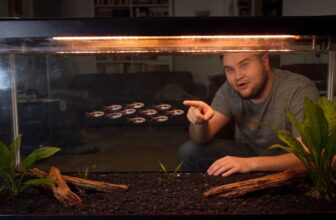
You’ll need a fifty-five-gallon tank for twelve Bucktooth Tetras, though seventy-five gallons or more lets them truly shine.
These silver, torpedo-shaped fish hail from the Amazon, where they nip scales off other fish—not flesh like piranhas, but still relentless.
Keep them in schools of twelve minimum, larger if you can, since bigger groups spread their biting energy around.
Feed them daily with frozen bloodworms, brine shrimp, or sinking pellets packed with protein.
Watch for pale colors or hiding, which mean stress.
With steady water changes, warm soft water, and no delicate tankmates, you can keep their nervous energy in balance—and there’s more to know if you want them to thrive.
At A Glance
- Keep a minimum school of twelve in a 55+ gallon tank to dilute aggression and establish healthy hierarchy.
- Feed high-protein carnivorous diet daily using frozen bloodworms, brine shrimp, and quality sinking pellets.
- Maintain soft, acidic water (pH 5.5–7.5, 0–15 KH) with tea-colored turbidity and temperatures of 72–82°F.
- Add five more fish immediately when nipping starts, and provide ample hiding spots with driftwood and caves.
- Watch for faded colors, clamped fins, or solitary hiding as early signs of stress, illness, or inadequate school size.
What Is Exodon Paradoxus? Meet the Bucktooth Tetra
What does a fish with teeth facing outward look like? You’re picturing *Exodon paradoxus*, the Bucktooth Tetra, a scale-eater from the Amazon in Brazil and Guyana.
Its taxonomic history puzzled scientists for decades. They couldn’t quite place this torpedo-shaped predator with its metallic silver body, yellow-green hints, and two bold spots.
You’d spot transparent fins with yellow tints, red splashes on dorsal and pectoral fins, plus bright tail flecks.
The aquarium trade introduced it to hobbyists wanting something fierce. You’ll find those hidden outward teeth only when you look closely, built for ripping scales.
When setting up a tank for these active predators, consider using natural dark mineral sand to create high contrast against their metallic silver bodies and help showcase their distinctive fin colors.
How Long Do Bucktooth Tetras Live?
If you’re holding a small glass jar of fish food, you’ll want to know how long your Bucktooth Tetra might keep darting through the water beside you.
Expect a lifespan reaching up to ten years with steady care, water changes, and proper protein-rich meals.
Longevity research shows these tetras match other characin species when you maintain clean, slightly acidic water near 75 degrees Fahrenheit. Stress from cramped tanks or solitary living shortens that timeline considerably. You protect your investment, and you’ll feel quietly satisfied watching silver bodies flash well into the next decade. That’s real commitment, met with real reward.
A stable sump system with adjustable baffle chambers can help maintain the consistent water quality these tetras need for maximum longevity.
Are Bucktooth Tetras Right for Your Aquarium?
Perhaps you’re standing in front of empty glass, measuring tape in hand, wondering if these shimmering hunters belong in your home.
- You’ve got space for twelve or more active swimmers, not just two
- You’ll skip delicate aquarium décor; these fish need sturdy, simple setups
- You accept tank compatibility means bucktooth tetras only—no community fish
- You can handle weekly water changes and strong filtration
- You’re ready for ten years of predatory behavior, not gentle tankmates
If you nod at each point, you’re prepared. If hesitation flickers, trust that feeling.
For aquarists seeking lower-maintenance alternatives, self-cleaning aquariums with robust 3-in-1 filtration systems can reduce weekly maintenance demands while still supporting active species.
What Tank Size Do Bucktooth Tetras Actually Need?
A school of bucktooth tetras moves like silver lightning, and that energy needs room to spread.
You’ll need 55 gallons minimum for twelve fish, though more space heals their aggression. Think of it like a playground—crowded kids fight, but room lets them run. While a 10 gallon aquarium kit might suit a single betta, bucktooth tetras demand significantly more swimming space for their active, schooling behavior.
| Tank Element | What You Need |
|---|---|
| Tank filtration | Strong flow, handles waste from messy eaters |
| Lighting; substrate choice | Moderate brightness, dark sand calms their nerves |
Bigger groups need bigger homes—seventy-five gallons or more for twenty-five fish. You can’t cheat this. Your water stays cleaner, your fish stay saner, and you watch instead of worry.
How to Set Up an Amazon-Style Bucktooth Tetra Tank
Once you’ve picked your tank size, you face the real puzzle: making it feel like home.
Start with dark sand across the bottom; it mimics the riverbed where these fish hunt and keeps them calm.
You’ll want to manage the Amazon water flow, since these tetras swim in currents that tumble through roots and fallen limbs.
Place driftwood, caves, and rocks around the edges, but leave plenty of open water in the middle for their fast, darting movement.
For substrate lighting, keep it soft and low; bright beams stress them, like a spotlight on a shy kid in class.
- Dark sand bottom
- Strong filtration for current
- Driftwood and caves
- Open swimming space
- Dim, gentle lighting
A thickened vinyl aquarium background featuring a river-bed or stone-river lake design will help block external distractions and reinforce the dim, enclosed feeling these fish prefer.
What Water Parameters Keep Bucktooth Tetras Healthy?
Since these fish come from soft, flowing rivers deep in the Amazon, you’ll need to copy that chemistry carefully if you want them to show their spark.
Keep the temperature between 72 and 82 degrees Fahrenheit, with 75 being just right. Your pH should stay between 5.5 and 7.5, leaning slightly acidic. Soft water matters too—keep hardness at 0 to 15 KH, which you can measure with a simple test kit. For precise pH readings in this acidic range, consider using pH precision 0.01 pen testers that offer professional-grade accuracy for sensitive Amazonian species.
For bucktooth tetras, aim for 72–82°F water, pH 5.5–7.5, and soft 0–15 KH hardness—test weekly to keep them thriving.
Turbidity control helps these fish feel secure, mimicking the tea-colored water of their home. Watch for nitrate spikes, and change 25 percent of the water weekly to keep levels low.
What Do Bucktooth Tetras Eat? A Complete Feeding Guide
What does a scale‑eater actually want on its dinner plate?
You’ll need to understand their wild habits to keep them thriving.
Bucktooth tetras are carnivores with specialized teeth for scraping scales and flesh.
Your feeding frequency should be once daily, enough to fill their bellies without fouling the water.
Nutrient balance means high protein—think 70% or more—with minimal plant matter.
They’ll accept flakes, but you’ll compromise their health doing so.
- Frozen bloodworms, rich and easy to store
- Brine shrimp, a classic treat they’ll chase
- Earthworms, cut to bite‑size pieces
- Quality sinking pellets, for variety
- Occasional feeder fish, mimicking wild behavior
For sustained color vibrancy and immune support, consider incorporating slow‑sinking granules formulated with high protein content, as these reduce waste while matching natural bottom‑foraging behaviors. Feed confidently, and watch their colors ignite.
Are Live Feeders Safe? Parasite Risks & Alternatives
That list of foods from last section includes a tricky item. Live feeder fish carry parasites, bacteria, and diseases that can sicken your tetras. You feel worried, and rightly so.
Parasite screening helps, but it’s imperfect. Many suppliers skip this step entirely. You’re gambling with your fish’s health.
Cultured alternatives solve this problem. Frozen bloodworms, brine shrimp, and prepared carnivore pellets offer complete nutrition without risk. These foods come from controlled facilities, not dirty holding tanks.
Your tetras won’t notice the difference. They’ll attack frozen foods with the same frenzy. You sleep better knowing you’ve removed the danger. To further protect your aquarium, consider iron test strip products that help monitor water quality alongside safe feeding practices.
How Aggressive Are Bucktooth Tetras Really?
Picture a silver flashlight darting through river water, and you’ve got the bucktooth tetra’s daily energy.
You witness aggression constantly when you keep fewer than twelve fish, they’ll turn on each other fast.
- Watch fins clamp tight—that’s stress signaling, your fish saying “I’m scared.”
- Notice one fish eating first every time? You’ve spotted tank hierarchy.
- Feed at the same spot daily to reduce feeding competition.
- See a lone tetra hiding? His school is too small.
- Add five more fish if nipping starts, spread that aggression thin.
You’re managing wild instincts in a glass box, respect that power.
A larger aquarium with strong magnetic glass cleaners makes maintenance easier when managing active, aggressive schooling fish.
Can Bucktooth Tetras Live With Other Fish?
When you open your tank lid and watch your bucktooth tetra school, you’ll notice their bodies tilt toward movement, any movement, with hungry curiosity.
You’ll feel a small worry, watching this, since you already suspect the answer.
They can’t live with other fish, not truly.
Their diet compatibility demands flesh—scales, fins, living tissue—and your tank becomes a hunting ground the moment another species enters.
Even large cichlids become targets, harassed until stress kills them or the tetras do.
The relentless pursuit leaves no sanctuary, not even for giants.
Bottom-dwellers offer no refuge.
You must accept a single-species setup, or you’ll mourn your other fish.
If you insist on visual complexity, dense artificial seaweed can provide structure without the risk of live plants being shredded or targeted.
Why Do Bucktooth Tetras Need Such Large Groups?
Why Bucktooth Tetras Need Large Groups
If you’ve ever watched a single bucktooth tetra in a small tank, you’ve seen something sad: a fish that circles, that nips, that never quite settles, as its instincts are calling for something it can’t find.
You need twelve minimum, twenty-five to fifty ideally, since social behavior dynamics demand safety in numbers. The shoal hierarchy spreads aggression across many bodies, so no single fish bears constant attack.
Large groups let each tetra read cues, find rank, and calm down.
- A dozen fish minimum, more is better
- Aggression dilutes instead of concentrates
- Clear ranking reduces fights
- Stress drops, colors brighten
- They act like real fish, not prisoners
How to Breed Bucktooth Tetras Without Losing Fry
Breeding Bucktooth Tetras Without Losing Fry
Breeding bucktooth tetras starts with a separate tank, smaller than your main one, since adults will eat their own eggs and fry without a second thought.
You’ll need fine-leaf plants, like Java moss, where eggs can hide.
After spawning, remove the adults immediately.
Eggs hatch in two to three days.
Your fry nutrition plan starts with infusoria, then baby brine shrimp by day five.
Consider breeding genetics carefully; pair your healthiest, most colorful fish for stronger offspring.
| Breeding Step | What You Do |
|---|---|
| Tank setup | 10-gallon tank, sponge filter, 78°F water |
| Spawning trigger | 50% water change, slightly warmer temperature |
| Egg protection | Fine-leaf plants or mesh bottom |
| Adult removal | Immediately after eggs scatter |
| Fry feeding | Infusoria first, baby brine shrimp after day five |
Monitor closely, feed often, and you’ll watch your fry grow.
What Health Problems Do Bucktooth Tetras Develop?
Signs of Stress and Disease
A sturdy net holds more than you’d think, and the same holds true for bucktooth tetra health: you’ll want to catch problems early, before they spread through your whole school.
Your fish show disease susceptibility when water quality drops below safe levels, so you’ll test weekly.
Watch for these stress indicators:
- Faded coloration, like a gray sweater left in sun too long
- Hiding instead of swimming with the group
- Clamped fins pressed tight against the body
- Rapid breathing at the water’s surface
- Lost scales from bullying, signaling weakness
You’ll act fast when you spot these signs, keeping your school safe.
Bucktooth Tetra vs. Piranha: How to Tell Them Apart
Bucktooth Tetra and Piranha Differences
The tank glass sits between you and two fish that look like they could swap places in a heartbeat, but your eyes can learn the real story. *Exodon paradoxus*—the bucktooth tetra—grows to just six inches, whereas most piranha species reach twelve or more, a difference you could measure with a school ruler.
Taxonomic confusion piles up since both fish bear teeth, though yours point outward for scraping scales, not slicing flesh.
Teeth that scrape, not slice: the quiet distinction between predator and parasite, written in the mouth’s architecture.
Behavioral misconceptions sting harder. Piranhas hunt when desperate or cornered. Your bucktooth tetra attacks constantly, shredding tankmates in swift schools, hungry in ways that feel more personal, more restless.
You watch, you learn, you choose.
Frequently Asked Questions
Do Bucktooth Tetras Jump Out of Aquariums?
Yes, you’ll need a secure lid since they’re active jumpers. Your bre tank design must include tight-fitting covers to prevent escapes during their energetic surface feeding or predator interactions with tankmates.
Can Bucktooth Tetras Damage Tank Equipment?
You’ll find their sharp teeth don’t damage sturdy equipment material, but you must verify ecosystem compatibility of all components. Increase your maintenance frequency as debris accumulates, ensuring your gear withstands their active, aggressive behavior long-term.
How Fast Do Bucktooth Tetra Fry Grow?
You’ll notice their growth rate remains modest initially. Fry size stays quite small for weeks, reaching only an inch within two months. You’ll maximize development by feeding baby brine shrimp frequently and maintaining pristine water conditions throughout.
Do Bucktooth Tetras Change Color When Stressed?
Yes, you’ll notice their stress response includes color fading or dullness, and combining that with a diet change can intensify the effect; maintaining stable conditions and proper nutrition keeps their metallic hues vivid and healthy.
Are Bucktooth Tetras Legal to Own Everywhere?
No, you can’t assume they’re legal everywhere, as legal status varies by region and import restrictions apply in certain countries because of their aggressive nature and potential ecological impact if released. Check local regulations before purchasing.
Rounding Up
Your hands rest on the glass, watching these silver hunters flash like living coins through tannin-stained water. You have learned what they need: swimming space measured in feet, not inches, companions counted by the dozen, and patience for their wild ways. The Bucktooth Tetra will not become gentle, but it will become *yours*—a true connection to something untamed. Choose this path, and your aquarium holds honest wilderness.