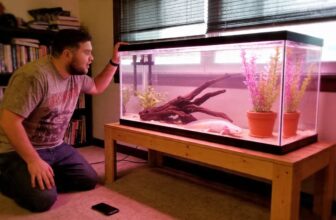
You’ll need a 48-by-18-inch tank, about 120 gallons, for your Sunshine Pleco when it grows to 12 inches over 3–4 years.
Keep the water between 74–84°F, dim the lights with a timer, and feed bloodworms plus blanched zucchini twice daily.
Clean water and patience help this fish live 15 years.
There’s more to uncover about keeping yours healthy.
At A Glance
- Adult L014 plecos reach 12 inches over 3–4 years, potentially living 15 years with proper care.
- Minimum housing requires 125 gallons with dim lighting, caves 12 inches apart, and double-rated canister filtration.
- Maintain water temperature 74–84 °F, pH 6.0–7.2, and perform 25% weekly water changes.
- Feed omnivorous diet of bloodworms, shrimp, vegetables, and sinking pellets twice daily.
- Choose healthy specimens with bright lemon-yellow bellies and dense gold spots, priced $80–$120.
How Big Do Sunshine Plecos Get? (Size and Growth Timeline)
Twelve inches. That’s the mark you’ll watch your Sunshine Pleco brush against, nose to tail, when it reaches adulthood. Expect this growth over three to four years, though you’ll notice the pace quickens in warm months and slows when temperatures drop.
This seasonal color change you observe—brighter gold in summer, muted tones in winter—reflects that same rhythm of growth and rest. Lifespan variability depends on your care; fifteen years feels possible with clean water and good food, yet five years slips away if you neglect the basics. You’re tending a slow-burning life, not a short flame.
Just as regular water changes prevent nitrite spikes and maintain healthy conditions in betta tanks, consistent maintenance of your Sunshine Pleco’s environment supports that long lifespan.
Tank Size and Space Requirements for L014
Adult Sunshines crack 12 inches, so skip the excuses and give them real room.
Start with a 48 by 18 inch footprint minimum—translate that to 120 gallons once they mature.
Dim the lights. These fish hug shadows, not spotlight zones.
Double your filtration rating. Heavy eaters push heavy waste.
Keep flow gentle. Rio Xingu veterans didn’t evolve for rapids; a pump rated for low flow prevents stress from oversized circulation.
Soft bellies need soft ground—fine gravel or sand only.
Territory matters. Stack driftwood caves and rock tunnels where they can hide and claim.
Hands-only for algae. Chemicals wreck their stress levels.
Plants lock in the look while adding extra cover.
Weekly maintenance keeps the system stable—and your pleco healthy.
Water Parameters, Filtration, and Flow for Sunshine Plecos
Although your Sunshine Pleco hails from warm Brazilian waters, you’ll need to recreate those conditions with care and precision.
Keep your thermometer steady between 74 and 84 degrees Fahrenheit, like bathwater you’d count to ten in. Aim for pH stability in the 6.0‑7.2 range, which means checking your test kit weekly, friend.
- Use a canister filter rated for twice your tank’s volume
- Add powerheads for gentle current, not rapids
- Test bi‑weekly, mark dates on your calendar
- Change 25% of water every seven days
This water flow optimization mimics their river home. You’ll feel proud watching them breathe easy, spots gleaming in clean current. For smaller setups, a 3‑in‑1 filtration system provides mechanical, chemical, and biological cleaning in one compact unit, though you’ll still need to upgrade as your pleco grows.
Substrate, Rocks, and Cave Setup
When you’re ready to build a home for your Sunshine Pleco, you’ll want to start from the bottom up, which means choosing a substrate—the fancy word for the stuff that covers your tank floor—that feels right against their soft belly.
Pick fine sand or small, rounded gravel, nothing sharp that could scratch.
You’ll want a substrate depth of about two to three inches, enough for your pleco to shift and feel settled, but not so deep that waste collects out of reach.
Add several smooth rocks, and driftwood too.
Think carefully about cave placement: position several caves across the tank floor, spaced apart, so your fish can claim private territory and feel safe during daylight hours.
This setup mirrors their wild home in Brazil’s rocky rivers, where hiding brings calm.
A sump baffle kit designed for larger tanks can help maintain stable water parameters and reduce turbulence in systems housing sensitive bottom-dwellers like the Sunshine Pleco.
What Do Sunshine Plecos Eat?
Once you watch a Sunshine Pleco hunt for food at night, you’ll notice they’re not simple algae scrapers, but hungry omnivores needing both meat and plants to stay healthy.
Their color genetics depend partly on nutrition, so you’ll want to feed them well.
Here’s what belongs on their menu:
- Bloodworms, shrimp, or snails for protein
- Blanched zucchini, cucumber, or peas for fiber
- Sinking carnivore pellets from pet stores
- A piece of driftwood they can rasp on
Tank mates like discus won’t steal these bottom-dwelling treats.
Skip algae-only diets, or you’ll watch their golden spots fade and their bellies shrink with hunger.
Because they produce significant waste, you’ll want to test water parameters twice weekly to keep nitrates and phosphate in check and ensure their colors stay vibrant.
How Often and How Much to Feed Your L014
He feeds his fish twice daily, morning and evening, respecting their nocturnal nature. Each portion should disappear within two to three hours. A single frozen bloodworm cube or a thumb-sized zucchini slice suffices. Leftover food degrades water quality fast, so he removes anything uneaten. The belly should look rounded, never bloated. He skips one feeding per week, copying natural patterns. Consistency builds trust. For those who travel, an automatic aquarium fish feeder with half‑gram accuracy and adjustable portion control can maintain this routine reliably.
Common Health Problems and How to Prevent Them
The Sunshine Pleco, like many of its kind, faces a handful of health troubles that you can spot early if you know what to look for.
Ich shows up as tiny white spots, like grains of salt, on your fish’s fins and body. Fungus looks like cottony patches. Both spread fast in dirty water.
Practice disease prevention by quarantining new fish for two weeks before they join your tank. This stops sickness before it starts.
For stress management, keep your water clean and stable, since plecos feel worry when ammonia rises or temperatures swing.
Here’s your watch list:
- Ich — white spots, treat with copper‑free meds
- Fungal infections — cottony patches, need clean water
- Fin rot — ragged edges, fix with frequent changes
- Parasites — scratching against objects, quarantine prevents spread
When transferring your pleco for treatment or tank maintenance, using a fine‑mesh net designed for delicate fish prevents fin damage and reduces stress during handling.
Compatible Tank Mates for Sunshine Plecos
A driftwood cave sits heavy on your tank bottom, and that’s where your Sunshine Pleco will claim its home. You’ll want tank mates who respect that boundary.
Mid-level swimmers make excellent neighbors: discus, rainbowfish, or angelfish who stay above the substrate. These fish won’t crowd your Pleco’s territory or compete for its hiding spots.
Your careful aquascaping should provide clear zones—dense plants and wood up top, open sand below. These companions also help with algae control, grazing surfaces your Pleco misses. Maintaining optimal water quality for all these species becomes easier with 8‑parameter test kits that monitor ammonia, nitrite, and other critical parameters weekly.
Avoid other bottom-dwellers who’d fight for cave space. Peaceful cohabitation feels calm, like sharing a room where everyone knows their corner.
Territorial Behavior and Managing Aggression
When darkness fills your tank, your Sunshine Pleco wakes and guards its cave like a watchful dog protects its yard. You’ll notice tension, perhaps, when another bottom-dweller swims too close. Managing this takes planning.
- Space caves far apart, at least 12 inches between each hidey-hole, so your pleco feels secure without crowding neighbors
- Dim your lights gradually using a timer; sudden darkness triggers territorial rushing, but gentle fading keeps peace
- Add floating plants to soften overhead brightness, giving your fish shadowy comfort
- Never squeeze two plecos into tight quarters; one per 125 gallons prevents angry chasing
Watch your fish. Contentment shows in relaxed fins, slow breathing, calm patrols.
A quiet 30‑dB filter maintains the peaceful environment your pleco needs, since loud equipment can heighten stress and territorial behavior in sensitive bottom‑dwellers.
Are Sunshine Plecos Nocturnal?
Your aquarium light switch clicks off at 9:00 PM, and somewhere beneath a driftwood cave, a pair of bright yellow spots flickers open.
You’ll observe nocturnal activity as your Sunshine Pleco emerges from shadows, its spotted fins rippling across sand in search of food.
Daylight hiding serves as survival armor, protecting this fish from stress and brighter tankmates who swim above. You might glimpse yours at dawn or dusk, but full sun rarely suits its nature.
Provide caves, driftwood tunnels, and shaded corners so your pleco feels secure. Respect its rhythms, and you’ll sense quiet satisfaction watching nighttime confidence replace daytime stillness. For aquarists seeking to maintain natural light cycles without disturbing nocturnal species, consider coral reef lights with dimming capabilities that simulate gradual sunset transitions.
Can You Breed L014 at Home?
The Challenges of Home Breeding
Sunshine Pleco breeding remains frustratingly out of reach for home aquarists, with nature’s secrets still guarded behind an invisible lock.
Breeding Sunshine Plecos at home sits just beyond the reach of most aquarists, like a locked door with no visible key.
You can’t crack it with standard equipment. Scientists still puzzle over the breeding cues that trigger reproduction. Your tank mimics their rivers, yet something stays missing.
Here’s what blocks you:
- Sunshine Plecos need specific seasonal triggers, like flood cycles, that home setups can’t replicate
- Their breeding behavior stays hidden in dark crevices you’ll never observe
- Males guard eggs in caves too small to access without disturbing them
- No one has documented reliable water chemistry shifts that spark spawning
You feel disappointed. That’s fair. Success belongs to dedicated breeders with specialized facilities, not living rooms. Wait. Watch. Perhaps someday.
Where to Buy Healthy Sunshine Pleco Specimens
Choosing Reputable Suppliers
A net dips into water somewhere far away, and your fish’s whole life starts right there.
You must choose where you buy with care.
Seek out suppliers who publish clear certification standards, like CITES documentation or health guarantees. These papers prove your fish was collected legally and kept in clean water before shipping.
Visit the shop in person. Watch the pleco swim; its spots should glow bright yellow, not dull. Ask when it arrived, and if they’ll hold it two weeks for quarantine.
Online, you risk hidden illness. You’re spending perhaps eighty to one hundred twenty dollars—protect that money, and protect a life.
Sunshine Pleco Care: Quick Reference Checklist
Sunshine Pleco Care Checklist
Three tools sit on the tank’s edge: a test strip, a calendar, and a soft net.
You pick up the test strip first, since water quality reveals stress before you see it.
- Test pH weekly, keeping it between 6.0 and 7.2
- Change 30% of water every seven days, minimum
- Offer protein and vegetables daily, not just algae wafers
- Provide driftwood for digestion and caves for hiding
Breeding genetics remain mysterious in home tanks, so don’t expect babies. That bright coloration shows only when they’re comfortable, calm, and well-fed. The calendar tracks patterns. The net waits, gently, for trust.
L014 vs. Other Gold Spot Plecos: What Makes Them Different
What Sets L014 Sunshine Plecos Apart
You open your fish store catalog or scroll through online listings, and here’s where you’ll spot the difference right away. The L014 Sunshine Pleco (*Scobinancistrus aureatus*) carries brighter, more uniform gold spots than its cousins, and that yellow belly truly glows under good lighting.
| Feature | L014 Sunshine | Other Gold Spots |
|---|---|---|
| Spot pattern | Dense, even distribution | Sparse or irregular |
| Belly color | Bright lemon-yellow | Pale or grayish |
| Origin | Rio Xingu only | Broader Amazon basin |
Genetic lineages split these fish into distinct species, not merely color morphs. You’ll find L014s command higher prices since their genes trace to a single, restricted waterway. That purity means you’re keeping a specific piece of Brazil, not a mixed-blood lookalike.
Frequently Asked Questions
Do Sunshine Plecos Eat Algae?
No, you can’t rely on algae grazing alone. You must feed yours protein-rich foods and vegetables regularly. Although they’ll nibble algae occasionally, algae grazing isn’t their primary diet, and proper nutrient cycling demands varied nutrition.
Are L014 Safe With Live Plants?
You’ve got excellent plant compatibility since L014 won’t target healthy vegetation, though they’ll graze algae control efforts clean. They’ll uproot tender stems when rummaging, so you’ll want sturdy, well-rooted species and protect delicate plantings.
How Long Do Sunshine Plecos Typically Live?
You’ll find that sunshine plecos typically have a lifespan of 10–15 years, though you might see individuals reach 20 years with exceptional care. Their breeding habits remain largely unviable in home aquariums, so you’ll rarely succeed with captive spawning attempts.
Should I Use Co₂ Injection for L014 Tanks?
You don’t need CO₂ dosing for these fish. Your tank pH naturally sits in their preferred 6.0–7.2 range without it, and they’ll thrive with proper filtration and water changes instead.
Can Sunshine Plecos Change Color With Mood?
Yes, you’ve likely noticed your Sunshine Pleco can color shift—its reflective scales darken or lighten with stress‑induced pigmentation changes. You’ll see brighter yellows when relaxed and muted tones during stress or poor water conditions.
Rounding Up
A glass aquarium, heavy in your hands, becomes a promise you keep. The Sunshine Pleco asks for space, clean water, and patience—three things you’re capable of giving.
You’ve learned what this fish needs: 125 gallons, caves to hide in, vegetables to graze, and years of steady care. That knowledge now lives in your hands.
Bring one home when you’re ready. Watch it grow from a spotted youngster into something magnificent. The reward isn’t just a beautiful fish—it’s the quiet pride of keeping your word.
Good luck.