You hold an Opaline Gourami, feeling its silvery scales shift to soft blue in your palm, and you notice something curious: these fish carry their own sky inside them. That color, cobalt marbling on a pearl body, fades fast when they’re stressed, so your job is simple—keep them calm. You’ll need a tank, 35 gallons or more, since cramped space makes them anxious and dull. Beyond the glass, water chemistry waits like a puzzle, heat and pH and gentle currents each playing a part you can learn to balance. There’s a quiet satisfaction in matching their needs so precisely, like tuning a radio until the static clears and music finally plays. But one choice you make early, the neighbors you select for this underwater room, determines whether harmony holds or shatters into chasing and hiding.
At A Glance
- House adults in a minimum 35-gallon dark-substrate tank with gentle filtration and dimmable lighting.
- Maintain water between 73–82 °F, pH 6.0–8.8, and 5–35 dGH with stable chemistry and surface air access.
- Feed algae flakes in the morning and bloodworms twice weekly for vibrant coloration.
- Choose peaceful tankmates like pearl gouramis or kuhli loaches; avoid barbs, neons, and rival males.
- Breed in shallow peat-filtered tanks where males build bubble nests and guard eggs devotedly.
What Do Opaline Gouramis Look Like and How Big Do They Get?
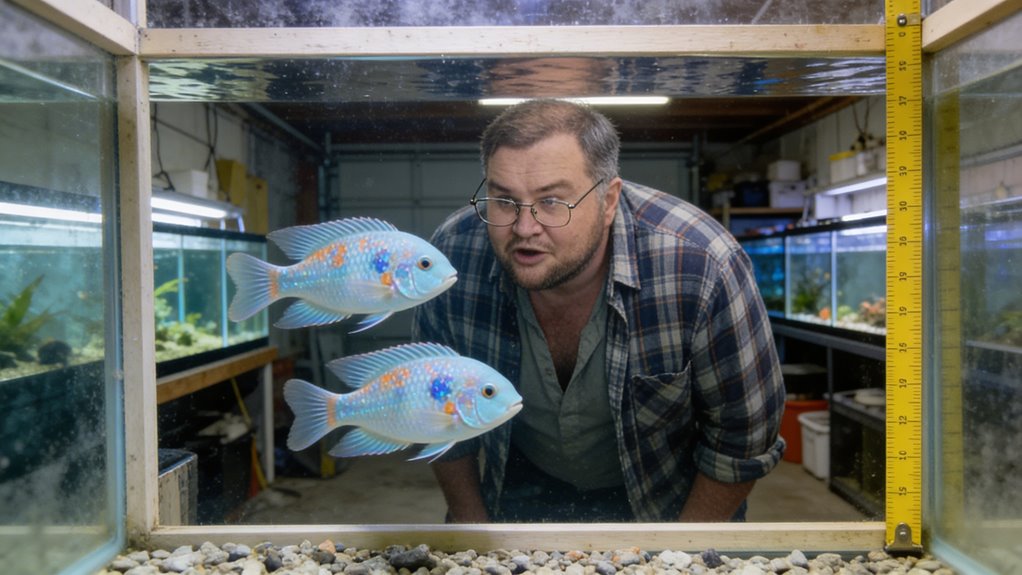
If you’ve ever held a smooth river stone up to sunlight, you’ll understand the quiet shimmer that makes the opaline gourami so easy to spot in a busy tank.
You find belonging in recognizing their oval bodies, like polished skipping stones, coated in silvery-blue with deep cobalt marbling that catches light exactly like the color habitat of their Southeast Asian ancestors—wetlands where water plays through leaves.
Their coloration shifts with mood and lighting, speaking a quiet language you learn to read.
Males carry long, pointed dorsal fins like kite tails, while females wear shorter, rounded ones, gathering small differences that help you know them individually.
Six inches from nose to tail when fully grown, they’re substantial enough to notice, gentle enough to welcome you back to the tank each morning.
What Tank Size Do Opaline Gouramis Need to Thrive?
Since these fish grow slowly but steadily, you’ll need to plan their home like you’re picking out a pair of shoes they won’t outgrow. A 35-gallon minimum works for adults, though you’ll want more room if you’re building a community. Your tank décor should include hiding spots and surface access for their maze organ. Choose a dark substrate color to make their blue marbling pop. Moderate plant density gives them security without crowding their swimming space.
- Filtration type matters: Use a gentle hang-on-back or sponge filter—strong water flow stresses their delicate fins.
- Lighting schedule: Eight hours daily, dimmed in evening, supports temperature stability and natural rhythms.
- Breeding setup: Prepare a shallow 10-gallon with peat filtration; fry nutrition starts with infusoria, then powdered food within days.
Which Water Parameters Matter Most for Opaline Gourami Health?
Your thermometer and test strips sit on the counter like quiet guardians, as water that looks clear can still hold trouble for your fish.
You keep the temperature between 73°F and 82°F, since cold water slows your gourami’s labyrinth organ, that special breathing tool they raise to the surface to gulp air.
You maintain pH near 6.0 to 8.8, and hardness between 5 and 35 dGH, knowing stable numbers matter more than perfect ones.
You study water filtration dynamics, how bacteria colonies break down waste so ammonia never spikes.
You learn that breeding genetics shape how well your fish handle stress, selecting healthier lines.
You belong here, protecting life you chose.
What Equipment and Plants Belong in an Opaline Gourami Tank?
The water parameters you hold steady deserve a proper frame, and that frame is your tank itself.
You need three things to make your gouramis feel at home.
- Dark gravel substrate—this makes their blue patterns glow like marble under moonlight, and they feel safe when their colors pop against it.
- Gentle substrate lighting—too bright stresses them, but soft light lets them find food without fear, about eight to ten hours daily suits their rhythm.
- Careful heater selection—keep water between 73 and 82 degrees Fahrenheit with a reliable, adjustable heater, since cold water hurts their maze breathing organ.
You’re building comfort, piece by piece.
What Should You Feed Your Opaline Gourami Daily?
Reach into that pantry of fish flakes you’ve been keeping handy, since it’s time to talk about what lands in your gourami’s belly every single morning and night.
You’ll want a feeding schedule that builds trust between you and your fish, offering two small meals daily, roughly twelve hours apart, perhaps seven a.m. and seven p.m.
| What You Give | What Your Fish Receives |
|---|---|
| Algae-based flakes each morning | Steady energy, like a friend who shows up every day |
| Bloodworms twice weekly | Strong growth, the reward of small surprises |
| Pinch-sized portions | Clean water, shared health, mutual respect |
This nutrient balance keeps your opaline lively, curious, and present.
How to Spot Ich and Hole-in-the-Head Disease Early?
When you’re checking your tank each morning, you’re not just looking at water—you’re reading the faces of your fish, and those faces can tell you when trouble starts.
Early symptom detection saves lives, since Ich shows up first as tiny white grains, like salt sprinkled on your gourami’s skin, before the sym color patterns fade and your fish start scratching against rocks.
White grains like salt on gourami skin signal Ich before color fades and scratching begins—detect early, save lives.
- Watch for white dots, less than a pinhead, on fins or body—you’ll spot them easier under aquarium light against their blue marble sheen.
- Check for small pits, like pinpricks, along the head and lateral line where hole-in-the-head begins quietly.
- Notice when appetite drops or breathing quickens; these small changes mean something’s wrong beneath the surface.
Move fast, treat quickly, and your opalines stay bright.
Which Fish Make Safe Tank Mates for Opaline Gouramis?
Where do you turn when you want friends for your opaline gourami that won’t nip those whisper‑thin ventral fins or get chased into hiding?
You look for calm, mid‑sized swimmers who share your tank’s gentle rhythm.
| Companion | Why They Belong | Feeling They Bring |
|---|---|---|
| Bristlenose Pleco | Cleans algae, minds its business | Quiet companionship |
| Harlequin Rasbora | Schools softly, matches your pace | Peaceful togetherness |
| Kuhli Loach | Hides in décor, emerges at dusk | Cozy mystery |
| Pearl Gourami | Mirrors your colors, respects space | Familiar recognition |
| Mystery Snail | Glides slowly, harms no one | Steady patience |
Choose soft lighting schemes that let everyone’s colors glow without harsh glare.
Add caves and plants to your tank décor so each friend finds a private corner.
You’ll build a community where every creature feels safe, seen, and at home.
Which Fish Should You Never Keep With Opaline Gouramis?
Some fish simply don’t belong in your opaline gourami‘s home, no matter how pretty they look in the store.
You want your fish family to feel safe together, and that means respecting finmate compatibility. Choosing wisely prevents heartbreak and keeps your aquarium peaceful.
- Tiny neon tetras – Your opaline grows six inches and sees them as snacks, not friends.
- Fin-nippers like tiger barbs – They attack those delicate, touch-sensitive ventral fins like bullies on a playground.
- Other male gouramis in small tanks – They’ll fight for territory, ruining any breeding setup plans you have.
How to Tell Male and Female Opaline Gouramis Apart?
Once you’ve picked safe tank mates, you’ll want to know exactly who you’re placing in your aquarium. Look closely at the dorsal fin—that tall fin on the fish’s back. Male opaline gouramis carry a long, pointed dorsal fin stretching toward the tail. Females keep a shorter, rounded dorsal fin, almost stubby by comparison. Color tells part of the story too. You’ll notice color marbling spreads more boldly across the male’s silvery-blue body. Both fish shimmer beautifully, but males flash deeper cobalt patterns. Check each color fin fin carefully before you buy. Matching pairs brings harmony to your tank community.
How Do Opaline Gouramis Breed in Home Aquariums?
When you’re ready to raise a new generation, you’ll want to set up a shallow breeding tank—about five or six inches of water—where the male can build his bubble nest, a floating raft of spit-and-air that cradles the eggs like a tiny, living life raft.
Watch his bubble breeding behavior closely: he moves rhythmically, he blows bubbles, he woos. It’s patience, practiced like waiting for bread to rise.
He moves, he blows, he woos—patience rising like bread.
You’ll remove the female after spawning, since he’ll guard those eggs with fierce, single-minded devotion. Fear not—this belongs to you now, this rhythm of care.
For fry nutrition, you’ll begin with infusoria, those microscopic swimmers, then graduate to powdered food.
Three truths guide you:
- Warm water, near 80°F, keeps the nest intact and the father calm.
- Dim lighting soothes skittish new life.
- Peat filtration softens the world just enough.
You’re not just keeping fish. You’re tending continuity.
How Long Do Opaline Gouramis Live With Proper Care?
Bubble nests give way to quieter days, and you’ll find yourself wondering how many years your opaline gourami might swim beside you.
With steady attention, your fish reaches four to six years, sometimes stretching longer when you follow proven care tips. Water changes, gentle feeding, and calm tankmates build the foundation. Genetics set the bre length, but your daily choices shape the outcome.
| Factor | Impact on Years |
|---|---|
| Clean water | Adds healthy months |
| Proper diet | Strengthens immunity |
| Low stress | Prevents early decline |
| Tank size | Supports full growth |
You’re not just keeping a fish; you’re weaving a small, shared story.
Frequently Asked Questions
Can Opaline Gouramis Recognize Their Owners?
You’ll notice your opaline gourami shows owner recognition through its feeding habits. When you approach the tank, it swims toward you, anticipating food. This happens since fish learn to associate your shape, footsteps, and routine with meals. You’re building trust through daily care, and that connection feels quietly rewarding. Your gourami won’t cuddle, but it knows you’re the one who keeps it safe and fed.
Do Opaline Gouramis Need a Lid on Their Aquarium?
Yes, you’ll need a lid requirement for your tank. These fish breathe air at the surface, using a special organ called a maze, and they’re known jumpers when startled. A snug lid keeps them safe, maintains water safety by reducing evaporation, and prevents dust from settling. You’ll feel calmer knowing your curious companions stay secure in their home, exploring without risk of escape.
Why Do Opaline Gouramis Change Color Suddenly?
Your opaline gourami shifts colors when stress, water chemistry, diet variations, social hierarchy, lighting shifts, temperature fluctuations, breeding behavior, or habitat enrichment change its mood or health. Darker marbling means fear or illness, whereas brighter silvery-blue shows contentment. You’ll notice quick fades during tank mate squabbles or after water changes. Stable conditions keep colors steady, so test parameters weekly and feed varied, protein-rich meals twice daily.
Can Opaline Gouramis Survive in a Pond Outdoors?
Yes, you can keep opaline gouramis outdoors, but you’ll need careful planning. Your pond temperature must stay between 73°F and 82°F year-round, which means you’ll need a heater in colder months or you’ll bring them inside when autumn arrives. You must provide predator protection too, since birds, raccoons, and neighborhood cats see your fish as easy snacks. A net cover or sturdy mesh fencing keeps your gouramis safe as they swim.
Do Opaline Gourami Pairs Bond for Life?
No, opaline gouramis don’t form lifelong partnerships. Their bonding behavior lasts only through spawning. You’ll notice males build bubble nests, entice females, then guard eggs alone. After hatching, they separate. You might feel disappointed, hoping for loyal mates, but this temporary bond serves reproduction, not companionship. Keep pairs if you want, yet understand they’ll drift apart. Their brief connection mirrors summer friendships, meaningful though fleeting.
Rounding Up
Your Opaline Gourami needs a 35‑gallon home, dark gravel, and gentle bubbles, with water kept between 73‑82 °F. Feed algae flakes twice daily, and choose calm friends like bristlenose plecos. Watch the male build bubble nests when ready to spawn. With patient care, these silvery‑blue fish bring quiet wonder to your tank for years. You have the tools now. Start small, observe closely, and trust the slow rhythm of their world.