A twenty-gallon glass box sits on a wooden stand, its water kept at seventy-seven degrees by a small heater. Swordtails swim inside, their tails like thin orange swords trailing behind them. They breathe through gills, those flat red slits that pull oxygen from water the way lungs pull it from air. Proper care yields fish that live five years, sometimes more. The details of how this happens matter.
At A Glance
- Swordtails need a 20‑gallon minimum tank, slightly alkaline water (pH 7.0–8.4), and temperatures of 75–79 °F.
- Adult males reach 5 inches with the sword; females grow to 4 inches and appear more rounded.
- Average lifespan depends heavily on water quality, diet, and consistent weekly maintenance.
- Females give live birth every four weeks, so dense plant cover protects surviving fry.
- Feed adults flake food twice daily; offer fry infusoria first, then powdered flakes and brine shrimp.
Five Reasons Swordtail Fish Make Ideal Community Tank Additions
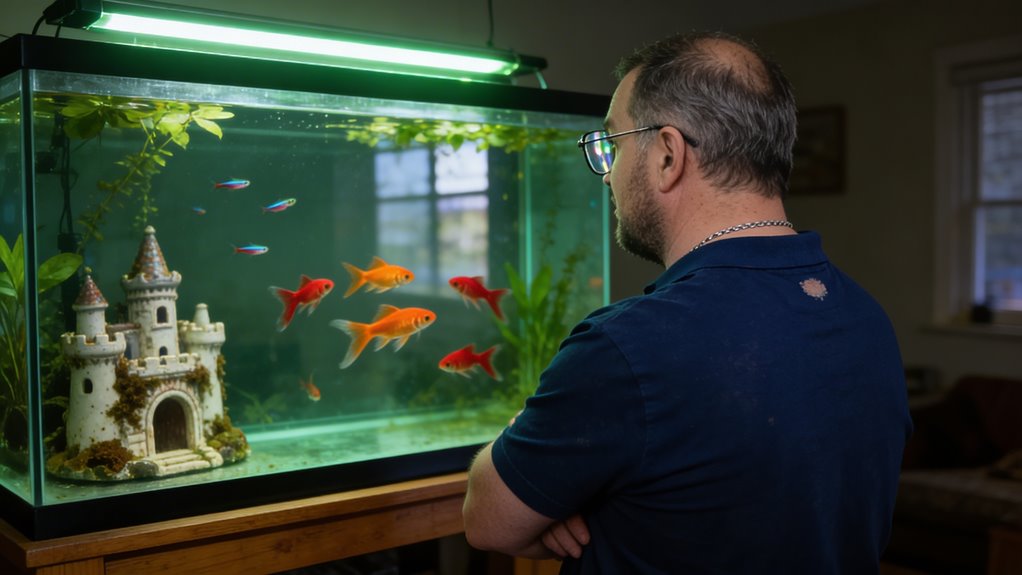
A single, brightly colored swordtail fish glides through the middle of a planted aquarium, its orange tail flashing like a small flame beneath the water’s surface.
These fish welcome beginners, forgiving small mistakes in water care like a patient friend.
Their color morphs—red, black, multicolored—create shared beauty everyone gathers around to admire.
Breeding genetics work simply: live babies arrive every four weeks, letting families witness new life together.
They ask only peaceful tankmates, never demanding special territory.
At twenty gallons minimum, they prove community living still leaves room for individual grace.
How Big Do Swordtails Get?
How much space does a full-grown swordtail truly need? Adult swordtails reach four to five inches from nose to sword-tip, with males stretching longer through their signature tail extension. Color morphs—marigold, pineapple, midnight black—share this frame, though breeding genetics can nudge size slightly, mixing strains for bulkier or leaner lines. Females remain shorter, plumper, built for carrying fry.
| Trait | Male | Female |
|---|---|---|
| Body length | 3.5 inches | 4 inches |
| With sword | 5 inches | No sword |
| Build | Slender | Rounded |
| Breeding role | Displays | Bears live young |
One needs room to glide, to feel at home.
Minimum Tank Size and Equipment Essentials
Once those four to five inches of fish are fully grown, the question becomes where they ought to spend their days.
A tank size of fifteen gallons fits one swordtail comfortably, like a single bedroom for a solitary guest.
Thirty gallons suits a small group, the aquarium version of a shared dining table where everyone finds a seat.
Filtration matters more than fancy stones. A filter turns over the water four times each hour, removing waste before it poisons the peace.
Upgrades become necessary when adding fish; more bodies mean more strain on the system.
Maintenance means checking the filter monthly, rinsing media in old tank water rather than tap, preserving helpful bacteria.
A secure lid prevents grief; swordtails jump when startled, seeking escape from sudden shadows.
Belonging begins with boundaries properly set.
Water Parameters Swordtails Need to Thrive
Balancing water chemistry matters more than chasing perfection.
A reliable heater keeps the thermometer between 75 and 79 degrees Fahrenheit, warm enough for comfort without strain. The pH scale should rest between 7.0 and 8.4, tilting slightly alkaline like their ancestral Mexican streams. Hardness matters too—12 to 35 dGH provides minerals that support healthy Swordtail genetics, strengthening bones and vivid coloration. Water filtration runs quietly day and night, removing waste before it turns toxic, much like a neighborhood removing trash before it attracts pests. Test weekly with liquid kits, not strips. Stability builds a home where fish flourish together.
What to Feed Swordtails: Diet and Feeding Schedule
The water conditions have been settled, and now the question becomes what to place in the tank that these fish will actually eat.
Swordtails are omnivores, meaning they need both meat and plants to stay healthy. A good flake food forms the base of their diet, like bread on a sandwich. Supplement this with frozen brine shrimp or bloodworms twice weekly, which brings out the best in color morphs.
Seasonal feeding means offering more protein in spring when fish naturally prepare to breed, then slightly reducing portions in cooler months. Feed small amounts twice daily, only what they can finish in two minutes. Remove uneaten food immediately, as it pollutes water and causes stress.
Why Male Swordtails Fight: and How to Stop It
Watch a tank holding several male swordtails, and soon you will notice one fish chasing another, fins flaring like small flags.
Territorial displays erupt when two males claim the same corner.
Hormonal triggers—testosterone surges during breeding season—heighten aggression.
A 4:1 female-to-male ratio calms tensions, spreading male attention across many partners.
| Strategy | How It Works | Result |
|---|---|---|
| Add females | Dilutes male rivalry | Less chasing, more harmony |
| Rearrange décor | Breaks claimed boundaries | Reset territories, fresh start |
| Increase tank size | 30+ gallons minimum | Space to retreat, coexist |
Observers find peace in balanced groups.
Compatible Tank Mates for Peaceful Swordtail Communities
Three small swimmers, each no longer than a hand’s width, can turn a quiet aquarium into a neighborhood where everyone knows their place.
Platies, mollies, and cories share water conditions without demanding attention.
These species hybrids from the same family swim calmly together, never starting quarrels.
Tank décor matters: gentle plants like Java fern give shy fish corners where they feel hidden, not alone.
Gouramis and neon tetras join this community when space reaches thirty gallons.
Everyone finds their level, middle or bottom.
No one needs to prove strength here.
Peace looks like fish passing without flinching.
Common Swordtail Diseases: Identification and Treatment
How does a fish tell us it feels unwell? A swordtail signals distress through clamped fins, white speckles like salt, or cottony patches near the mouth. Disease diagnostics begin with careful watching: noting where spots appear, how the fish breathes, whether it hides or drifts.
- Ich appears as tiny white dots across skin and fins, treatable with gradual temperature increase to 86°F plus copper-based medication
- Fungal infections show fluffy gray growth, requiring antifungal baths
- Fin rot turns tail edges ragged; clean water and antibiotics help
- Velvet creates gold dust film; dim lights and copper formulas work
Treatment protocols demand patience, exact dosing, and isolation tanks to protect tankmates. Recovery takes seven to fourteen days with steady water checks.
Daily Care Routines That Extend Swordtail Lifespan
A clean net resting beside the tank marks the start of another morning.
Consistent habits build trust between keeper and fish, much like watering a plant at the same hour each day. Water health monitoring means testing temperature, pH, ammonia, and nitrates weekly with a liquid test kit, recording results in a small notebook. Stable numbers, between 75-79°F and pH 7.0-8.4, prevent stress that shortens life.
Weekly testing builds trust—stable water, longer lives.
Lighting optimization requires eight to ten hours of gentle LED illumination daily, timed like sunrise and sunset. Too much light grows algae; too little dulls their colors.
Small acts, repeated with care, keep them swimming longer.
How to Breed Swordtails in Your Home Aquarium
A small plastic cup holds the morning’s first offering of flakes, the signal that breeding may begin.
Select a breeding pair from color morphs that appeal to your eye, preferably with strong genetic variation to guarantee healthy offspring. Move them to a separate 10-gallon tank with water warmed to 80°F. Add fine-leaved plants, like Java moss, giving babies somewhere to hide.
- Condition adults with bloodworms and brine shrimp for one week
- Watch for the female’s dark gravid spot near her tail
- Remove the male after mating, he has done his part
- Wait 28 days, the length of a moon’s cycle, for birth
Remove the mother immediately.
Swordtail Fry Care: Raising Newborn Fish to Adulthood
When fragile newborns first appear, where does one even begin?
A dedicated nursery tank, five to ten gallons, protects swordtail fry from hungry mouths in the community. Fine-leaf plants, like java moss, create tunnels where babies hide, feeling safe.
Successful pl breeding demands separation. Adults return to the main tank within hours of birth, or instincts take over.
Fry nutrition determines who thrives. Newborns eat infusoria, microscopic organisms, for their first three days. Then, powdered flake food and newly hatched brine shrimp, measured in pinches twice daily, fuel growth.
Clean water, changed weekly, prevents disease. Patience rewards: fry become adults in four months, joining the group.
Frequently Asked Questions
Can Swordtails Change Gender?
No, swordtails cannot change gender.
These fish display clear sexual dimorphism, meaning males and females look physically different from birth. Males carry the namesake sword, an elongated tail fin, whereas females do not. Unlike some fish species that show gender flexibility, swordtails remain the sex they developed as. Hobbyists sometimes mistake young males for females because the sword grows slowly, emerging fully around three to four months of age.
Do Swordtails Need a Heater Year-Round?
Swordtails need steady warmth, and a heater remains the most reliable tool for this task.
Heater alternatives exist, one could use heat mats beneath the tank, or wrap the glass with insulating foam, but these methods feel uncertain, like wearing a sweater instead of turning up the thermostat.
Nighttime heating matters most when rooms drop below 65 degrees Fahrenheit, for swordtails grow sluggish and vulnerable in cold water.
Most keepers choose electric heaters for peace of mind.
Are Swordtails Safe for Planted Tanks?
Yes, swordtails are safe for planted tanks, offering excellent plant compatibility. They rarely damage foliage, preferring to swim among leaves rather than uproot them. Their grazing habits contribute to gentle algae control, nibbling fuzzy growth without destroying tender shoots. Java fern, Anubias, and dwarf hairgrass thrive alongside them. A 30-gallon tank with these plants creates habitat where fish and greenery coexist peacefully, neither overwhelming the other. The community flourishes through mutual respect for space.
Can Swordtails Live With Betta Fish?
Swordtails can share space with bettas, though tank compatibility demands caution. Male bettas view swordtails’ flowing tails as rivals, sparking aggression. Community dynamics improve with a 30-gallon tank, abundant plants for hiding, and one male betta among female swordtails. Peace emerges when each fish claims territory. Watch for nipping, separate if needed. Success feels like calm neighbors sharing a fence—quiet coexistence, not friendship.
How Many Swordtails Should I Keep Together?
A single swordtail needs 15 gallons of water, like a small bedroom for one fish. For a friendly group, four to six fish share a 30-gallon tank, which gives them space to swim and feel safe together. Group density matters: one male with three or four females keeps peace, since too many males fight. Tank size grows with numbers, so fish find belonging without crowding, like neighbors who need elbow room.
Rounding Up
A twenty-gallon tank, steady at seventy-seven degrees, holds more than water.
It holds patience made visible.
Swordtails swim through daily care—measured flakes, gentle nets, weekly changes of one-third volume—and they return this attention with years of quiet motion.
The fry, no longer than a grain of rice, grow into fish that carry sword-shaped tails like flags of persistence.
Aquarium keeping is small biology, and likewise practice in showing up.
The tank stays clean.
The fish stay well.
The keeper learns what thriving looks like, then applies it elsewhere.