You hold a ghost shrimp in your palm, translucent as a raindrop, and wonder what keeps it alive. These creatures need five gallons of water, soft sand, and Java moss to grip. They feel safe when hidden, just like you do under a blanket. But their babies die in freshwater every time. The fix is salt—fifteen parts per thousand—and most people never learn this until too late. You deserve to know why.
At A Glance
- Keep 5-10 shrimp in fine sand or bare-bottom tanks with Java moss and gentle filtration.
- Maintain stable pH 6.5-8.0, 65-82°F temperature, and 20-30% weekly water changes.
- Feed 2-3 times daily with flakes, blanched vegetables, and occasional protein; remove uneaten food.
- Pair only with small peaceful fish like tetras and rasboras; avoid aggressive or predatory species.
- Breed at 75°F with brackish water conditions for larvae and quarantine new shrimp two weeks.
Ghost Shrimp Tank Setup: Substrate, Plants, and Filtration
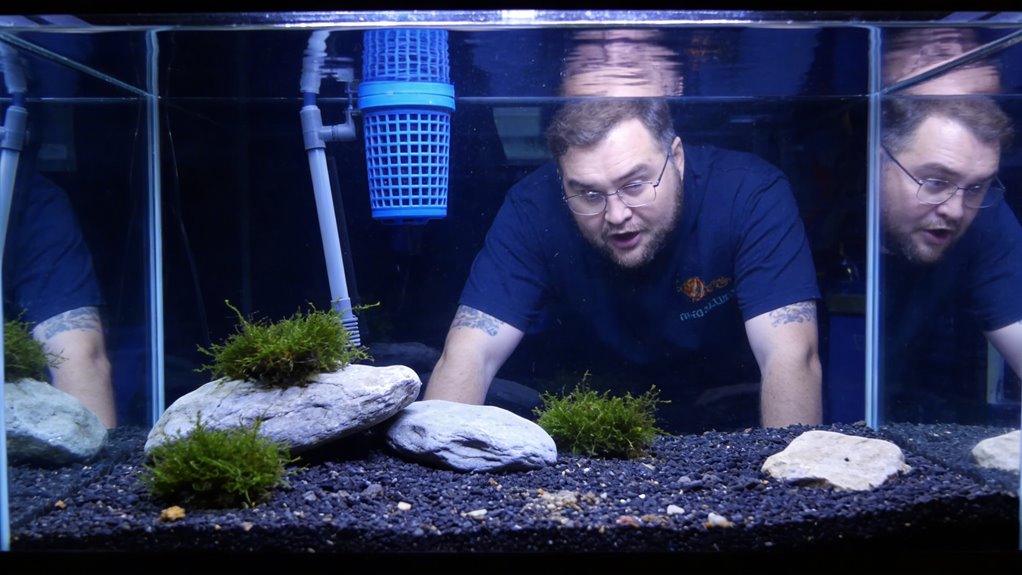
A five-gallon tank is the smallest home you can give your ghost shrimp, though they breathe easier when you’ve got more space to spare.
You’ll want fine sand here, since substrate grain size matters enormously to these little diggers. Sharp gravel tears their soft exoskeletons, and that hurts them.
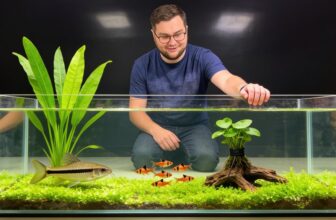
Live plants root well in this sand, and you need plant anchoring spots they can trust. Java moss, hornwort—push them gently into place, and watch your shrimp wander like kids in a familiar neighborhood.
A simple sponge filter keeps their water clean without dangerous currents. You’re building safety here, piece by piece, and they’ll know.
Ghost Shrimp Water Parameters: What Actually Matters
Where does the comfort live in a tank full of water you cannot even see through? It lives in numbers you can trust.
You check pH stability first—ghost shrimp feel stress when acidity swings wildly, so you keep it between 7.0 and 8.0. Temperature matters too: 65–82 °F feels like home. Water coloration tells you stories—brown means decay, green means algae blooms, clear means balance. You learn to read these signs like a friend reading your face.
| Parameter | Safe Range | What You Watch For |
|---|---|---|
| pH | 7.0–8.0 | Sudden drops or spikes |
| Temperature | 65–82 °F | Shivering or frantic swimming |
| Hardness | 3.72–6.75 dGH | Soft shells after molting |
You test weekly. You belong here, among careful keepers.
Feeding Ghost Shrimp: Portion Sizes and Frequency
Three pellets, no more than that, rest on the bottom of your tank each morning. This is portion control made visible, small enough that your shrimp finish by noon.
Your feeding schedule builds trust through repetition. You offer food once daily, every morning, like a familiar knock at the door. Skip a day weekly; this mimics nature’s uneven hand and keeps your water clean.
Watch them gather, tiny fans waving, sharing what you’ve given. You belong to this rhythm now, the one who provides just enough, never too much, keeping your shrimp safe through simple, measured care.
What Fish Won’t Eat Your Ghost Shrimp?
Once you’ve settled your shrimp into their feeding rhythm, you’ll start wondering who else can share their home.
Predator compatibility matters here. You’re looking for fish with small mouths, gentle feeding preferences—think neon tetras, otocinclus catfish, or small rasboras. These fish eat flakes and algae, not shrimp.
Avoid cichlids, bettas, or angelfish; they’ll hunt your transparent friends.
Size helps too. Fish under two inches usually pose little threat. You’ll feel relief watching shrimp graze peacefully beside calm tankmates.
Create hiding spots with plants and driftwood, so shrimp escape if needed.
Your community succeeds when everyone eats different things, at different levels.
The Ghost Shrimp Molting Cycle Explained
As your ghost shrimp grow, you’ll notice something strange lying at the bottom of your tank, a hollow, see-through shell that looks exactly like your shrimp but empty inside.
Your shrimp hasn’t died.
It’s outgrown its armor, shedding the old to make room for new. Molting hormone regulation controls this transformation, a chemical signal telling the body it’s time.
Exoskeleton regeneration timing follows a precise schedule, every few weeks when young, slowing as adults age. The new shell stays soft for hours, leaving your shrimp vulnerable.
That’s why hiding spots matter. You protect them, and they belong.
Ghost Shrimp Diseases: Early Signs and Treatment
Molting leaves your shrimp soft and open to trouble, and that trouble sometimes arrives uninvited.
Watch your shrimp’s behavior; shrimp coloration shifts signal illness before you see spots. Cloudy white fuzz means Vorticella, a tiny hitchhiker you catch early through their glass bodies. Pink swollen patches warn of bacterial infections you cannot cure, so you remove the sick one to protect friends. Faster molting frequency weakens shells, so you skip copper meds and keep water steady.
You belong to a careful community now, learning to read these quiet animals. Your attention saves them.
Breeding Ghost Shrimp: From Eggs to Larvae
When you spot a cluster of tiny green eggs tucked beneath a female’s tail, you’re witnessing the start of something fragile and worthwhile.
You’re now part of a quiet miracle. These eggs, twenty to thirty in each batch, stay there for three weeks. Keep your water steady at 75 degrees, and watch closely.
Breeding genetics matter more than you’d think. Strong parents mean stronger babies, so choose healthy, active adults with clear bodies and full antennae.
After hatching, you’ll face your biggest test: larval nutrition. These babies drift, helpless, needing tiny food—infusoria, or powdered spirulina—four times daily. You’re their only lifeline.
You belong here, in this careful rhythm.
Why Ghost Shrimp Larvae Die (And How to Save Them)
The brine shrimp hatchery you bought online sits empty on the counter, its plastic walls still fogged from your last attempt, and you’re wondering what went wrong this time.
Ghost shrimp larvae perish since you’re matching saltwater conditions wrong for their *lar behavior*, which needs brackish water, not full marine.
Their *gene expression* stays locked until salinity hits 15-20 parts per thousand, like a key finding its lock.
You’re probably starving them too—*larval nutrition* demands constant green water or rotifers, not fish flakes.
Add *UV sterilization* to kill bacteria without chemicals, and suddenly you’re part of the club that keeps them alive.
Ghost Shrimp Population Control: When to Remove Adults
Your brine shrimp hatchery finally holds steady, cloudy with green water and alive with larvae, and now you’re watching the adults below with new eyes.
You’ve learned that population density manipulation keeps your colony healthy, not crowded.
- Count your shrimp weekly, like attendance at a meeting you care about.
- When you see more than twelve adults in one gallon, some must move.
- Breeding timing matters: remove adults before females berry again, about every thirty days.
- Watch for thin shells after molting; these neighbors need space to hide.
- Move the elderly first, they’re teachers who’ve done their part.
Moving Ghost Shrimp to New Tanks: Acclimation Steps
A single cup of tank water sits on your counter, and you’re staring at the bag of shrimp you just carried home. You’re part of something now, a keeper of tiny lives.
Float that bag for twenty minutes, let the temperatures match, slow and steady. Tank relocation shocks bodies built for gentle streams. Add a splash of your water every ten minutes, four times, so chemistry shifts like seasons changing, not storms hitting.
Pour them through a net, don’t dump store water in. Stress mitigation means patience, means watching them twitch, then settle, then belong. You did this together, you and them, new home.
Ghost Shrimp vs. Amano vs. Cherry: Which Shrimp for Your Setup?
Three small creatures sit on the pet store shelf, each in its own bag of water, and you’re wondering which one belongs in your tank at home. You deserve a shrimp that matches your heart, not just your filter.
Consider these differences:
- Ghost shrimp aesthetics show clear bodies, letting you watch hearts beat
- Amanos grow larger, reaching two inches, and eat more algae
- Cherries brighten tanks with cherry-red shells, easy to spot
- Ghost shrimp behavior includes active digging, visible through glass
- Amanos cost more, cherries breed easier, ghosts fit tight budgets
You pick the one that feels like home.
Frequently Asked Questions
Can Ghost Shrimp Detect Magnetic Fields?
Ghost shrimp don’t possess magnetic navigation abilities like sea turtles or bees do. You won’t find electroreception sensing organs in their transparent bodies, either. They navigate using simple eyes and antennae instead. When you watch them scramble through plants, they’re following chemical trails and light cues, not invisible fields. Their small world stays rooted in touch, taste, and sight—you can feel certain they’re lost without those familiar senses.
Do Ghost Shrimp Need Air Stones or Surface Bubbles?
You don’t need air stones or surface bubbles for ghost shrimp.
A sponge filter, which is a simple tube with foam around it, gives them enough oxygen. The filter (meaning a thing that cleans water by pulling it through material) moves water gently, and that’s sufficient.
You can use an air stone if you’d like, but it’s extra, not required. Your shrimp will breathe fine without it.
How Do Ghost Shrimp Affect Tank pH Over Time?
Ghost shrimp won’t swing your pH wildly, friend. Their small bioload barely nudges water chemistry, so you won’t face pH drift from their waste alone. You’ll keep balance by staying on top of water changes, watching that ammonia stays under 10 ppm. Think of them like tidy neighbors who clean but don’t rearrange the furniture. Your tank stays steady when you’re attentive, and that feels reassuring.
Will Ghost Shrimp Clean Algae off Snails’ Shells?
You’ll see them nibble fuzz.
Ghost shrimp don’t specialize in shell cleaning. They focus on algae grazing across surfaces, not picking snails’ shells bare. They’ll taste what’s loose, but they won’t scrub your snail shiny. That gentle grazing helps tanks feel balanced, like neighbors sharing yard work. You stay patient, let them scavenge where they choose, and you’ll find contentment in their quiet, imperfect efforts.
Can Ghost Shrimp Recognize Their Keeper’s Face?
You’re curious about *vision recognition* between you and your shrimp. Ghost shrimp don’t recognize your specific face, but they’ll learn your shape and movement through *keeper bonding*. They notice when you approach with food, creating a gentle habit of trust. You’ll feel a quiet connection, like being noticed by a shy neighbor. It isn’t personal love, but it’s real recognition, and that can feel like belonging.
Rounding Up
You’ve got the tools now—fine sand, gentle filters, and patience. Keep your water steady, feed small bites, and watch for those green eggs. When larvae arrive, remember they’ll need brackish water, not freshwater. Mistakes will happen; shrimp die, lessons stay. You’re building a small world, drop by drop, and that’s enough.