A soft handful of sand, dark as coffee grounds, rests at the bottom of the tank—this is where kuhli loaches spend their days, burrowing nose-first with whiskered faces hidden. They’re shy, these little eels with stripes like old-fashioned barber poles, and that shyness tells you something important: a creature that hides needs a world where hiding feels safe. Keep five or more together, add gentle water flow, and wait for night to feed them. There’s a trick to keeping them healthy that most guides miss, and it starts with something as simple as a coffee cup turned on its side.
At A Glance
- Keep groups of at least five kuhli loaches to prevent chronic stress and encourage natural behaviors.
- Use soft sand substrate to protect their delicate belly scales and allow burrowing instincts.
- Create slightly acidic, soft water conditions between 73–86 °F for optimal health and breeding success.
- Feed sinking foods after dark when loaches become active nocturnal hunters.
- Compatible companions include peaceful tetras, rasboras, and cherry shrimp; avoid aggressive fish like tiger barbs.
Are Kuhli Loaches Right for Your Aquarium?
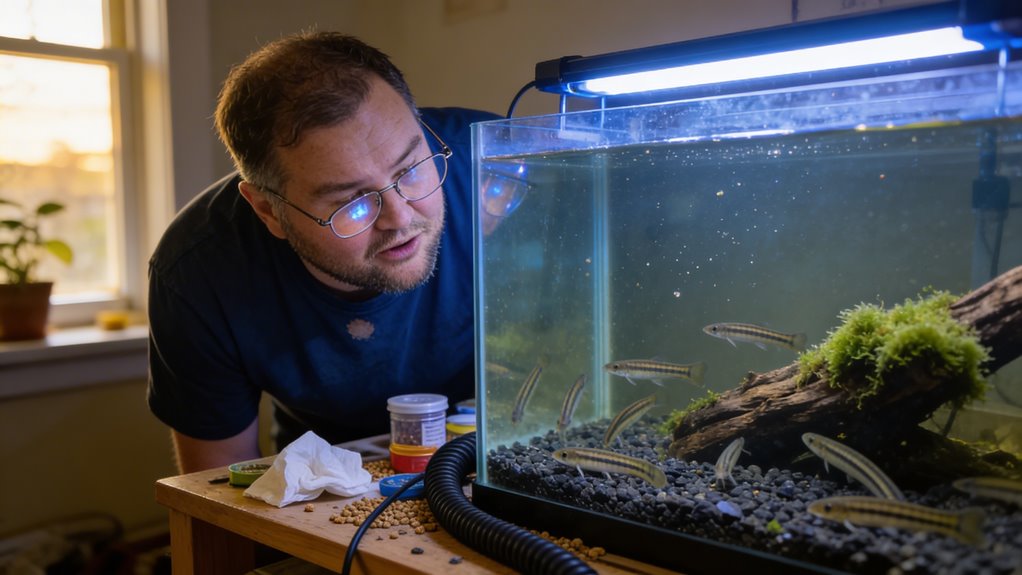
A soft bag of sand, the kind used for children’s playboxes, sits waiting at the pet store since Kuhli Loaches need it to feel safe.
Substrate selection matters deeply for these bottom-dwellers, as their delicate barbels sift through fine grains searching for food. Water chemistry must stay soft and acidic, pH 5.5 to 6.5, or they’ll fall ill. A proper feeding schedule brings them out at night, when they feel secure with their own kind.
Social dynamics require five or more loaches; fewer causes loneliness, and lonely fish hide forever. Plant integration with java fern or moss improves tank aesthetics while offering cover. Your lighting strategy should dim to eight hours, mimicking their forest streams.
Tank Size and Setup Basics
Since these fish love company, a single Kuhli Loach needs at least fifteen gallons of water to call home, and each extra friend requires three to five more gallons to swim happy.
Substrate selection matters deeply, as these bottom-dwellers push their faces through material daily.
Filtration methods need gentle care, covering intake tubes with fine mesh so nobody’s whiskers get pulled inside.
A secure lid prevents escape attempts, since curious loaches investigate upward when startled.
Water stays soft and slightly acidic, between 73 and 86 degrees, matching their native streams.
Hiding places—rocks, driftwood, caves—help shy fish feel safe enough to belong.
Why Kuhli Loaches Need Soft Sand
Gravel scratches their bellies and traps food they cannot reach.
Soft sand protects their delicate undersides, scales so thin you can almost see through them. Their burrowing behavior drives them downward, snout-first into the bottom, where they sleep through daylight hours. Substrate grain size matters more than most aquarists realize: particles under 2 millimeters let them submerge fully beneath the surface, safe and hidden.
| What Sand Does | Why It Matters |
|---|---|
| Cushions their belly scales | Prevents cuts, infections, stress |
| Allows full burrowing | Lets them rest, feel secure, belong |
| Releases trapped food | Keeps meals reachable, water cleaner |
They need this to feel at home.
Water Conditions They Actually Need
As they burrow in sand to feel safe, Kuhli Loaches still breathe the water above, and that water must feel like home.
Keep the temperature between 73°F and 86°F, warm like their native streams.
Warm like their native streams, the water wraps around them—a comfort they cannot name but always seek.
Maintain pH at 5.5 to 6.5, slightly acidic, and guard against pH fluctuations, which stress their sensitive bodies.
Hardness must stay soft, below 5.0 dGH, so their faint scales stay protected.
Choose substrate grain-size carefully—fine, soft sand lets them tunnel without injury, connecting them to the security they crave.
Clean water flows at two to three times tank volume hourly, mimicking gentle currents they know.
Cover filter intakes with fine mesh, preventing curious loaches from harm.
Secure the lid firmly, for they sometimes leap toward unexpected freedom.
This water becomes their belonging place.
How to Feed Kuhli Loaches (and Get Them to Eat)
Kuhli Loaches hunt for food when the world goes dark, so you’ll want to drop dinner in after the lights dim.
Nocturnal timing honors their nature, letting them eat without stage fright.
- Target food near hiding spots where they feel safe.
- Choose sinking pellets, frozen bloodworms, or blanched zucchini strips.
- Scatter across soft sand for natural substrate feeding behavior.
- Remove uneaten portions by morning to protect water quality.
Their four pairs of barbels brush the bottom, sifting like fingers through sand to find what settles there. You’ll feel proud when you spot them out, eating together, finally at home.
Why You Need at Least Five Kuhli Loaches
Picture a single leaf tumbling down a stream, catching against a rock, stuck alone. A solitary Kuhli Loach feels this isolation deeply, hiding motionless, wasting away from loneliness.
These fish possess socialgroup dynamics hardwired into their being. In groups of five or more, they weave through plants together, sharing findings, resting in gentle piles. This social enrichment transforms them from frightened shadows into curious, visible creatures.
Keepers notice the difference immediately. Five loaches mean braver fish, better feeding, longer lives. They find comfort in numbers, and watchers find joy in their confidence. Belonging heals them.
Best Tank Mates (and Fish to Avoid)
The search for compatible companions starts with understanding what Kuhli Loaches truly are: soft-bellied bottom dwellers, barely three inches long, who spend daylight hours tucked beneath driftwood and only venture out after dark. They need friends who respect their gentle nature.
A compatible tank design shelters everyone alike. Substrate compatibility matters too—smooth sand protects delicate barbels, whereas sharp gravel wounds.
- Tetras, rasboras, and danios swim above without disturbing quiet neighbors below
- Corydoras share bottom space peacefully, sifting alongside loaches at dusk
- Cherry shrimp clean algae without competing for food
- Tiger barbs nip fins; bettas flare and chase; large fish see loaches as prey, so keep these strangers out
How to Catch and Treat Illness Early
Since these little fish hide so well, illness often stays hidden too, until it’s almost too late to help.
Strip away the mystery by watching for pale colors, clamped fins, or loaches that stay above the substrate. Check daily at feeding time; use a flashlight after dark when they’re brave.
Prevention beats cure every time. Test water weekly—keep nitrates below twenty parts per million. Quarantine new plants and fish for fourteen days minimum, no exceptions.
At first sign of trouble, isolate the sick loach in a hospital tank. Use appropriate medication—read the dication label twice, dose carefully, and finish the full course.
Early action saves lives.
How to Spot and Fix Stress Fast
Illness isn’t the only danger hiding in quiet tanks. Stress, that silent weight, presses on Kuhli Loaches before any white spots appear.
Watch for these stress indicators, friends:
- Fading stripes, like dimmed lanterns signaling trouble inside
- Rapid gulping at the surface, a desperate reach for air gone thin
- Hiding when food drops, appetite lost to invisible worry
- Darting, frantic swimming, a small creature seeking escape
Quick remedies restore peace. Test water at once—ammonia burns invisible wounds. Add dark caves, soft sand, five companions minimum. Dim the lights. They aren’t fragile; they’re sensitive, like us, needing gentle steadiness to feel truly home.
What Works for Breeding Kuhli Loaches
A small cave of dark slate, no bigger than a coffee cup, sits waiting on the tank floor. Breeders know this shadowed space invites shy pairs to begin.
Water must stay soft, pH 6.0–6.5, temperature steady at 75°F–80°F. Spawn timing follows evening cool-downs, mimicking tropical rains. Successful keepers watch for females swelling with green eggs.
| Trigger | Water Change | Result |
|---|---|---|
| Cool rain mimic | 30% cooler water | Spawning begins |
| Dim lights | LED off 2 hours | Pairing occurs |
| Dawn feed | Live worms offered | Egg release peaks |
| 7 days later | Remove adults | Fry hatch safely |
| First foods | Infusoria, then micro-worms | Fry nutrition secured |
Tiny fry need the right fry nutrition within hours. Community members share recipes, failures, victories. No one breeds alone.
Java Moss Cover: Why They Need It and How to Grow It
Those same slate caves that shelter spawning pairs sit empty and cold without the soft greens that make them feel like home.
Java moss weaves living thread through every gap, catching infusoria for fry, filtering ammonia with silent efficiency.
Moss propagation happens fast when conditions welcome it—division, stem cuttings, patience rewarded.
Light intensity guides the rhythm: too bright burns fronds pale, too dim stalls the spread. Aim gentle, like morning through forest canopy.
- Anchor tufts with fishing line above sand
- Trim weekly to keep paths clear for loaches
- Rinse weekly in old tank water
- Share cuttings with fellow keepers, building community
They thrive when surrounded by green that knows their name.
Frequently Asked Questions
What Are the Spikes Under Their Eyes For?
The sharp spikes beneath each Kuhli Loach’s eyes serve as hidden weapons for self-defense. When threatened, the fish raises these spines to warn predators away. This eye development pattern protects vulnerable sensory function, since the loach’s eyes sit beneath thin, see-through skin and can’t spot danger well. One might say the spikes act like a shy person’s firm boundary—quietly present, rarely shown, but unmistakably real when needed.
Can Kuhli Loaches Live in Bare-Bottom Tanks?
Bare-bottom tanks make Kuhli loaches feel exposed and anxious, like a child sleeping without their familiar blanket.
These fish need soft, fine sand for their substrate preference—it lets them burrow, sift, and feel safe. A 15-gallon tank size works for one, but they’ll hide constantly without sand to dig through.
Groups of five or more help them feel brave, yet even friends can’t replace that comforting, gritty bottom beneath their bellies.
Do Kuhli Loaches Produce Audible Sounds?
Yes, Kuhli Loaches produce faint clicking sounds during vocal communication, especially when excited or in distress. Researchers use acoustic detection equipment to study these soft noises, which fall between 100 and 800 hertz—quieter than a whisper. They’ll click as they explore sand or interact with companions. These sounds aren’t constant music, just brief, gentle pops that remind listeners they’re paying attention to living creatures with their own quiet language.
Why Do They Sometimes Swim in Rapid Circles?
They swim in rapid circles when experiencing a stress response or excitement. This rapid swimming often happens during water changes, after sudden light shifts, or when they detect food. It shows their nerves are jangled, like a child pacing before a test. They’ll settle once conditions stabilize, usually within minutes. Keeping groups of five or more helps them feel safe, reducing these frantic loops.
Can They Survive Brief Power Outages Without Filtration?
Kuhli loaches carry decent filtration resilience for short gaps, usually managing several hours if the tank stays calm. Their oxygen demand stays modest thanks to slow-moving blood and that habit of breathing air at the surface, which they gulp when water grows stale. Still, anxiety creeps in past four or five hours without flow, so gentle surface stirring helps until power returns. Watch them; they’ll show worry first.
Rounding Up
A soft sand bed, five friends, and a steady hand with the water tests—that’s what Kuhli loaches ask for.
They’ll reward you with dawn‑light movements across the glass, little eel‑shaped shadows that remind you patience pays off.
Breeding’s a quiet gamble, not a promise, but the trying builds care.
Keep their world gentle, their bellies full after dark, and they’ll teach you that shy creatures, given safety, become brave in small, steady ways.