You stand before a glass tank, watching a fist-sized fish flick its tail with surprising force. That Oscar, no bigger than your palm today, will stretch to fourteen inches within eighteen months. Its brain, proportionally large among fish, lets it recognize your face, beg for food, even sulk when ignored. Yet most owners fail this fish, stuffing it into cramped corners where it turns mean, gray, and sick. The secrets aren’t complicated, but they’re precise, and you’ll need every one of them before that cute juvenile becomes a powerful adult with needs you didn’t anticipate.
At A Glance
- Oscars reach 12–16 inches and need a 55-gallon minimum tank, plus 25 gallons per additional fish.
- Feed pea-sized pellets once daily for adults, skipping one day weekly to aid digestion.
- Suitable tank mates include Bichirs, Silver Dollars, Jack Dempsey, and Green Terror.
- Avoid small fish like tetras, angelfish, and guppies, as Oscars are aggressive predators.
- Maintain water temperature 75–80°F, pH 6.0–8.0, and perform weekly water changes for health.
How Big Do Oscar Fish Really Get?
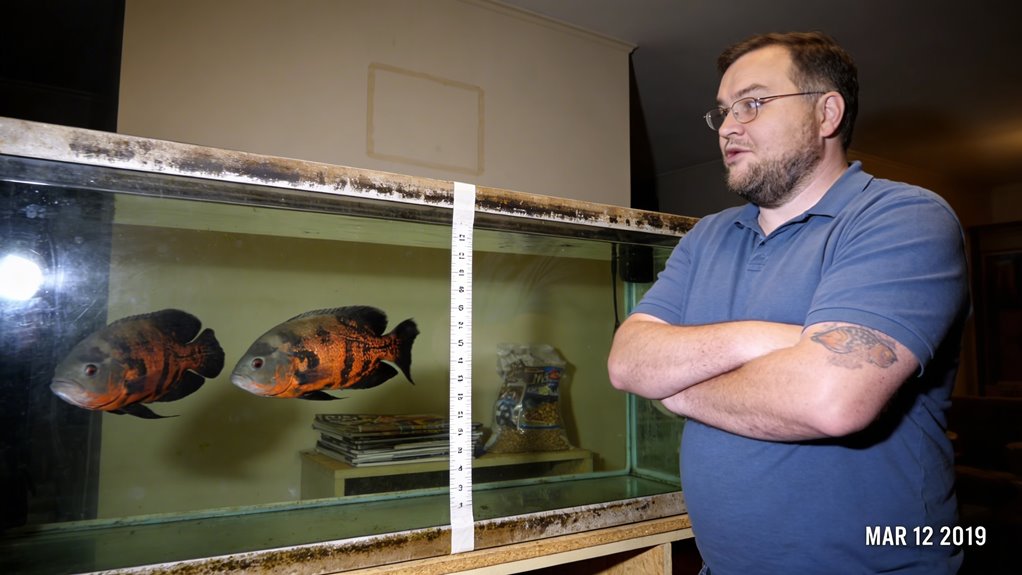
When you first spot an Oscar fish swimming behind pet store glass, you’ll likely see a youngster no bigger than your thumb. Don’t let that fool you. In just eighteen months, you’ll watch that same fish balloon to twelve or fourteen inches, sometimes sixteen if you’re lucky with breeding stock.
That’s nearly the length of a standard ruler, nose to tail.
Adults weigh over a pound, heavy enough to dislodge decorations with a flick. Their native habitat—slow Amazon backwaters—shapes this heft, where size means survival. You’ll feel pride seeing that growth, knowing you’ve joined others who commit to such magnificent transformations.
What Tank Size Do Oscars Actually Need?
Since you’ve seen how fast they grow, you’ll understand why that gallon number matters so much, so soon.
They grow fast, which is why that gallon number matters so much, so soon.
A single Oscar needs fifty-five gallons, minimum. That’s about four feet long, front to back. Add twenty-five more gallons for each friend you bring home. Two Oscars? Eighty gallons. Three? One hundred five.
Your substrate choice matters since Oscars dig, they root, they churn. Soft sand protects their mouths from cuts and scrapes. Breeding pairs need even more room, or they’ll fight instead of flirt.
Give them space, and they’ll give you calm mornings watching them claim their corner.
Which Water Parameters Keep Oscars Healthy?
The right water chemistry keeps your Oscar’s colors bright and its swim smooth, just like clean air keeps your own chest loose and easy.
You’ll want to hold water temperature steady at 75–80°F, which feels like a warm bath to your hand.
Water hardness matters more than you’d guess; aim for 12–15 dH, the measure of minerals dissolved like sugar in tea. Too soft, and your fish struggles; too hard, and stress builds quietly.
pH stability beats chasing perfect numbers. Keep it between 6.0 and 8.0, and avoid sudden swings that shock the gills.
Test weekly. Change water regularly. Your Oscar trusts you to keep its world steady, and that trust, felt daily, deepens your bond.
What Should You Feed Your Oscar?
What does your Oscar see when it looks up through the water?
It watches you approach, hopeful, hungry. Feed it right, and you’ll belong to something alive and watching.
Bite-sized food matters. Your Oscar’s mouth fits pellets about the size of a pea. Feed once daily, enough that it’s gone in two minutes. That’s the gold rule of bre feeding—small, frequent is better than one big pile.
You’ll test your tank weekly, since stale water ruins appetite. Water-testing keeps digestion smooth, colors bright.
| Food Type | How Often | Watch For |
|---|---|---|
| Cichlid pellets | Daily | Cloudy water from overfeed |
| Bloodworms | Twice weekly | Uneaten bits sinking |
| Frozen peas | Weekly | Oscar’s orange deepening |
| Crickets | Weekly | Excitement, hunting speed |
| Nuts or fruit | Monthly only | Digestive trouble, less waste |
You’ll learn its favorites. That’s the bond forming.
Are Live Foods or Pellets Safer for Oscars?
Your hand hovers over the fish store’s counter, caught between two containers: one holds wiggling earthworms, the other holds firm brown pellets in a clear cup.
You want what’s safest for your Oscar, your companion in this underwater world you share.
Pellet nutrition gives measured vitamins, steady protein, clean ingredients you can trust. Manufacturers design these for complete health, nothing hiding inside.
Live food risks sneak in too easily: parasites hitch rides on worms, bacteria cling to shrimp, diseases you cannot see until your fish suffers. The thrill of hunting isn’t worth the gamble.
Choose pellets for peace of mind.
How Often Should You Feed Oscar Fish?
Since you watch your Oscar glide through the water, you notice how food changes everything about their day.
You want a feeding routine that keeps your fish healthy and happy, not overstuffed or hungry.
| Age of Oscar | Daily Feeding Frequency |
|---|---|
| Baby (under 3 inches) | 2-3 times daily |
| Juvenile (3-6 inches) | 2 times daily |
| Young adult (6-10 inches) | 1-2 times daily |
| Adult (10+ inches) | 1 time daily |
| Breeding pair | 2 times daily |
Your core feeding schedule depends on size. Smaller Oscars burn energy fast, so you’ll feed more often.
You’ll adjust feeding frequency as they grow, watching their belly. A slightly rounded stomach means you’ve given enough. Skip one day weekly. It clears their digestion.
You’re building trust through this rhythm.
Are Oscar Fish Too Aggressive for Community Tanks?
The food you’ve measured, the trust you’ve built, now faces a harder test when you add other fish to the tank.
Oscar fish show aggressive behavior, like a child guarding a favorite toy. They dig, they claim space, and they’ll chase newcomers who seem small or weak. This territorial instinct grows stronger with breeding potential—when Oscars sense they might spawn, their protectiveness sharpens into something fierce. You feel anxious, wondering if peace exists.
It does, but you must choose wisely. Space calms them, seventy-five gallons minimum, and tank mates must match their size and confidence without provoking wars.
Which Fish Can Survive With an Oscar?
A sturdy filter hums behind the glass, and you’re staring at empty water, wondering who might live beside your Oscar without becoming lunch.
You’ll find safety in size and spirit. Bichirs, with their eel-like bodies and ancient patient eyes, understand territorial waters. Silver Dollars school in shimmering agreement, fast enough to escape moods. Jack Dempsey and Green Terror bring equal boldness, matching your Oscar’s confidence.
Habitat compatibility matters more than you’d guess. These companions share similar water needs, around 75–80°F, soft substrate for digging, and hiding spots for privacy. They won’t shrink from personality. Breeding pairs need extra space, 80 gallons minimum, or aggression surges like summer storms.
You’re building a community of equals, not victims. Watch their bodies, not just rules, and you’ll know when friendship holds.
Which Fish Look Safe (But Aren’t) for Oscar Tanks?
Bloodworms drift through the water like thin red threads, and you might think a peaceful school of tetras would brighten the corner behind your Oscar’s rock.
Don’t trust that instinct.
Neon tetras, cardinal tetras, and those shimmering rummy-nose tetras all look too small to threaten your Oscar, but they’re snacks waiting to happen, stirring stress rather than safety.
You want companionship in your tank, not casualties.
Even medium fish like angelfish or fancy guppies invite trouble, their flowing fins tempting nips, their swimming styles clashing with your Oscar’s blunt, room-to-room patrolling.
Your tank décor choices matter here, too.
Loose plants and delicate driftwood won’t survive an Oscar’s bulldozing investigation, and nervous tank mates hide where water flow runs strongest, exhausting themselves against currents they can’t rest from.
You’re building a community, not a chase scene.
Belonging means protecting everyone inside the glass.
How to Spot Hole-in-the-Head Disease Early
Keeping your Oscar’s companions safe matters, but you’ve furthermore got to watch the fish itself.
Early detection starts with daily inspection of your Oscar’s head, watching close for tiny pits or pale spots near the eyes and gills, as early treatment depends on catching these before they deepen. You’ll want to test water weekly, keeping ammonia at zero and pH steady, since poor conditions trigger this illness. If you notice changes, don’t wait, act that same day. Treat with clean water changes and proper medicine, knowing scars may remain, but your friend can heal and stay with you longer.
How Long Do Oscar Fish Live With Proper Care?
Since you’ve learned to watch for illness, you might wonder how many years your careful attention can give back.
Your Oscar fish lives ten to thirteen years with proper care, sometimes fifteen if you’re lucky. That’s a decade of companionship, longer than most cichlids offer.
A decade of companionship with your Oscar fish outlasts most cichlids, stretching to fifteen years with proper care and a little luck.
Good water, space, and food matter, but Oscar breeding history shapes this too. Color genetics aren’t just about beauty—strong bloodlines from responsible breeders mean hardier fish. Red Oscars, Tigers, Lemons, they all carry inherited strengths or weaknesses.
Choose wisely, care consistently, and you’ll belong to a rare club: those who’ve kept an Oscar into its golden years.
Frequently Asked Questions
Can Oscar Fish Recognize Their Owners?
Yes, Oscars show owner recognition, swimming to the glass when you approach.
You’ll notice training response too—they learn feeding times, follow your finger, and may even let you pet them briefly.
Their large eyes spot you across the room, unlike smaller fish. With patience, you’ll build trust. Some owners report their Oscar sulks after tank cleanings, showing clear memory of your routines. That bond feels quietly rewarding.
Do Oscars Need Tank Mates to Be Happy?
No, Oscars don’t need tank mates, but you’ll see more playful social enrichment with compatible companions.
A 75‑gallon tank prevents territorial disputes, as proper water parameters (75‑80°F, pH 6.0‑8.0) reduce stress indicators like hiding or rapid gilling. Choose tank mates that match their social hierarchy—similar‑sized, robust fish you’ve introduced through a slow acclimation process. They’ll establish pecking orders, sometimes sparring, but that’s natural breeding behavior, not true aggression.
Soft substrate protects their rooting habits, and dim lighting with hiding spots mirrors their Amazon home. Without companions, you’ll need extra plants and décor to prevent loneliness—another stress indicator that shows in clamped fins. You’re building their community, whether solo or grouped.
Is It Safe to Hand-Feed Oscar Fish?
You can hand-feed your Oscar, but you’ll want to understand the hand feeding risks first. Your fingers might get nipped, since Oscars have strong jaws and poor eyesight up close. Wash your hands before and after, using plain water without soap residue. Keep hand feeding occasional to maintain nutritional balance from their regular pellets, not treats. You’re building trust slowly, and that’s something special between you two.
Can Oscar Fish Live in Outdoor Ponds?
Yes, you can keep Oscar fish in outdoor ponds, but you’ll need careful planning. Your pond pond setup must hold at least 300 gallons for one Oscar, with deep areas reaching 3-4 feet. You’ll need robust filtration and shaded spots using rocks or plants. Winter temperature control becomes essential, as Oscars die below 55°F, so you’ll need heaters or indoor relocation when cold months arrive. Monitor water quality weekly.
Do Oscar Fish Change Color With Mood?
Yes, you’ll notice your Oscar’s scales darken or brighten with their feelings. Those mood color shifts happen since their pigment cells expand or contract—a pigment cell response—to stress, excitement, or calm. When they’re frightened, you’ll see them pale almost to grey. When content, their oranges and blacks glow vivid. It’s like how you blush when embarrassed, a visible mirror of inner weather. Watch closely, you’ll learn their emotional language.
Rounding Up
A sturdy 55-gallon tank, that’s your starting canvas, like a bedroom for a growing kid who needs space to stretch. You’ll add 25 gallons for each friend, since crowding sparks fights, just like sharing a too-small lunch table. Feed pea-sized pellets daily, skip Sundays for rest, and you’ll watch years unfold—10 or more—with bright colors and steady swimming. Water stays calm at 75 to 80 degrees, pH steady, hardness in range. That’s care you can trust.